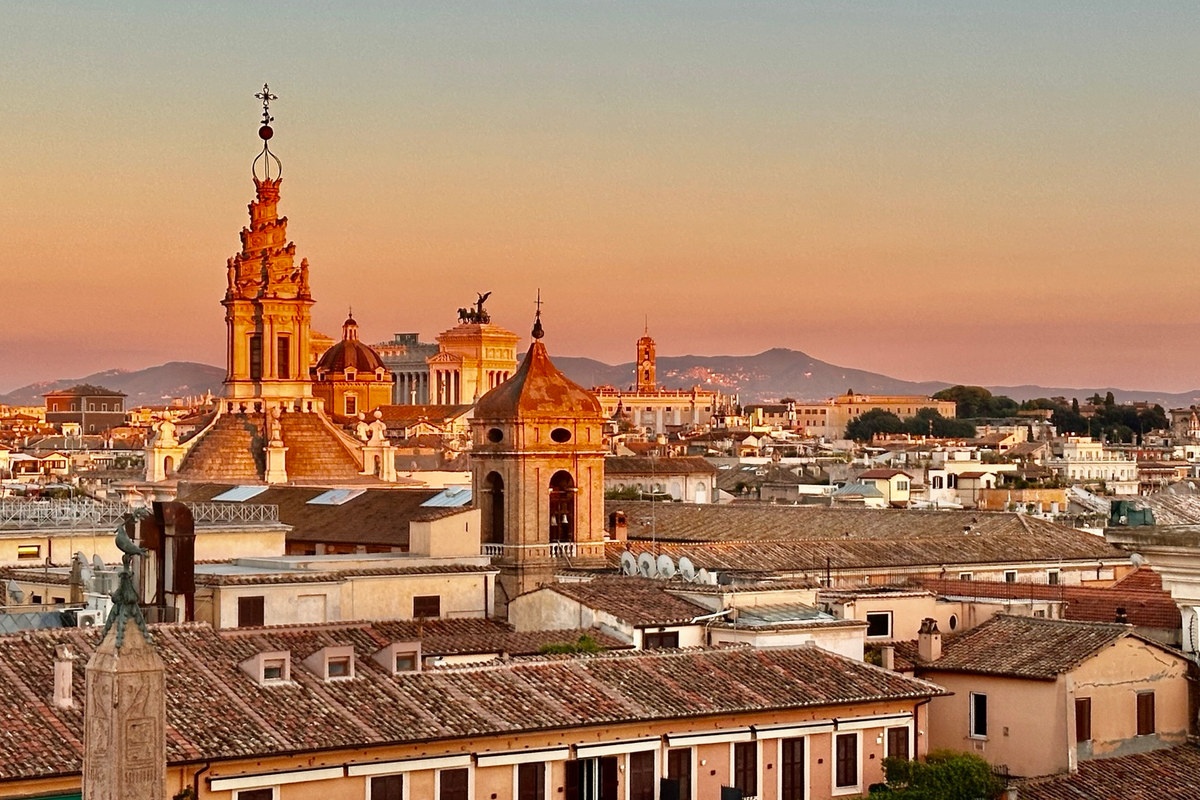
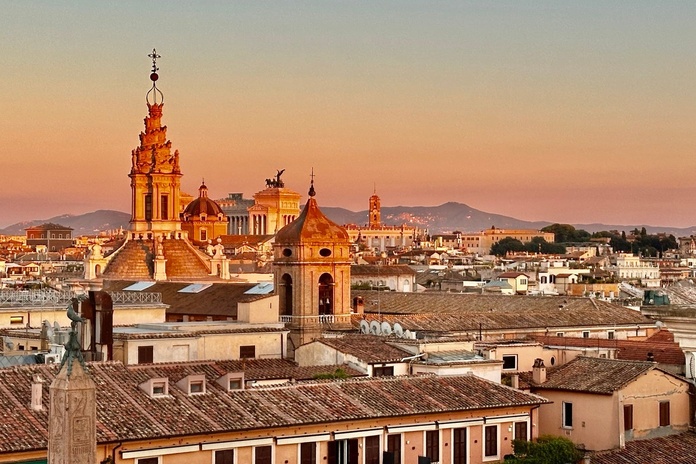


One evening in Rome, music ascends to our terrace from the gardens of the Palazzo Borghese.
Friends joined us downstairs. In the courtyard, a reception unfolds while a violinist accompanies the sunset. We had chosen our hotel with care; no one, however, could have booked this exact blend of light, music, and company.
None of this was on the itinerary. Yet it would become one of the most enduring memories of the stay.
The great monuments certainly had their place in the plan. The Colosseum, the Pantheon, Saint Peter’s, or the Spanish Steps remain must-sees, and it would be odd to claim a different way of traveling would skip them.
But three days in Rome also remind us that between these rendezvous there are moments harder to schedule, and they contribute just as much to the perception of a destination.
Friends joined us downstairs. In the courtyard, a reception unfolds while a violinist accompanies the sunset. We had chosen our hotel with care; no one, however, could have booked this exact blend of light, music, and company.
None of this was on the itinerary. Yet it would become one of the most enduring memories of the stay.
The great monuments certainly had their place in the plan. The Colosseum, the Pantheon, Saint Peter’s, or the Spanish Steps remain must-sees, and it would be odd to claim a different way of traveling would skip them.
But three days in Rome also remind us that between these rendezvous there are moments harder to schedule, and they contribute just as much to the perception of a destination.
Before the monuments, a first encounter
Our first contact with Rome is a driver whose hesitant English does not hinder the conversation in the slightest. Even before our arrival, he sent a welcome message on WhatsApp.
At the airport, we find him among his colleagues, our names on his placard. Hair slicked back, a few days’ beard, he welcomes us warmly and immediately takes Rebecca’s suitcase, my Australian partner, into his care. Mine, I note with amusement, stays in my charge.
We do not always catch his phrases, but the exchange proceeds without difficulty. After a long journey from Australia, this way of receiving guests has already become part of the experience. Before the first façade or the first piazza, Rome has begun with a face.
A few days later, on the terraces of Borromini, another encounter provokes the same feeling. This time our waiter speaks impeccable English. When asked where he comes from, he flips back his long brown hair and reveals a tattoo on his neck: “Roma.” Roman, of course.
His pride makes us smile, as if the question had been almost superfluous. We had gone up for the view. Yet, this gesture remains as present in memory as the city’s rooftops. The panorama told of Rome seen from above; the tattoo said something else: the way some of its inhabitants still seem to belong deeply to their city.
At the airport, we find him among his colleagues, our names on his placard. Hair slicked back, a few days’ beard, he welcomes us warmly and immediately takes Rebecca’s suitcase, my Australian partner, into his care. Mine, I note with amusement, stays in my charge.
We do not always catch his phrases, but the exchange proceeds without difficulty. After a long journey from Australia, this way of receiving guests has already become part of the experience. Before the first façade or the first piazza, Rome has begun with a face.
A few days later, on the terraces of Borromini, another encounter provokes the same feeling. This time our waiter speaks impeccable English. When asked where he comes from, he flips back his long brown hair and reveals a tattoo on his neck: “Roma.” Roman, of course.
His pride makes us smile, as if the question had been almost superfluous. We had gone up for the view. Yet, this gesture remains as present in memory as the city’s rooftops. The panorama told of Rome seen from above; the tattoo said something else: the way some of its inhabitants still seem to belong deeply to their city.
A capital at a neighborhood scale
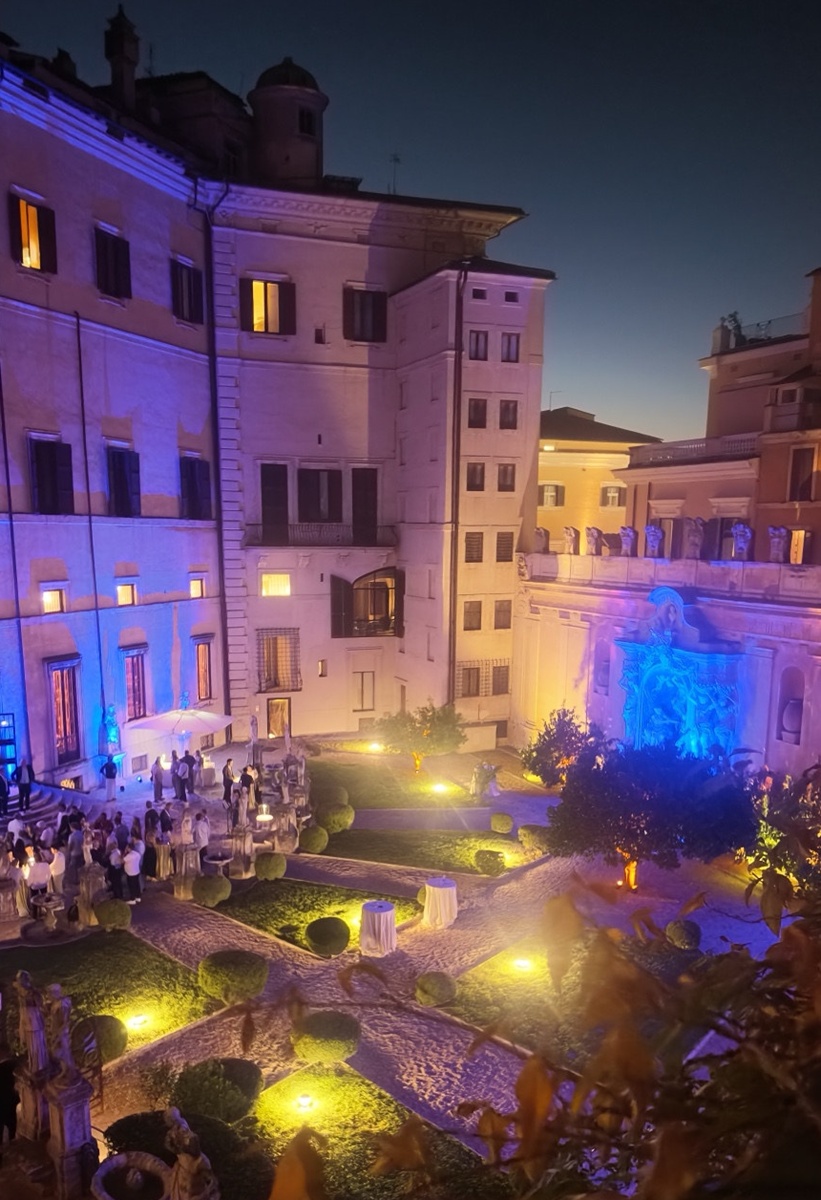
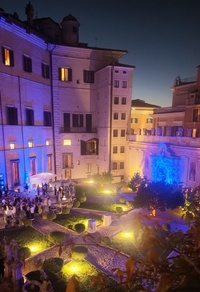
At six in the morning, it is the gulls that wake us. An espresso on the terrace of the room, the gardens of the Palazzo Borghese before us, and the capital seems to awaken with surprising gentleness.
For a few minutes, Rome takes on almost the dimensions of a Mediterranean town at neighborhood scale, rather than those of a large tourist capital.
This calm also stems from the choice of the anchoring point. Located on via dell’Arancio, in a small street in the historic center, the Vilòn allows walking to much of the center’s sights while, once the door is crossed, offering a real sense of withdrawal.
This is probably the right place for a hotel in a stay like this: not to become the destination, but to allow one to inhabit the city differently, to depart after a pause or to return without feeling they left the center.
Outside, the crowds are indeed present. So this is neither secret Rome nor a capital miraculously spared from tourism.
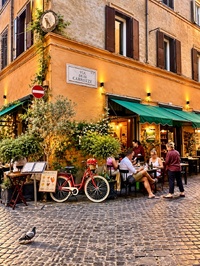
Yet, between the major visits, attention shifts to much more ordinary scenes: the fish stalls, the fruits and vegetables arranged with care, the elders continuing a conversation, the cafés taken at the counter, the cobblestones, the small fountains where one stops while walking.
Three days obviously cannot understand a city. They can, however, be enough to perceive a rhythm.
When I later ask Martina Avitabile, director of the Vilòn, about this almost village-like impression. She too mentions local shops, familiar faces, and neighborhood habits. “This coexistence between the monumental and what is most ordinary is, in my view, one of Rome’s greatest charms,” she explains.
The phrase sums up quite well what the stay ends up revealing: one can move in minutes from a monument that belongs to world history to a daily scene that could happen in a neighborhood where everyone still knows their routines.
For a few minutes, Rome takes on almost the dimensions of a Mediterranean town at neighborhood scale, rather than those of a large tourist capital.
This calm also stems from the choice of the anchoring point. Located on via dell’Arancio, in a small street in the historic center, the Vilòn allows walking to much of the center’s sights while, once the door is crossed, offering a real sense of withdrawal.
This is probably the right place for a hotel in a stay like this: not to become the destination, but to allow one to inhabit the city differently, to depart after a pause or to return without feeling they left the center.
Outside, the crowds are indeed present. So this is neither secret Rome nor a capital miraculously spared from tourism.
Yet, between the major visits, attention shifts to much more ordinary scenes: the fish stalls, the fruits and vegetables arranged with care, the elders continuing a conversation, the cafés taken at the counter, the cobblestones, the small fountains where one stops while walking.
Three days obviously cannot understand a city. They can, however, be enough to perceive a rhythm.
When I later ask Martina Avitabile, director of the Vilòn, about this almost village-like impression. She too mentions local shops, familiar faces, and neighborhood habits. “This coexistence between the monumental and what is most ordinary is, in my view, one of Rome’s greatest charms,” she explains.
The phrase sums up quite well what the stay ends up revealing: one can move in minutes from a monument that belongs to world history to a daily scene that could happen in a neighborhood where everyone still knows their routines.
Saint Peter’s, or the part impossible to program
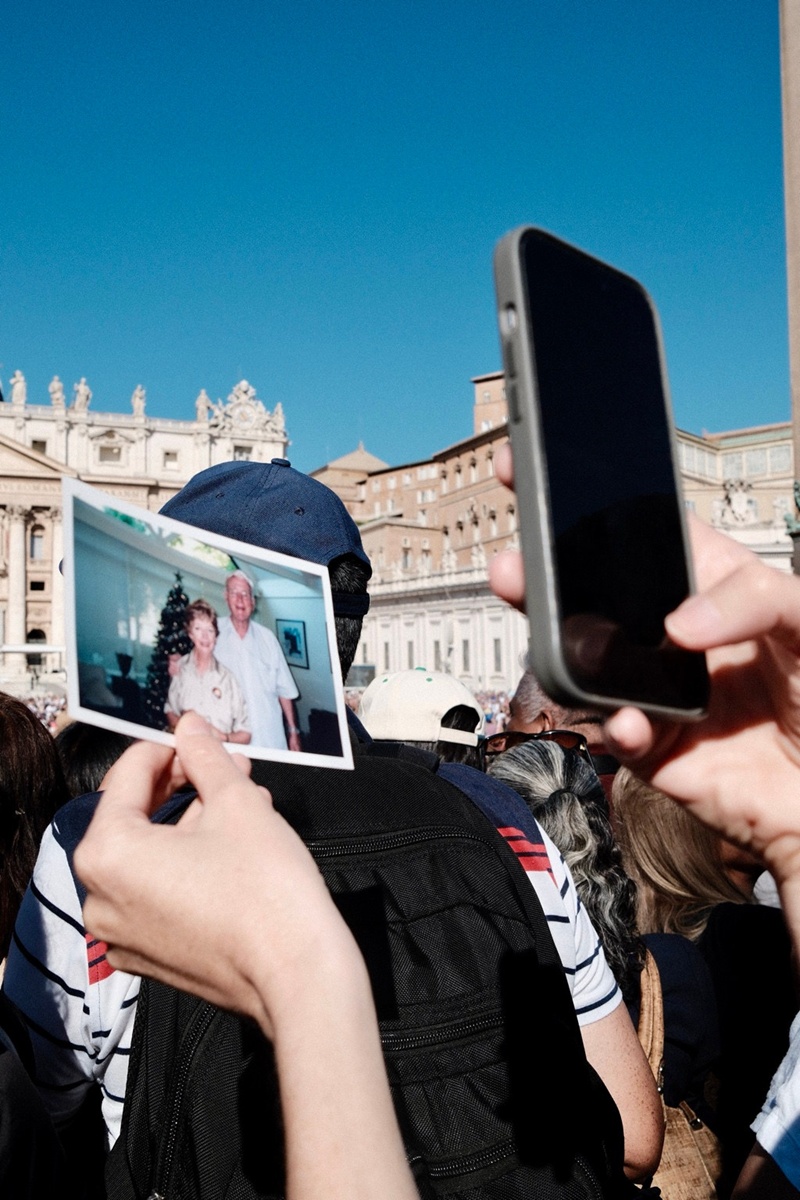
On Wednesday, September 16, we head to Saint Peter’s and discover that a general audience of the pope is to be held on the square.
We had not built our stay around this appointment, distinct from a Mass, but decide to stay. When the papal mobile passes a few meters from us, the proximity is surprising.
A figure usually seen on a screen suddenly stands before us, in the middle of the crowd, less than five meters away. We had simply come to discover Saint Peter’s; we now witness a moment we had absolutely not planned.
For Rebecca, my Australian partner, this morning takes on an even more personal dimension. She holds in her hands a photograph of her grandmother, whose funeral takes place that same day in Australia. On St. Peter’s Square, this small portrait suddenly links two scenes separated by thousands of kilometers: a public gathering in the heart of Rome and a family goodbye on the other side of the world.
What was meant to be a visit becomes then a memory impossible to dissociate from the place. This scene speaks to nothing universal about Rome and cannot become a promise made to a traveler. It simply reminds us that an itinerary prepares the conditions of the journey, but it never fully determines what will become the main memory.
We had not built our stay around this appointment, distinct from a Mass, but decide to stay. When the papal mobile passes a few meters from us, the proximity is surprising.
A figure usually seen on a screen suddenly stands before us, in the middle of the crowd, less than five meters away. We had simply come to discover Saint Peter’s; we now witness a moment we had absolutely not planned.
For Rebecca, my Australian partner, this morning takes on an even more personal dimension. She holds in her hands a photograph of her grandmother, whose funeral takes place that same day in Australia. On St. Peter’s Square, this small portrait suddenly links two scenes separated by thousands of kilometers: a public gathering in the heart of Rome and a family goodbye on the other side of the world.
What was meant to be a visit becomes then a memory impossible to dissociate from the place. This scene speaks to nothing universal about Rome and cannot become a promise made to a traveler. It simply reminds us that an itinerary prepares the conditions of the journey, but it never fully determines what will become the main memory.
Preserving time, another form of personalization
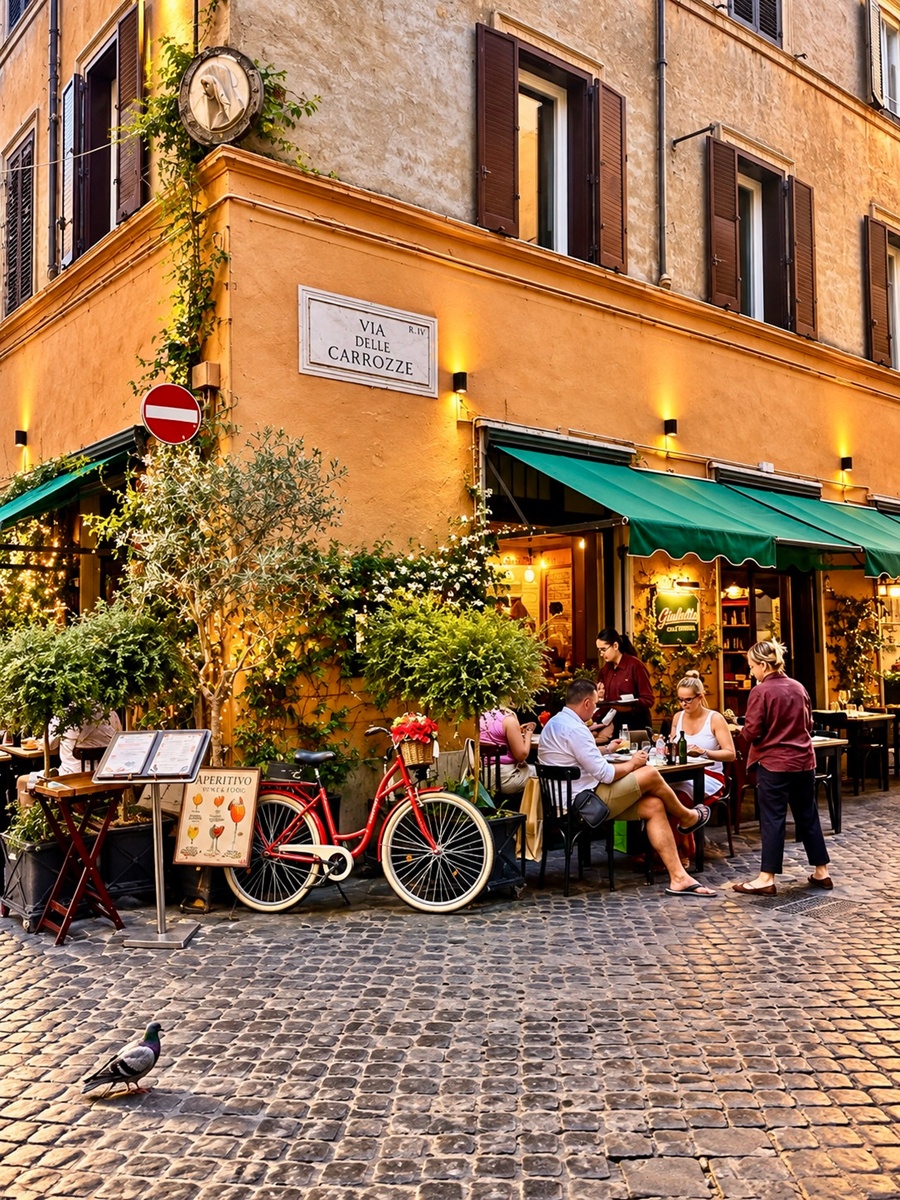
This is where the experience becomes interesting for the travel professional. It obviously isn’t about giving up on preparation.
In a city like Rome, choosing the right accommodation, understanding distances, booking the essential visits, and placing a few good addresses remains decisive.
But the advice can also be to not fill every available hour. A conversation may last longer than expected. A lunch may stretch. A square may tempt you to sit down rather than immediately move to the next stop.
A client may need to return to the hotel before resuming in the evening. Preserving this flexibility does not mean offering less: it acknowledges that customization concerns both the pace of the stay and its content.
Martina Avitabile summarizes this philosophy with a simple idea: leave “room for the unexpected.” A coffee can become a conversation, she explains, an aperitif can turn into dinner, and a ten-minute stroll can become sixty when the city gives you a reason to pause.
For a short break, perhaps this is where another way of advising Rome lies. Not necessarily seeking addresses unknown to all, nor stripping the city of its must-sees, but selecting what truly matters and allowing the traveler to keep enough freedom to encounter what wasn’t planned.
We arrived with a fairly precise idea of what we wanted to see. At departure, the monuments still appear in the photographs. But in the notes we took leaving the city, there are also the gulls waking, a chauffeur, a tattoo on a server’s neck, a photograph held on St. Peter’s Square, and a violin heard from a garden.
Rome had honored our plan. Happily, it had also managed to exceed it.
In a city like Rome, choosing the right accommodation, understanding distances, booking the essential visits, and placing a few good addresses remains decisive.
But the advice can also be to not fill every available hour. A conversation may last longer than expected. A lunch may stretch. A square may tempt you to sit down rather than immediately move to the next stop.
A client may need to return to the hotel before resuming in the evening. Preserving this flexibility does not mean offering less: it acknowledges that customization concerns both the pace of the stay and its content.
Martina Avitabile summarizes this philosophy with a simple idea: leave “room for the unexpected.” A coffee can become a conversation, she explains, an aperitif can turn into dinner, and a ten-minute stroll can become sixty when the city gives you a reason to pause.
For a short break, perhaps this is where another way of advising Rome lies. Not necessarily seeking addresses unknown to all, nor stripping the city of its must-sees, but selecting what truly matters and allowing the traveler to keep enough freedom to encounter what wasn’t planned.
We arrived with a fairly precise idea of what we wanted to see. At departure, the monuments still appear in the photographs. But in the notes we took leaving the city, there are also the gulls waking, a chauffeur, a tattoo on a server’s neck, a photograph held on St. Peter’s Square, and a violin heard from a garden.
Rome had honored our plan. Happily, it had also managed to exceed it.