

A journey to Sri Lanka is this remarkable succession of atmospheres and experiences: heritage, spirituality, wild nature and tropical serenity brought together in a single destination.
At Karibuni, we support Francophone tourism professionals in designing trips to Sri Lanka, alongside our receptive partners LSR and Distinct Destination. Tailor-made circuits, cultural journeys, nature discoveries or beach extensions… each program is crafted to reveal all the island’s richness and to offer a complete, authentic and immersive discovery of Sri Lanka.
At Karibuni, we support Francophone tourism professionals in designing trips to Sri Lanka, alongside our receptive partners LSR and Distinct Destination. Tailor-made circuits, cultural journeys, nature discoveries or beach extensions… each program is crafted to reveal all the island’s richness and to offer a complete, authentic and immersive discovery of Sri Lanka.
Sri Lanka, an island of a thousand experiences
Positioned in the heart of the Indian Ocean, south of India, Sri Lanka concentrates an astonishing diversity within a relatively compact territory. Ancient temples, royal cities, tea plantations, misty mountains, wildlife reserves and coconut-fringed beaches follow one after another within a few hours of driving.
This is precisely the strength of the destination: in a single trip, you can combine culture, nature, encounters, safari and a seaside stay, with atmospheres that evolve almost every day.
This is precisely the strength of the destination: in a single trip, you can combine culture, nature, encounters, safari and a seaside stay, with atmospheres that evolve almost every day.
The Cultural Triangle: traveling through time
In the center of the island, the Cultural Triangle concentrates some of the country’s most impressive historical sites. Ancient royal capitals, Buddhist temples and archaeological ruins recount more than two millennia of history.
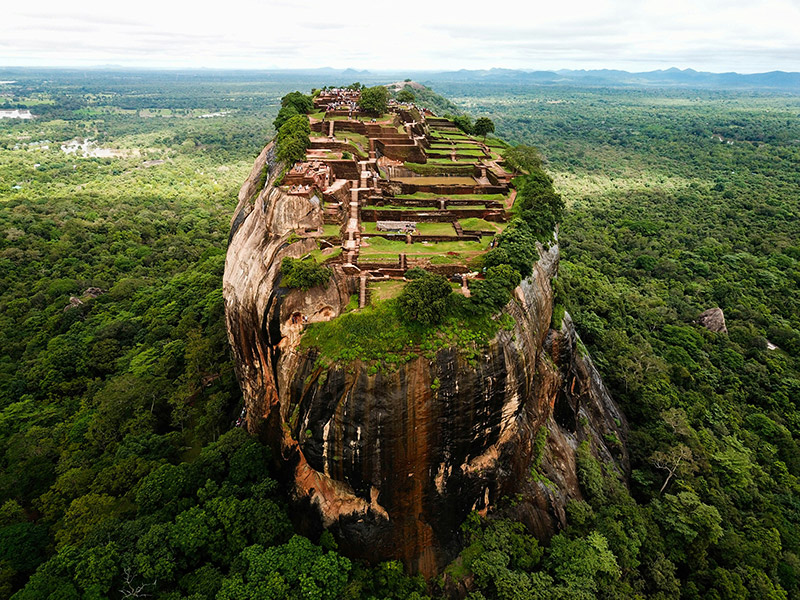
Sri Lanka now counts eight UNESCO World Heritage Sites, six of them cultural, including the sacred city of Kandy, the Sinharaja Forest Reserve, and the famous Lion Rock in the ancient city of Sigiriya.
Sri Lanka now counts eight UNESCO World Heritage Sites, six of them cultural, including the sacred city of Kandy, the Sinharaja Forest Reserve, and the famous Lion Rock in the ancient city of Sigiriya.
Sigiriya: Atop the Lion Rock
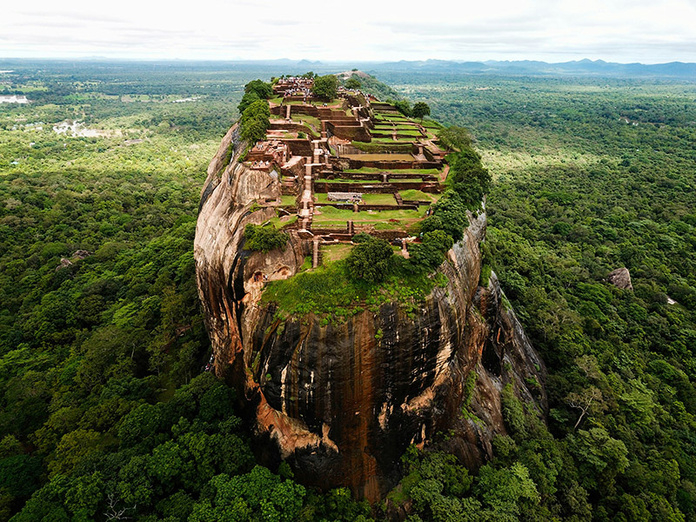
It is impossible to speak of Sri Lanka without mentioning Sigiriya, one of the country’s most emblematic landscapes.
This ancient royal citadel was built in the 5th century around a spectacular rock towering about 180 meters above the surrounding vegetation. The ascent gradually leads toward the famous frescoes, the gardens at the foot of the rock, and the massive lion’s paws that mark the entrance to the final part of the journey.
Once at the summit, the effort is rewarded with a spectacular panorama over the jungle and the surrounding plains.
But Sigiriya is not just about the view. The site also testifies to a remarkable know-how in urban planning, architecture and water management, with gardens and pools designed more than 1,500 years ago.
This ancient royal citadel was built in the 5th century around a spectacular rock towering about 180 meters above the surrounding vegetation. The ascent gradually leads toward the famous frescoes, the gardens at the foot of the rock, and the massive lion’s paws that mark the entrance to the final part of the journey.
Once at the summit, the effort is rewarded with a spectacular panorama over the jungle and the surrounding plains.
But Sigiriya is not just about the view. The site also testifies to a remarkable know-how in urban planning, architecture and water management, with gardens and pools designed more than 1,500 years ago.
Dambulla: temples carved in rock
A few kilometers away, Dambulla reveals a completely different atmosphere.
Its famous rock temple houses several caves transformed into Buddhist sanctuaries. Inside, dozens of Buddha statues and spacious wall paintings cover the walls and ceilings.
The subdued light, colors and the silence of the places create a unique ambiance, halfway between cultural discovery and spiritual experience.
Its famous rock temple houses several caves transformed into Buddhist sanctuaries. Inside, dozens of Buddha statues and spacious wall paintings cover the walls and ceilings.
The subdued light, colors and the silence of the places create a unique ambiance, halfway between cultural discovery and spiritual experience.
Kandy: the Spiritual Heart of Sri Lanka
From Nuwara Eliya to Ella: In the Realm of Tea
Leaving Kandy, the landscapes gradually change. The tropical warmth gives way to a cooler atmosphere, the roads wind up and the first tea plantations appear on the hills.
Welcome to the Sri Lankan Highlands.
In Nuwara Eliya, nicknamed the “Little Britain,” colonial buildings, flowering gardens and historic houses recall the British era. Around the town, plantations dress the hills in a spectrum of greens.
A visit to a factory lets you follow the different steps of making Sri Lanka’s famous tea and better understand the major role this crop has played in the country’s history and economy.
Further on, Ella charms with its peaceful atmosphere and spectacular landscapes. Hike to Little Adam’s Peak, explore the Nine Arch Bridge, or stroll among the plantations: here, nature becomes the thread that runs through the journey.
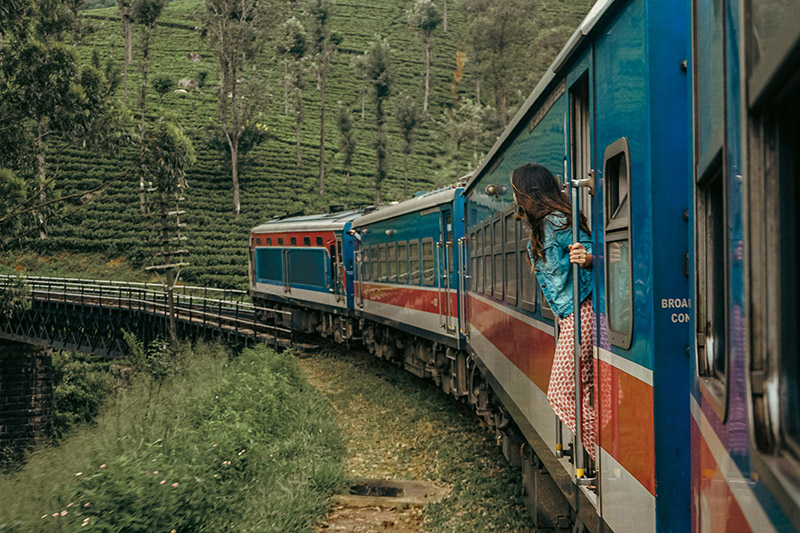
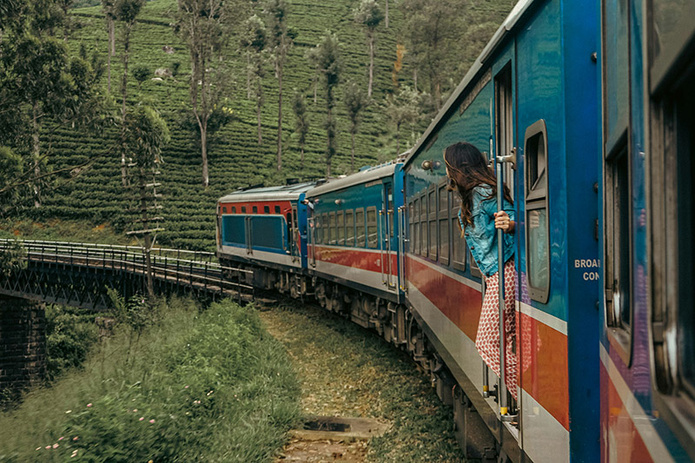
And to connect these stages, nothing beats the famous train journey through the mountains.
Between Kandy, Nanu Oya and Ella, the railway winds between tea plantations, valleys, waterfalls, villages and forests. A simple experience that has, over the years, become one of Sri Lanka’s iconic images.
Welcome to the Sri Lankan Highlands.
In Nuwara Eliya, nicknamed the “Little Britain,” colonial buildings, flowering gardens and historic houses recall the British era. Around the town, plantations dress the hills in a spectrum of greens.
A visit to a factory lets you follow the different steps of making Sri Lanka’s famous tea and better understand the major role this crop has played in the country’s history and economy.
Further on, Ella charms with its peaceful atmosphere and spectacular landscapes. Hike to Little Adam’s Peak, explore the Nine Arch Bridge, or stroll among the plantations: here, nature becomes the thread that runs through the journey.
And to connect these stages, nothing beats the famous train journey through the mountains.
Between Kandy, Nanu Oya and Ella, the railway winds between tea plantations, valleys, waterfalls, villages and forests. A simple experience that has, over the years, become one of Sri Lanka’s iconic images.
Safari in Sri Lanka: another facet of the island
Less known than those of some African destinations, Sri Lankan wildlife still holds some wonderful surprises.
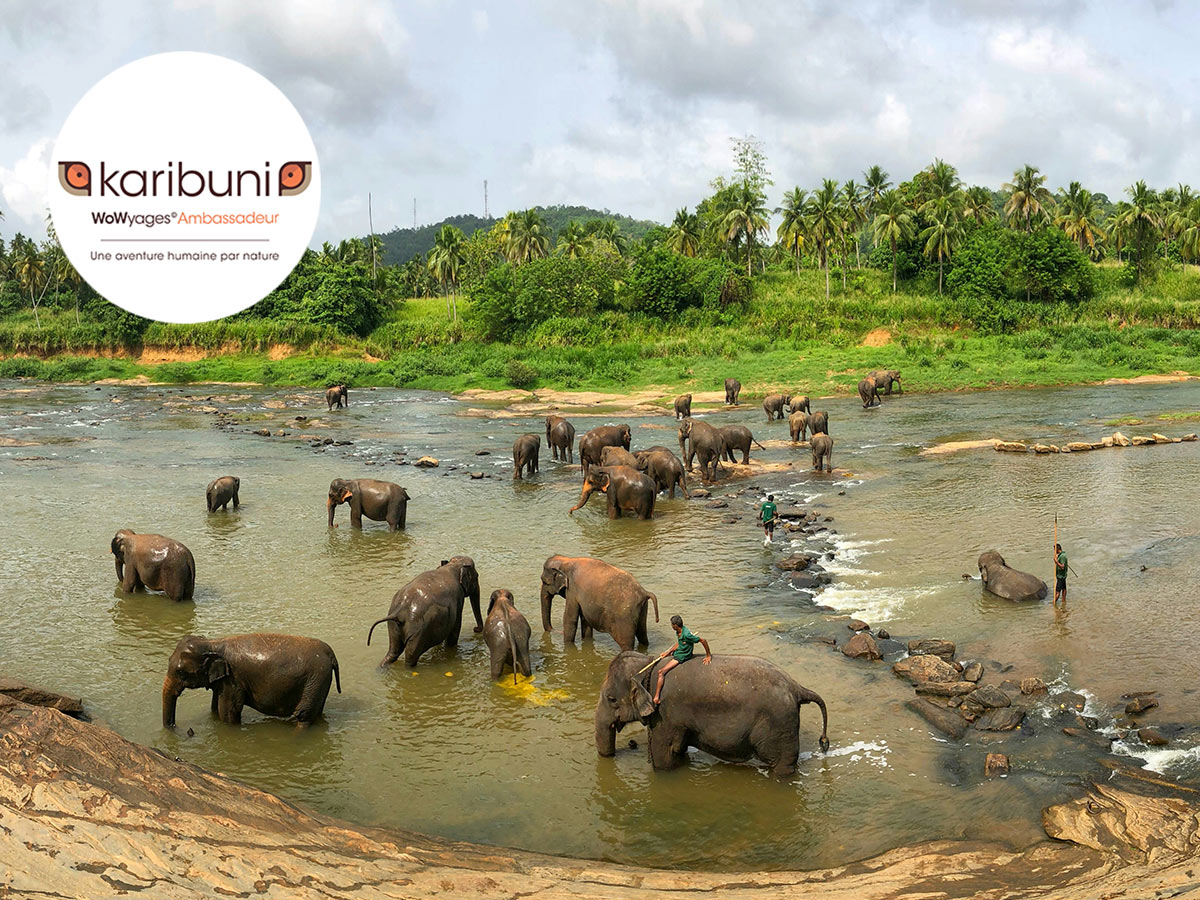
Going on a safari in Sri Lanka allows you to observe Asian elephants, buffalos, crocodiles, deer, monkeys and an incredible diversity of birds.
Going on a safari in Sri Lanka allows you to observe Asian elephants, buffalos, crocodiles, deer, monkeys and an incredible diversity of birds.
Yala: in the footsteps of the leopard
In the southeast of the island, Yala National Park is probably the country’s most famous.
Its landscapes alternate dry forests, lagoons, plains and rocky areas. The park is particularly renowned for its leopards, although spotting them is of course a matter of luck.
Elephants, buffalos, crocodiles, jackals, monkeys and birds complete this immersion into Sri Lanka’s wildlife.
Its landscapes alternate dry forests, lagoons, plains and rocky areas. The park is particularly renowned for its leopards, although spotting them is of course a matter of luck.
Elephants, buffalos, crocodiles, jackals, monkeys and birds complete this immersion into Sri Lanka’s wildlife.
Udawalawe: the kingdom of elephants
Further west, Udawalawe is particularly appreciated for elephant viewing.
Its open landscapes facilitate encounters and sometimes allow observing several groups during a single safari.
In the center of the country, the surroundings of Minneriya and Kaudulla are also known for their seasonal concentrations of elephants, offering a beautiful complement to the Cultural Triangle’s heritage.
Its open landscapes facilitate encounters and sometimes allow observing several groups during a single safari.
In the center of the country, the surroundings of Minneriya and Kaudulla are also known for their seasonal concentrations of elephants, offering a beautiful complement to the Cultural Triangle’s heritage.
Galle: colonial charm by the ocean
After the mountains and the national parks, head to the coast.
In the southwest, Galle instantly transports you to another era. Its fort, a UNESCO World Heritage Site, preserves traces of Portuguese and then Dutch presence.
Inside the ramparts, former colonial houses now host cafés, galleries, shops, small hotels and restaurants.
One strolls there without a fixed plan, between tranquil lanes and old houses, before heading back to the ramparts at the end of the day to watch the sun set over the Indian Ocean.
In the southwest, Galle instantly transports you to another era. Its fort, a UNESCO World Heritage Site, preserves traces of Portuguese and then Dutch presence.
Inside the ramparts, former colonial houses now host cafés, galleries, shops, small hotels and restaurants.
One strolls there without a fixed plan, between tranquil lanes and old houses, before heading back to the ramparts at the end of the day to watch the sun set over the Indian Ocean.
Sri Lanka’s beaches: choosing your coast by season
With around 1,600 kilometers of coastline, it is hard to talk about Sri Lanka without mentioning the sea.
Sri Lanka’s beaches offer very different atmospheres depending on the region and the time of year.
In the south, Mirissa, Unawatuna, Tangalle or Bentota easily allow you to extend a circuit with a few days of relaxation.
On the east coast, Trincomalee, Nilaveli, Pasikudah or Arugam Bay reveal another facet of the island. This coast is particularly renowned for surfing.
Thanks to the alternation of the monsoons, it is thus possible to privilege one coast or the other depending on the season and to build beach itineraries almost year-round.
Sri Lanka’s beaches offer very different atmospheres depending on the region and the time of year.
In the south, Mirissa, Unawatuna, Tangalle or Bentota easily allow you to extend a circuit with a few days of relaxation.
On the east coast, Trincomalee, Nilaveli, Pasikudah or Arugam Bay reveal another facet of the island. This coast is particularly renowned for surfing.
Thanks to the alternation of the monsoons, it is thus possible to privilege one coast or the other depending on the season and to build beach itineraries almost year-round.
Adam’s Peak: walking toward the sun
For hiking enthusiasts, Adam’s Peak, or Sri Pada, offers a distinct experience.
This sacred summit has drawn pilgrims from different faiths for centuries. At the summit there is a footprint whose origin varies according to beliefs: it is associated with the Buddha by Buddhists and with Adam in certain Muslim and Christian traditions.
The ascent usually starts in the middle of the night to reach the summit before sunrise.
When conditions are favorable, the first lights gradually reveal the surrounding mountains and create one of the most memorable moments of the journey.
This sacred summit has drawn pilgrims from different faiths for centuries. At the summit there is a footprint whose origin varies according to beliefs: it is associated with the Buddha by Buddhists and with Adam in certain Muslim and Christian traditions.
The ascent usually starts in the middle of the night to reach the summit before sunrise.
When conditions are favorable, the first lights gradually reveal the surrounding mountains and create one of the most memorable moments of the journey.
When to go to Sri Lanka?
The peculiarity of Sri Lanka’s climate lies in its two monsoons, which do not affect the same regions at the same time.
From December to February, the south and the west generally experience their most favorable conditions. It’s an excellent period to combine the Cultural Triangle, the mountains, and the beaches of the south coast.
From May to September, the east coast also enjoys more favorable conditions, particularly around Trincomalee, Pasikudah and Arugam Bay.
March and April constitute a transitional period often interesting for touring the island’s interior and the Highlands.
October and November correspond to a more unsettled period, with possible rainfall across much of the country.
As always under the tropics, the weather remains variable: more than a single “best season,” Sri Lanka thus invites you to tailor the itinerary to the time of travel.
From December to February, the south and the west generally experience their most favorable conditions. It’s an excellent period to combine the Cultural Triangle, the mountains, and the beaches of the south coast.
From May to September, the east coast also enjoys more favorable conditions, particularly around Trincomalee, Pasikudah and Arugam Bay.
March and April constitute a transitional period often interesting for touring the island’s interior and the Highlands.
October and November correspond to a more unsettled period, with possible rainfall across much of the country.
As always under the tropics, the weather remains variable: more than a single “best season,” Sri Lanka thus invites you to tailor the itinerary to the time of travel.
Sri Lanka, a Journey of Grand Natural Wonders
Few destinations allow you to experience so many different things in a single trip.
One morning might begin facing the ruins of an ancient royal city, continue amid elephants, and end a few days later facing the Indian Ocean. Between two stops, tea plantations, villages, temples, markets and tropical landscapes give each day a distinct character.
Sri Lanka can thus appeal to culture enthusiasts as well as families, nature lovers, hikers or travelers seeking an itinerary that blends discovery and relaxation.
An generous, accessible and incredibly varied island, which ultimately is not limited to its temples, its beaches, or its safaris: it is their combination that makes the travel so rich.
One morning might begin facing the ruins of an ancient royal city, continue amid elephants, and end a few days later facing the Indian Ocean. Between two stops, tea plantations, villages, temples, markets and tropical landscapes give each day a distinct character.
Sri Lanka can thus appeal to culture enthusiasts as well as families, nature lovers, hikers or travelers seeking an itinerary that blends discovery and relaxation.
An generous, accessible and incredibly varied island, which ultimately is not limited to its temples, its beaches, or its safaris: it is their combination that makes the travel so rich.
THE ANECDOTES CORNER
• Sigiriya was once crowned by a royal palace. The final approach symbolically passed through a giant lion: today only its impressive paws remain.
• One footprint, several beliefs. At the summit of Adam’s Peak, the sacred Sri Pada footprint is interpreted differently according to religious traditions, making the mountain an important place of shared pilgrimage.
• Ceylon tea travels under its old name. Although the country officially became Sri Lanka in 1972, the term “Ceylon tea” remains globally known.
• One footprint, several beliefs. At the summit of Adam’s Peak, the sacred Sri Pada footprint is interpreted differently according to religious traditions, making the mountain an important place of shared pilgrimage.
• Ceylon tea travels under its old name. Although the country officially became Sri Lanka in 1972, the term “Ceylon tea” remains globally known.


Jean-François Turroc
Directeur commercial
+ 33 1 47 51 04 03
+ 33 6 28 56 75 54
[email protected]
Site web : Karibuni
>> Karibuni in the DESTIMAG Directory
Directeur commercial
+ 33 1 47 51 04 03
+ 33 6 28 56 75 54
[email protected]
Site web : Karibuni
>> Karibuni in the DESTIMAG Directory