


The tourism industry in the Middle East remains deeply marked by the war that has taken hold for three years now.
Adeline Kurban Fiani, founder and head of KTS Voyages and the tour operator Aya Voyages, which arranges trips across the entire Middle East, says she has recorded a drop of more than 90% in activity in the region.
“Across all destinations in the Middle East, it’s very bad, except for Egypt which is pulling ahead,” she notes.
The same assessment is shared by Magic Travels. “Some destinations are suffering, of course, from the context, such as the United Arab Emirates, Oman and Jordan,” explains Samer Jabri, CEO of the company. Egypt, however, “is now recovering very, very well.”
The situations nevertheless vary strongly depending on the destination. In Dubai, the hotel occupancy rate rose from 36% in March to 66% in August 2026. The emirate welcomed 6.97 million international visitors between January and August, including 869,000 in August alone.
Jordan and Israel remain behind
Jordan welcomed about 3,147,000 visitors in the first half of 2026, including around 12,695 French visitors, according to data from the Jordan Tourism Board. By comparison, 63,000 French tourists had visited the country between January and August 2023.
Unsurprisingly, Israel’s figures are not better.
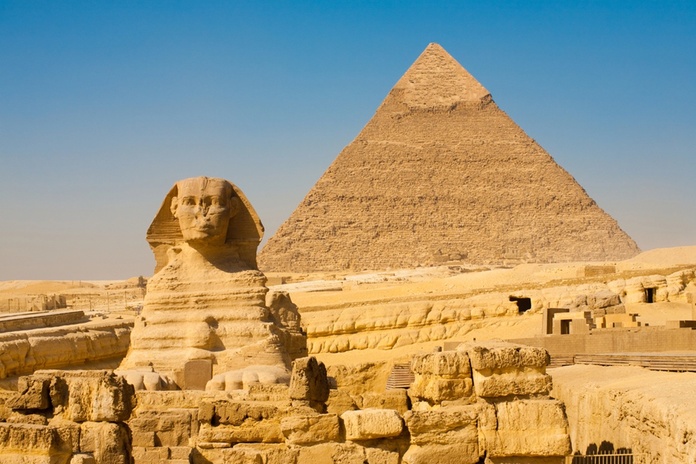
In a Middle East where the war has delivered a brutal halt to tourism, Egypt stands out as an exception. Between January 1 and September 4, 2026, the country welcomed 14.8 million international tourists, representing a 4% increase. French arrivals are rising even more, by 16% to date, and could reach +25% for the year, according to Sherif Fathy, the Egyptian Minister of Tourism and Antiquities.
Read also: Egypt boasts of a successful tourist season
“Egypt is a safe country, at peace, promotes peace, and plays a mediating role in favor of peace, which makes it an exception,” he explained at IFTM 2026.
The outlook remains favorable for the winter. Among French professionals, TUI France confirms the trend, with +25% more clients in July and +10% in August 2026 compared with summer 2025. The tour operator is increasing its offering, notably with the Club Lookéa Makadi Oasis, a new five-star club, and the Club Lookéa Nile Monarch cruise, aboard a luxury ship with five excursions included.
Read also: TUI France launches Premium Collection Club Marmara and Club Lookéa
Egypt is also banking on 2027, with new museums and especially the solar eclipse of August 2, visible for six minutes in Luxor and in several southern regions. This should reinforce the destination’s singular status in a region where the tourism rebound remains highly uneven.
Professionals see the first signs of a rebound
After a complete halt of activity in March, Dubai “is starting to recover very slowly” and some inquiries are emerging for Oman, but they remain “very marginal.” At Aya Voyages, the recovery has been noticeable since the end of August.
The same observation is made by Magic Travels. Samer Jabri notes a recent rebound in Gulf destinations. In Dubai, stopovers are resuming and lengthening. “Previously travelers stayed one or two nights. Now you can see they stay a little longer. I also notice it in budget volumes, which are becoming larger.”
In Oman, Magic Travels has opted to reopen its Magic Camp at Wahiba, an “eco-chic” product blending desert, authenticity, and comfort. “We are really very happy to have reopened, because we have seen genuine interest in the camp,” emphasizes Samer Jabri. Early bookings come chiefly from the United Kingdom, the United States, and Asia.
Jordan is also beginning to show up again in order books. At TUI France, Victoria Proffit, head of global communications at TUI France, estimates that “Jordan is picking up again after a period of complete standstill.” The tour operator currently offers five to six itineraries in the destination.
“It is a culturally very rich destination. Everyone wants to see Petra at least once in their life,” she adds.
Israel bets on professionals to rebuild trust
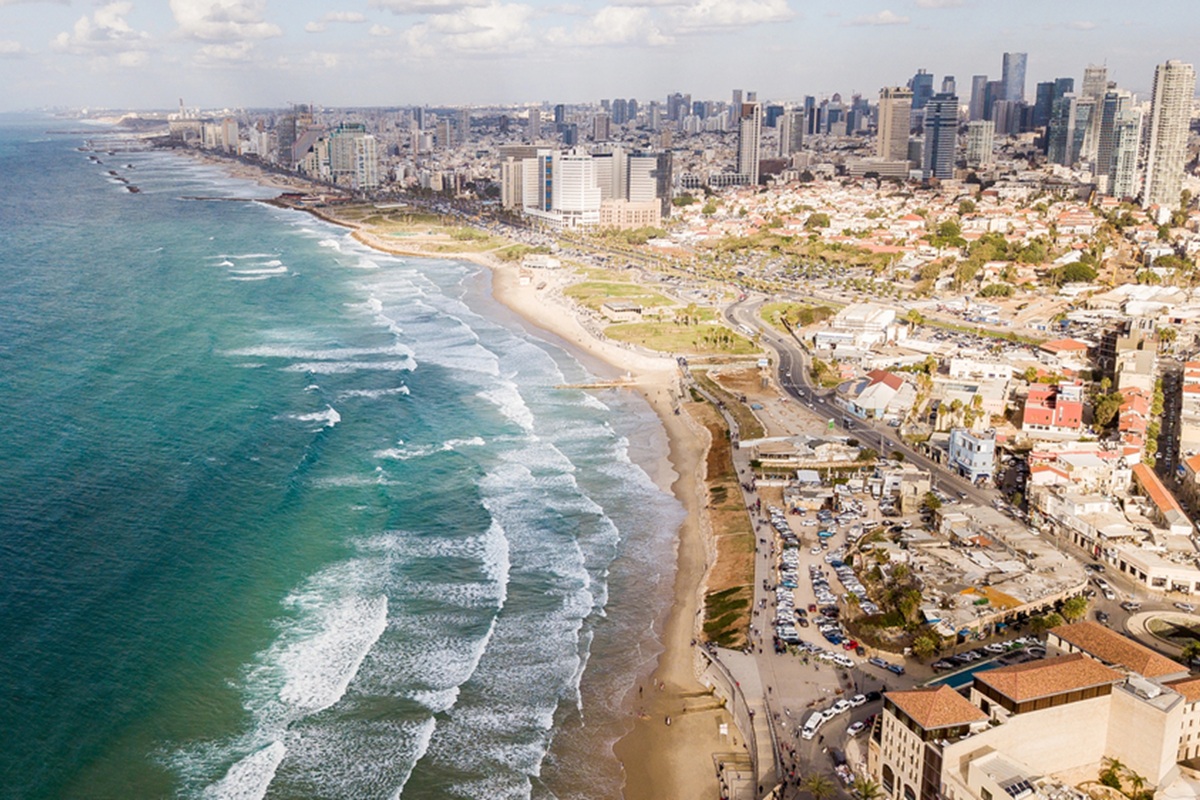
Israel is also trying to revive French visitors’ numbers.
Between January and August 2026, 81,500 French tourists travelled to the country. France remains the leading European market and the second international market after the United States.
The French market also resists better than overall inbound tourism, with a decline of 55% versus 2023, against 74.1% for all markets.
“France remains one of the most loyal markets to the Israeli destination”, notes Hassan Madah, director of international marketing for the Israeli Ministry of Tourism. He highlights “a redeployed air offering” as well as “the enduring appeal of its heritage, spirituality and gastronomy.”
In July and August, 41,500 French people travelled to Israel, up 0.7% year on year. Connectivity must still be strengthened this winter. “For winter 2026-2027, Tel Aviv will be served by more than 70 direct flights per week from four French cities: Paris, Marseille, Lyon and Nice,” specifies Hassan Madah.
The country is also working on its hotel offering, with 19 new establishments and several expansion projects planned in 2026. “The ambition is to upscale and diversify the offering, in both the big cities and resort destinations,” he explains.
To reassure professionals, the ministry plans educationals and press trips.
“We want tourism professionals and journalists to see for themselves that the situation is good,” asserts Hassan Madah.
The clearly stated objective is: “to regain the confidence of professionals and to show them that the situation is evolving.” A video campaign launched in the United States is also set to be rolled out soon in France and other European countries.
A recovery still highly dependent on geopolitics
For the professionals interviewed, returning to pre-crisis levels remains difficult to date.
Samer Jabri says he is “reasonably optimistic”, but believes that the return to previous volumes will depend directly on the evolution of the political situation.
The professional also notes that individual travelers seem to be returning before groups, the latter needing more visibility.
European markets do not react in the same way. Italy and the United Kingdom show more momentum than France.
At Aya Voyages, diversification helps absorb part of the shock. “We offer more than 50 destinations. We are currently focusing a lot on the United States, Asia and Europe,” explains Adeline Kurban Fiani. According to her, some travelers who would have turned to the Middle East have shifted to Asia and to South America.
Tourist offices, for their part, are multiplying actions to maintain confidence. In Jordan, the Jordan Tourism Board is promoting itineraries of seven to ten nights, combining Amman, Petra, Aqaba, the north of the country and natural spaces, while expanding operations with tour operators, agencies and receptive partners.
The early signs of recovery are indeed present. But they remain fragile and highly uneven across destinations. The regional war in the Middle East is not over, and tensions continue to weigh on travelers’ perceptions.
Regional tourism is starting to breathe again, but trust still needs to be rebuilt.