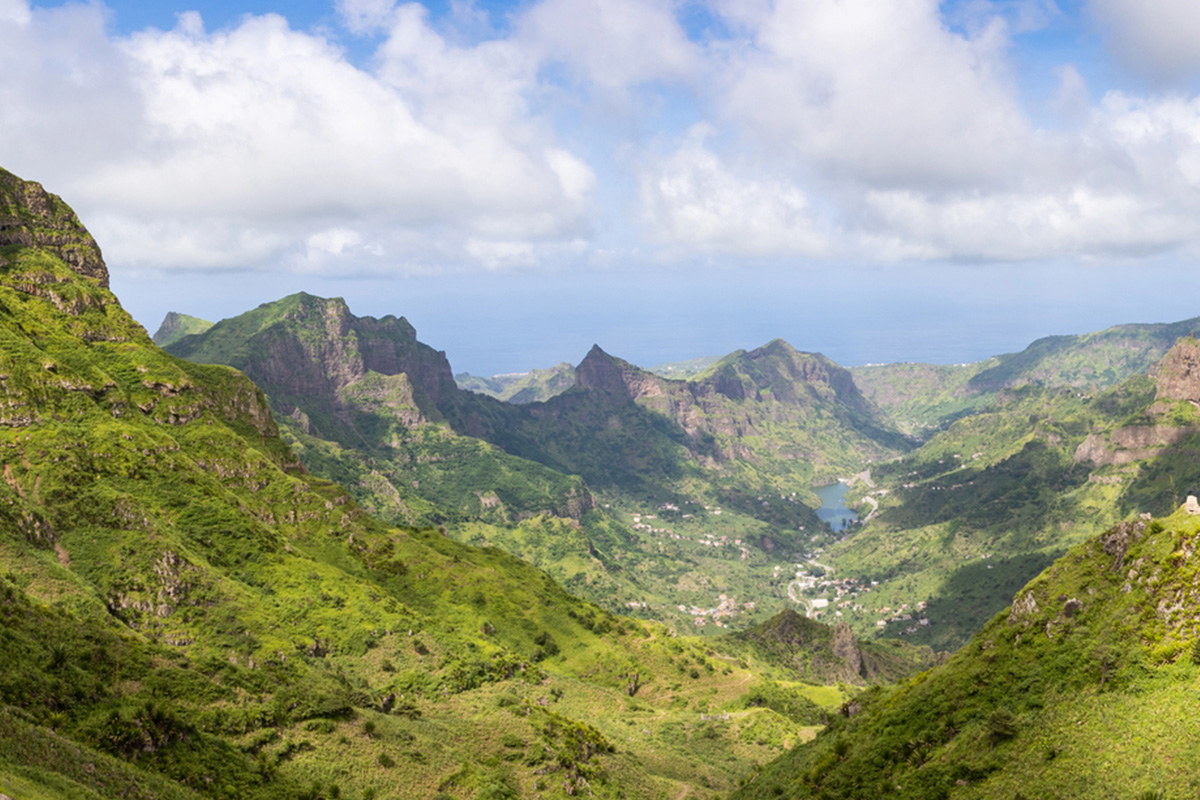


White-sand beaches, rugged mountains, colorful villages, Creole culture… About six hours by air from France, Cape Verde seeks to be known for much more than sun-soaked getaways.
At the crossroads of Africa, Brazil and Portugal, the archipelago of ten islands, nine of which are inhabited, provides professionals with the means to design trips for all traveler profiles, all year round.
Since 2025, the Cape Verde Tourism Institute (ITCV) has rolled out a strategy focused on the French, Belgian and Luxembourg markets, with a clear objective: move away from the mass market and promote discovery tourism across all islands.
« Our mandate is truly to focus on niche, immersive tourism: meet Cape Verdeans and experience authentic moments », explains Emmanuelle Winter, Trade PR Director of Travel-Insight, the agency that represents the destination in France, met at the IFTM 2026.
The French Market Shows Clear Growth
The strategy is starting to pay off. In 2025, Cape Verde welcomed 120,808 French visitors, compared with 103,021 in 2024, a 17.3% increase.
France is now the archipelago’s third outbound market.
To sustain this momentum, the destination engages with journalists and tourism professionals. The objective is to develop partnerships with tour operators and travel agencies, and to train distributors to better sell the archipelago.
Relationships with influencers and content creators, as well as the Institute’s social media activity, complete the setup.
Ten Islands, As Many Ways to Market the Archipelago
For sun-seeking travelers, Sal and Boa Vista remain the essential entry points, with the long beaches of Santa Maria and Santa Monica.
Hiking enthusiasts will head to Santo Antão, reachable by ferry: spectacular relief, green valleys, and trails of all levels linking villages along the hillside. A stop in São Vicente is a must, especially Mindelo, the country’s cultural capital, renowned for its architecture and its music scene.
Santiago, the largest island, offers an immersion into Cape Verdean history and daily life: Praia, the capital, Cidade Velha, the first colonial city founded in the 15th century and UNESCO-listed, Serra Malagueta Natural Park, and Tarrafal beaches to the north.
On Fogo, Pico do Fogo rises to 2,829 meters and its caldera hosts a unique world wine production on volcanic soil.
This diversity lends itself particularly well to combined itineraries, a axis that ITCV wants to develop with tour operators.
A Destination Lived Through Its People
Beyond the landscapes, Cape Verde is discovered through its traditions: grogue production, sugarcane eau-de-vie from Santo Antão, markets and fishing ports, and morna, popularized by Cesária Évora and inscribed on UNESCO’s intangible cultural heritage list in 2019.
A way of life summarized by a Creole word, la morabeza : the hospitality and warmth of Cape Verdean hospitality. A trip to Cape Verde requires slowing down and following the pace of the inhabitants : « No Stress Cabo Verde ».
A way of life summarized by a Creole word, la morabeza : the hospitality and warmth of Cape Verdean hospitality. A trip to Cape Verde requires slowing down and following the pace of the inhabitants : « No Stress Cabo Verde ».
Concrete Actions with the Public and Professionals
This strategy is already translating into action on the ground.
In 2026, Cape Verde was the featured destination at the Clermont-Ferrand Travel and Nature Escape Show, with influencer conferences, exhibitions, dances and tastings of Cape Verdean cuisine.
Industry professionals and media can submit any information or collaboration requests to [email protected] .
In 2026, Cape Verde was the featured destination at the Clermont-Ferrand Travel and Nature Escape Show, with influencer conferences, exhibitions, dances and tastings of Cape Verdean cuisine.
Industry professionals and media can submit any information or collaboration requests to [email protected] .