Economic Situation


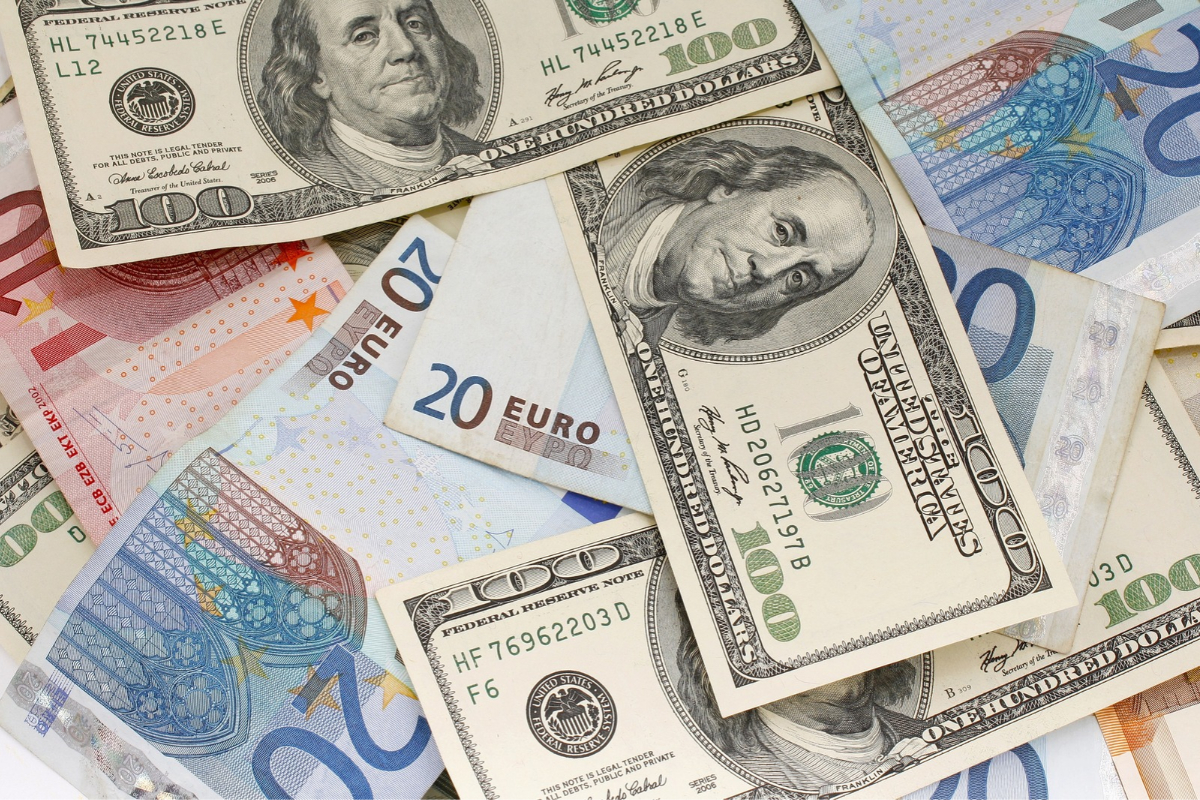
The dollar ended the week at its strongest level of the year against the euro. On Tuesday, just before the U.S. inflation figure, one euro was still worth 1.1214 dollars. By Friday, it was worth only 1.1052, a 1.44% drop in three days.
The euro has fallen for four weeks and sits 7.7% below its late January peak, at 1.1974. For a tour operator, services priced in dollars therefore cost considerably more than at the start of the year.
Everything started with American prices. They rose by 0.4% in October compared with September, a bit more than economists had anticipated. Several leaders of the Fed, the U.S. central bank, then called for additional rate hikes.
Investors are pricing in an initial increase on December 8 and 9, while U.S. rates are currently between 3.75% and 4.00%. They expect another early in 2027.
But a better-yielding currency attracts capital. A two-year investment yields 4.88% in the United States, versus 4.51% seven days earlier, and around 3.11% in Germany. This difference, close to 1.8 percentage points, favors the dollar. The European Central Bank will not close the gap: it should raise its rate on December 17 from 2.50% to 2.75%, but 40 economists out of 70 surveyed by Reuters in October expect that this will be the end of the hikes.
In our view, the euro declines less because of December decisions than because of what the Fed does next. Absent any surprises, the dollar should therefore advance more slowly. Then there is oil: according to Iran, three tankers were struck by mines on Saturday in the Strait of Hormuz. The euro zone buys its energy abroad, and a higher-priced barrel would further weaken its currency. Winter budgets are thus being built with an expensive dollar and fuel that could become expensive again.
Taux de change : le point technique
 The December rate hikes, both in the United States and in Europe, are known: they are already priced in and will no longer move the euro on their own.
We think its decline could continue, but at a slower pace. Two data points will serve as tests: American consumer spending on Tuesday, then on Wednesday the minutes of the latest Fed meeting. Solid figures could push the euro down to 1.0960 dollars. Disappointing figures would push it up toward 1.1140.
It is the Swiss franc that has fallen the most among major currencies. It yields no interest, its rate being 0%, and investors who had sought refuge there in October have exited.
The euro has gained 1.35% against it, at 0.9266 francs: a stay in Switzerland thus costs a little less. The British pound (0.83559 per euro) and the Canadian dollar (1.5758) have hardly moved. The yen has weakened as much as the euro against the dollar, and you still need 176.83 yen for one euro.
This strength of the dollar is echoed in Dubai and Abu Dhabi. The value of the UAE dirham is pegged to the dollar and moves in lockstep with it: when the dollar rises, the dirham rises with it. One euro traded for about 4.07 dirhams on November 12, versus 4.15 at the start of October, i.e., nearly 2% lower.
During the peak season, hotels or excursions priced in dirhams thus cost European buyers more, just as any service paid in dollars.
| WEEKLY SUPPORTS | WEEKLY RESISTANCES | |||
| S2 | S1 | R1 | R2 | |
| EUR/USD | 1.0960 | 1.1000 | 1.1100 | 1.1140 |
| EUR/GBP | 0.8290 | 0.8320 | 0.8390 | 0.8420 |
| EUR/CHF | 0.9150 | 0.9210 | 0.9320 | 0.9380 |
| EUR/CAD | 1.5600 | 1.5680 | 1.5840 | 1.5910 |
| EUR/JPY | 174.50 | 175.80 | 178.00 | 179.20 |
The supports and resistances shown below indicate, respectively, the floor and ceiling levels within which prices are expected to move over the course of the week.
The information presented in this publication is provided for purely informational purposes and does not constitute investment advice, an offer to sell, or a solicitation to buy, and should in no way serve as a basis or be considered as an incentive to engage in any investment.
Mondial Change is a French financial institution, founded in 2015, specializing in the management of international payments and exchange-rate risk.
Mondial Change also supports numerous players in the tourism sector: travel agencies, group organizers, tour operators, and inbound operators…
www.mondialchange.com
Contact: [email protected]
Mondial Change also supports numerous players in the tourism sector: travel agencies, group organizers, tour operators, and inbound operators…
www.mondialchange.com
Contact: [email protected]