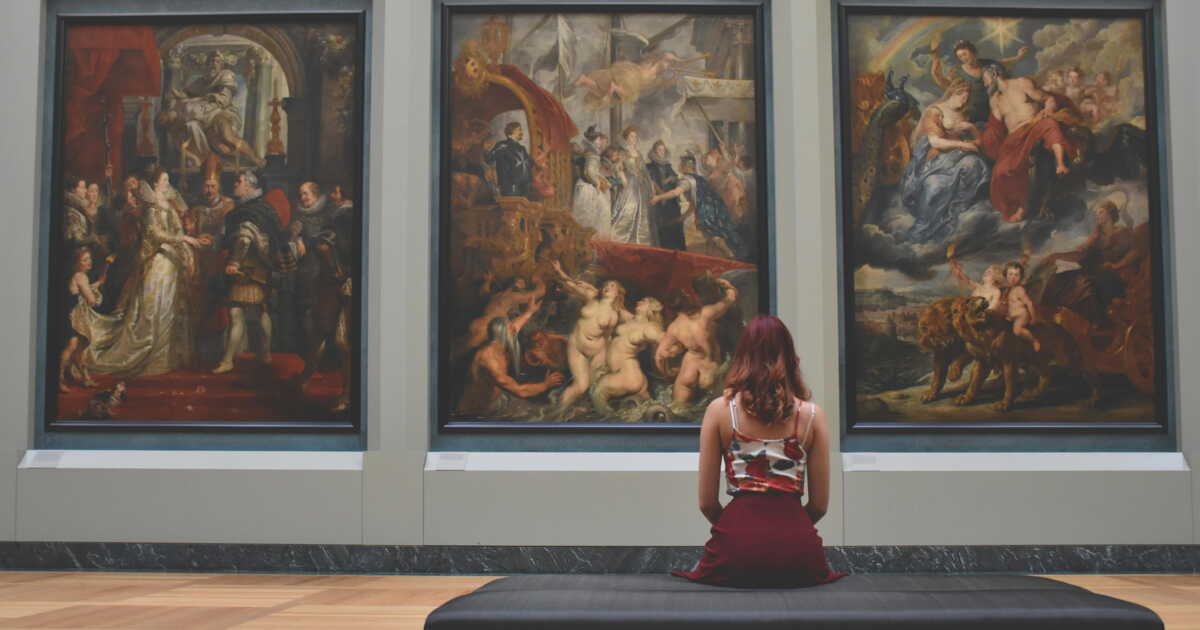
What if visit prescriptions were about to become standard practice? For a year now, Yvelines has been testing a scheme that allows caregivers to offer patients a free museum visit. A model already adopted in Canada for several years.
And for good reason, in 2019 the WHO confirmed in a report that art has positive effects on mental and physical health. While several research studies have corroborated this report, a new British study suggests that art could influence biomarkers of aging.
This study conducted by scientists at University College London (UCL) and published Monday, May 11, 2026 in the journal Innovation in Aging asserts that a weekly artistic or cultural activity could slow the pace of aging, and as much as a weekly physical activity.
“Our study provides the first evidence that engaging in an artistic or cultural activity is linked to a slowing of biological aging”, declares Feifei Bu, an epidemiologist at UCL and senior author of the study, as reported by Science Alert.
A study conducted on 3,500 people
To reach their conclusions, the researchers analyzed health data from more than 3,500 adults in the United Kingdom, while measuring how often they participated in artistic or cultural activities. The scientists included visits to a museum or library, attending an art exhibition, crafts, singing or painting.
They then used epigenetic clocks (a biochemical test that measures the accumulation of methyl groups on DNA), thereby measuring the biological age of these individuals. In general, study participants who practiced at least once a week one of the activities mentioned above showed less pronounced signs of aging than those with a less varied cultural life.
According to the PhenoAge clock, their biological ages were on average one year younger than those who did not engage in artistic activities. The DunedinPACE clock, which measures the pace of aging, indicates a 4% slowdown for weekly practice.
Is art as effective as exercise for health?
Their findings indicate that artistic activities reduce stress, inflammation and improve cardiovascular disease risk, i.e., benefits similar to those of physical activity.
“These results prove that engaging in artistic and cultural practice should be recognized as a health-beneficial behavior, on par with physical exercise,” says Daisy Fancourt, an epidemiologist and lead author of the study, who has been studying the health benefits of art at UCL for nearly ten years.