
Corsair Confirms In-House Capability for Heavy Maintenance on the Airbus A330neo


© Romain Cannizzaro

Dream Yacht


An expertise honed over time

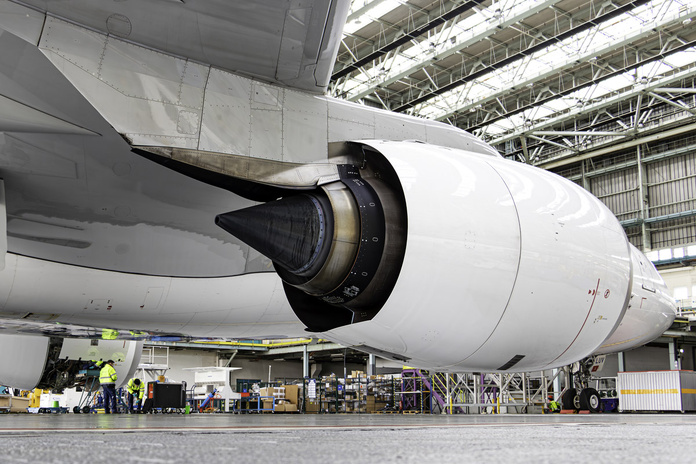
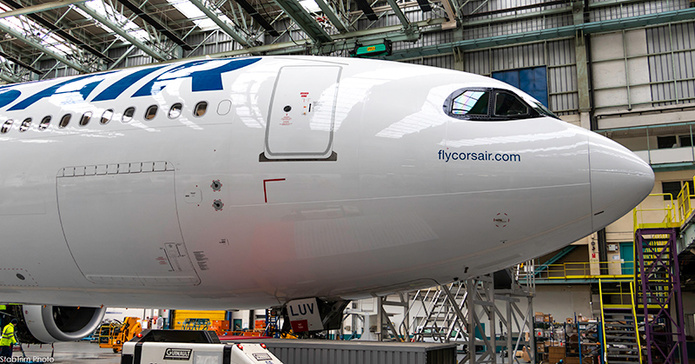
This capability is not improvised. It rests on an in-house technical leadership within the company, whose resources are approved by EASA/DGAC. The airline already managed a substantial portion of its fleet maintenance internally; over the years it has methodically expanded this scope to better control the lifecycle of its aircraft. These internalized C checks have thus been completed in roughly two weeks — a timeframe that is well within reach given the scale of operations performed: structural inspections, system checks, and comprehensive equipment verifications, all in accordance with the most demanding safety and quality standards in the industry.

To this know-how, Corsair adds a very rare digital component: end-to-end control of the entire planning and execution process for visits (tasks, materials, personnel, etc.). From internally developed applications, Corsair technicians register the completion of their tasks on tablets, and all data are synthesized to provide mastery and perfect transparency across the entire value chain, from the planning phases of the project.


Flexibility, cost control and independence
Beyond technical performance, this internalization serves several strategic objectives. It enables Corsair to gain flexibility in planning its operations, to better manage its maintenance costs, and to reduce its reliance on external service providers. This issue is all the more critical as global aircraft maintenance capacities (MRO) are currently in high demand, in a context of strong pressure on the capabilities needed by the sector (hangar availability, qualified personnel, and aircraft parts). Having this autonomy therefore constitutes a real competitive advantage. Corsair had already internalized several key capabilities, including inline cabin maintenance and engine removals/reinstallations.


© Romain Cannizzaro


Reliability at the heart of the customer promise

On long-haul routes, maintenance mastery is not merely a technical issue: it directly governs operational performance. Aircraft availability determines schedule reliability, program robustness, and ultimately the quality of service delivered to passengers. By taking back control of the heavy maintenance of its aircraft, Corsair equips itself to better guarantee, over the long term, the reliability and quality of its offering — a crucial concern for its customers as well as for all its distribution partners, who rely on this regularity and quality on a daily basis.


In-house maintenance as a guarantee of upgrading the offering

The strengthening of maintenance capabilities thus supports the strategy of moving upmarket pursued in recent years. By expanding its cabin and equipment maintenance expertise, Corsair gains greater control over the quality of the product offered to its passengers. Consequently, about 50% of the workload of a Corsair C check is devoted to the cabin alone, an unheard level among specialized MROs. Directly contributing to the upkeep of interior fittings helps ensure the sustained level of quality expected by customers.


A modern fleet serving performance

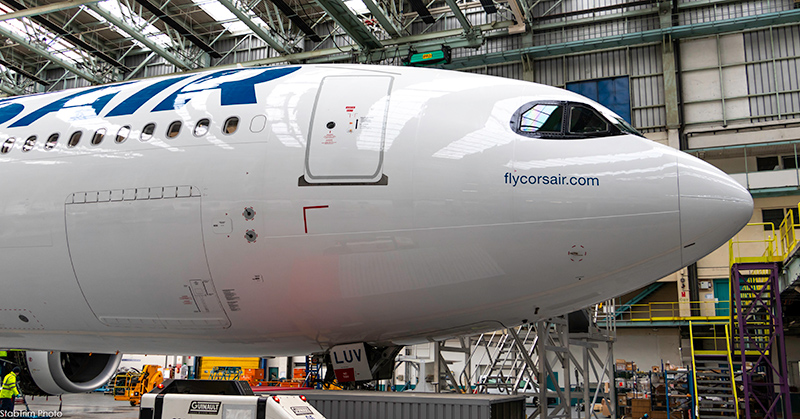
Finally, this phase fully aligns with Corsair’s transformation embarked on in 2021, structured around a fleet now composed exclusively of Airbus A330neo aircraft. This homogeneity — one of the youngest fleets in Europe — gives the company enhanced operational reliability and cohesive service across its network. As state-of-the-art aircraft, the A330neos also offer significantly improved environmental performance: a 15% reduction in fuel consumption, 25% lower CO₂ emissions per seat, and a 60% smaller noise footprint compared with the previous generation. In an industry facing growing pressures for competitiveness and decarbonization, this efficiency is a durable driver of cost control.

With the capacity to perform C-checks in-house and a greater grasp of the value chain, Corsair confirms a transformation that blends operational performance, technical mastery, and service quality — serving a durable long-haul model, rewarded by solid financial results.
© Romain Cannizzaro


Amara Nambinga

Amara Nambinga

I write about tourism, culture, and emerging destinations with a Namibian perspective. Through my articles, I try to highlight the places, people, and travel stories that show how Africa and the wider world are changing.