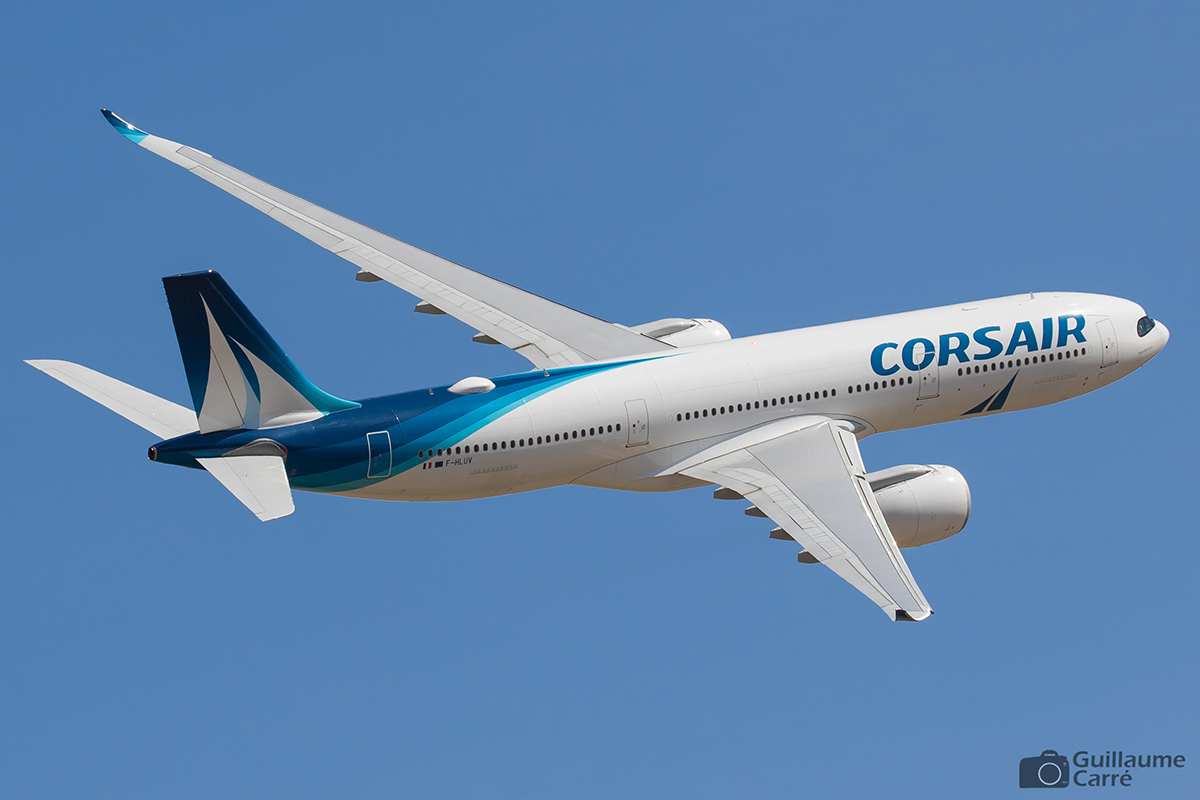
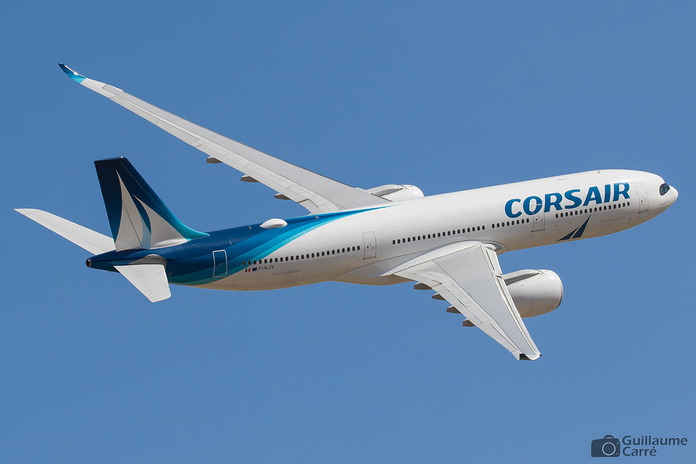


A 100% A330neo Fleet
Since late 2024, Corsair operates a fleet entirely composed of Airbus A330neos. This renewal enables the airline to deploy aircraft with improved energy performance. According to the manufacturer’s data, the A330neo emits 25% less CO₂ per seat and reduces its noise footprint by 60% compared to the previous generation.
This evolution is reflected in the airline’s consumption performance. In 2025, Corsair recorded 69.1 g of CO₂ per passenger-kilometre, compared with 86.9 g in 2019, a reduction of nearly 20% over six years.
Every Flight Counts
Beyond the fleet, Corsair acts directly on how its aircraft are operated. Its Fuel Efficiency program measures the impact of 26 initiatives, from flight preparation to in-flight and ground operations.
Over the twelve months from September 2025 to August 2026, these actions enabled fuel savings of 2,903 tonnes, i.e. more than 9,000 tonnes of CO₂ avoided.
A significant portion of these savings comes from crew practices. Eco-piloting actions account for about 40% of the gains. Continuous descent, when feasible, for example saved 329 tonnes of fuel over the period. Trajectory optimization, particularly when air traffic control allows aircraft to take more direct routes, also represents a major lever.
Technology complements these practices. With FlytOptim, developed by Thales, pilots benefit from optimized flight profiles on certain routes toward Africa, the Caribbean, and the Indian Ocean. The system enables savings of between 110 and 130 tonnes of fuel per year.
Reducing the Ground Footprint
The environmental approach also covers cabin operations. Waste sorting on board, launched in 2024 on flights to Martinique, has gradually been extended to other destinations.
Corsair is also working on the second life of its equipment: old uniforms are valorised, staff clothing is collected for recycling, and onboard linen is entrusted to an ESAT. Replacing paper newspapers with a digital catalog helps reduce the amount of paper used and the weight carried onboard.
Corsair is also working on the second life of its equipment: old uniforms are valorised, staff clothing is collected for recycling, and onboard linen is entrusted to an ESAT. Replacing paper newspapers with a digital catalog helps reduce the amount of paper used and the weight carried onboard.
An Evaluated Approach
These actions are part of a broader approach that is also subject to external evaluations. In 2026, Corsair scored 56/100 with EcoVadis, eight points higher than the previous year, earning the “Committed” badge. The company also earned in 2025 the Positive Company – Silver label.
The reduction of the environmental footprint thus rests on a multitude of levers: a newer fleet, better-controlled fuel consumption, optimized trajectories, eco-piloting practices, and careful attention to waste and resources. All these actions, added together flight after flight, allow Corsair to continue reducing its environmental impact.
The reduction of the environmental footprint thus rests on a multitude of levers: a newer fleet, better-controlled fuel consumption, optimized trajectories, eco-piloting practices, and careful attention to waste and resources. All these actions, added together flight after flight, allow Corsair to continue reducing its environmental impact.


HELPDESK AGENCES from Monday to Friday, 9:00 AM – 6:00 PM
0820 825 318 (0.15 €/min)
[email protected]
CORSAIR.BIZ Site dedicated to travel professionals
(agent rates, commercial procedures, product offers, etc.)
www.corsair.biz
GROUP SERVICE from Monday to Friday, 9:00 AM – 6:00 PM
01 81 94 15 00
[email protected]
CORSAIRGROUPE Your new online group quotation tool
Registration & information, write to [email protected]
Website: www.flycorsair.com
 |
 |
 |