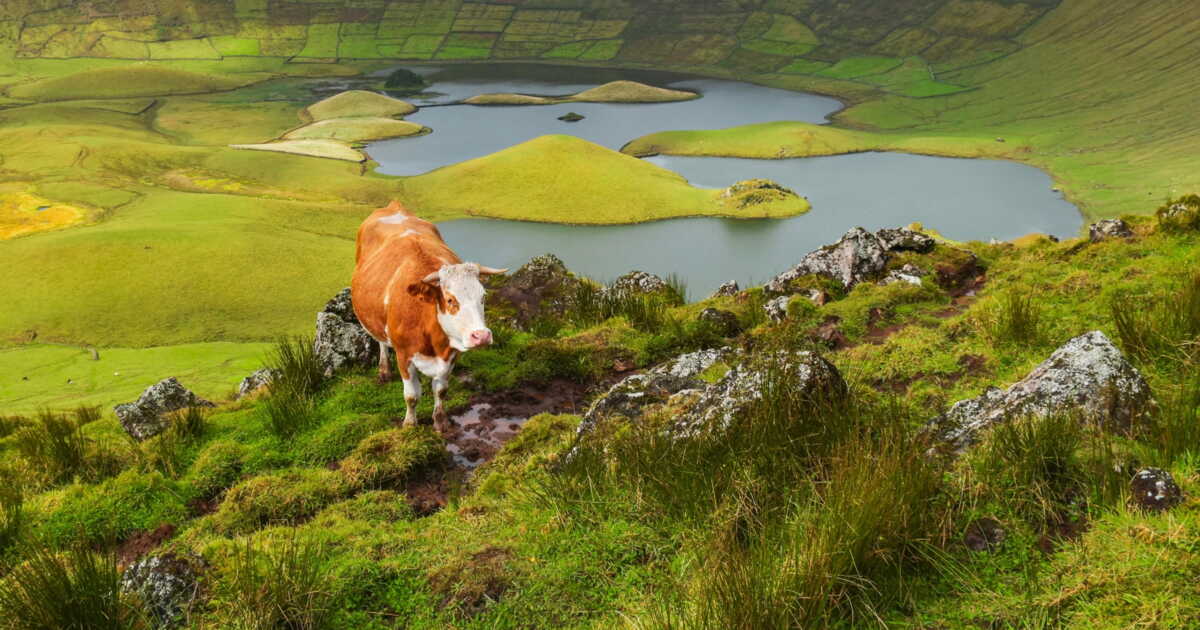
Isolated in the far northwest, here is the smallest and least populated island: 17 square kilometers for 400 inhabitants, gathered in a single village, Vila do Corvo, with basalt houses. In this micro-society, where farming is king, doors are not locked and some decisions are still taken communally. The only road crosses moorland and bogs to lead straight to the heart of this confetti-like islet, where Caldeirão sits, a sumptuous crater 2.3 kilometers in diameter, scattered with sparkling lakes.
What to see, what to do?
Watching migratory birds
Fiery warblers, red-eyed vireos, yellow-billed cuckoos, olive-backed grebes, blue-winged teals or white-fronted swallows… In autumn, especially in October, flocks of migratory birds from the Americas, blown off course by storms, wash up on Corvo, turning it into the Eldorado of birdwatchers. A word to enthusiasts.
Sun and beach on a tiny shore
It’s just a small stretch of coast, but it delights fans of swimming or sunbathing: far to the south, near the village, lies Praia da Areia, the island’s lone sandy beach. In summer, the water is astonishingly clear — ideal for a snorkeling outing.
With whom to travel?
The travel agency Les Maisons du Voyage, which helped us put this dossier together, puts its intimate knowledge of the Azores at your service, to trace the steps of our reporters in a 12-day journey (from 2,650 euros, flights, accommodations and a car included). From São Miguel to Pico, via São Jorge and Faial, the islands come one after another without ever resembling each other: caldeiras lush with vegetation, steep coasts beaten by the Atlantic, fishing villages with intact Portuguese influences… This archipelago remains a destination apart, wild, welcoming and deeply vibrant. maisonsduvoyage.com and 0156813830.
➤ Article published in GEO magazine no. 572, “The Azores, nine islands, nine worlds to explore,” October 2026.
➤ If you love GEO, then to miss nothing, discover our subscription options to receive GEO every month at your home with ease.