



Since leaving Thomas Cook a year earlier, my professional life resembles more a path than a career plan.
I resumed my studies at CNAM, pursuing a master’s in Quality, Sustainable Development and Corporate Social Responsibility. I mingle with unemployment. And, thanks to my friend Auguste Loko, who studies in the same cohort as me, I make several trips to Congo-Brazzaville to accompany a deputy on the issue of waste.
That day, an email arrives from my quality professor. He speaks of an end-of-study internship to participate in the preparation of COP21. The description is short. I search for information on the Internet and one thought immediately arises: I must be part of it.
I return to France. I prepare my interview by talking about circular economy, government exemplarity, and responsibility. On January 5, 2015, I begin my internship at the Ministry of Ecology, alongside Yasmine Bekri, who pursues the same master as I do. My mission includes notably deploying the action plan she defined around ISO 20121.
I had studied this standard at CNAM. I was about to discover what it could produce in real life.
When a Standard Gets People Moving
 ISO 20121 was still relatively new at the time. Published in 2012, it offers event stakeholders a management system that accounts for the economic, social and environmental impacts of their activities.
It will be revised in 2024, with a stronger focus on inclusivity and the legacy of events.
At COP21, what struck me, however, wasn’t the framework. It was the people.
I led the waste and circular economy group. Around the table sat players who, usually, can be rivals. And every morning, almost, I wanted to bring more of them into the dance. Among them, small organizations capable of offering solutions different from those of traditional players, notably on bio-waste such as Moulinot Compost.
I discovered then something that hasn’t left me: a standard can be a powerful transformation tool when it enables people to move toward a common objective.
COP21 also transformed me. After leaving Thomas Cook and a period of doubt, I regain part of my confidence. I especially discover my ability to unite very different actors, with rhythms sometimes far apart, and to bring forth solutions between them.
I want to pursue entrepreneurship. Yet economic reality quickly reminds me that a conviction alone is not enough to fill a order book. I take up a salaried role as CSR lead in a health purchasing group. An excellent professional experience, but far less fulfilling personally. Less than two years later, I leave that position and gradually return to Agapè.
At that time, a friend tells me a sentence I won’t forget: “Let the acorn grow and stop pulling it out of the ground to see if it has roots.” I have finally decided to let Agapè grow.
Certification Is Never the Beginning of the Story
At first, the company rarely comes to me saying it wants to transform its relationship with the world. The motivation is often far more pragmatic: a client demand, a bid, market evolution, or a competitor already certified. That doesn’t bother me.
I simply start elsewhere. I listen to the intention. I question the will. I ask: why do you want to do this?
Then we enter the certification process. The standard provides the skeleton. We work on impacts, stakeholders, objectives, action plan, indicators, responsibilities, procurement.
At first, my clients often find this heavy, even when I try to lighten it as much as possible. And then comes the first management review.
Suddenly, the documents stop being documents. Connections appear. The teams understand why they did all this. They look back and discover the path traveled.
A second moment arrives a few semianes later: the closure of the first certification audit.
I then see among leaders, who are otherwise seasoned, an emotion we all know. The CAP, the baccalaureate, or the driving license moment. The same tension before the result. The same relief when the third party confirms that the system stands.
But getting the license has never meant knowing how to drive forever. The work begins after.
Also Accept Not Succeeding
Then sometimes a dedicated reference appears. Some organizations also choose to delegate this function to a CSR transition manager, a role I sometimes occupy.
Practices evolve. Responsible purchasing gradually becomes routine, sometimes with difficulty. Actions around events change. Action plans are tracked, reshaped, adapted.
And above all, organizations learn something that we sometimes have trouble accepting: progress does not mean hitting every objective.
At each management review, we question them again. Some objectives must be reinforced. Others abandoned or adapted to context. My clients sometimes worry: “But what will the auditor think if we lower our objective?”
I then remind them that the management system does not ask them to tell a perfect story. It asks them to show how they steer, evaluate, correct, prove, and improve their approach.
However, life itself is sometimes a much harsher auditor. Burnout, sick leave, accidents, heatwaves, fires, droughts and extreme climate events do not read our action plans. They evaluate, in their own way, the collective outcome of our decisions.
I wrote last month in these columns: “Life does not negotiate. It responds.” I think so even more today.
Eleven Years Later, the Circle Widens
Another Law? And Yet…
I know the necessity of law. I am aware of abuses, notably greenwashing, that led lawmakers to intervene. My reaction thus isn’t aimed at the rule itself. It stems from something deeper.
For a long time I have read Laozi’s Tao Te King, a text that accompanies me far beyond my profession. There I find an ancient question about the accumulation of rules and what a society produces when it tries to regulate everything.
That is why I refuse to give up a question: by organizing our society around distrust, aren’t we risking disempowering those we want to make responsible?
I do not want a world where we act correctly only because a text compels us, where every word must be spoken first with the thought of how we will defend ourselves later.
I prefer a world in which we spontaneously agree to answer for what we do. And that what we do always commits us to something larger than ourselves. For me, it comes down to three words: respect for the living.
Trust Is Not Naivety
Trust is not naivety. It does not prevent measurement or proof. It does not excuse outside observation. On the contrary: a responsible organization should want to know its impacts, share its data, listen to its stakeholders, accept contradiction, and confront its approach with the view of a third party.
The standard does not replace conscience. It gives it a method.
Certification does not create responsibility. It allows it to be tested.
And auditors, consultants, employees, suppliers, and customers can continue to be the bees that circulate and spread good practices.
If I could today encounter the woman seated under her fan in Pointe-Noire in October 2014, a few seconds before she opens the email that will change part of her life, I think I would tell her: “Go all out. Have trust. Stay aligned with your deepest convictions. Sometimes go fast. Often slow down. Do with less, and better, always. Less effort, more conviction. And be patient.”
Eleven years later, I could probably give exactly the same advice to the organizations I accompany.
We will continue to need standards, certifications, auditors, data, and evidence. But I would like all of them to serve a greater objective than themselves: to help us become trustworthy again.
And you, how many rules do you need to be responsible? I would be glad to discuss in the comments. And if your organization is considering an ISO 20121 approach or the new ISO/UNDP 53001, let’s talk.
And what if trust were our new world?
About Cathy Bou
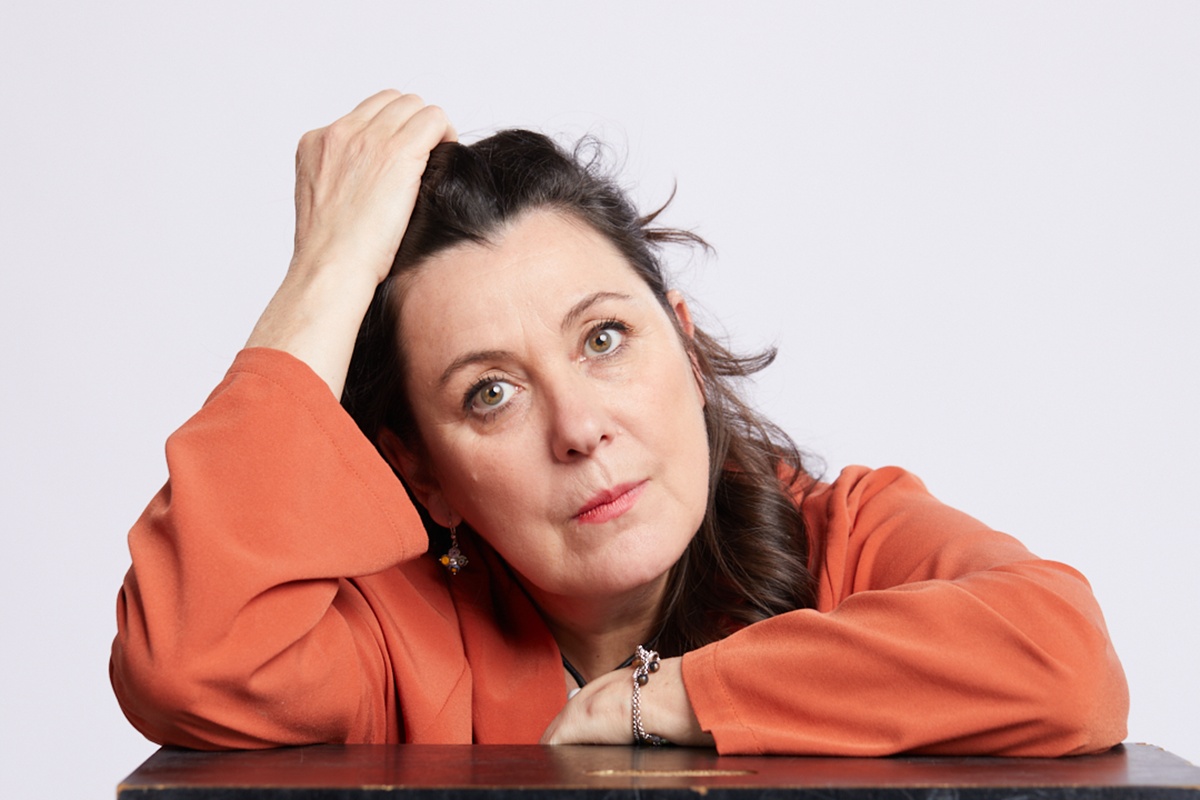
She joined Thomas Cook as an intern at a travel agency in Arcachon, where she built, over nearly twenty-five years, a rich and evolving career.
From travel agent to head of customer relations in the Paris region, she discovers the trade in all its dimensions: distribution, customer relations, handling sensitive situations, management, change management and the early challenges of sustainable development.
Driven by a thirst to learn and to transmit, she chose in 2015 to reinvent herself and earned a Master in Management of Corporate Social Responsibility (CSR) at the Conservatoire national des arts et métiers (CNAM). This formation marked a decisive turning point: to put her tourism expertise at the service of sustainable transformation.
She then founded Agapè, a consultancy specializing in responsible strategy. Since then, she has supported companies, travel agencies, tour operators, event organizers and health sector actors in building models balancing economic performance, environmental responsibility and social impact.
Her career has led her to speak at major international events such as the COP21, the G7 in Biarritz, the BIG fair of Bpifrance, and the IUCN World Conservation Congress, as well as with public institutions, large companies and leading organizations, including the Curie Institute.
Nothing in her background destined her for this trajectory. It is precisely this practitioner’s view, forged by field experience as much as by strategic reflection, that now informs her analyses.
Through her columns in TourMaG, she defends a conviction: the tourism of tomorrow will be built by reconciling the health of businesses, the health of people, and the health of living beings.
About Agapè
The firm mainly operates in the worlds of tourism, events and health, with a strong conviction: responsible performance arises from balancing the economic, human, environmental and governance dimensions.
It also rests on the ability of leaders to understand complexity, to make informed decisions, and to act with coherence.
Through its consulting, auditing, training missions and the development of digital solutions, Agapè helps organizations turn their responsible commitments into a real lever of performance, resilience and the preservation of life.
More than a consulting firm, Agapè builds an ecosystem of methods, tools and training designed to accompany decision makers through the transitions that shape tomorrow’s world.