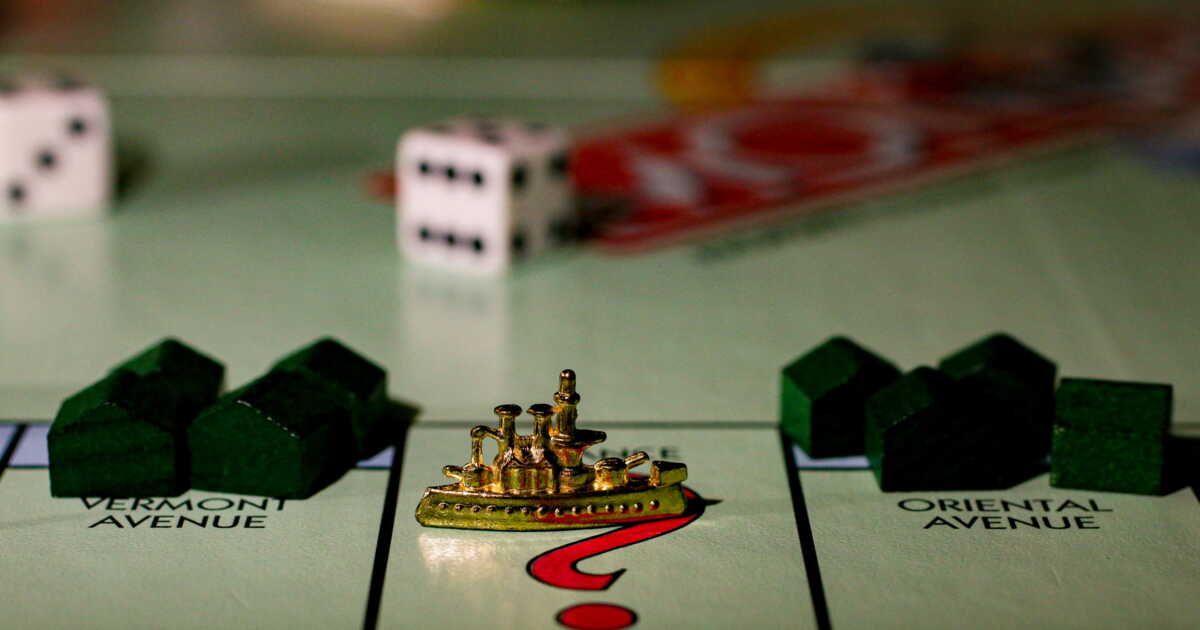
The idea seemed perfect. To celebrate the 250th anniversary of the founding of the United States, in 2026, the American company WS Game Company, which produces board games, conceived a special edition of Monopoly. A 100% made in America edition. In both the game’s street names and the production steps, everything was to ooze America. The idea came to Jonathan Silva, co-owner of WS, after Donald Trump announced new tariffs on Chinese-made imports, according to the Wall Street Journal.
“It was a colossal headache. I hope I never have to go through that again”, now thinks Jonathan Silva, as just under 5,000 copies of Monopoly Americana finally saw the light of day this summer. The design, logistics, and price of this edition of the iconic game proved far more difficult to execute than expected. And it is not even 100% American.
A More Expensive and Lower-Quality Game
WS has been producing luxury or vintage editions of famous games for decades. For 25 years, the entirety of its catalog has been manufactured in China. To succeed in this bet, it thus had to rethink its entire production chain and forge ties with subcontractors based in the United States. This is where the problem lies. WS struggled enormously to find companies capable of producing the Monopoly components at a reasonable price.
Jonathan Silva believed he could produce Monopoly Americana for a price 20% higher than the price at which he produced the Vintage Monopoly in China. The cost, in fact, was 100% higher. And the quality was lower. Whereas Chinese companies offered wooden components, the American factories could only provide plastic for the price offered. Gone were the pretty rounded finishes on the box, or the magnets that kept the pieces from falling when buyers opened the box.
The WS Executives Were Unable to Produce This Piece in the United States
As for the Monopoly Americana dice? They are Chinese. No American company could produce 5,000 sets. While Chinese firms are accustomed to accommodating client requests, American ones, they do not operate that way. “We started by assessing the capacities of the factories and then designed the product”, explains Jonathan Silva about the manufacturing process.
For the box and some pieces, WS turned to the Belgian group Cartamundi, which runs a massive factory in Massachusetts. The partners’ expertise in board games should have made things easier, but that was not the case. The final blow came with the production of the plastic trays in which the cards and pieces are stored. The American subcontractor’s prototypes kept breaking. This delayed the game’s release by several weeks. After 14 months of work, just under 5,000 copies were released. While the Chinese version of Vintage Monopoly costs $45, you have to budget $80 to get Americana.