

Some promotional films are more original than others.
They can even cost less and captivate millions of devoted viewers for years, in front of their screens. Why? What happens there?
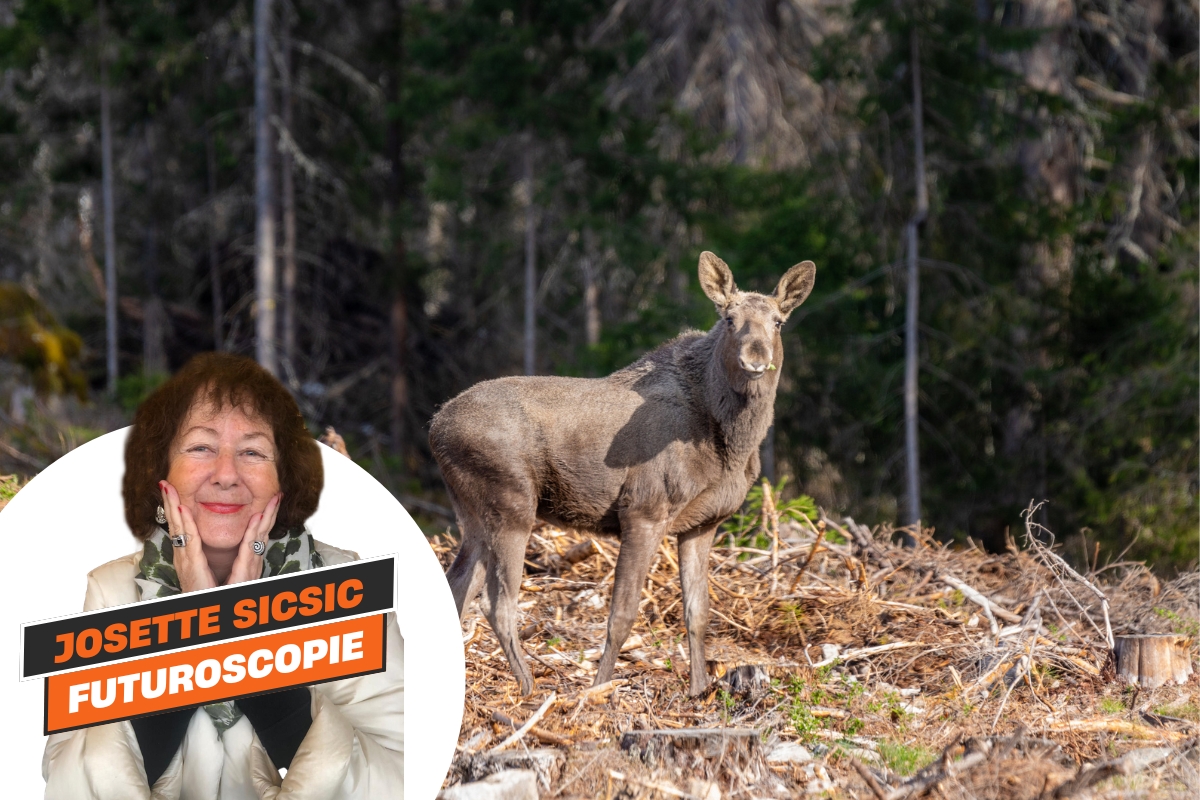
And well, it’s simple: we are in Sweden, in its far north and we witness thanks to about thirty cameras scattered across the forest, the migration of a hundred or so moose who leave the coast to spend their sunny days inland!
A noticeably rougher and more authentic form of reality TV, this initiative demonstrates the power that animal spectacles in their natural habitat can have. The spectacle relaxes, soothes, opens the door to meditation, to renewal, to tranquility…
They can even cost less and captivate millions of devoted viewers for years, in front of their screens. Why? What happens there?
And well, it’s simple: we are in Sweden, in its far north and we witness thanks to about thirty cameras scattered across the forest, the migration of a hundred or so moose who leave the coast to spend their sunny days inland!
A noticeably rougher and more authentic form of reality TV, this initiative demonstrates the power that animal spectacles in their natural habitat can have. The spectacle relaxes, soothes, opens the door to meditation, to renewal, to tranquility…
Slow TV: a new movement in relaxation
 Perfectly aligned with Sweden’s image as a premier wellness destination, televised moose migrations fit into a larger movement known as Slow TV.
Invented by the Norwegians about fifteen years ago, this form of television involves programs where nothing happens. Truly nothing!
Thus, Norwegians had set up cameras filming for seven straight hours a railway line followed by a train! Silence, fixed shots… In fact, they embraced the techniques of underground cinema developed by Anglo-Saxon filmmakers in the 1970s to depict reality.
A master of the genre, for instance Andy Warhol attached a camera to sleeping young women. It lasted four hours, and people cried genius! The film was titled Chelsea Girls! Artistically, the method thus became therapeutic.
svtplay.se, the channel that produces and broadcasts the moose migration program, effectively turns this millennial ritual into a global event.
With a 24/7 broadcast, the program accumulates more than 500 hours of live that some viewers watch during vacations they take to follow the moose transhumance through the forest, including the crossing of a river. The highlight, the river crossing, drew 70 animals in 2025 compared to 87 in 2024.
While many bears as well as foxes, reindeer, otters and legions of birds and birds of prey have joined this show. A spectacle that is quite unpredictable but whose benefits are recognized by scientists.
The benefits of slow, passive viewing
Indeed, a recent study conducted by Sweden’s Agricultural Sciences University (SLU) among people who followed The Great Moose Migration in slow TV format confirms that watching the event reduces stress, calms the mind, and strengthens the sense of connection to nature:
– It also fosters a sense of emotional closeness to nature, despite the digital experience.
– The natural sounds (wind, river, birds) play a key role in this immersion.
– The editing-free format nor narration reinforces the feeling of authenticity and presence.
– Watching also offers an aesthetic dimension: perfectly synchronized bird formations or schools of fish moving in a fluid motion create a visual harmony that naturally slows the inner rhythm.
– Finally, this kind of spectacle can provoke a sense of wonder while the live chat (which is offered) creates an engaged community, fostering exchanges, learning, and sometimes even environmental engagement.
– Last but not least: Slow TV appears as a credible complement to outdoor experiences, capable of producing effects close to real contact with nature, without replacing it.
– It also fosters a sense of emotional closeness to nature, despite the digital experience.
– The natural sounds (wind, river, birds) play a key role in this immersion.
– The editing-free format nor narration reinforces the feeling of authenticity and presence.
– Watching also offers an aesthetic dimension: perfectly synchronized bird formations or schools of fish moving in a fluid motion create a visual harmony that naturally slows the inner rhythm.
– Finally, this kind of spectacle can provoke a sense of wonder while the live chat (which is offered) creates an engaged community, fostering exchanges, learning, and sometimes even environmental engagement.
– Last but not least: Slow TV appears as a credible complement to outdoor experiences, capable of producing effects close to real contact with nature, without replacing it.
For example: bird migrations that do us good
If this experience provides an excellent example of the power of immersive animal spectacles on our minds, it isn’t the only one. Without svtplay’s help and screens, a simple forest stroll as offered by forest therapy worldwide is part of it.
While it must be acknowledged that observing animal and bird migrations is increasingly popular.
Leading the way are bird migrations at certain times of the year, in vast, perfectly organized bands that delight ornithology enthusiasts whose numbers are growing. The LPO claims 80,000 members and 460,000 followers on social media.
In France, the Somme Bay, Der-Chantecoq Lake, Teich Nature Reserve, the Camargue, and especially the famous Cap Gris-Nez offer opportunities for walks and spectacular observations. Integrated into the Caps and Opal Marshes Regional Natural Park, the bird migrations crossing this park include fulmars, seagulls, and terns.
Proposals by associations come in three levels: those offered by the LPO (Ligue pour la Protection des Oiseaux), advanced scientific networks (SEOF and RFO), and small local associations.
Internationally, ornithologists speak of flyways and catalog some of the finest spectacles: the Nebraska crane migration with over 500,000 cranes, the pink flamingos of the African Rift, autumn migrations of raptors at Veracruz (Mexico), millions of raptors (sparrowhawks, buzzards, falcons). The Wadden Sea in Northern Europe, the Danube Delta (Eastern Europe), the Strait of Gibraltar, coastal migrations in Australia and New Zealand…
All are among other prime destinations for these spectacular journeys, to which we should add the grand animal migrations some tour operators offer: wildebeests, zebras, gazelles in the Serengeti, caribou in the Arctic, elephants in southern Africa… and of course whales popularized by Canadians on the Saint Lawrence River or dolphins.
Often overlooked, the migrations of monarch butterflies (Canada, Mexico) are impressive, and of course emperor penguins who collectively traverse long ice routes to breed… delight a few privileged observers.
While it must be acknowledged that observing animal and bird migrations is increasingly popular.
Leading the way are bird migrations at certain times of the year, in vast, perfectly organized bands that delight ornithology enthusiasts whose numbers are growing. The LPO claims 80,000 members and 460,000 followers on social media.
In France, the Somme Bay, Der-Chantecoq Lake, Teich Nature Reserve, the Camargue, and especially the famous Cap Gris-Nez offer opportunities for walks and spectacular observations. Integrated into the Caps and Opal Marshes Regional Natural Park, the bird migrations crossing this park include fulmars, seagulls, and terns.
Proposals by associations come in three levels: those offered by the LPO (Ligue pour la Protection des Oiseaux), advanced scientific networks (SEOF and RFO), and small local associations.
Internationally, ornithologists speak of flyways and catalog some of the finest spectacles: the Nebraska crane migration with over 500,000 cranes, the pink flamingos of the African Rift, autumn migrations of raptors at Veracruz (Mexico), millions of raptors (sparrowhawks, buzzards, falcons). The Wadden Sea in Northern Europe, the Danube Delta (Eastern Europe), the Strait of Gibraltar, coastal migrations in Australia and New Zealand…
All are among other prime destinations for these spectacular journeys, to which we should add the grand animal migrations some tour operators offer: wildebeests, zebras, gazelles in the Serengeti, caribou in the Arctic, elephants in southern Africa… and of course whales popularized by Canadians on the Saint Lawrence River or dolphins.
Often overlooked, the migrations of monarch butterflies (Canada, Mexico) are impressive, and of course emperor penguins who collectively traverse long ice routes to breed… delight a few privileged observers.