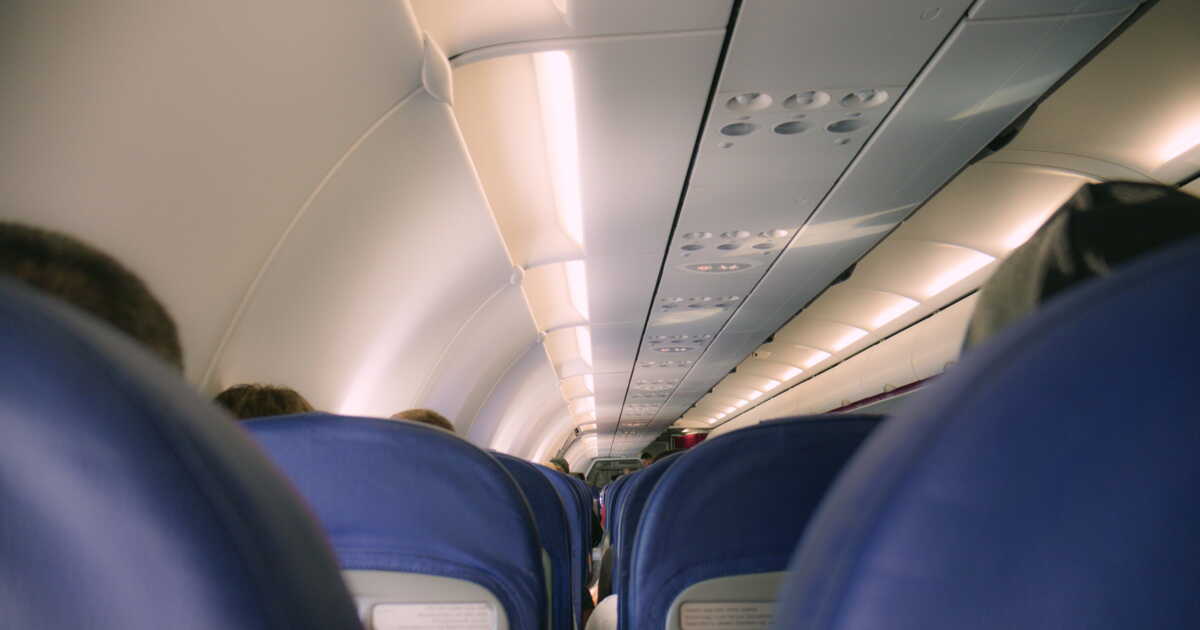
Swimwear, dresses, T-shirts… When you head off on sunny vacations, you typically pack light garments. Yet it’s always wise to bring something to cover up, even for the plane where it often feels quite cool. A temperature, according to Bobby Laurie, a former flight attendant and now co-host of the travel and lifestyle show The Jet Set, that the crew intentionally keeps in check. “The ideal cabin temperature lies between 21 and 24 degrees Celsius,” he first explained to Popular Science.
In reality, a comfortable temperature can feel cooler due to the low humidity level maintained on board to prevent corrosion of the aircraft structure. Moreover, this temperature helps to limit the risk of fainting among passengers. In-flight, the risk of hypoxia—an instance where the body doesn’t receive enough oxygen and can lead to loss of consciousness—is indeed real. According to the expert, discomfort on airplanes is especially common on overnight flights. “People are often a little disoriented when they wake up mid-flight, and very often they stand up and collapse immediately”, he stated.
A phenomenon typically linked to the cabin’s simulated air pressure, kept at an equivalent altitude of roughly 1,800 to 2,400 meters above sea level. Although most passengers do not perceive this difference in atmospheric pressure, their bodies receive about 25% less oxygen. Those who are not accustomed to these conditions may feel dizzy, lightheaded, or even faint.
The cold air on airplanes has numerous health benefits
Additionally, the cool air in an aircraft helps keep passengers more alert, thus enabling quicker responses in cases of sudden turbulence or during an evacuation. It also contributes to slowing the heart rate, regulating breathing, stabilizing blood oxygen levels, and helping to prevent nausea and motion sickness by easing the body’s thermoregulation system and restoring its balance.
“Maintaining a cooler temperature in the airplane cabin also helps regulate the interior humidity” he explained. According to him, the low ambient humidity accelerates the evaporation of sweat and can lead to immediate dehydration. However, the increased ventilation prevents passengers from getting too hot, which slows evaporation. It also neutralizes the water vapor in the air, making the atmosphere feel less suffocating.
Travelers who tend to wrap themselves up in multiple light layers often end up stripping down rather quickly. Especially since in a closed cabin where hundreds of passengers are gathered, the crowding can indeed raise the temperature significantly. “You’re probably bundled up in a blanket, you may be wearing a hoodie to stay warm, and the person next to you is just a few inches away. With everyone’s body heat, you’ll quickly start feeling very warm”, the expert revealed.
Where to sit on the plane to avoid the cold?
For passengers who want to steer clear of the coldest areas of the aircraft, it’s best not to sit near the emergency exits, where icy air can seep in through door seals. Similarly, window seats are often cooler, as they are more exposed to the exterior of the aircraft. “The galleys”, these spaces devoted to cooking and meal preparation on board a plane, “are always colder than the rest of the aircraft,” notes Bobby Laurie.
Not only are they typically located close to a door, but they also house the powerful refrigeration units used to preserve the food. Yet the most effective approach remains to plan for warmly layered clothing, because, “on a domestic flight with 150 to 200 other passengers, it will be hard to please everyone at once”, he concludes.