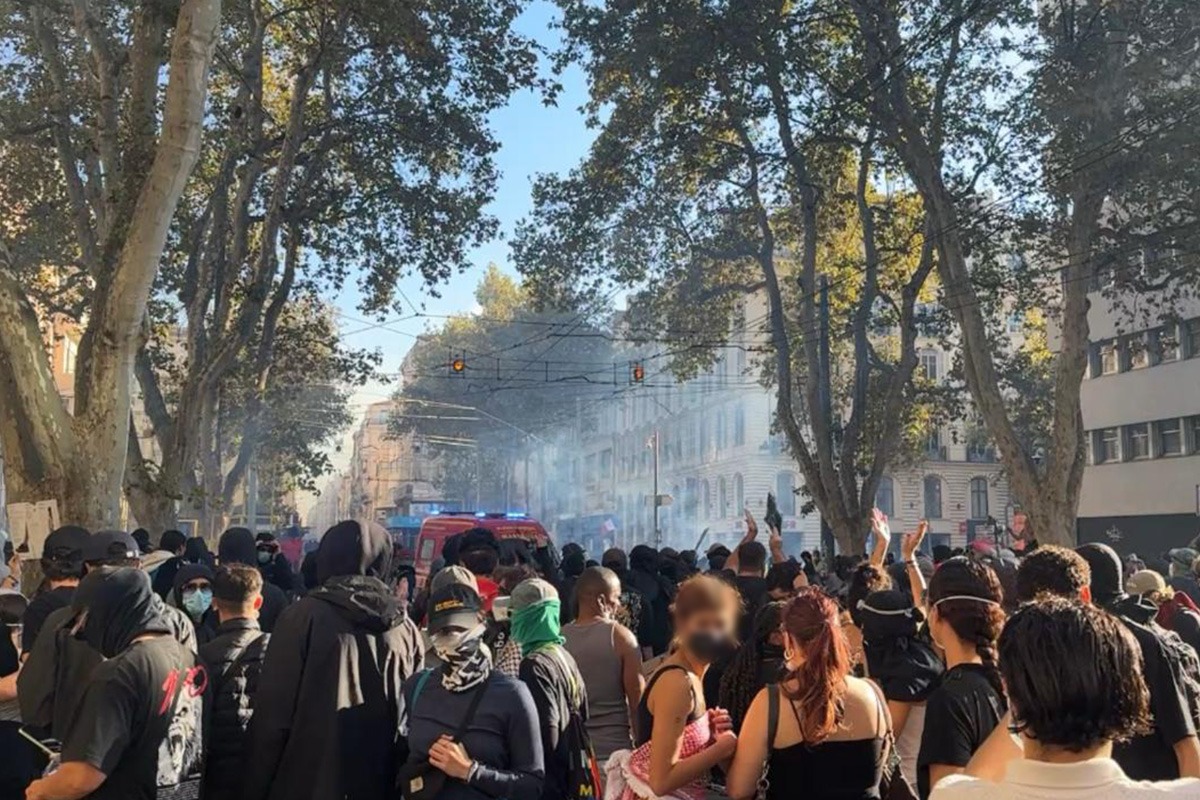

The images of violence and vandalism that occurred in several French cities, notably on October 17, raise questions about the consequences of these events for the country’s tourism appeal.
If industry professionals fear cancellations and a deterioration of France’s image abroad, how can we measure the effects of this crisis and, above all, how can we recover from it?
Édith Fagnoni, whose work focuses notably on the development of territories in crisis and on the role of tourism in transforming territories, analyzes, for TourMaG, the mechanisms and potential levers to restore confidence.
TourMaG – What impact can images of destruction have on tourism?
Édith Fagnoni : There is a definite impact. However, it is important to avoid thinking in binary terms; not everyone is affected in the same way. There is a gradation among the territories, neighborhoods, and activities involved.
The city’s image, that of romantic Paris or the postcard portrayal, can take a harsh hit. Images can sometimes convey the impression that the country is overrun by mobs of looters and that danger is everywhere, even though this is not the case.
It is particularly the scale of the street, the neighborhood, and the square that is under scrutiny. These public spaces are at the heart of the urban tourist experience. For a visitor who has already booked, these images can evoke a sense of disorder and insecurity, to the point of leading them to cancel their trip, because with no end date, postponing simply becomes less likely.
TourMaG – Do the media play a role in amplifying this feeling of insecurity?
Édith Fagnoni : The media can do a lot of harm, especially when they replay the same images repeatedly. Those images are then circulated abroad, and their reach becomes much greater.
We also need to be careful with images reused out of context and with the terms used to describe them. Expressions like “civil war” can be used to describe situations that do not necessarily match that reality.
The risk is that visitors generalize what they see in one place to an entire city or country. We can end up with the impression that certain iconic sites are inaccessible, and abandon the idea of visiting a destination altogether.
TourMaG – Can this deterioration of the image be lasting?
Édith Fagnoni : I hope the consequences won’t be durable, but it will be hard to rebound. This directly touches on the reputation of places.
A crisis inevitably calls for reconstruction. But this rebuilding cannot happen overnight. We must think about how to reinvest in the spaces, how to reinhabit them, and how to give them renewed momentum.
I particularly think of the notion of resilience. How does a territory manage to recover after a crisis? How does it regain attractiveness? These are questions that require collective reflection.
It is essential that tourism stakeholders come together to build a revitalization process.
This concerns not only professionals, but also institutions, local authorities, and city actors, including merchants.
It is also important to recall the role of the tourism offices, which can help inform visitors, reassure them, and highlight visiting possibilities. But no single actor can resolve a crisis of this magnitude alone.
TourMaG – How can destinations counterbalance these negative images?
Édith Fagnoni : First, it’s important to remember that not all places are affected. In Paris, for instance, some sectors were particularly exposed, but others remain accessible. We can also think of Fontainebleau or the Loire Valley castles.
There is thus work to do to highlight the other tourist resources of a territory. At the city level, this can mean guiding visitors to discover other neighborhoods, other streets, and other sites beyond the most frequented ones. On a broader scale, it also means encouraging visitors to explore the regions surrounding the major metropolises.
It is also necessary to think about communication. I recall a campaign in Tunisia after the Arab Spring. It leveraged a counterpoint idea: “People say Tunisia is a field of ruins. You decide.” The campaign then showcased other facets of the country.
This approach can be interesting; it is not about denying the crisis, but about showing what the territory also has to offer.
TourMaG – Beyond communication, what is ultimately the main challenge for French cities?
Édith Fagnoni : The crucial word is trust.
When a territory is associated with images of violence or vandalism, it is not only its image that is affected, but also how people perceive it and envision themselves within that space. A place one wished to discover may become a place one prefers to avoid.
It shifts from attractiveness to repulsion.
And that is where resilience comes into play. A city cannot be reduced to a few images, but those images can dominate all others. We must succeed in recreating a mental image in which visitors can again project themselves there.