Summary
- Marstrand, first stop on a preserved coastline
- Dyrön: the authenticity of a car-free island
- On Åstol they harvest the “black gold of the sea”
- Tjörn and Orust: between nature, culture and the art of living
- Käringön: a fishermen’s village out of time
- On the plate, gastronomy intimately linked to the sea
- A destination that can be savored even off-season
Far from the bustle of major tourist hubs, a getaway to the islands off western Sweden invites slowing down. Hiking becomes a way to traverse the isles, meals tell of the marine terroir, and each crossing offers a new perspective on a coastline where nature takes center stage.
Marstrand, First Stop on a Preserved Coastline
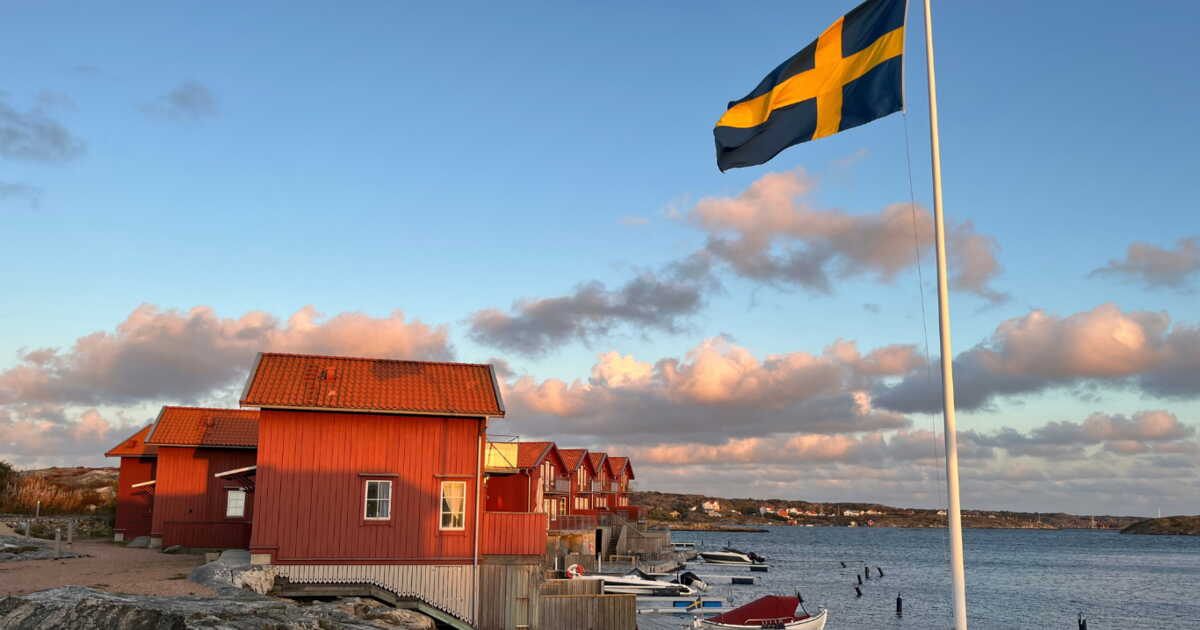
As you move away from Gothenburg, the country’s second-largest city, the landscape shifts. The mainland gradually yields to a chain of islands and islets, coves and wind-sculpted rocks. For the first stop in the archipelago, Marstrand immediately sets the tempo. Accessible by a short boat crossing from the mainland, the island reveals a scene where colorful wooden houses, narrow, tranquil lanes, small quays, a lively marina, and rocks carved by the elements mingle. Founded in the 13th century and Swedish since 1658, Marstrand was once one of Europe’s most important centers for herring fishing, before becoming a popular seaside resort in the 19th century.
Today, this car-free island maintains a slower, more authentic rhythm, ideal for a stay centered on relaxation. At the island’s summit, Carlsten Fortress dominates the landscape and recalls the strategic past of this former maritime stronghold. But it is by walking the coastal paths of the island that one truly experiences the site’s beauty, a 360-degree panorama dotted with islands and outcrops.
Dyrön: the authenticity of a car-free island
Arriving by ferry, the contrast with neighboring islands is striking at first: on Dyrön, the landscape is greener, made up of valleys, meadows, and granite cliffs. Very popular from Midsummer through the end of August, Dyrön is quieter in September. Ferry crossings are then less crowded, especially in the morning outbound and the evening return.
The island is explored on foot; no cars traverse the alleys. Only a few electric shuttles, used to transport materials or assist people with mobility needs, share the routes with pedestrians.
It is Sören, one of the island’s 200 permanent residents, who accompanies us along the island’s prepared trails. Living here with his wife since 2021, he also offers accommodations to visitors. He guides us along the superb 5 km walking circuit that loops around the island and crosses the spectacular Dynes Ravine via wooden footbridges. An impressive experience.
Another exotic adventure: the electric public sauna. Located at the southern tip of the island, just ten meters from the waves, this community-run sauna has already been voted Sweden’s best electric sauna. Offering an incredible view through its glass bays, you then access the sea directly via ladders and smooth rocks for a refreshing dip (if you’re chilly, better skip!).
For everyday errands, a shop acts as a mini-supermarket, a pharmacy and a bakery. Need a plate or a tool for DIY? A space exists where residents can leave items they no longer use and others can take them. A barter system that testifies to Dyrön’s communal spirit.
On Åstol they harvest the “black gold of the sea”
Like on Dyrön, Åstol, smaller still, is an island where the visitor once again savors walking but in a different setting. The small fishing village sits on a particularly spectacular rocky island. The white and colorful houses seem to cling to the slopes, while the harbor recalls the historical importance of fishing in local life.
Åstol was settled in the mid-18th century, during one of the great haring abundance periods. For generations, fishing sustained the island and brought prosperity. At its peak, nearly 500 people resided there, and in the 1960s more than twenty large steel trawlers were based there. The decline of fishing in the 1970s radically changed the island’s face and forced residents to leave.
But new residents have moved in, drawn by the charm of this small territory still closely tied to the sea. While fishing no longer holds the same importance, it continues to shape local life, notably thanks to shrimp, crabs, and lobster, nicknamed the “black gold of the sea.” A stop is a must at Åstol Rökeri (Åstol Smokehouse) restaurant, a renowned fish restaurant with its own fish smoker. We sampled slightly smoked shrimp served with aioli… Fans of classic Swedish pickled herring will not be disappointed.
Here too, there is no motorized traffic: only the sound of footsteps, the wind, and the movement of the sea.
Tjörn and Orust: between nature, culture and the art of living
Wider in scope, Tjörn offers numerous walking routes to enjoy the region’s characteristic scenery: pink and gray rocks, heathlands, coves, and meadows, all set against the sea. The colorful fishing villages and wild beaches contribute to the quintessential Swedish postcard landscape.
Our stop was on the island of Mjörn, within the municipality of Tjörn, a journey back through time. At Sundsby Säteri, a historic estate dating back to the 14th century, one discovers a rolling, wooded park crisscrossed by trails and traversed by a road that retains its medieval layout. Private for over three centuries, the estate was purchased in 2003 by the municipality of Tjörn, which opened it to the public.
There you can learn especially about Margaret Huitfeldt, a wealthy aristocrat and landowner of the 17th century, who became one of the wealthiest women of her era in Bohuslän upon her husband’s death. She lived there with her family and founded a charitable foundation in memory of her youngest son, who died prematurely, with the aim of helping the poor and funding the education of Bohuslän’s young students. She fulfilled this and went further. In 1664, she established a substantial donation in his memory, including the Sundsby estate. It has become famous as one of the most significant land donations in Sweden’s history.
The stroll then continues through the gardens, tended by gardeners in period costumes and using antique tools, followed by a stop at the café, offering dishes, pastries, and homemade breads.
Orust, on the other hand, reveals a more rural ambiance. The third-largest island in Sweden is dotted with small ports, villages, traditional houses, and agricultural landscapes that remind us that Bohuslän life is not solely about the sea: it rests on a balance between land and ocean. A chance to pause for a fika in a harbor-side café. The fika, often translated as coffee, is a cherished moment when one enjoys a cup of coffee but, more broadly, it is also the coffee break accompanied by cakes, tarts, or biscuits—a mid-afternoon treat. A deeply rooted Swedish tradition that lets us discover cinnamon buns (kanelbullar), one of the region’s most iconic sweet treats.
On Tjörn as on Orust, the journey takes a more contemplative dimension. We walk, breathe in the sea air, pause to admire the landscape, and gradually discover a lifestyle built on closeness to nature.
Käringön: a timeless fishing village
The journey continues to Käringön, another small car-free island that has managed to preserve a particularly authentic character. Barely 5 kilometers in circumference, and yet a true maze of lanes, traditional houses, small gardens, rocks and piers that compose a photogenic setting. But behind this postcard lies the story of a community closely tied to the sea. Here, houses perched on the rock are generally not separated by fences. Public paths mingle with private gardens, giving walks an astonishing sense of continuity and freedom.
On the harbor, a few shops, restaurants and a hotel are enough to sustain the island. In peak season, Käringön experiences spectacular crowds: from 67 residents outside the summer period, the population can reach nearly 3,000 in summer. In early September, the bustle subsides and the island settles into a calmer pace. Beyond seasonal crowds, a shared aspiration remains: to preserve the tranquility and character of this unique place. On Käringön, you must take time to look. A boat moored at the quay, a colorful façade, a fishing net forgotten on a jetty, a house facing the open sea… So many details that tell the story of an island shaped by the sea. Fishing, which long governed local life, remains at the heart of its identity today.
In the Plate, a Gastronomy Intimately Tied to the Sea
It’s impossible to explore the Swedish west coast without delving into its gastronomy. Here, the sea feeds directly into the plate. Oysters, shrimp, crabs, mussels, and crayfish are among the emblematic products of this coast renowned for the richness of its waters. To accompany these coastal products, Bohuslän dishes are often paired with dill and horseradish, with dill lending its essential anise-like freshness to cooking broths, while horseradish, frequently grated or incorporated into emulsions, adds a sharp kick that is much appreciated. Additionally, harvesting local seaweeds (such as sea lettuce or sweet kelp) adds a unique umami flavor to local dishes, and even infuses regional spirits or craft beers.
Simplety is often on the menu: fresh products are prepared with care, accompanied by bread, potatoes, or delicate sauces often based on oil. The cuisine highlights the quality of the ingredients rather than multiplying artifices. Through each course, the visitor discovers the region in a different way, through its meals.
A Destination That Can Be Savored Off-Season as Well
Choosing to travel off-season gives this getaway a completely different dimension. Far from the summer bustle, the islands reveal themselves in a more intimate atmosphere. The changing light reveals the granite’s nuances, the trails invite you to take your time, and the villages shift their pace.
Here, distances are short, but everything invites you to slow down. To walk without haste, to stop to observe, to chat with islanders, to taste the sea’s produce, and to savor every moment. More than a route island by island, this escape is an invitation to reconnect with a slower time dictated by landscapes, seasons, and the sea. A different way to discover Sweden, in a surprising sense of disconnection.
Discover Western Sweden
How to get there: By plane from Paris, direct flight to Gothenburg with KLM. To reach the Bohuslän islands, the well-developed bus network easily serves the towns from which ferries depart.
A hotel: On Marstrand, the Grand Hôtel Marstrand, a historic seaside hotel dating from the late 19th century, benefits from an ideal seaside location with direct access to the cobbled streets and the quay. It is part of efforts to strengthen sustainability in Western Sweden.
A restaurant: On Dyrön, Dyröns Värdshus, a small inn-restaurant located near the port, highlights seasonal produce and offers simple yet refined cuisine inspired by the flavors of the Swedish west coast.
An activity: On Orust, unwind at Starna Ocean Spa offering a wellness experience focused on heat, water, and the coast’s exceptional views of Bohuslän. Saunas, a floating sauna, and an outdoor pool facing the sea help you disconnect.
Want to visit Western Sweden? Before you go, for practical tips or general information on traveling in Western Sweden, the site ouestsuede.com is a treasure trove of resources.