Summary
-
From “flower power” to “farmers markets”
-
The Local Flavor
-
Old Objects, New Life
-
Lodi, Wine Differently
-
“Life is too beautiful to hurry”
-
A land of plenty where the hippies made their home
-
Morro Bay, Sacred Nature
-
From desert to Sequoias, the spirit of Indigenous peoples lingers
Spring has taken up residence in Sacramento, about a 90‑minute drive north of San Francisco. Along brick buildings covered with colorful murals, people stroll with iced coffee in hand, in the cool river air and the scent of honeysuckle. At 1215 19th Street, in the artsy Midtown district, Patrick Mulvaney goes from table to table on the terrace of the restaurant bearing his name. Local caviar, house‑made smoked salmon, crackling pork with miso and apple butter, all washed down with sparkling wines… For more than twenty years, this jovial sixty‑something in his eternal Hawaiian shirt has been the local face of the Slow Food movement, born in 1986 in Italy to counter the threat of fast foods. “Our valley is America’s pantry,” he boasts. “Tomatoes, grapes, rice, apricots… I can cook in the evening with fruits and vegetables picked that morning!” Several times a week, the chef stocks up about 20 km away, at the Soil Born urban farm on the banks of the American River. This 22‑hectare operation on public land has been cultivated since 2001 by an association that runs weekly markets and feeds the surrounding schools and restaurants with organic, seasonal vegetables.
From “flower power” to “farmers markets”
Delicious, healthy, locally sourced products, in California, the land of technology, glitter, and intensive agriculture (like the tomato, a staple of ketchup)? The wealthiest state in the United States still manages to surprise! In Sacramento, the stronghold of horticulture in the United States, locavorian logic has boldly been enshrined as a principle by the authorities. In 2012, the city proclaimed itself the capital of the Farm-to-Fork movement (“from the farm to the plate”), which advocates sourcing from local growers. Hospital kitchens, for example, source 90% of their supplies within a 240‑km radius, ensuring steady income for producers and aiding their transition to organic. A move that contrasts with the consumerism and competitive spirit that prevail elsewhere in the Golden State. And it invites even tourists to break away from clichés. San Francisco, Los Angeles, Yosemite, Death Valley: these destinations remain essential. But to truly taste the California dolce vita, you must venture to off‑radar spots, where the joy is in good eating, slow time, and preserved nature. A California still steeped in the animism of Indigenous peoples, the pastoral frugality of ranchers, and the ideals of the hippies, many of whom returned to the land here.
The Local Flavor
It is precisely during the flower-power years, in 1974, that Randii MacNear arrived in Davis, a city of 65,000 adjacent to Sacramento, whose university is renowned for its agriculture department. Born near New York, this woman passionate about local produce helped establish here in 1977 the first Certified Farmers’ Market in California, a label guaranteeing the local origin of products. On this bright March Saturday, she welcomes customers who head toward about forty stalls lined under wrought‑iron canopies. To Balkan tunes played by an accordionist, families, retirees, and green‑haired youths fill their baskets with early vegetables, goat cheeses, and loaves of bread sold directly and at fair prices by regional growers, some of whom have run their stalls since the market’s founding. An almost rural vibe that Randii says was inspired… by the Old Continent!
“In Europe, the market square sits at the center of villages, and you know those who feed you by their first names,” she says. “That’s what we wanted to reproduce here.”
All around, the heart of Davis radiates the same relaxed atmosphere. Along broad sidewalks flecked with oaks, maples, and ginkgo trees, a whole spectrum of cafés, bakeries, second‑hand bookstores, art galleries… and even a bike‑friendly network, a rarity in the United States, letting you pedal to explore historic Davis (Davis Bike Loop, 19 km) or local craft breweries (Davis Brewery Bike Loop, 16 km).
Old Objects, New Life
Along the country roads that traverse the Yolo County saline plains, where large farms coexist with small organic growers, you can also reach Park Winters, a Victorian estate dating from 1865, tucked among pistachio and sunflower fields. In 2010, Rafael Galiano and John Martin traded the hustle of San Francisco for this four‑hectare property, converting it into a chic country bed & breakfast that appeals to urban, well‑off locals. The place, though upscale, cultivates a sense of conviviality and rustic simplicity.
“What we love is giving old objects a new life”, notes Rafael, as cats purr on cushions and blackbirds flit through the garden trees. Almost everything here is upcycled: the piano that belonged to the previous owner, the chairs, the sideboard, the counter… Every weekend, the hosts serve guests a seasonal brunch, set out under a vast covered veranda. Opposite, fields of flowers invite visitors to pick their own bouquet of carnations, ranunculus, or sweet peas, for 38 dollars the two hours. “Believe me, it’s more effective than thirty minutes with a shrink!” laughs the host.
3 Hidden Delicacies of California Terroir
Ollalieberry : a cousin of the blackberry and raspberry, this very sweet and tangy fruit grows only in Oregon and California. In the coastal town of Cambria, Linn’s Easy as Pie café sells it as syrups, jams, jellies, and luscious tarts.
Dates : in Indio, near Palm Springs, the Shields Date Garden palm grove produces common varieties (Medjool, Barhi) and others unique in the world, like the Brunettes, less sweet, with a honey and caramel aroma.
Pacific Gold Oysters : these small Pacific oysters with firm flesh and very salty taste are raised, for example, by the Morro Bay Oyster Company. You can buy them on site and enjoy them perched facing the bay, watching the otters.
Lodi, the Wine Differently
Further south, in the little town of Lodi, Jeremy and Choral Trettevik have set out to develop a more sustainable and accessible alternative to California’s dazzling yet often exclusive wines. Unlike the posh valleys of nearby Napa and Sonoma, the Lodi wine region is known for producing everyday table wine. It has also recently welcomed vintners eager for virtuous practices, such as limiting irrigation in a California prone to severe droughts. The couple Trettevik are part of this movement. On their operation along Route 88, in an anthracite‑colored barn that starkly contrasts with the blue sky, they strive to offer free tastings and wine‑education lessons in a country where such practices are viewed as elitist. They also host local events. This Saturday, a producer market set up at the foot of the century‑old Zinfandel plant. Glasses in hand, to the backdrop of a small concert, locals trade plants, take cuttings of vines… and bottles. “Modern life is obsessed with money and success,” laments Jeremy Trettevik. “If people have money to spend on wine, let them put it in a bottle to share with friends!”
From Lodi you can reach Interstate 5 within a few miles, which heads toward Los Angeles across the endless Central Valley agricultural basin. In the distance to the left, the first foothills of the Sierra Nevada, with peaks still snow‑covered at the end of March. To the right, the heights of the Diablo Mountains, which hide access to the Paso Robles region and San Luis Obispo County, a bastion of La Dolce Vita often overlooked by tourists, where Pacific breezes kiss green pastures ideal for grazing.
“Life is too beautiful to hurry”
In the hamlet of Parkfield, the Varian family has been keeping the V6 Ranch running since the 1960s, an 8,000‑hectare estate populated by beef cattle where the simple cowboy lifestyle—centered on family, land, and livestock—persists. Today, John and Barbara Varian also welcome outsiders. They host guests in cottages converted from old village buildings and offer a Western‑tinged program: barbecue (sitting on saddles repurposed as stools!), horseback rides, and lasso lessons… Each year their bluegrass music festival echoes through the mountains with fiddles, harmonicas, and banjos. “Here, the land is like a member of the family: that is the message we want to share,” explains Barbara, recalling the slogan of San Luis Obispo County: “Life is too beautiful to hurry.”
A land of plenty where hippies made their home
This motto seems to permeate this utopia half‑way between San Francisco and Los Angeles, even along the coast where briny air blends with scents of eucalyptus and maritime pines. No surprise that hippies once settled in the coastal villages of Cambria and Cayucos to pursue pottery and body painting away from the city. Although they long ago ceded space to retirees and surfers, a relaxed, timeless spirit still lingers. Shops close at 5 p.m., wine bar terraces populate the lawns, and people greet one another without knowing each other. Nature, too, remains fully present. In Morro Bay’s small fishing harbor, at the mouth of the Chorro and Los Osos creeks, nets are hauled in and fish are sold right on the pier. On the beach, children paddle a few strokes from the sea otters, which linger in these shallow waters to avoid shark jaws.
Morro Bay, Sacred Nature
At the foot of the natural history museum, Virginia Flaherty, an ornithologist and kayak guide, waits by her craft, life jacket in hand. With a few paddle strokes, the sixty‑somethings leads in a monastery‑like silence to the heart of the Morro Estuary Natural Preserve, a protected estuary where grebes, herons, turnstones, and other shorebirds thrive… But also remarkable bat rays, whose broad imprints can be seen in the sand where they bury themselves. In this expanse of water separated from the ocean by a dune, enormous red and yellow starfish sprawl across the rocks, pelicans bow their chests, and otter families drift off to sleep, their paws tangled.
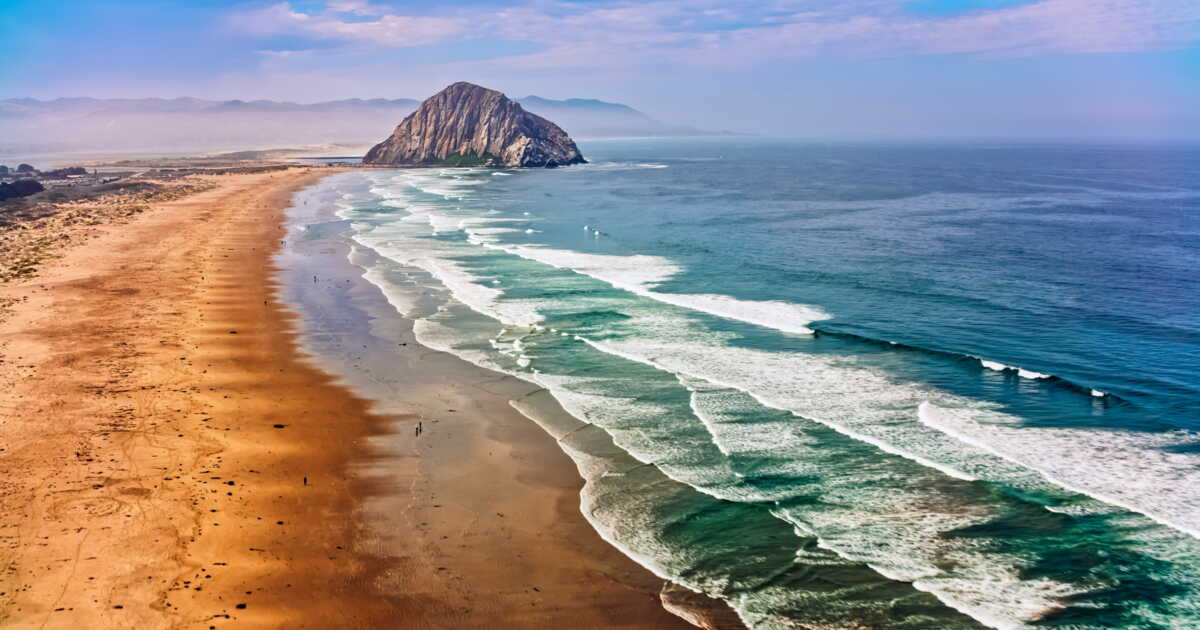
Morro Bay is also famous for Morro Rock, a volcanic‑origin rock that towers above the bay at 176 meters. This landmark is sacred to the Salinan and Chumash tribes, the Indigenous peoples of the region. It’s a different story that surfaces throughout rural California: that of Indigenous peoples, present here for at least 19,000 years. Away from the metropolises and their sprawling suburbs, the names of rivers, mountains, and villages often derive from their heritage.
From Desert to Sequoias, the Spirit of Indigenous Peoples Floats
Even in Palm Springs, an artificial oasis in the desert east of the City of Angels, a resource long exploited by Indigenous peoples lies beneath the surface: a mineral spring at 40°C, slightly sulfurous, used to ease stress, muscle pains, and skin issues. The Agua Caliente Band of Cahuilla Indians, descended from the Cahuilla people, has managed to keep the operation going. To immerse yourself, you must visit the Spa at Séc‑he (“the sound of bubbling water”), a sacred cultural site adorned with mosaics of deities, such as Grandmother Spider, creator of the world. “Indigenous peoples have shaped the landscapes of this region for millennia,” explains Kate Anderson, spokesperson for the tribe. From desert to redwood forests, traces of our ancestral culture are everywhere. Even in these rough stone bathtubs where one now lounges, water bubbling up to the neck provides a pleasant way to reconnect with California’s deep soul!
Tracing a route in “Cool California”
Prefer regional airports
To avoid gridlock in big cities and dive straight into rural California. Car rentals are also cheaper there. Example itinerary: Paris–Sacramento via San Francisco on the way out, Palm Springs–Paris via Los Angeles on the return.
Stroll through farmers markets
Many small towns have their own. You can grab a bite, meet the local farmers… For market days: ecologycenter.org/food-farming/farmers-market-finder
Learn about Indigenous heritage
The Visit Native California site is full of information for discovering Indigenous California: places to visit, experiences… visitcalifornia.com/native
Try train + bike
Driving remains king, but there are alternatives! Amtrak operates five lines across the Golden State, with the option to bring your bike aboard. amtrak.com
Follow on Instagram
The Visit California tourism board’s account offers ideas for off‑the‑beaten‑path escapes.
➤ Article appeared in GEO HS magazine no. 134, “Grandes évasions à petite vitesse,” August–September 2026.
➤ If you love GEO, discover our subscription options to receive GEO at home every month.