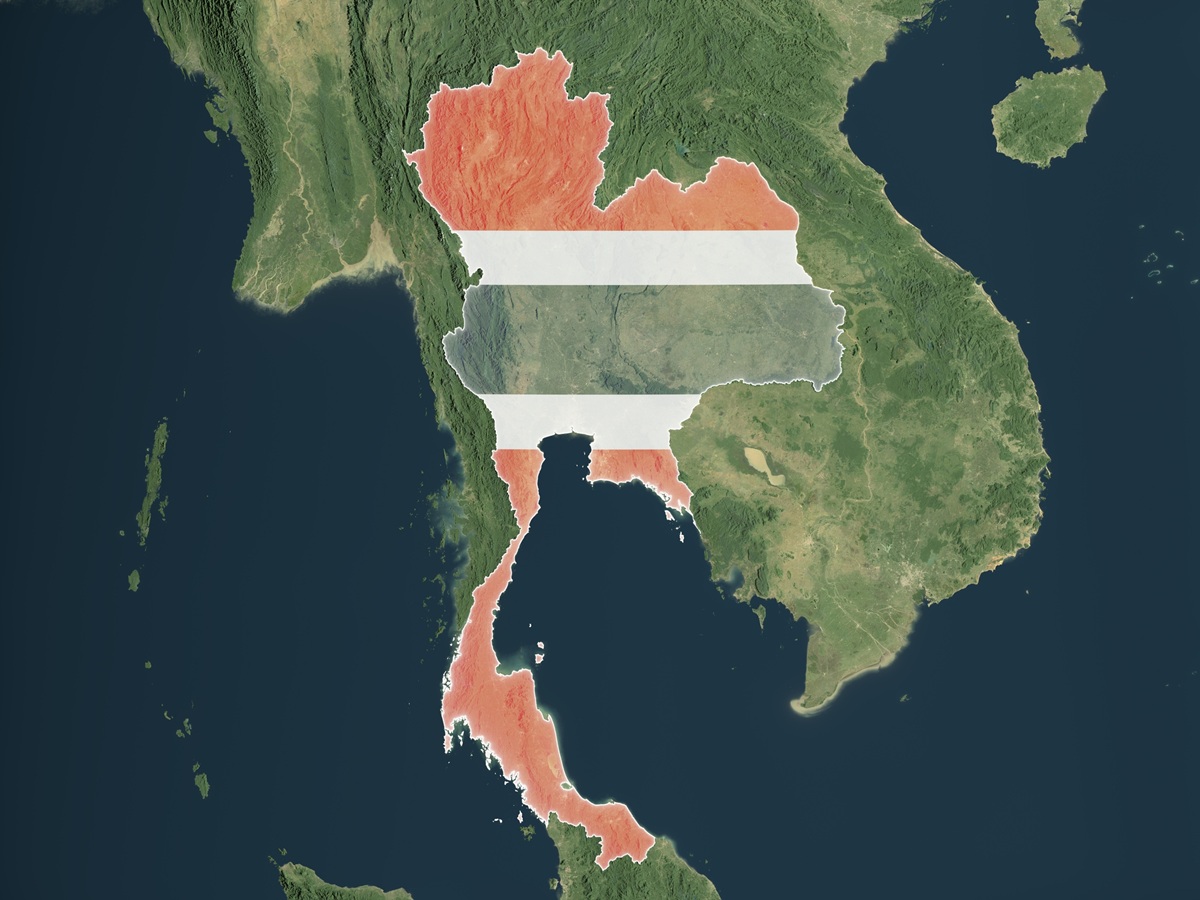


The year 2025 was marked by a renewed conflict between Cambodia and Thailand.
Violent clashes occurred along the border between the two countries, resulting in several dozen deaths and nearly 800,000 displaced people.
For seven months now, the conflict has been at a standstill and Thailand has begun erecting a concrete wall to seal off the route of a disputed border.
The situation seems to be easing at this level, but a new zone of tension has opened up, this time farther south.
And this time, at the border with Malaysia, incidents have occurred, not directly with the Malaysian neighbor, but in provinces where the Malay language is predominant.
Thus, on the night of August 22–23, 2026, around fifty incidents were recorded.
Violent clashes occurred along the border between the two countries, resulting in several dozen deaths and nearly 800,000 displaced people.
For seven months now, the conflict has been at a standstill and Thailand has begun erecting a concrete wall to seal off the route of a disputed border.
The situation seems to be easing at this level, but a new zone of tension has opened up, this time farther south.
And this time, at the border with Malaysia, incidents have occurred, not directly with the Malaysian neighbor, but in provinces where the Malay language is predominant.
Thus, on the night of August 22–23, 2026, around fifty incidents were recorded.
Thaïlande : le Quai d’Orsay déconseille plusieurs provinces du sud
As reported by Courrier International, these attacks take the form of shootings, arson and explosions, aimed at creating chaos in the Muslim-majority regions of Narathiwat, Pattani and Yala.
The attacks have not been claimed, although the Quai d’Orsay notes that armed separatist movements are active in these provinces. Since 2004, in southern Thailand, these movements have carried out several attacks.
Thus, the French Ministry of Foreign Affairs formally advises against traveling to the southern provinces of Narathiwat, Pattani, Yala and Songkhla.
Going forward, the eastern, western and southern borders of the country have been placed in red, the highest vigilance level of France Diplomatie.
The attacks have not been claimed, although the Quai d’Orsay notes that armed separatist movements are active in these provinces. Since 2004, in southern Thailand, these movements have carried out several attacks.
Thus, the French Ministry of Foreign Affairs formally advises against traveling to the southern provinces of Narathiwat, Pattani, Yala and Songkhla.
Going forward, the eastern, western and southern borders of the country have been placed in red, the highest vigilance level of France Diplomatie.
Thaïlande : les raisons de l’insurrection ?
The insurgent groups are demanding new rights and greater autonomy, or even the creation of an independent Muslim-majority state, according to Amnesty International in an article devoted to this little-known conflict.
These regions are also marked by economic underdevelopment.
To trace the origins of the tensions, one must go back to 1909, when Bangkok annexed an independent sultanate. The kingdom then imposes forced linguistic, religious and cultural assimilation on its inhabitants.
In response to this, opposition rose and organized itself in the 1960s. In 2004, the conflict entered a new phase, with attacks against police stations, resulting in several dozen deaths.
Over the past twenty years, the conflict has claimed more than 7,700 lives and left 15,000 injured.
These regions are also marked by economic underdevelopment.
To trace the origins of the tensions, one must go back to 1909, when Bangkok annexed an independent sultanate. The kingdom then imposes forced linguistic, religious and cultural assimilation on its inhabitants.
In response to this, opposition rose and organized itself in the 1960s. In 2004, the conflict entered a new phase, with attacks against police stations, resulting in several dozen deaths.
Over the past twenty years, the conflict has claimed more than 7,700 lives and left 15,000 injured.