The Ardèche, tucked away in the Auvergne-Rhône-Alpes region, hides cultural and natural treasures. Picture gigantic gorges, sites from another era, and villages that seem to whisper stories of the past. Here are ten activities to consider for a rewarding stay in Ardèche.
1. Paddling Down the Ardèche Gorge by Canoe-Kayak
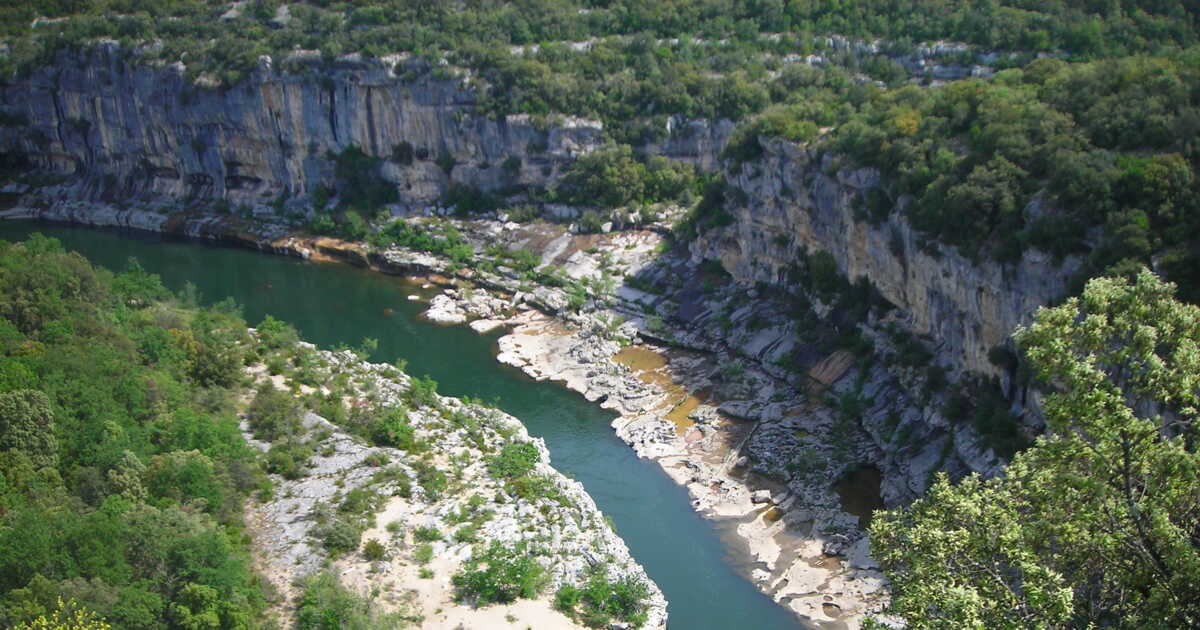
The descent of the Ardèche Gorge by canoe-kayak remains an iconic holiday experience in Ardèche, especially during the summer when outdoor activities become the heart of discovering the area. This route spans more than 30 kilometers, linking Vallon-Pont-d’Arc to Saint-Martin, tracing the Ardèche River through a spectacular canyon whose cliffs rise to over 300 meters in places.
Passing beneath the famous Pont d’Arc, a natural arch emblematic of the region, visitors enjoy striking viewpoints while immersing themselves in preserved nature. This aquatic adventure, accessible to families as well as those seeking gentle thrills, reveals a protected environment where biodiversity and geological heritage can be read from the water’s edge. In close alignment with the tourism office’s recommendations, this activity combines sport, exploration, and value for money, a paradise for nature lovers and for those seeking freedom under supervision.
2. Explore the Chauvet 2 Cave
The Chauvet 2 Cave, located in southern Ardèche, is a faithful replica of a World Heritage site, allowing a total immersion into prehistoric art while preserving the original. This facsimile accurately reproduces rock paintings dating back more than 36,000 years, offering a structured sensory journey, enhanced by the adjacent Aurignacian Gallery, a center of cultural and scientific mediation.
Through this journey through time, the visitor discovers not only parietal art but also the lifestyle of the first humans who occupied the region. Accessible in all seasons, this visit is an essential step to understanding human history in interaction with the landscape. It fully fits into a cultural itinerary at the heart of Ardèche for families, integrating nature, science and transmission.
3. Hiking in the Monts d’Ardèche Regional Natural Park
The Monts d’Ardèche Regional Natural Park, designated Global Geopark, stands out for the richness of its exceptional panoramas, its kilometers of marked trails and its geological diversity. A terrain of exploration for volcanology enthusiasts, forests and landscapes carved by erosion, it offers a clear reading of the forces that shaped the Mont Gerbier de Jonc and its surroundings.
The dry season, from November to February, is ideal for walking circuits to explore the Bois de Païolive natural reserve or the contemporary artistic installations integrated into the landscape. For hikers and lovers of scenic viewpoints, the park is a paradise for those who love engaged nature. It also offers educational stops to better understand the interactions between geology, climate and local culture, all guided by the tourism office resources.
4. Discover Charismatic Villages
Exploring Ardèche’s characterful villages, such as Balazuc, Vogüé or Antraigues-sur-Volane, offers a complete immersion into a territory where stone, water and history answer each other. These listed towns, often perched or located by the water, provide a journey through time, between medieval castles, cobbled lanes, artisan shops and sunsets over ochre roofs.
Each moment of wandering reveals a unique heritage atmosphere, enhanced by the quality of restorations and the vitality of local artisans’ workshops. In line with the tourism office’s recommendations, these places invite you to wander, sample the local cuisine and exchange with residents. This type of discovery appeals to visitors seeking living heritage as well as families looking for an alternative to large tourist crowds.
5. Visit the Aven d’Orgnac
The Aven d’Orgnac, labeled Grand Site of France, is a must for geology and human history enthusiasts. This monumental cave impresses with its vast halls, millennial stalactites, and mineral columns formed over centuries. The guided tour, accessible to all, is an excellent way to understand the formation of Ardèche’s underground landscapes. On the surface, the Cité de la Préhistoire completes the discovery with a museography focused on the region’s first inhabitants. This site thus combines scientific knowledge and wonder, offering a dual reading — natural and historical — of southern Ardèche, linked to family circuits, educational workshops and a coherent offering from the local tourism office.
6. Embark on a Safari at Peaugres Safari Park
The Peaugres Safari Park, located near the southern edge of Ardèche, stands as a flagship destination for family vacations. Spanning 80 hectares, it offers a mixed route — by car and on foot — allowing the observation of more than 120 species in conditions close to their natural habitat. The car circuit traverses zones where lions, bears or zebras roam in semi-freedom, while the footpath leads to aquatic areas, greenhouses and educational observation zones.
The whole is a paradise for wildlife enthusiasts, while raising awareness of conservation issues. This well-structured site, supported by clear signage and suitable infrastructures, is recommended by the tourism office as a comprehensive activity blending leisure, education and biodiversity.
7. Tasting wines from the Côtes du Rhône
A wine stop in the vineyards of the Côtes du Rhône, on the edge of Ardèche, reveals a winemaking tradition rooted in hillside terraced landscapes. Through guided tastings and conversations with winemakers, this outdoor activity integrates fully into a cultural and gastronomic stay. The nearby characterful villages provide an ideal setting for this sensory exploration, where grape varieties such as Syrah, Viognier or Grenache express their typicity.
The local cuisine, served as an accompaniment in the estates, enhances the experience with refined pairings. Advised by the tourism office, this slow approach to the territory appeals to the curious as well as wine enthusiasts, seeking balanced value-for-money and warm hospitality from the owners themselves.
8. Ride a Bike Along the Via Rhôna
The Via Rhôna, a safe cycling route running along the Rhône, provides a gentle way to discover Ardèche differently. Accessible to families as well as experienced cyclists, this path passes through multiple spots where rural heritage, dramatic viewpoints and local produce come together.
Each stage, often linked to a tourism office, offers the opportunity for a picnic, a cultural break or a discovery of local cuisine. In summer, sections by the water allow for a combination of outdoor activities and swimming, notably at Grain Beach or near Mont Gerbier de Jonc. This itinerary fits into an ecological, well-structured journey, promoting sustainable tourism and attentiveness to local specifics.
9. Spelunking in Ardèche’s Caves
Spelunking in Ardèche’s caves offers an active and educational approach to the region. Caverns such as Saint-Marcel Cave or the Madeleine Cave allow exploring underground landscapes safely, thanks to prepared or guided circuits. The geological richness of these sites, marked by natural basins, rare mineral formations and spectacular galleries, provides a total immersion into the mineral world.
These experiences, guided by professionals, attract families as well as seasoned visitors seeking a journey through time. In connection with other sites like the Aven d’Orgnac, this activity complements Ardèche’s heritage and natural offerings in both summer and off-season.
10. Visit the Lavender House
The Lavender House, located in the heart of Ardèche, is an educational and sensory space dedicated to a flagship plant of Mediterranean heritage. Through guided tours, visitors discover the distillation process, traditional uses and botanical specifics of lavender, while strolling through fragrant fields in season. This space, promoted by the tourism office, also offers workshops, exhibitions and a shop highlighting local products.
This stop invites slowing down, scenting and understanding, at the crossroads of agriculture, nature and local cuisine. It sits within a logic of transmission and value-adding of know-how, reinforcing Ardèche’s appeal for an audience seeking authenticity and calm.
Which Tourist Sites to Visit on a Short Stay in Ardèche? Selecting the Essentials for a Successful First Discovery
The Pont d’Arc, a spectacular natural arch at the heart of Ardèche’s gorges, stands as an unmissable stop. Not far away, Chauvet 2 Cave, a faithful reconstruction of a UNESCO-listed prehistoric cavity, offers a unique immersion into parietal art. The village of Balazuc, listed among France’s most beautiful, provides an architectural reading of local heritage. These sites, gathered within a reasonable perimeter, condense Ardèche’s soul between nature, history and culture. In two or three days, Ardèche reveals itself through its most significant contrasts.
What to Do in Ardèche with Children? Activities Blending Gentle Nature, Learning and Wonder
Many organized caves (Aven d’Orgnac, Madeleine Cave) offer guided tours suitable for families, blending pedagogy and lighting effects. Quiet rivers are ideal for learning canoeing or supervised swims. Wildlife parks like Peaugres Safari, or educational farms, also dot the territory. Medieval villages welcome families with seasonal animations. Thanks to short distances and a diverse range of activities, Ardèche provides a balanced setting for intergenerational holidays—dynamic yet accessible.
What to Do in Ardèche in 1 Day? A Condensed Itinerary Between Natural Heritage and Characterful Villages
A typical day could begin with a morning stroll through Ardèche’s gorges, by car or on foot depending on time, with a stop at the Serre de Tourre viewpoint. Then, a visit to Chauvet 2 Cave adds a cultural dimension. The day could end with a visit to the villages of Vogüé or Labeaume, whose lanes offer mineral and vegetal charm. This kind of short but well-structured plan lets you glimpse Ardèche’s singularity in a few hours: a rugged yet welcoming territory, wild and inhabited.
What to Do in Ardèche When It Rains? Cultural and Underground Alternatives Indoors
Caves such as Aven d’Orgnac, Saint-Marcel Cave, or Chauvet 2 become natural and cultural refuges perfectly suited for bad weather. Museums like the Muséum de l’Ardèche in Balazuc, or lavender and chestnut museums, allow you to discover local know-how indoors. Finally, classified villages like Alba-la-Romaine offer sheltered strolls through narrow lanes, often featuring artisans’ workshops.
This article was written with the help of artificial intelligence, then corrected, expanded and validated by the newsroom editors.