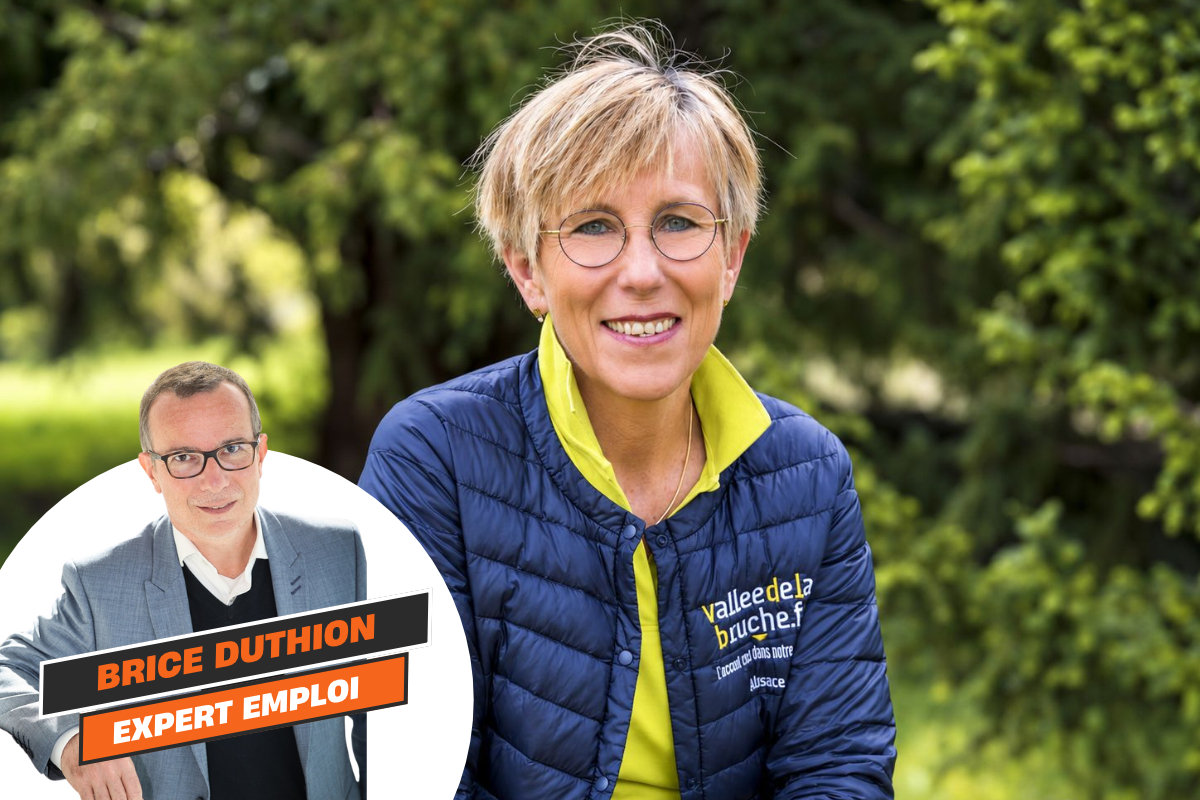


When Anne-Catherine Ostertag begins her career in the 1980s, the dominant model of the tourist office is still that of physical welcome: informing, handing out documentation, knowing the hours and accommodations, speaking the visitor’s language. Forty years later, this hierarchy of skills has been overturned and the traditional figure of the receptionist has largely disappeared.
But welcoming hasn’t vanished with time: it has transformed. The tourist office today must inform, but also analyze data, lead projects, support businesses, engage with local authorities, think about mobility, build offerings, and understand the social and environmental transformations of the territory.
In a few decades, we have moved from tourist information to territorial engineering», analyzes Anne-Catherine Ostertag.
Her career illustrates this. Coming from social and family economics, she entered tourism with an internship at Gîtes de France, created her first office in Outre-Forêt, then joined the Bruche valley in 1988. This initial training centered on the social realm will prove decisive: listening, observing, understanding and showing empathy constitute the foundation of the profession.
As tools become more sophisticated, certain human qualities gain value. Curiosity is one of them. Anne-Catherine Ostertag has made it a key recruitment criterion, even favoring atypical backgrounds: a professional translator, but also a chemical engineer.
This latter background brought both a sensitivity to service and the scientific rigor useful for processing data and for observation. Because value no longer resides in the amount of information held. Knowing everything becomes impossible.
The job consists more in qualifying information: knowing not only that a site exists, but when to visit it, for which audience, under what conditions, and why. In short, transforming data into advice. This requires an intimate knowledge of the territory. Site visits, educational tours and direct experimentation with the offering must remain essential elements of ongoing training.
General knowledge, curiosity and knowledge of the territory thus become as important as technical skills. And that is the paradox of AI: the easier access to information, the more valuable the ability to make sense of it becomes.
Another revolution has occurred since the mid-2010s: the tourist office no longer works only for the tourist. Residents frequent local product shops, seek information about their own territory; newcomers also become an audience to welcome.
The office must now reach out to its publics, work beyond the walls and support local professionals. It becomes a player in the territorial relationship.
The history of the Bruche valley provides an illustration. When Anne-Catherine Ostertag arrived there in 1988, the territory underwent the decline of the textile industry. Tourism was sometimes seen as a substitute activity for a territory that would have no other economic future.
The first challenge is then less about attracting tourists than about restoring confidence in the residents: inviting them to tell their valley, allowing them to become aware, through visitors’ eyes, of the value of what they consider ordinary. This is already a form of territorial engineering: building a collective narrative from what actually exists rather than fabricating an artificial destination.
The new HR challenge: learning how to learn and becoming a “trusted third party”
 Digital skills are now essential, ranging from practical mastery of a spreadsheet to data analysis. But they must be accompanied by project management abilities and a capacity to work with local authorities, businesses, associations and funders.
Another central skill becomes crucial: knowing how to adopt the user’s point of view, “putting on the tourist’s eyes.” How does a visitor reach a hike from the station? What obstacles does a person with a disability encounter? What information is he really missing?
Mobility illustrates this evolution. For a long time, the tourist offering was designed around cars. It must now consider trains, bikes, walking, intermodality and the continuity of the journey. New skills emerge at the intersection of tourism, transport and planning.
More broadly, climate, agriculture, mobility, culture, urban planning, biodiversity or digital technology force tourism professionals to engage with very different worlds.
Hence, what should be recruited? Probably less a fixed catalog of skills and more a permanent capacity to learn. For Anne-Catherine Ostertag, the main HR challenge is to find professionals able to question themselves, to keep learning, and not to stay trapped by established practices.
She sees AI as an opportunity: it can automate certain tasks, speed up processing and free up time. But it also creates a risk: the possibility of plausible, perfectly worded information that is false. Hence a new strategic function for tourism offices: to become trusted third parties. In a world of information overload, the office may no longer be the holder of information, but the one who can verify it, contextualize it, and guarantee it thanks to its knowledge of the territory.
The foresight of occupations cannot be separated from that of organizations. Who should do what tomorrow? For Ostertag, the answer cannot be purely legislative. In the face of territorial diversity, she favors a subsidiarity logic, based on dialogue, common sense, and the search for the best added value at each level. The same thinking applies to skills.
Territorial tourism workforce planning (GPEC) could become a reflection on the ecosystem of skills needed by the territory. Some will stay within offices; others will be pooled at departmental, regional or national scales; again others will need to be sought from specialists in mobility, climate, data or planning. The challenge is no longer that every office can do everything, but that it can mobilize the right expertise.
Preserving the uniqueness of tourism
This cross-cutting approach carries however a risk: the risk of diluting tourism into broad attractiveness policies. Economic development, agriculture, residential life and business location fall under a holistic vision of territorial planning.
But they should not obscure the singularity of tourism: hospitality. Not easily measurable by profitability alone, it remains an essential territorial capital. The office can thus become a space of mediation between visitors, residents, professionals and elected officials, a kind of “glue” in territories and a society that is increasingly fragmented.
This evolution also changes the role of leaders. Running a territorial office is no longer just about increasing attendance or economic spillovers. One must participate in decisions about the very model of tourism: what kind of tourism do we want? Which projects are compatible with water resources, land, or landscapes?
The director of a territorial office (rather than tourism) will tomorrow need to understand environmental, economic and territorial issues, dialogue with elected officials and defend a vision. This requires a competence rarely listed in job descriptions: the courage to arbitrate.
Hence, tomorrow’s tourism professionals may be less exclusively “touristic.” They will need to understand data and AI, but also mobility, the environment, public policies and planning.
They will work with farmers as well as with digital specialists, with residents as well as with elected officials. And they will also need to preserve at the same time what lies at the heart of the trade: welcoming. So atypical career paths could take more space.
Social sciences, engineering, geography, environment, culture or digital fields can enrich tourism’s traditional skills. The HR challenge will be less about finding a candidate who already masters all dimensions of a position than about identifying someone who possesses the curiosity, empathy, rigor and capacity to learn needed to grow with them.
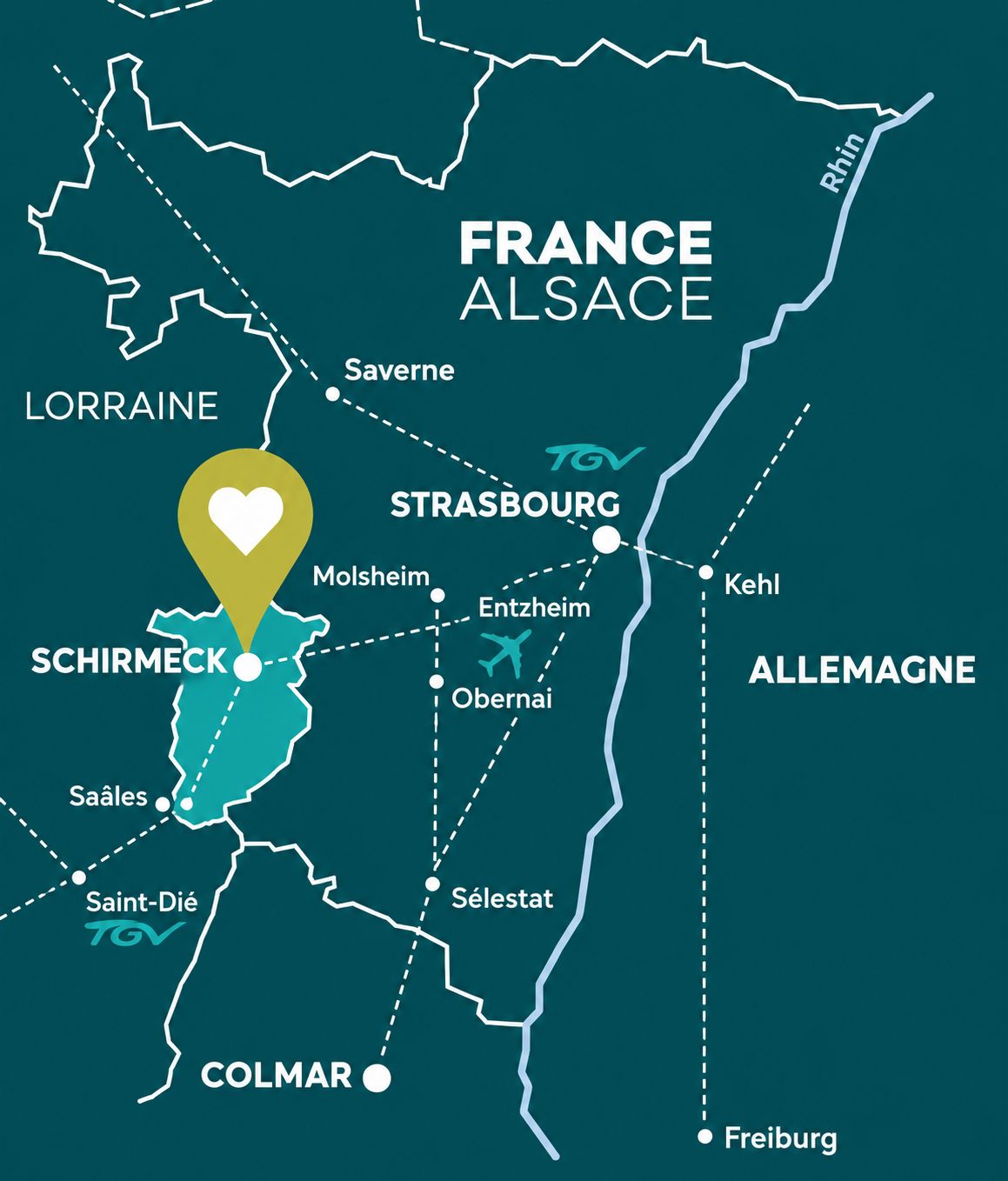
Finally remains a skill that artificial intelligence does not render obsolete: deeply knowing one’s territory. In the Bruche Valley, lacking some traditional markers of Alsatian tourist imagery, it was necessary to build a destination from its own distinct traits: its landscapes, its people, hiking, its industrial and social history, and the contemporary memory of the Struthof.
This experience perhaps sums up the future of the profession. The professional will not merely need to know an offer and know how to sell it, but to understand what makes a territory unique, to preserve it, to tell its story, and to connect it with those who live there or discover it. The Bruche Valley’s motto, “L’accueil, notre nature”, then takes on a particular resonance.
Tourism will remain, first and foremost, a meeting: that between a visitor, residents and a territory. And this meeting will stay deeply human.