Located in the north of Germany, Hamburg is a metropolis—the second largest in the country—cut by the Elbe, which links it to the North Sea. This city with a rich historical heritage is also a cultural and artistic hub that offers a thousand and one attractions. With so many possibilities available, it can sometimes be difficult to navigate.
1. A Jaunt to Hamburg’s Port
This gigantic maritime hub stands out for the intensity of its activity and the variety of ships that pass through daily, ranging from the imposing freight cargos to the elegant cruise ships. Embarking from this strategic port is to plunge into the bustling world of global maritime transport, to observe up close the logistical dynamics that drive world trade while enjoying a navigation experience like no other.
A cruise departing from a major port offers a privileged vantage point on this aquatic hive where technological modernity and maritime traditions mingle, forming a perpetual spectacle for fans of port industries, commercial geopolitics or simply grand journeys by sea.
2. Miniatur Wunderland, the Magic of the Small
Miniatur Wunderland, located in Hamburg, asserts itself as the world’s largest model rail network, offering an immersion in a miniature universe of remarkable precision. Each section faithfully reproduces landscapes, cities, and life scenes from various countries, animated by thousands of figurines, vehicles and automated trains moving in a day-night cycle.
Accessible to all audiences, this cultural attraction pleases families as much as enthusiasts of technical details, thanks to an interactive and evolving scenography. A visit to the Miniatur Wunderland is a pedagogical and playful experience, where attentive observation reveals the ingenuity of long-term work, celebrated for its ability to captivate visitors over time.
3. Strolling Through Planten un Blomen
Located in the heart of Hamburg, the Planten un Blomen park constitutes a real interlude of urban greenery, where nature coexists harmoniously with the city’s bustle. Renowned for its meticulously maintained botanical gardens, its water features and fountains, this historic park offers a setting ideal for relaxation, strolling, or discovery.
In summer, it becomes a cultural hotspot with outdoor concerts, activities for children and interactive installations, allowing visitors to enjoy a soothing environment without leaving the city center. The Planten un Blomen park thus embodies a form of neighborhood tourism, combining landscape heritage, accessibility and quality of experience in a city where nature is conceived as a public service in its own right.
4. A Time Travel to Speicherstadt
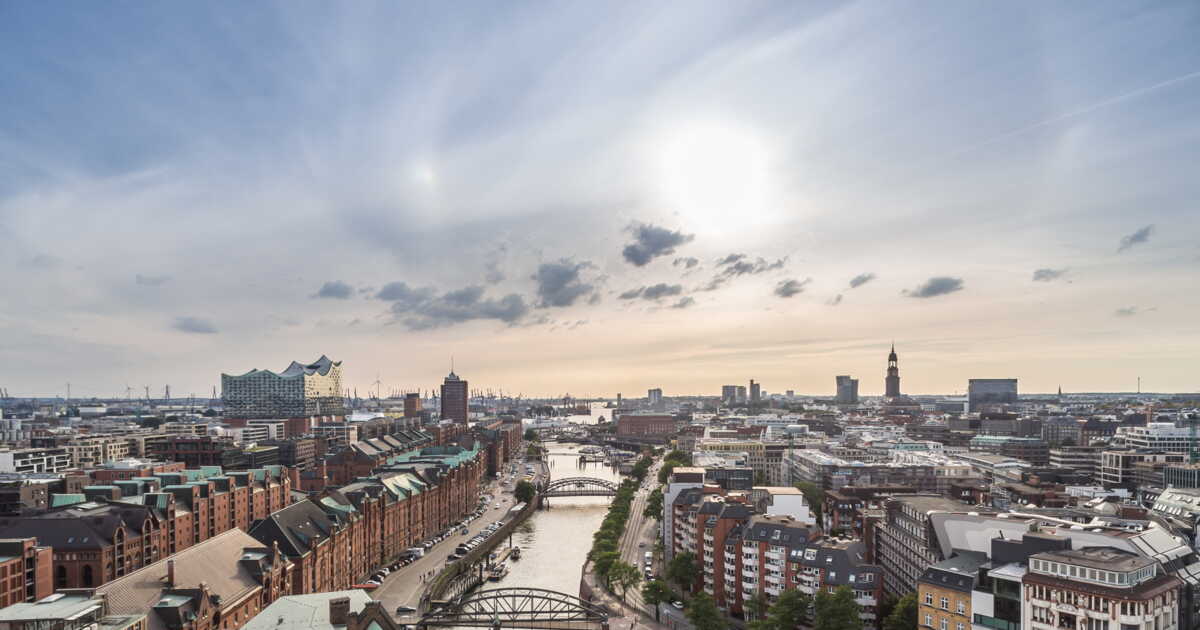
Listed on the UNESCO World Heritage List, the Speicherstadt stands as one of the world’s most notable port warehouses complexes, recognizable by its red-brick façades and its network of narrow canals spanned by many bridges. This emblematic Hamburg district, built between the late 19th and early 20th centuries, testifies to the city’s central role in international maritime commerce.
Today refurbished while retaining its historic character, it houses museums, galleries and cultural institutions, offering an ideal route for fans of industrial architecture, urban history or heritage strolls. Wandering through Speicherstadt is to explore a place where port memory blends with modernity, in a setting conducive to a rewarding and tranquil pedestrian discovery.
5. The Bustling Nights of Reeperbahn
The Reeperbahn district, located in Hamburg’s St. Pauli borough, asserts itself as the beating heart of Germany’s nightlife, renowned for its electric atmosphere and exceptionally dense entertainment options. Known for its clubs, lively bars, theatres and concert halls, it constitutes a magnet for night owls seeking a vibrant urban experience where popular culture, music and spectacle intertwine until the first light of day.
Far from the conventional routes, the Reeperbahn reflects the identity of a city where festivity is regarded as a vector of sociability and artistic expression. Whether you’re a fan of alternative scenes, a late-night wanderer, or simply curious to sense the pulse of a moving metropolis, this district stands as a must-see to experience Hamburg differently.
6. The Elbphilharmonie, an Architectural Boldness
Symbol of Hamburg’s architectural modernity, the Elbphilharmonie rises above the port like a cultural lighthouse, combining contemporary design, state-of-the-art acoustics and exceptional city and Elbe panoramas. Inaugurated in 2017 on the foundations of an old port warehouse, this iconic concert hall has become a reference venue for lovers of classical music and contemporary sound creation, attracting internationally renowned artists.
More than a venue for performances, the Elbphilharmonie embodies the aim of making Hamburg a center of artistic excellence accessible to all. Paired with a rich urban fabric that blends historic heritage, alternative scenes and relaxation spaces, it testifies to the dynamism of a metropolis clearly oriented toward the future. For travelers seeking meaningful cultural experiences, Hamburg stands out as a complete destination, combining urban adventure, a high-quality musical offering and a port city lifestyle.
What to Do in Hamburg in 3 Days? A Cultural and Urban Itinerary to Explore the City in Depth
Visiting Hamburg in three days allows one to grasp its cultural richness, the diversity of its districts, and its openness to water. The first day could be devoted to the Speicherstadt district, a UNESCO World Heritage site, and a boat tour of the port.
On the second day, the Sternschanze district, more alternative, invites immersion into local life, between galleries, thrift shops and independent cafés. Finally, a visit to the Elbphilharmonie and the International Maritime Museum closes the exploration. Three days are enough to grasp Hamburg’s complex identity, between Hanseatic rigor, architectural modernity and an emerging arts scene.
How Many Days to Visit Hamburg? Tailor Your Stay to Your Interests
Hamburg can be discovered in two to three days for travelers seeking an initial urban and cultural approach. This format allows visiting the essential sites: Speicherstadt, the Elbphilharmonie, the shores of the Alster and the St. Pauli district. However, for maritime history enthusiasts, specialized museums, or nightlife lovers, extending the stay to four or five days offers a steadier pace.
The richness of Hamburg’s neighborhoods, highly contrasted, invites a progressive discovery. Each area reveals a facet of the city, from the industrial port to the tranquil shores of the lakes. More than a fixed duration, it is the diversity of interests that should guide the time spent there.
What Is Hamburg’s Specialty? Between Northern Cuisine and Port Tradition
Hamburg’s gastronomy reflects its maritime roots and Nordic influences. Among local specialties, the Fischbrötchen, a small fish-filled sandwich (herring, mackerel, salmon), is enjoyed at markets or by the portside. Labskaus, a more rustic dish based on salted meat, beet and mashed potato, illustrates a culinary tradition linked to sailors’ lives. Historic breweries also offer craft beers paired with regional dishes. The city focuses on the quality of its local products, such as dark rye bread or seafood, and on the elegance of certain starred establishments. Eating in Hamburg means understanding its deep connection to the North Sea and its mercantile history.
What Unusual Activities to Do in Hamburg? Exploring the City Beyond the Classic Routes
For those wishing to get off the beaten path, Hamburg offers a range of unusual activities. A visit to the Miniatur Wunderland, the world’s largest miniature train network, lets you relive childhood memories in a spectacular setting. A canoe ride through the canals or a twilight cruise reveals another facet of the city.
Bunkers transformed into clubs, former warehouses turned into contemporary art spaces, or the Wilhelmsburg district’s alternative vibe offer quirky and immersive experiences. In Hamburg, the unusual often lies in the hybridization of industrial heritage and cultural innovation.
Tourism in Hamburg: Why the City Attracts Travelers in Search of Authenticity and Urban Culture
Tourism in Hamburg continues to grow, driven by a dense cultural offering, an open urban setting and a distinctive atmosphere. As Germany’s second-largest city, Hamburg blends economic dynamism and quality of life, inside a landscape shaped by water. The port, lakes, canals and parks provide a constant breath of relief within a varied urban fabric.
The city appeals to music lovers—thanks to its famous Elbphilharmonie—the architecture enthusiasts, or those who enjoy nightlife in the vibrant streets of Reeperbahn. It is also a destination prized for its confident identity, both rigorous and creative, where each neighborhood asserts its own style.
Which Hamburg Neighborhood Should You Explore First? A Panorama of the City’s Urban Vibes
Each Hamburg neighborhood has its own distinct personality. Speicherstadt impresses with its network of red-brick warehouses on stilts, a remnant of maritime commerce. Sternschanze attracts a young, creative crowd, with its cafés, independent galleries and its alternative atmosphere.
Eimsbüttel stands out for its quiet residential character, while St. Pauli preserves a legendary nightlife energy, between theatres, clubs and historic bars. HafenCity, currently undergoing transformation, embodies the city’s contemporary architectural ambitions. Exploring Hamburg means moving between these worlds which, each in their own way, contribute to the city’s plural identity in motion.
This article was written with the help of artificial intelligence, then corrected, completed and validated by the editors of the newsroom.