

What would Michelangelo or Leonardo da Vinci say if they returned to the 21st century?
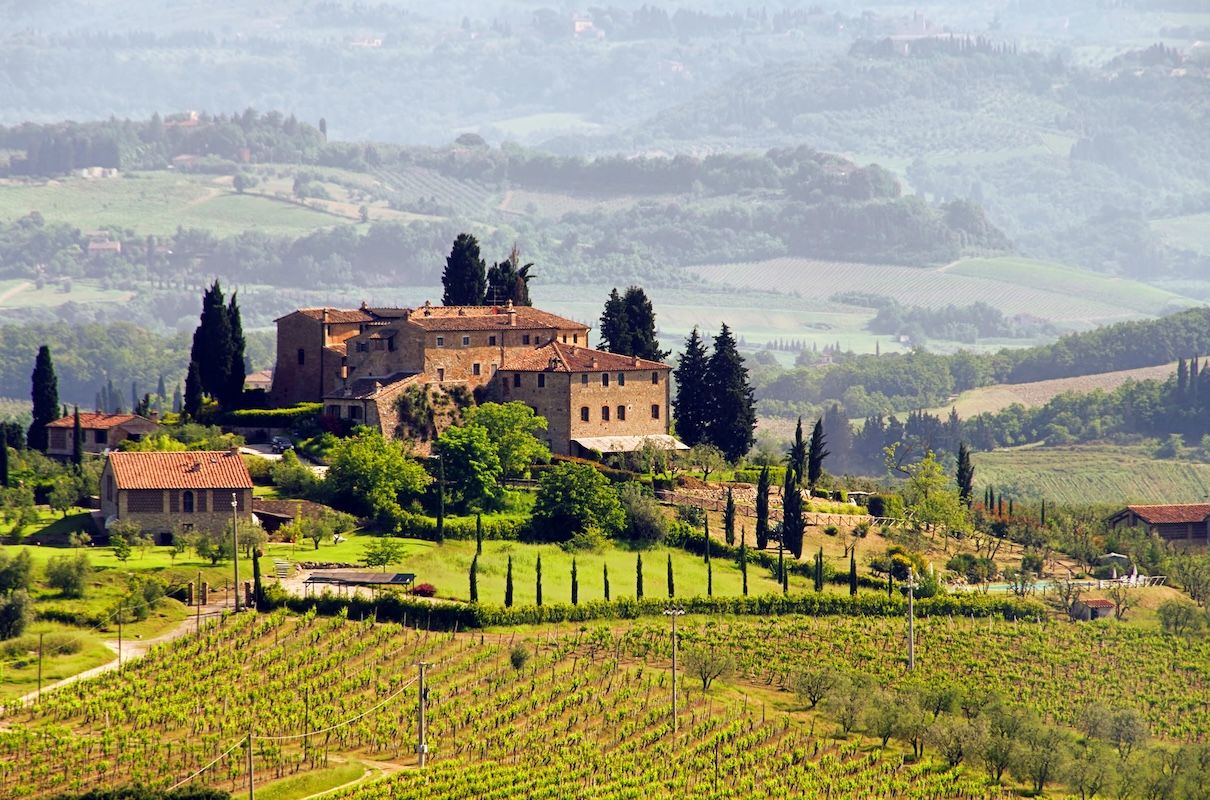
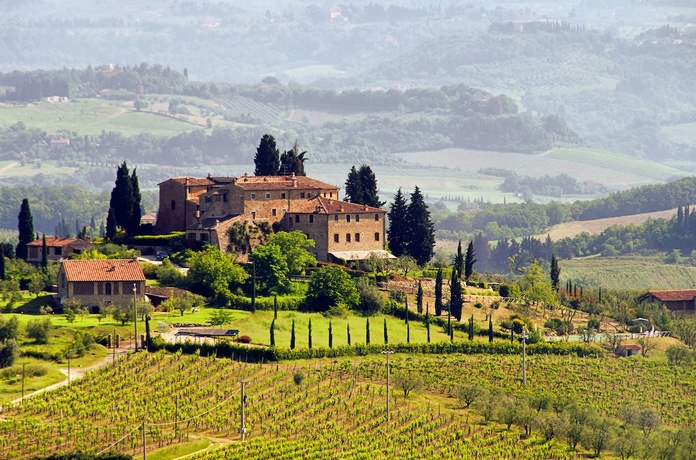
They would rediscover the sweet scent of Tuscany, its medieval villages and its cypress-hilled hills, so dear to today’s travelers…
No doubt they would also be pleased to see that art continues to reign supreme, with monumental works scattered across the countryside and the heart of towns.
Here lies one more reason of wonder — this region of plenty. For several years now, contemporary artists have left their mark here, peppering their creations in the wilds or in urban districts.
Like in Florence. With its Ponte Vecchio, its Uffizi Gallery and the Academy, the Tuscan capital is proud of its Renaissance heritage. But it also embraces contemporary art in several places.
In the Boboli Gardens, born under the Medici and the city’s most famous park, Igor Mitoraj’s monumental bronze head, cracked and monumental, towers among ancient and classical sculptures, in a striking contrast.
They would rediscover the sweet scent of Tuscany, its medieval villages and its cypress-hilled hills, so dear to today’s travelers…
No doubt they would also be pleased to see that art continues to reign supreme, with monumental works scattered across the countryside and the heart of towns.
Here lies one more reason of wonder — this region of plenty. For several years now, contemporary artists have left their mark here, peppering their creations in the wilds or in urban districts.
Like in Florence. With its Ponte Vecchio, its Uffizi Gallery and the Academy, the Tuscan capital is proud of its Renaissance heritage. But it also embraces contemporary art in several places.
In the Boboli Gardens, born under the Medici and the city’s most famous park, Igor Mitoraj’s monumental bronze head, cracked and monumental, towers among ancient and classical sculptures, in a striking contrast.
Florence, Enzo Pazzagli Art Park
In the Rose Garden, near the Michelangelo esplanade, the Belgian artist Jean-Michel Folon scattered bronze sculptures that dialogue with their surroundings. The view over the historic center from this park is also breathtaking.
To the south of Florence, there is another surprise at the Enzo Pazzagli Art Park. It gathers about 200 sculptures, most of which come from this metalworking specialist artist, who also created here “La Trinità,” a new installation of 300 cypress trees planted to form a face.
Forty minutes by car from Florence, Prato, a former textile city, is worth a detour for its Luigi Pecci Centre for Contemporary Art.
The design metallic edifice, crescent-shaped, encloses the original building and reveals permanent collections of visual arts and performing arts, cinema, design and fashion, as well as works by major artists of the 20th and 21st centuries (Jan Fabre, Anish Kapoor…).
To the south of Florence, there is another surprise at the Enzo Pazzagli Art Park. It gathers about 200 sculptures, most of which come from this metalworking specialist artist, who also created here “La Trinità,” a new installation of 300 cypress trees planted to form a face.
Forty minutes by car from Florence, Prato, a former textile city, is worth a detour for its Luigi Pecci Centre for Contemporary Art.
The design metallic edifice, crescent-shaped, encloses the original building and reveals permanent collections of visual arts and performing arts, cinema, design and fashion, as well as works by major artists of the 20th and 21st centuries (Jan Fabre, Anish Kapoor…).
In Prato, Exhibitions of International Renown
This Italian institution, a benchmark of avant-garde art, hosts annual exhibitions of international renown.
From the museum garden where works also stand, a contemporary art trail reveals about a dozen installations scattered around the city: the iron sculpture “Reflection of the Cosmic Order” by Eliseo Mattiacci; the circular steel-tube structure “Mazzocchio,” by Ben Jacober and Jannick Vu…
From Prato, head to Peccioli and its MACCA (Museum of Contemporary Art in the Open-Air), less than one hundred kilometers southwest of Florence. In this village in the Valdera, a valley rimmed with vineyards and olive groves, more than 70 installations are scattered through the streets and the surrounding nature.
The most spectacular? Sculptures three to nine meters tall representing human figures emerging from the earth, a metaphor for rebirth.
A stroll in Peccioli, whose houses line up neatly along a hilltop, also leads to a steel footbridge wrapped in a colorful “ribbon,” by Italian artist Patrick Tuttofuoco (Endless Sunset), and to a wall speckled with eyes photographs by Vittorio Corsini (Lo sguardo di Peccioli).
From the museum garden where works also stand, a contemporary art trail reveals about a dozen installations scattered around the city: the iron sculpture “Reflection of the Cosmic Order” by Eliseo Mattiacci; the circular steel-tube structure “Mazzocchio,” by Ben Jacober and Jannick Vu…
From Prato, head to Peccioli and its MACCA (Museum of Contemporary Art in the Open-Air), less than one hundred kilometers southwest of Florence. In this village in the Valdera, a valley rimmed with vineyards and olive groves, more than 70 installations are scattered through the streets and the surrounding nature.
The most spectacular? Sculptures three to nine meters tall representing human figures emerging from the earth, a metaphor for rebirth.
A stroll in Peccioli, whose houses line up neatly along a hilltop, also leads to a steel footbridge wrapped in a colorful “ribbon,” by Italian artist Patrick Tuttofuoco (Endless Sunset), and to a wall speckled with eyes photographs by Vittorio Corsini (Lo sguardo di Peccioli).
Andrea Bocelli and ArtInsolite
Do not miss in Ghizzano, a hamlet of Peccioli, the surprising Via Medio, or the Midway, by British artist David Tremlett: his wall drawings accentuate the windows of the houses on Via di Mezzo, echoing the greens and earthy browns of the surrounding hills.
Located about ten kilometers from Peccioli, Lajatico offers its reply. Here too, contemporary art transcends heritage. This momentum owes much to the famous tenor Andrea Bocelli. Born in Lajatico in 1958, he created the Teatro del Silenzio, a summer festival he himself described as the “Woodstock of Bel Canto.”
The contemporary art event ArtInsolite has been added there, drawing creators who have dressed the village’s buildings with their works, tracing an unusual “path of art.”
Located about ten kilometers from Peccioli, Lajatico offers its reply. Here too, contemporary art transcends heritage. This momentum owes much to the famous tenor Andrea Bocelli. Born in Lajatico in 1958, he created the Teatro del Silenzio, a summer festival he himself described as the “Woodstock of Bel Canto.”
The contemporary art event ArtInsolite has been added there, drawing creators who have dressed the village’s buildings with their works, tracing an unusual “path of art.”
Monumental Sculptures in the Countryside
To see: the “restaurant of modern art,” a curious red altar topped by a sculpture, set in a vaulted rocky cave; a root-bulb curving emphatically against a wall of old stones.
Around the festival site, the arid countryside with rolling fields also hosts modern sculptures, a delicious blend of rural life and land art.
Further afield, here is Volterra. Close to San Gimignano, the famous village with its tall medieval towers, this substantial hilltown of Etruscan origin perched on a ridge is punctuated by palaces, churches and towers, overlooking a countryside sprinkled with monumental geometric sculptures (ring, arrow, stakes…).
Created by the artist Mauro Staccioli (1937-2018), a son of the region, they subtly punctuate the agricultural landscape, which shifts from green to straw-yellow with the seasons.
Around the festival site, the arid countryside with rolling fields also hosts modern sculptures, a delicious blend of rural life and land art.
Further afield, here is Volterra. Close to San Gimignano, the famous village with its tall medieval towers, this substantial hilltown of Etruscan origin perched on a ridge is punctuated by palaces, churches and towers, overlooking a countryside sprinkled with monumental geometric sculptures (ring, arrow, stakes…).
Created by the artist Mauro Staccioli (1937-2018), a son of the region, they subtly punctuate the agricultural landscape, which shifts from green to straw-yellow with the seasons.
Louise Bourgeois and Daniel Buren in Gaiole in Chianti
Antinori and its Design Winery
About twenty kilometers before reaching the great Tuscan city, in San Casciano in Val di Pesa, the Antinori winery plays the design-winery card. Inaugurated in 2012, its bold cathedral-like form for wine makes generous use of local materials: terracotta, wood, glass…
A spectacular spiral staircase crowns it, and it overlooks the countryside from a terrace surrounded by vineyards planted with the Chianti’s signature grape, Sangiovese.
In the same family for 26 generations, the estate, with its Accademia (a collection of Tuscan artworks) and its Antinori Art Project (exhibitions by contemporary artists), embodies a regional, artsy culture carried to its pinnacle here.
A spectacular spiral staircase crowns it, and it overlooks the countryside from a terrace surrounded by vineyards planted with the Chianti’s signature grape, Sangiovese.
In the same family for 26 generations, the estate, with its Accademia (a collection of Tuscan artworks) and its Antinori Art Project (exhibitions by contemporary artists), embodies a regional, artsy culture carried to its pinnacle here.
Practical Information
The region is accessible by plane thanks to flights linking Paris and several French cities to Florence with Volotea, Vueling and Air France, or by train from Paris via Turin, in about ten hours.
The proposed itinerary forms a loop starting from Florence, passing through Prato, Valdera, Volterra, Capalbio, Montepulciano and Chianti.
In terms of accommodations, several charming addresses dot the route: the Pitti Palace al Ponte Vecchio, in Florence, pleases with its terrace overlooking the city; the Albergo Villa Nencini, near Volterra, occupies an elegant 17th-century residence; the Fattoria Biologica Poggio Foco, near Capalbio, offers an agritourism stay at the heart of a biodynamic farm; finally, Borgo Le Noci, in Gaiole in Chianti, provides a refined pause within the Tuscan wine landscapes.
The proposed itinerary forms a loop starting from Florence, passing through Prato, Valdera, Volterra, Capalbio, Montepulciano and Chianti.
In terms of accommodations, several charming addresses dot the route: the Pitti Palace al Ponte Vecchio, in Florence, pleases with its terrace overlooking the city; the Albergo Villa Nencini, near Volterra, occupies an elegant 17th-century residence; the Fattoria Biologica Poggio Foco, near Capalbio, offers an agritourism stay at the heart of a biodynamic farm; finally, Borgo Le Noci, in Gaiole in Chianti, provides a refined pause within the Tuscan wine landscapes.