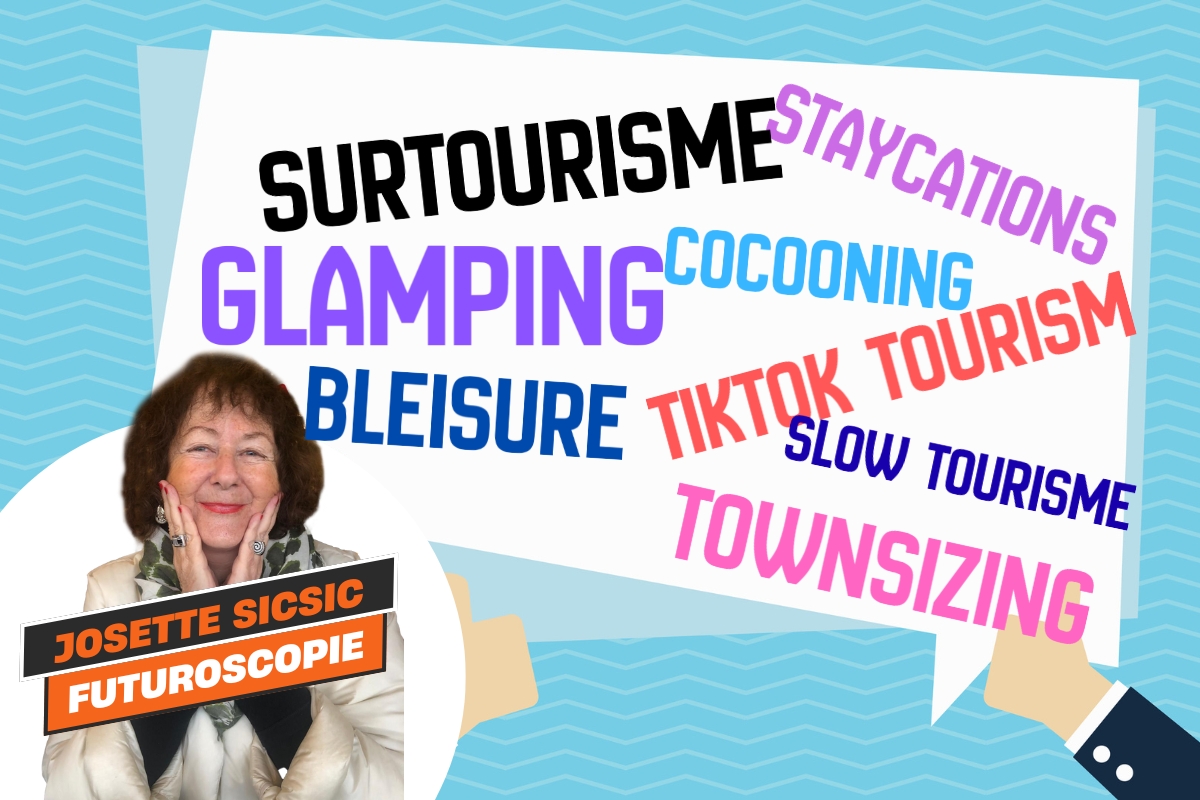


Among the champions of the genre, the term “cocooning” has taken the spotlight. It is all the more emblematic because, since its creation by Faith Popcorn’s forecasting firm (the brain reserve) in the 1990s, it has been understood across generations and has a knack for never going out of fashion.
It hardly fades, and this is reinforced by the Covid lockdowns, when a notion of “neo-cocooning” emerged. This represents a trend of retreating to one’s home that, at the same time, becomes multifunctional: work, entertainment, sport…
Another major success is the term “surtourism” or “hypertourism” denoting the negative impacts of tourism on territories and tourist sites. Repeated in unison, often exaggerated, this term even has its opposite: “undertourism”, which has not gained notoriety. And yet, “undertourism” exists indeed and is definitively more widespread than “surtourism”.
But it is less surprising, therefore less used by media seeking the spectacular.
It hardly fades, and this is reinforced by the Covid lockdowns, when a notion of “neo-cocooning” emerged. This represents a trend of retreating to one’s home that, at the same time, becomes multifunctional: work, entertainment, sport…
Another major success is the term “surtourism” or “hypertourism” denoting the negative impacts of tourism on territories and tourist sites. Repeated in unison, often exaggerated, this term even has its opposite: “undertourism”, which has not gained notoriety. And yet, “undertourism” exists indeed and is definitively more widespread than “surtourism”.
But it is less surprising, therefore less used by media seeking the spectacular.
Slow Tourism, Glamping… and Staycations!
 Immense succès aussi pour le “slow tourism” born in Italy from the Slow Food movement which, as early as the 1980s, solidified a tendency to return to a slower life and tempo, especially in the realms of food, transport, and tourism.
Still widely used, this term marked a revolution that is undeniably lasting.
In another category, that of neologisms built around tourism styles, we find the “glamping”. A contraction of the words glamour and camping, signifying the emergence of luxury camping offerings. A real development, indeed progressing, deserving a specific label that has only one flaw: its sound.
The “couch-surfing”, describing a free way to travel from couch to couch, is also well recognized. Yet this activity is waning and tends to disappear.
The “staycations” are experiencing a committed trajectory? Less well understood, the compound term formed from stay (to stay) and cation (vacation) nonetheless constitutes a real trend, consisting of taking one’s holidays at home. It is not going to be reduced.
In the same vein, there are the “coolcations” which refer to budget-friendly vacations during heatwaves. A trend that will grow and will likely boost the appeal of Nordic destinations.
Traveller Styles
In the series of compound words describing vacation and traveler styles, “back packers” have been known for more than half a century. Often replaced in France by the term “routard”, they remain very present on roads worldwide. Denoting a travel accessory, they even precede “globe-trotters”. Another historical neologism.
New, thanks to Forbes magazine and its Global Nomad Index (as well as Skyscanner’s travel trends), the “Glomads” could this year gain some popularity. Signifying a highly connected population, traveling year-round with their laptops in hand, they do not differ greatly from the generation of “Digital natives” or “Digital nomads” identified by many destinations that consequently promote their welcome (Thailand, Canary Islands, Portugal).
In the same vein, the term “workation”—indicating the same mix of work and vacation—is more used by English speakers. It does not become popular in France, probably due to its awkward sound.
While the term “Bleisure”, though repeatedly mentioned by the media, does not take off either. Barely audible to Francophone ears, it fails to emphasize the combination of “business” with “leisure”. Yet the trend is there and will endure, especially as a well-established term is added: “remote workers”, i.e., teleworkers.
Another emergence is “JOMO” (Joy of Missing Out), describing individuals who proudly express their joy at skipping highly common experiences and activities. They stand in opposition to “FOMO” (Fear of Missing Out).
New, thanks to Forbes magazine and its Global Nomad Index (as well as Skyscanner’s travel trends), the “Glomads” could this year gain some popularity. Signifying a highly connected population, traveling year-round with their laptops in hand, they do not differ greatly from the generation of “Digital natives” or “Digital nomads” identified by many destinations that consequently promote their welcome (Thailand, Canary Islands, Portugal).
In the same vein, the term “workation”—indicating the same mix of work and vacation—is more used by English speakers. It does not become popular in France, probably due to its awkward sound.
While the term “Bleisure”, though repeatedly mentioned by the media, does not take off either. Barely audible to Francophone ears, it fails to emphasize the combination of “business” with “leisure”. Yet the trend is there and will endure, especially as a well-established term is added: “remote workers”, i.e., teleworkers.
Another emergence is “JOMO” (Joy of Missing Out), describing individuals who proudly express their joy at skipping highly common experiences and activities. They stand in opposition to “FOMO” (Fear of Missing Out).
Some Developments in the Pipeline
Noting that nocturnal tourism has long constituted a large portion of the tourist offer (bars, nightclubs, concerts, parties…), the term “Noctourism” is trying to spread. For now, it still struggles to gain traction, but after-sunset experiences, notably those related to the sky, the stars, the northern lights, and full-moon nights, will develop. But beware, the “me mooning”—referring to those who want the full moon for themselves—gathers more and more followers.
The “Land snorkelling”, a recent trend describing a contemplative exploration of the landscape on the ground, just as one would snorkel in water (creative vocabulary used in 2025 travel trends), could also have a bright future. Just like “Micro-adventures”, which have always existed but needed a fresh twist!
The “Townsizing”, a tendency to choose smaller towns or communities as destinations rather than large metropolises, is also waiting in the wings to establish itself. But, more in Anglo-Saxon countries.
As for “Regenerative Tourism”, it has started a relatively bright career even though it hardly exists yet. An achievement that can be explained by a genuine traveler tendency not to degrade the environment and to practice sustainable tourism by picking up litter and leaving no traces of their passage. But who really does it? One might speak of “crypto trends”.
The “set jetting”, for its part, is undeniably in vogue. Denoting tourism practiced on film and TV shooting locations, it must be admitted that it is increasingly and very broadly media-covered.
The “Land snorkelling”, a recent trend describing a contemplative exploration of the landscape on the ground, just as one would snorkel in water (creative vocabulary used in 2025 travel trends), could also have a bright future. Just like “Micro-adventures”, which have always existed but needed a fresh twist!
The “Townsizing”, a tendency to choose smaller towns or communities as destinations rather than large metropolises, is also waiting in the wings to establish itself. But, more in Anglo-Saxon countries.
As for “Regenerative Tourism”, it has started a relatively bright career even though it hardly exists yet. An achievement that can be explained by a genuine traveler tendency not to degrade the environment and to practice sustainable tourism by picking up litter and leaving no traces of their passage. But who really does it? One might speak of “crypto trends”.
The “set jetting”, for its part, is undeniably in vogue. Denoting tourism practiced on film and TV shooting locations, it must be admitted that it is increasingly and very broadly media-covered.