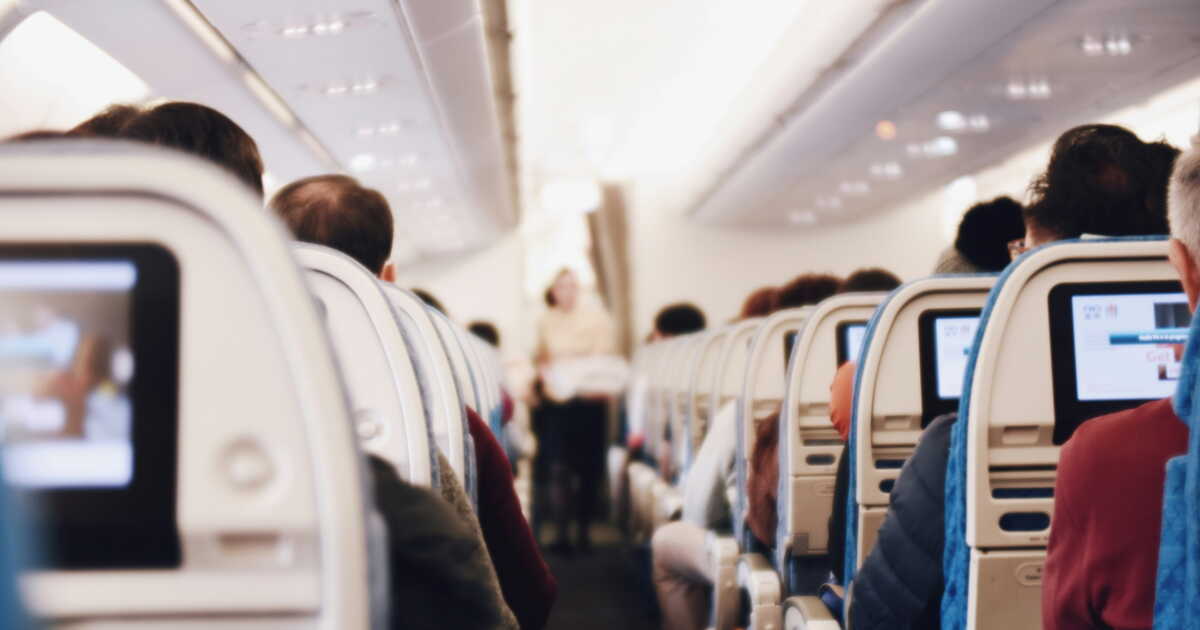
You may be about to board a plane for vacation. If this isn’t your first flight, you know that flying at several kilometers of altitude has direct effects on our bodies. And it usually starts as soon as takeoff. When the plane climbs, you may already have felt a strong pressure in your ears, or the sensation that they are blocked. This is a direct consequence of rapid changes in altitude and air pressure.
In an article published in The Conversation, Adam Taylor, a professor of anatomy at Lancaster University, explains: “As cabin pressure falls, the volume of oxygen available also decreases.” Instead of the usual 21% of oxygen in normal air, the body has only about 15%. This drives you to breathe more and your heart to beat faster. These are factors to monitor in patients with heart or lung conditions, but perfectly harmless for others. However, these changes in pressure and air also affect the intestines.
Is airplane food really bad, or is it our bodies trapping us?
“As the plane gains altitude, cabin air pressure changes and all the air that was in the intestines expands. This is what causes bloating and discomfort”, explains Dr. Megan Rossi in Boots. This actually operates on the same principle as the air in the ears. But while swallowing saliva or chewing a gum can relieve the sensation in the auditory tubes, the intestines have more difficulty recovering. The doctor recommends not eating too much in the lead-up to the flight to avoid this sensation.
If you eat during the flight, however, you may find the food bland. It isn’t necessarily because what you’re served isn’t seasoned or well cooked; it’s your taste buds that are being deceived. The cabin air is very dry and it reduces the ability of the taste buds to function properly, says Dr. Roger Henderson to the Daily Mail. Sweet tastes are particularly affected.
Our bodies run short on moisture in the air
It is also because of the lack of humidity in the cabin that our skin often becomes very dry on the plane. So don’t hesitate to apply moisturizing cream before and after the trip. It’s also best to drink plenty of water and avoid alcohol.
Avoiding alcoholic beverages will also help reduce the risk of fainting on board. About a third of in-flight medical emergencies involve a passenger fainting. Don’t panic if it happens to you: the cabin crew is trained to handle such situations and symptoms typically disappear by landing!
Want to share your view on climate change in France? Enter the L’Oeil du climat photo contest!