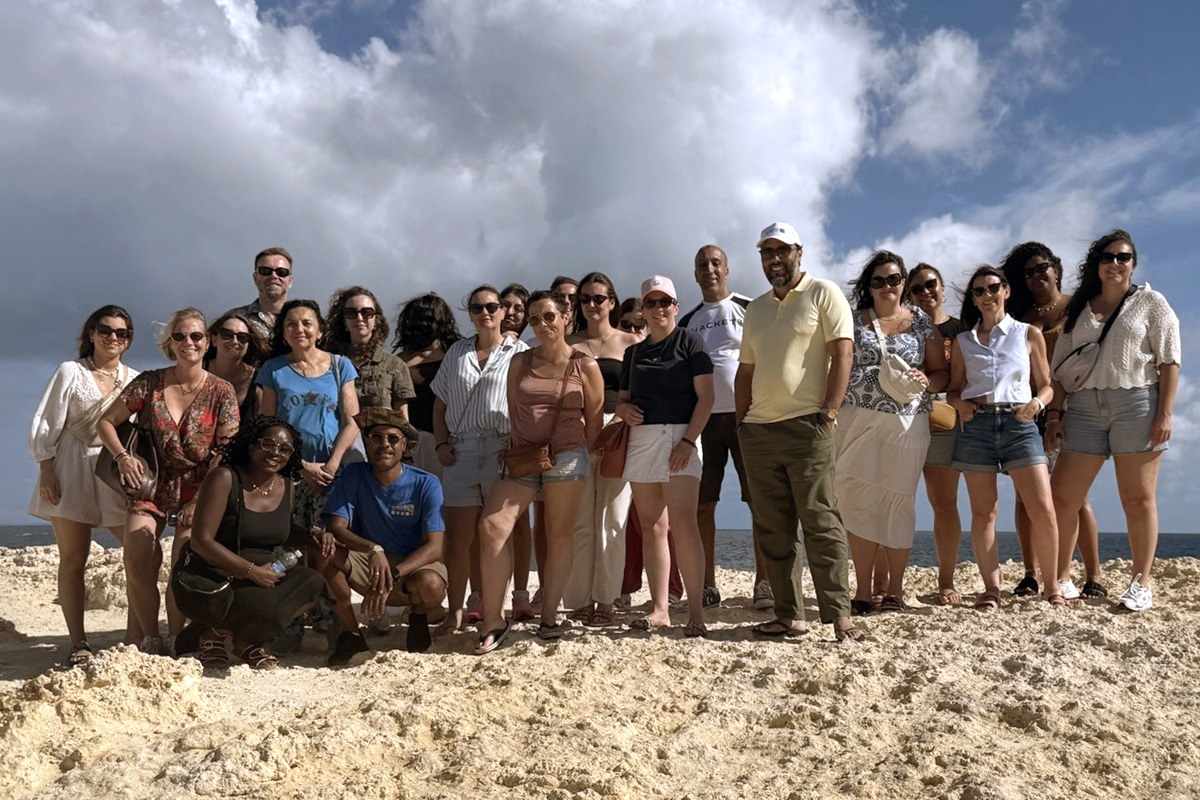

For five days, twenty travel agents explored four of Guadeloupe’s six inhabited islands.
Organized by the Comité du Tourisme des Îles de Guadeloupe (CTIG), with the support of Air Caraïbes and the Des Hôtels et Des Îles group, this educational tour had a clear objective: to show that the destination is not limited to its beaches, but that it blends nature, culture, gastronomy, and a hotel offering capable of meeting all types of travelers.
But this study trip is only the final step in a much more ambitious scheme.
Named “Secrets des Îles de Guadeloupe,” the CTIG certification program rests on four phases: an e-learning course, a seminar or webinar, a commercial challenge, and an on‑site experiential edutour.
The aim is to raise the distributors’ skills so that they become true destination specialists.
The twenty participants are among Guadeloupe’s best sellers at the end of the 2025 commercial challenge, which generated more than €563,000 in revenue for the destination.
Barely landed in Pointe-à-Pitre (Grande-Terre) after a direct flight provided by Air Caraïbes, the participants headed to Deshaies (Basse-Terre).
For five days, they traversed Grande-Terre, Basse-Terre, Terre-de-Haut and Terre-de-Bas, which make up the Saintes archipelago. In other words, four of Guadeloupe’s six inhabited islands, a feat hailed at the end of the stay by Patrick Galin, the promotion officer for the Îles de Guadeloupe.
« You have experienced four islands out of six. You have visited an island I have only been to three times in my life. That is Terre-de-Bas. »
A reminder that this edutour does not follow the most conventional itineraries.
Organized by the Comité du Tourisme des Îles de Guadeloupe (CTIG), with the support of Air Caraïbes and the Des Hôtels et Des Îles group, this educational tour had a clear objective: to show that the destination is not limited to its beaches, but that it blends nature, culture, gastronomy, and a hotel offering capable of meeting all types of travelers.
But this study trip is only the final step in a much more ambitious scheme.
Named “Secrets des Îles de Guadeloupe,” the CTIG certification program rests on four phases: an e-learning course, a seminar or webinar, a commercial challenge, and an on‑site experiential edutour.
The aim is to raise the distributors’ skills so that they become true destination specialists.
The twenty participants are among Guadeloupe’s best sellers at the end of the 2025 commercial challenge, which generated more than €563,000 in revenue for the destination.
Barely landed in Pointe-à-Pitre (Grande-Terre) after a direct flight provided by Air Caraïbes, the participants headed to Deshaies (Basse-Terre).
For five days, they traversed Grande-Terre, Basse-Terre, Terre-de-Haut and Terre-de-Bas, which make up the Saintes archipelago. In other words, four of Guadeloupe’s six inhabited islands, a feat hailed at the end of the stay by Patrick Galin, the promotion officer for the Îles de Guadeloupe.
« You have experienced four islands out of six. You have visited an island I have only been to three times in my life. That is Terre-de-Bas. »
A reminder that this edutour does not follow the most conventional itineraries.
Hotels for every traveler profile
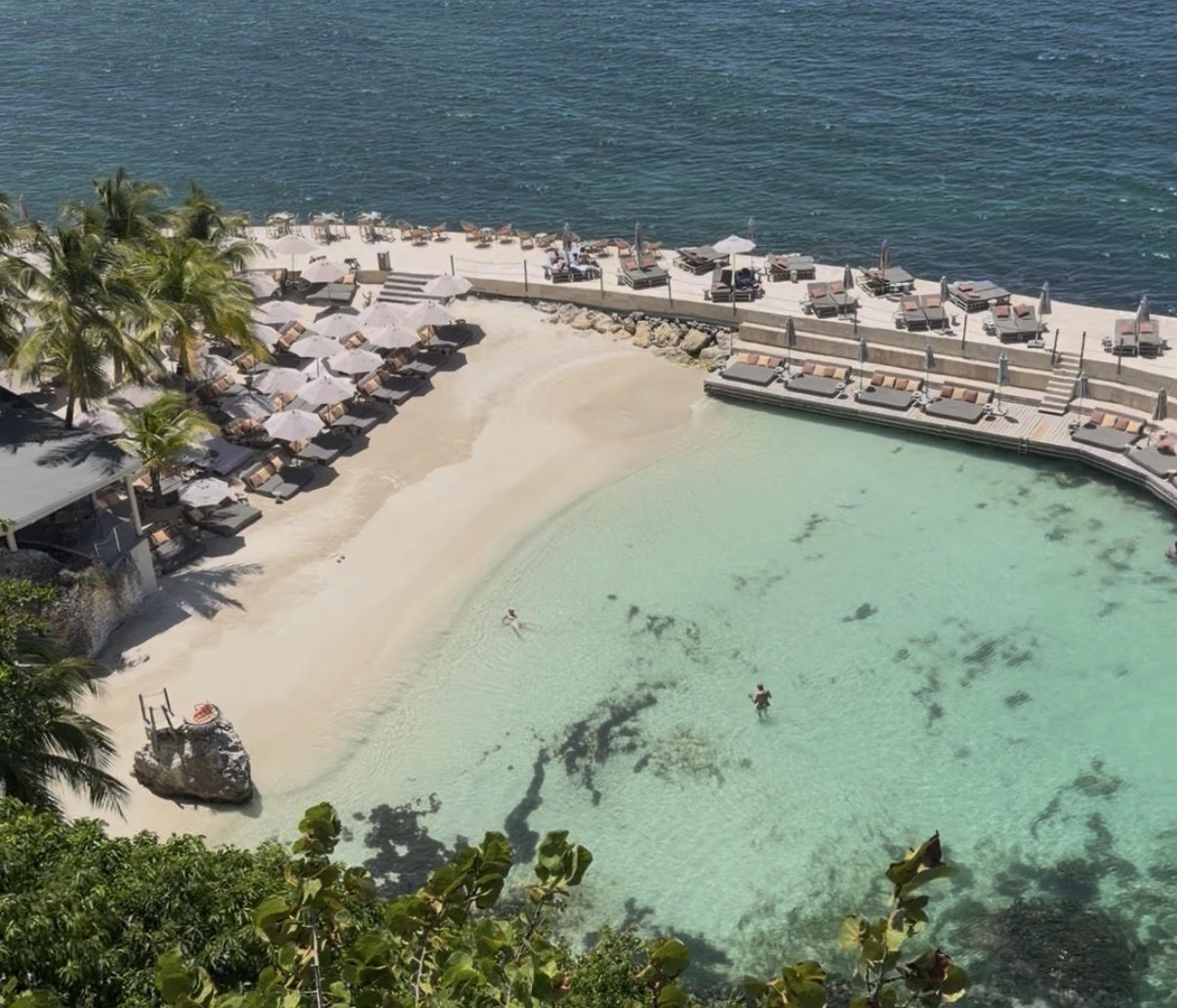
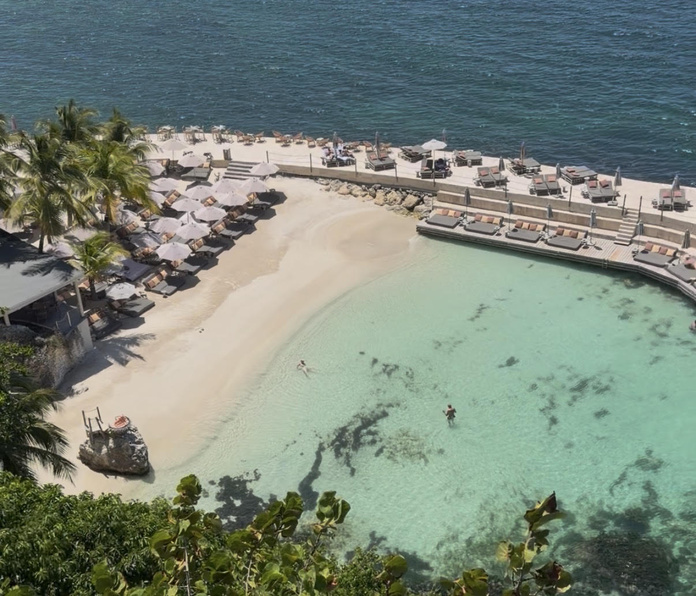
One of the trip’s objectives was naturally to discover the accommodations that agencies will later propose to their clients.
The first night therefore took place at the Langley Resort Fort Royal, in Deshaies (Basse-Terre).
Nestled between a broad blonde-sand beach and the tropical forest, this four‑star resort makes an excellent base for exploring the north of Basse-Terre. The bungalows scattered across the gardens, direct beach access, and tranquil atmosphere immediately appeal.
Deshaies hides another surprise. Fans of the series Death in Paradise will instantly recognize the scenes from this British fiction shot here since 2011, portraying the fictional “Isle of Sainte-Marie.”
The police station, the seafront, the Creole lanes, Catherine’s bar, and several beaches feature among the iconic spots visitors can discover on a stroll.
On the second day, a change of scene with a three-night stay at La Créole Beach (Des hôtels & des Îles) in Gosier, Grande‑Terre.
More lively, with several restaurants, a spa, and a spacious pool, the property caters to both families and couples who want to stay close to Grande‑Terre’s main attractions.
The group also visited La Toubana (Des hôtels & des Îles) in Sainte-Anne, Grande‑Terre, the destination’s only five‑star property. Overlooking the Caribbean Sea, it positions itself in the premium segment with its bungalows, suites, private beach, and spa.
In Les Saintes, Bois Joli hotel in Terre‑de‑Haut completes this discovery thanks to its privileged location opposite one of the world’s most beautiful bays.
The first night therefore took place at the Langley Resort Fort Royal, in Deshaies (Basse-Terre).
Nestled between a broad blonde-sand beach and the tropical forest, this four‑star resort makes an excellent base for exploring the north of Basse-Terre. The bungalows scattered across the gardens, direct beach access, and tranquil atmosphere immediately appeal.
Deshaies hides another surprise. Fans of the series Death in Paradise will instantly recognize the scenes from this British fiction shot here since 2011, portraying the fictional “Isle of Sainte-Marie.”
The police station, the seafront, the Creole lanes, Catherine’s bar, and several beaches feature among the iconic spots visitors can discover on a stroll.
On the second day, a change of scene with a three-night stay at La Créole Beach (Des hôtels & des Îles) in Gosier, Grande‑Terre.
More lively, with several restaurants, a spa, and a spacious pool, the property caters to both families and couples who want to stay close to Grande‑Terre’s main attractions.
The group also visited La Toubana (Des hôtels & des Îles) in Sainte-Anne, Grande‑Terre, the destination’s only five‑star property. Overlooking the Caribbean Sea, it positions itself in the premium segment with its bungalows, suites, private beach, and spa.
In Les Saintes, Bois Joli hotel in Terre‑de‑Haut completes this discovery thanks to its privileged location opposite one of the world’s most beautiful bays.
A destination you experience as much as you visit it
Very quickly, hotel visits gave way to experiences. At the Jardin botanique de Deshaies, the agents plunged into lush tropical vegetation before taking the Route de la Traversée.
In the heart of Guadeloupe National Park, a forest hike allowed them to measure the richness of this preserved nature. Swimming at the Écrevisses Falls (Basse-Terre) stands out as one of the trip’s highlights.
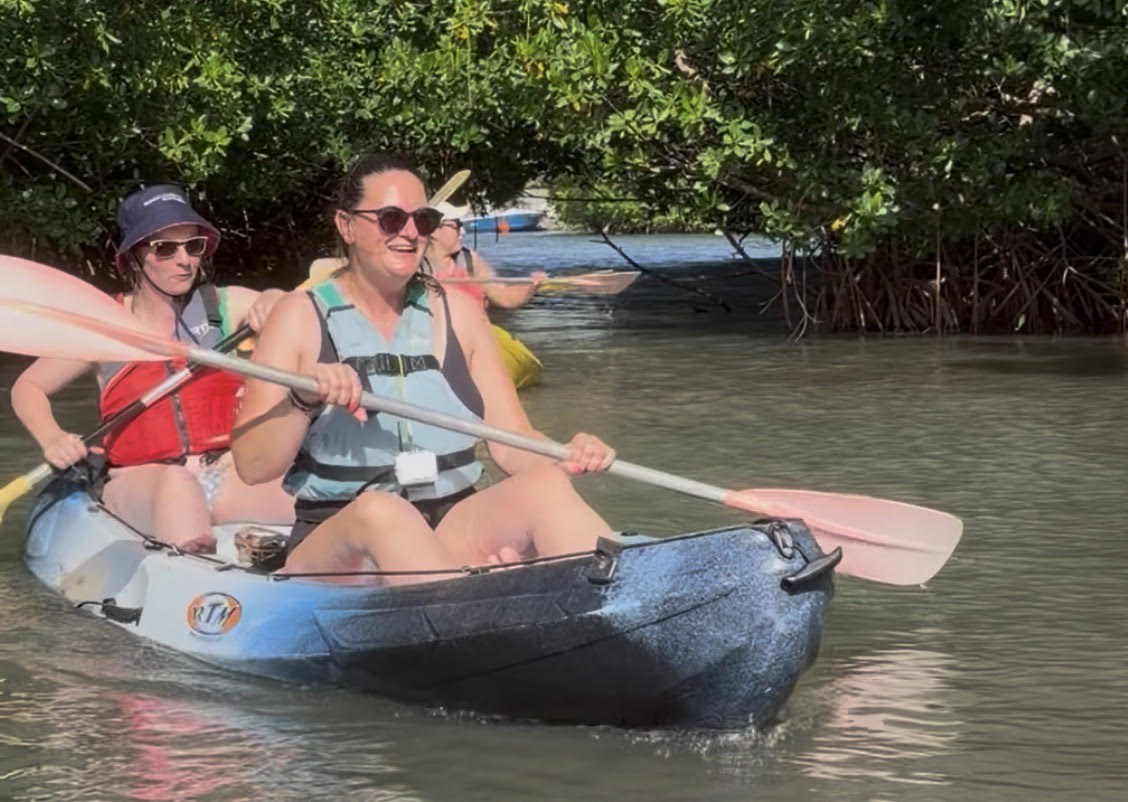
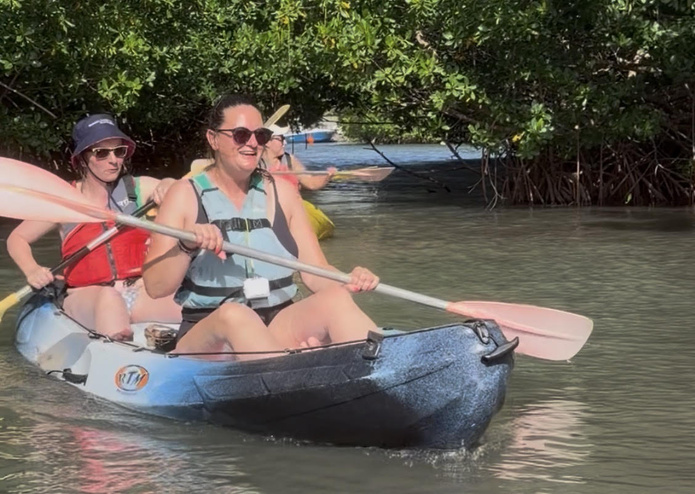
Another memorable discovery: a kayaking excursion in the Grand Cul-de-Sac Marin (Grande-Terre). Gliding quietly among the mangroves, participants explored the mangrove from a different angle and became aware of its essential role in maintaining the balance of this ecosystem.
The ACTe Memorial, in Pointe‑à‑Pitre (Grande‑Terre) provided a historical and commemorative dimension to the journey by recounting the history of slavery and the peoples of the Caribbean.
In the heart of Guadeloupe National Park, a forest hike allowed them to measure the richness of this preserved nature. Swimming at the Écrevisses Falls (Basse-Terre) stands out as one of the trip’s highlights.
Another memorable discovery: a kayaking excursion in the Grand Cul-de-Sac Marin (Grande-Terre). Gliding quietly among the mangroves, participants explored the mangrove from a different angle and became aware of its essential role in maintaining the balance of this ecosystem.
The ACTe Memorial, in Pointe‑à‑Pitre (Grande‑Terre) provided a historical and commemorative dimension to the journey by recounting the history of slavery and the peoples of the Caribbean.
Bokit, coconut sorbet, and agricole rhum
The best memories do not always come from scheduled visits.
In Sainte-Anne (Grande‑Terre), the group settled at a food truck to sample a bokit. Born from African, European and Caribbean influences, this generously stuffed fried bread has become one of Guadeloupe’s emblematic street foods.
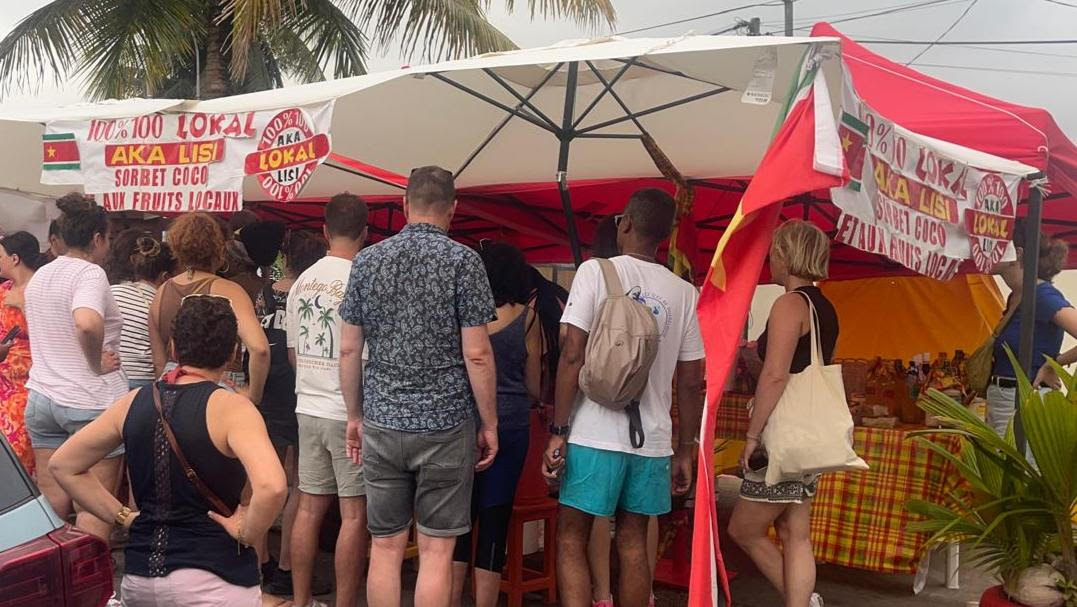
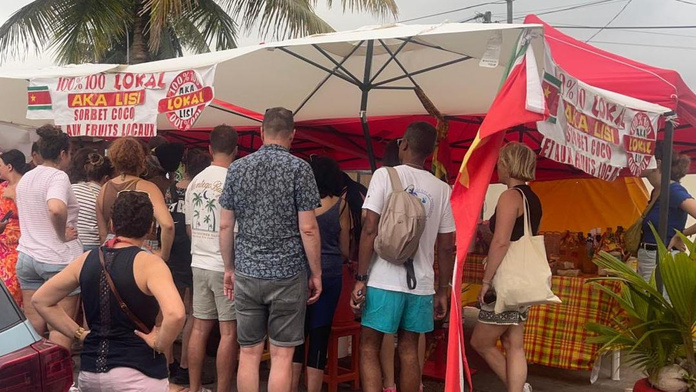
The day before, a stop at the Mamelles roundabout (Basse‑Terre) had allowed tasting Lucie’s famous homemade coconut sorbet, a true local institution.
It would be impossible to mention Guadeloupe without talking about rum. In Sainte‑Rose (Basse‑Terre), a visit to the Reimonenq distillery reminds how sugarcane cultivation shaped the archipelago’s history and economy. The participants discovered the various stages of making agricole rum, from cane harvest to tasting.
In Sainte-Anne (Grande‑Terre), the group settled at a food truck to sample a bokit. Born from African, European and Caribbean influences, this generously stuffed fried bread has become one of Guadeloupe’s emblematic street foods.
The day before, a stop at the Mamelles roundabout (Basse‑Terre) had allowed tasting Lucie’s famous homemade coconut sorbet, a true local institution.
It would be impossible to mention Guadeloupe without talking about rum. In Sainte‑Rose (Basse‑Terre), a visit to the Reimonenq distillery reminds how sugarcane cultivation shaped the archipelago’s history and economy. The participants discovered the various stages of making agricole rum, from cane harvest to tasting.
Another way to sell Guadeloupe
 Published by Laurent Guéna Journalist – TourMaG.com
 See all articles by Laurent Guéna


Ajoutez TourMaG à votre flux Google Actualités