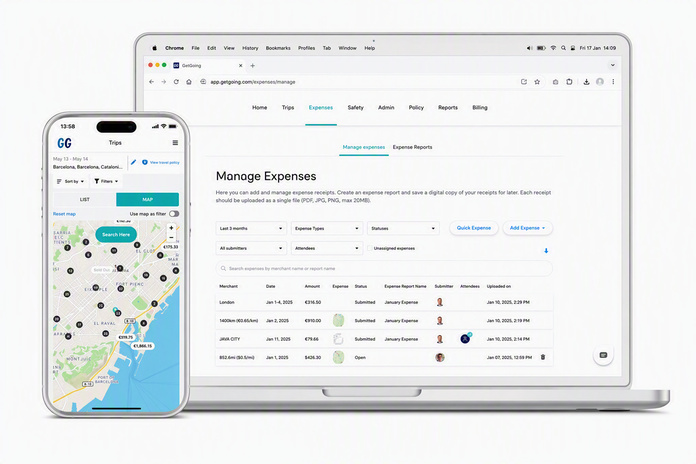

Ghislain Domi, VP GetGoing (BCD): France Set to Be One of Our Major Growth Contributors


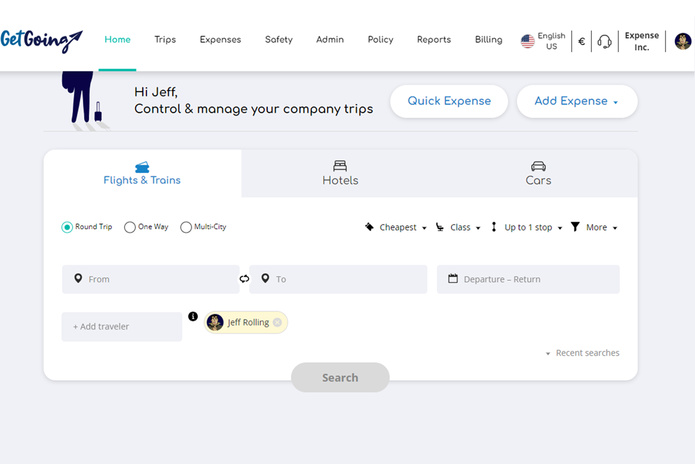
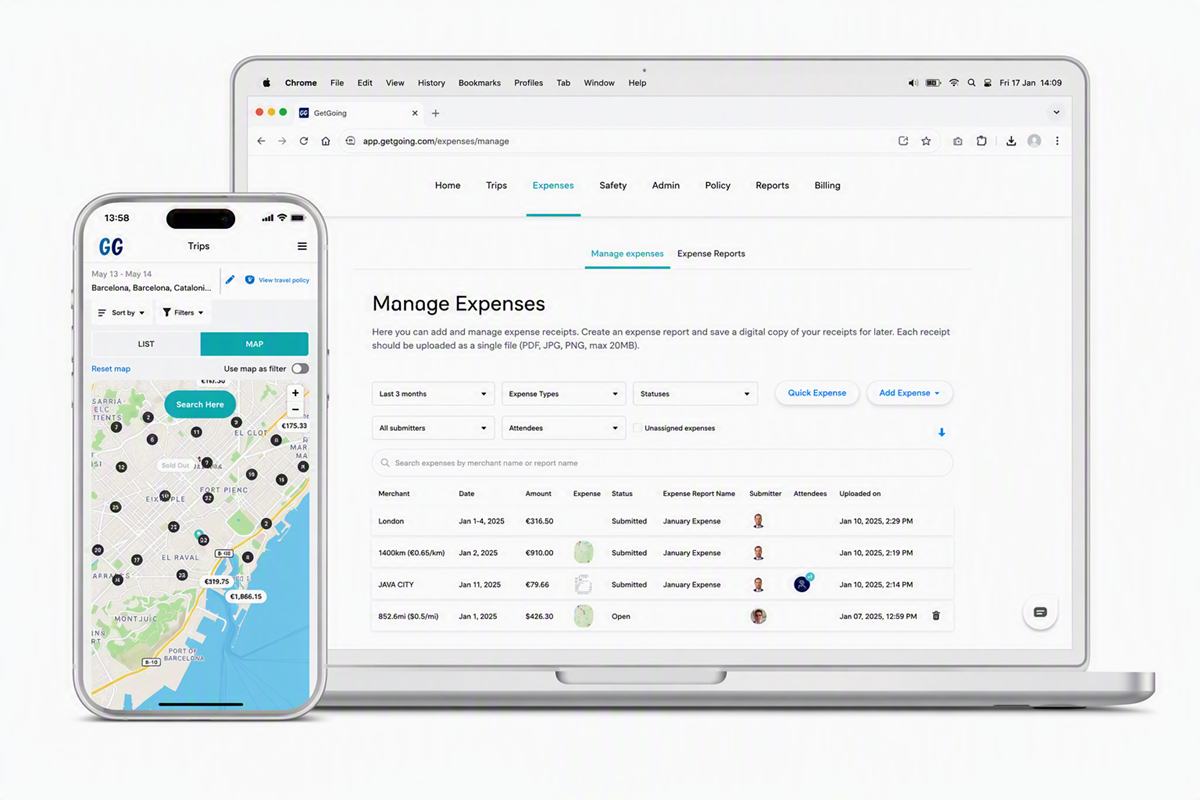
GetGoing, la plateforme de gestion des voyages d'affaires et des dépenses dédiée aux PME de BCD Travel est disponible en France depuis début 2026. @getgoing

MSC Croisières


TourMaG.com – BCD launched GetGoing on the French market at the start of the year. What is it about? Where is its deployment at?


Ghislain Domi : GetGoing was launched in Germany in 2022 and in the United States in 2023. We began rolling it out gradually in France at the start of the year, as well as in the United Kingdom, Belgium and the Netherlands.

We wanted to test the platform on the French market before communicating more broadly. Early feedback has been positive and IFTM represents a new milestone to accelerate this launch.

Growing companies reach a moment where travel management becomes too complex. They book on different sites, use Excel spreadsheets for their expenses, and assistants often have to manage travel alongside many other tasks.

Once a company reaches a certain size, they need to gain efficiency and take back control of their spending. GetGoing enables centralization of bookings, provides visibility into expenses, and reduces the administrative burden.

We also target companies that have already worked with TMCs, but for whom the tools and traditional processes have become too heavy. In such cases, their need is more about simplifying management.

TourMaG.com – GetGoing targets SMEs. Simplicity is therefore one of the platform’s main selling points?

Ghislain Domi : Absolutely. I have been in business travel for almost 20 years and have largely started with implementations of international programs. I’ve seen firsthand what can block these projects.

We wanted to approach the problem from the opposite angle: instead of shortening the implementation, we aimed to eliminate it. With GetGoing, there is no traditional implementation in the classic sense.

We can create a new client in a few minutes. Once the legal information is provided, building the base needed to start booking takes one to two hours maximum.

Of course, some topics can extend the process. A company that does not yet have a travel policy, for instance, can benefit from GetGoing deployment to define one. We can assist, but that inevitably takes more time.


“GetGoing and other BCD offerings are complementary”


Ghislain Domi est le Vice-President de GetGoing. @getgoing

TourMaG.com – Is the platform aimed only at travel managers?


Ghislain Domi : One of the goals is precisely to give travelers more control. We offer mobile apps on iOS and Android, and the idea is to cover the entire process, both for the traveler and the company.

The journey does not end when the employee returns home. Expenses, expense reports, and budget tracking must then be managed. We want to cover the end-to-end process.

TourMaG.com – Could GetGoing eventually compete with the other BCD Travel solutions?

Ghislain Domi : GetGoing and the other BCD offerings are complementary.

When a client grows or their program becomes more complex, they may need more customization, specific integrations, or customized processes. In that case, they can move toward TripSource.

We thus think less in terms of company size and more in terms of needs. GetGoing must remain a simple and effective solution for companies that primarily seek smoothness.


Air France NDC available in September

TourMaG.com – What role does artificial intelligence play in the platform?

Ghislain Domi : We are fairly selective. Our priority remains to keep a simple platform. We won’t add AI just for the sake of AI.

We use it where it provides real value, notably for receipt capture and expense reports. The traveler can take a photo of the receipt and the expense report is automatically prefilled. However, validation remains human.

AI also contributes to personalizing search results. For a flight, for example, it can determine the order in which the offers appear. But no algorithm will hide offers: we do not remove anything, we only adjust the hierarchy.

TourMaG.com – What adaptations did you have to make for the French market?

Ghislain Domi : The main adaptation obviously involves SNCF. We already had Deutsche Bahn in Germany and UK Rail in the United Kingdom. To offer a credible France-based offer, we had to include SNCF.

We are also working on Air France’s NDC. The feature is already in testing, and we are finalizing the last elements. It should be available by September.


“Around a hundred clients worldwide.”
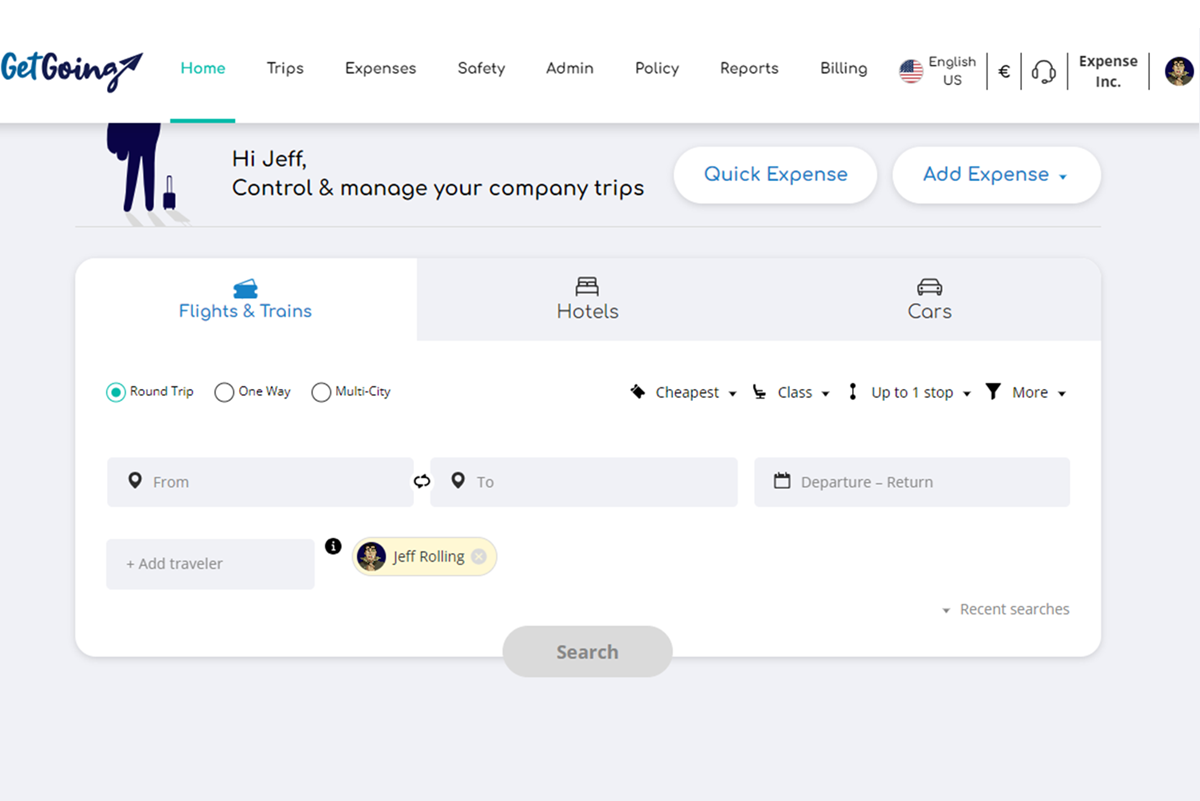

« GetGoing représente un véritable relais de croissance pour BCD en général et pour BCD France en particulier », affirme Ghislain Domi, Vice-President de GetGoing.  @getgoing

TourMaG.com – What will be the next evolutions?


Ghislain Domi : We have a very busy road map, with several years of development ahead of us.

By the end of the year, we will particularly strengthen Travel Risk Management. We already have a map showing where travelers are located. We will develop the entire portion related to reporting, tracking, disruptions, and risk-event management.

We are also actively collecting feedback from customers to bring about regular optimizations.

Next year, we will also develop new offerings in payments, a topic that is particularly important for SMEs, and significantly strengthen the Expense module. This will include integrating credit card data, more connections with third-party systems, and greater end-to-end process automation.

TourMaG.com – How many clients are using GetGoing today?

Ghislain Domi : We have around a hundred clients worldwide.

We don’t primarily measure by client count but by business volume. Our objective is to surpass 100 million euros in business volume by 2030. We’re on a solid trajectory to reach that.

TourMaG.com – What ambition for France?

Ghislain Domi : The French market is still very small since we have just launched there. But it will be one of the major contributors to GetGoing’s growth.

Historically, BCD did not address this market directly in France. There is therefore a lot to do and enormous potential. GetGoing represents a real growth lever for BCD in general and for BCD France in particular.

TourMaG.com – Could GetGoing be deployed in other countries?

Ghislain Domi : For now, nothing has been decided. There are ideas and we will discuss them soon, but nothing has been decided or funded yet.

Future developments may not be limited to Europe. We already know how to serve the European subsidiaries of a client, even in countries where we have not yet launched commercially in a proactive manner.


Caroline Lelievre Publié par Caroline Lelievre Journaliste – TourMaG.com
Voir tous les articles de Caroline Lelievre

  • picto Twitter
  • picto Linkedin
  • picto email
Ajoutez TourMaG à votre flux Google Actualités Google Actualités icône

ECTAA: Key Issues Set to Shape Europe’s Autumn Agenda


Eric Drésin, secrétaire général de l’ECTAA, fait le point sur les dossiers à suivre - Photo ECTAA

MSC Croisières


After the summer break, the ECTAA (European Association of Travel Agencies and Tour Operators) returns to work.

In its briefcase, several dossiers to monitor in the coming months. One of the first tasks concerns the implementation of the new directive on package travel.

The text has now crossed the European stage and enters its phase of transposition in the Member States. The European Commission specifies that countries have 28 months to transpose the new rules into their national law, before a six-month entry into force later.

To read: CEI, refunds, packages… what the European directive officially published changes!

The text must thus be transposed no later than September 29, 2028 to enter into force on March 29, 2029.


Package Travel Directive: Avoiding Over-Transposition

« We are in the transition phase for implementation, for transposition », explains Eric Drésin, secretary-general of the European association.

The ECTAA works with its national professional associations to monitor how the text will be rolled out in each country. « We start with the less hot dossiers», he summarizes, with one objective: to prevent compromises reached at the European level from being questioned at the national level.

If the new directive ultimately does not impose a general limitation on prepayments, member states still have limited room for maneuver.

« There is no obligation to limit prepayments, it’s clear, and we’ve managed to rule that out », recalls Eric Drésin. « But if the member states want, they can. » Vigilance is therefore required to avoid the risk of over-transposition. « There, we really want to tighten the screws to avoid this situation. »

The first country to tackle the transposition is Finland, where the ECTAA is expected as early as next week.


Air Passenger Rights: the problem of Intermediation Fees

Another particularly sensitive dossier: the revision of air passenger rights. A political agreement was reached this summer on revising the European framework. The European Commission indicates that the new regime must still be formally adopted and published before it applies, with a delay of 12 months after its publication.

For travel agencies and other intermediaries, one point crystallizes the concerns: refunds in the event of a flight cancellation.

« When a flight is canceled the travel agency will be obliged to reimburse its intermediary fees », explains Eric Drésin. And on this point, the legislative fight is now over: «There is nothing more we can do in the legislation. »

The ECTAA therefore intends to shift the debate to the realm of B2B relations.

The European association has denounced the «disproportionate impact» of these new rules on independent intermediaries and argues that intermediary fees remunerate a service distinct from that of the carrier.


Passenger Package : the dossier to watch closely

But the dossier that could monopolize a large part of the European agenda in the coming months is undoubtedly the Passenger Package, presented in May last.

The package includes three legislative proposals dedicated notably to rail ticketing, to multimodal mobility services (MDMS) and to railway passenger rights. The objective stated by Brussels is to enable travelers to compare and more easily purchase journeys that combine several operators (rail, road, sea), with a single ticket and enhanced rights throughout the entire trip.

In principle, ECTAA is supportive of this evolution. But Eric Drésin points to several difficulties.

The first concerns the absence of air travel in a device presented as multimodal. « We must integrate air transport into this legislative package so that we can have a clearly multimodal and relevant offer for customers », he says.

The organization believes that the principles of access that are fair, reasonable and non-discriminatory (FRAND) should not be limited to rail but should apply to all transport sectors whenever dominant operators impose unfair conditions on their business partners.


Sustainability: a topic that could resurface?

Finally, another topic is expected to return to the foreground: sustainability.

After having occupied an important place in sector debates in the post-Covid years, the issue seemed to have faded from view. For Eric Drésin, the events of this summer could however revive the discussions.

« The question of sustainable travel, of sustainability in our sector, had somewhat disappeared from the news », he notes. But «this summer raised so many questions that it will come back onto the table ».

According to him, national associations could ask the ECTAA to act more on this topic…

Five Cruise Ship Deliveries Set to Define the End of 2026


Le 4 décembre verra entrer simultanément en service le plus grand et l’un des plus innovants navires de notre sélection, MSC World Asia et Viking Libra (photo) @Fincantieri

Hurtigruten


The delivery of Explora III, on July 24 in Genoa, has not closed the book on 2026’s novelties.

After its christening in Barcelona and the start of its inaugural season on August 3, five other cruise ships are still due to enter service before year-end. Explora Journeys.

The calendar sketches an astonishing contrast. The smallest, the Magellan Discoverer will welcome fewer than a hundred passengers in Antarctica. The largest, the MSC World Asia, will be able to embark up to 6,762 in the Mediterranean.

Between the two lie three other models: a large cruise ship intended for the Chinese market, a vessel partially powered by liquid hydrogen, and a new showcase of all-inclusive ultra-luxury.


A 2026 vintage with character

With thirteen new cruise ships, 2026 is not a record year for the number of deliveries. The vintage stands out more for its eclectic mix.

According to Cruise Industry News’ orderbook, the ships delivered this year add roughly 27,000 beds and a cumulative investment estimated at 9.5 billion dollars.

The fleet has already been enriched by the Norwegian Luna, the Disney Adventure, the Mein Schiff Flow or the Legend of the Seas, which became the largest cruise ship in the world. Delivered on July 24, Explora III was the eighth ship in this lineup.

The 2026 vintage thus covers almost all sector evolutions. It brings together floating resorts capable of hosting thousands of passengers, ultra-luxury units, a small expedition vessel, and the first responses from the shipowners to the question of the post-fossil-fuel era.


September: Magellan Discoverer opens the final wave

The eagerly awaited Magellan Discoverer is slated for delivery in September before beginning its itineraries in November, during the southern hemisphere season 2026-2027.

Built in Chile for Antarctica21, it will become the first hybrid-electric polar ship built in South America. Classified as PC6, it will be able to accommodate 76 passengers within the company’s “air-cruise” programs and 96 on wholly maritime journeys.

The model enables travelers to reach Antarctica by air, without crossing the Drake Passage, and then board near the peninsula. Batteries, electric propulsion, heat recovery and a scientific laboratory are expected to enable the company to pursue a low-impact approach in one of the planet’s most sensitive environments.


November 6: China delivers Adora Flora City

The next major milestone is set for November 6. Adora Flora City is to be delivered in Shanghai, before heading to Guangzhou to begin its commercial career.

The second large cruise ship built in China after Adora Magic City, the vessel measures 341 metres and has 2,130 cabins. It can accommodate up to 5,232 passengers. The inaugural voyage will depart from Nansha Port, in Guangzhou, on November 22. The five-night itinerary will call at Hong Kong and Chan May, gateway to Huế in Vietnam.

The interior design, dining and entertainment will incorporate references to Chinese culture. A special program bringing together Cantonese opera, acrobatics, traditional music and puppet theatre is planned for the inaugural voyage.


4 décembre : Viking Libra ouvre l’ère de l’hydrogène

Delivered by Fincantieri in November, Viking Libra is set to welcome its first guests on December 4 in Piraeus. Its inaugural voyage will be a ten-day itinerary through the Greek islands, returning to Athens on December 13.

The ship will stay true to Viking’s established format: a relatively compact footprint, 499 balcony cabins and a capacity limited to 998 passengers. The breakthrough will lie beneath the hull.

Viking Libra will be equipped with a propulsion system partially powered by liquid hydrogen and fuel cells. With a power output of up to 6 MW, this installation is designed to allow the cruise ship to operate with zero emissions during certain sailing sequences or at its ports of call.

Viking presents it as the first cruise ship in the world capable of using liquid hydrogen directly for propulsion.

A highly watched first, even though the vessel will also retain conventional engines.


La sculpture est appelée à devenir l'une des signatures de MSC World Asia @MSC


Imagined by Balich Wonder Studio, the dragon becomes the main symbol of the Asian references woven into the ship’s design. Despite its name and this aesthetic universe, MSC World Asia will not immediately head toward Asia.

After its delivery in Saint-Nazaire and its christening in Le Havre on November 28, it will move on to Marseille to begin its first Mediterranean season. The dragon will thus come to life in Europe.


Laurent Guéna Published by Laurent Guéna Journalist – TourMaG.com

See all articles by Laurent Guéna

  • picto Linkedin
  • picto email
Add TourMaG to your Google News feed Google Actualités icône

SNCF Set to Enter Italy’s High-Speed Rail Market


L'AGCM vient de s'exprimer en faveur de la libre concurrence sur le marché italien de la grande vitesse - Depositphotos.com, @Hans_Chr

IFTM prenez RDV avec TourMaG


The Italian Competition Authority and Market Authority (AGCM) has issued a ruling favorable to opening up the high-speed market to competition in Italy.

A step welcomed by SNCF Voyages Italia, a subsidiary of SNCF Voyageurs.

The Authority validated the commitments made by the infrastructure manager Rete Ferroviaria Italiana to ensure fair access terms for new operators.

For SNCF Voyages Italia, this decision constitutes an important first step. But it must now be followed by concrete measures, including the immediate allocation of a portion of the requested rail slots.

Without this access to capacity to run trains, the launch of the project will not be possible.


Un projet d’investissement prévu pour 2027

The company plans to launch its new high-speed offering in September 2027.

The project relies on the introduction of 15 next-generation trains, with the goal of carrying more than 10 million passengers per year in Italy.

The offering aims to provide more capacity, “optimal comfort, competitive fares and an environmentally friendly travel experience,” says SNCF Voyages Italia in a press release.

The industrial plan foresees 13 daily round-trips : 9 between Turin and Naples, and 4 between Turin and Venice.

For the company, this level of activity is essential to make the investments viable. Without these minimum conditions, the project could not be fully implemented.


Un projet aux retombées économiques significatives, mais encore conditionné

According to a study conducted with Università Bocconi and its GREEN research center, the project could generate more than €480 million in economic spillovers per year.

These benefits would include a contribution to growth, new tax revenues, the creation of more than 4,000 direct and indirect jobs, time savings for travelers, and an average easing of prices due to intensified competition.

Despite the decision of the Competition Authority, SNCF Voyages Italia nevertheless believes that several conditions remain essential to bring its market entry to fruition.

The company is asking in particular for sufficient access to additional rail slots, the possibility to operate maintenance facilities in Italy, and obtaining the necessary certifications for its trains. Without these guarantees, the launch of the new offering could not be realized within the planned timelines.

SNCF Voyages Italia urges all sector stakeholders to collaborate to enable a successful entry into the Italian market, in compliance with European regulations.


Amelia Brille Published by Amelia Brille TourMaG.com Editor
See all articles by Amelia Brille

  • picto Linkedin
  • picto email
Add TourMaG to your Google News feed Google Actualités icône  

The One Place You Should Never Set Your Suitcase Down, Experts Say

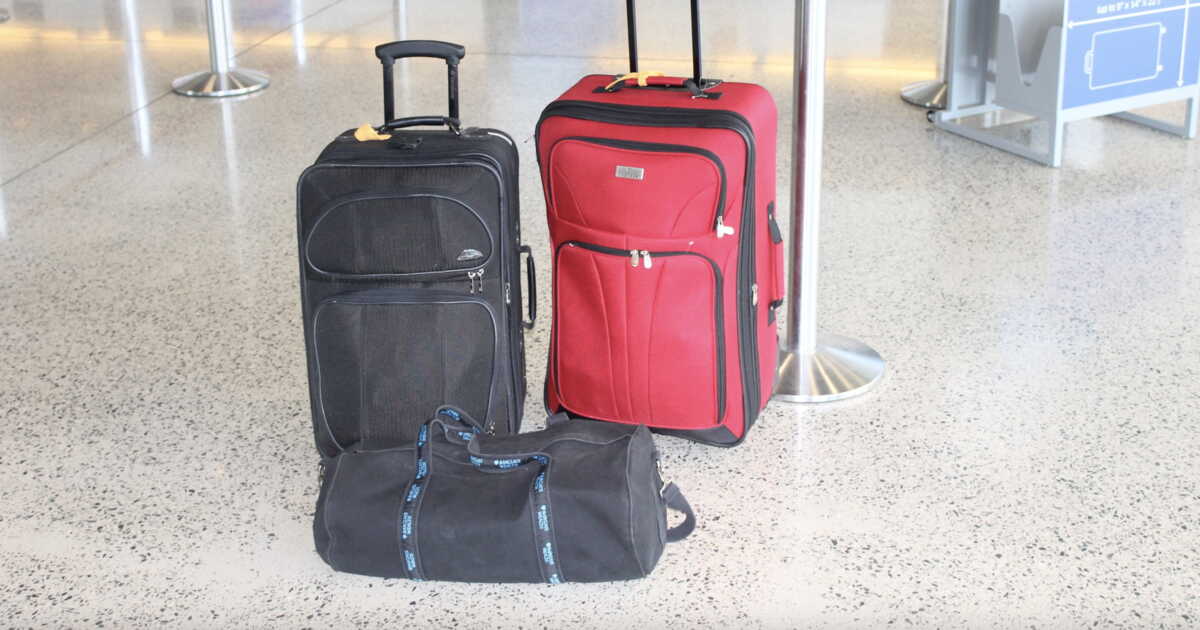
Upon arriving in a hotel room, it’s hard to resist the urge to drop your suitcase right away to start unpacking. And what could be more convenient than placing that bag on the bed? Yet this habit, adopted by many travelers, is far from harmless. According to several experts, it’s even the worst possible place to set down and open your suitcase. Here’s why.

Why the bed is the worst place to put down your suitcase

For many travelers, the bed is the most convenient spot to open their suitcase and unpack. According to data shared by Real Simple, 38% of travelers place their suitcase directly on the hotel bed. Yet this reflex is far from advisable.

Why? The problem comes from the path the luggage takes before arriving in the room. They pass through airport terminals, security screening belts, public transportation, taxi trunks, or sidewalks. So many surfaces that could be contaminated…

“It is likely that your luggage has spent time in unsanitary places”, explains Timothy Southern, director of the Nevada State Public Health Laboratory and associate professor of microbiology and immunology at the University of Nevada School of Medicine in Reno, in Travel + Leisure.

The specialist also notes that suitcases can carry pathogens from one surface to another. “Some bacteria and some viruses can persist on the surface of a suitcase and then contaminate the bedding”, adds Timothy Southern.

Beyond bacteria and viruses, bed bugs constitute another risk. These insects can hide in the seams of a suitcase, in clothing, or in the upholstered furniture in the room. By placing your luggage on the bed, the risk of transporting them or picking them up increases.

“One of the reasons travelers are advised not to place their luggage on hotel beds is to limit the spread of bed bugs”, notes the expert.

The solutions recommended by specialists

The good news is that there are simple alternatives. The first is to use a luggage rack, equipment found in many hotel rooms. Placed at the right height, it allows you to store or retrieve your belongings without placing the luggage on the bedding.

“By simply using a luggage rack, you can prevent unwanted guests from contaminating your bedding, whether at home or on your trip”, says Timothy Southern.

When the room doesn’t have one, other furniture can do the job. Julie Durso, A-List travel advisor for Scott Dunn, recommends in Travel + Leisure using a desk, a dresser, or a bench at the foot of the bed—surfaces better suited than the bedding.

Finally, if none of these solutions are available, the bathroom floor remains the best option, according to experts. Its hard, non-porous surface is far less conducive to bed bug establishment than carpets or fabric-covered furniture.

Adopting this simple habit helps limit the risk of transporting bacteria, viruses or bed bugs into your luggage, and then to your home. Finally, once your belongings are out, remember to close your suitcase rather than leaving it open for the entire stay. This reduces the chances for any insects to settle in. Easy precautions that can prevent many inconveniences after a hotel stay.

In the same series “Our Travel Tips”:

According to flight attendants, this is the place you should never put your coat on a plane

Here are the three tips to borrow from flight attendants to travel like a pro

The reclining seat on the plane, without headphones… advice from a flight attendant in the face of rudeness

Thailand: What We Know About THIM, the New Travel App Set for October 2026


Thaïlande : que sait-on de THIM, la nouvelle appli pour les voyageurs annoncée pour octobre 2026 ? - Photo Appli ios

Top of Travel


Thailand continues the digitization of its entry procedures.

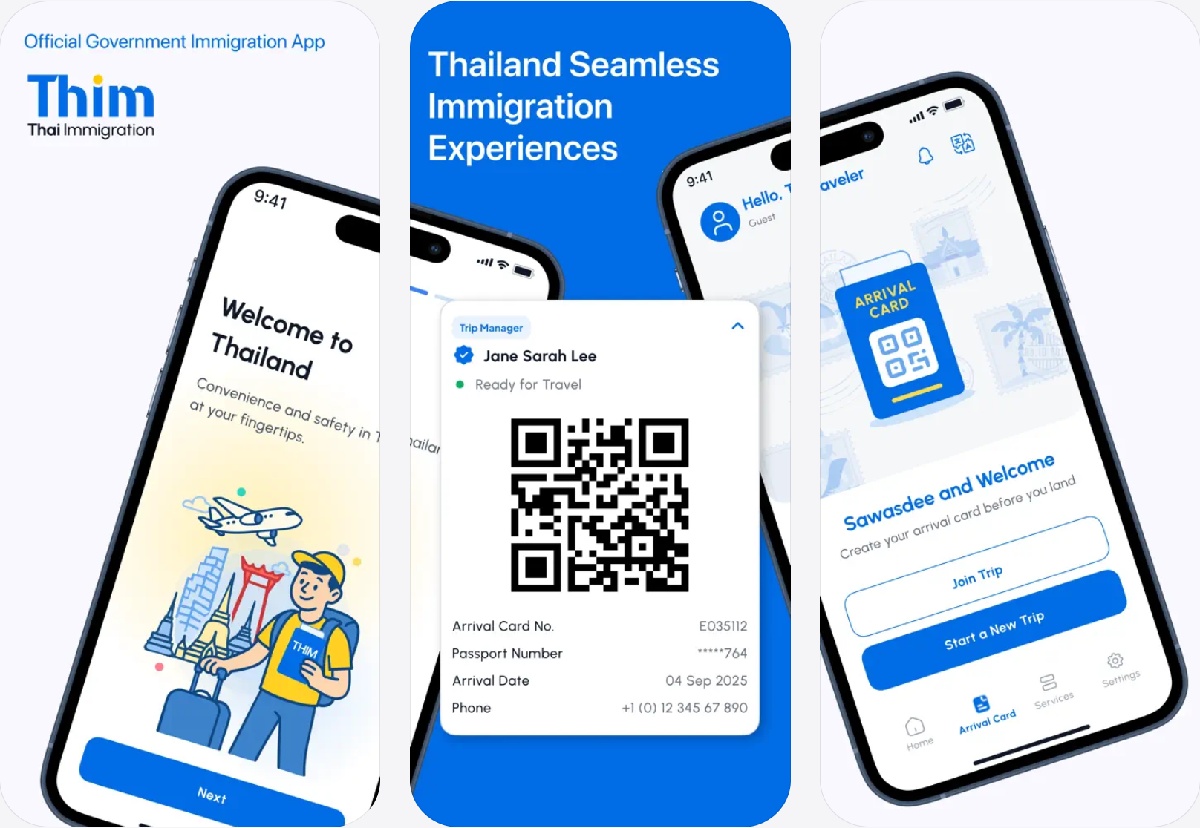
According to several Asian media, including The Straits Times, the Thai Immigration Bureau is preparing the deployment of THIM (Thailand Immigration Management System), a new mobile application designed to simplify and speed up the entry formalities for international travelers.

Presented at the AWS Summit Bangkok 2026, the application should enable travelers to input their information before arrival, notably through automated passport reading and the creation of a reusable digital profile. According to The Straits Times, THIM is part of the TDAC (Thailand Digital Arrival Card) system, which has become mandatory for foreign visitors.

« The THIM app would complement the TDAC portal, which until now did not have a mobile app version. It would serve to optimize immigration procedures in Thailand », also explains Nicolas Lepage, head of Sales and Communications at Action-Visas.


The THIM app already available on Android and iOS

The app is already available on the Thai Immigration Bureau’s iOS and Android stores. Descriptions published on these platforms highlight the management of digital arrival cards, traveler registration, and the reception of travel-related notifications.

For now, Thai authorities have not published a detailed deployment schedule. Several local media, however, mention an experimental phase starting on October 1, 2026.

At this stage, no official communication suggests that the TDAC web portal will disappear in favor of the mobile application. Observers instead expect the coexistence of the two channels to allow travelers to choose between a traditional online process and smartphone-based usage.