In England, Follow in the Footsteps of the Pendle Witches and Their Sinister Legends

In the north-west of England, a mist-wreathed hill and villages with old stone houses invite you to trace the country’s most unsettling legends. Welcome to Pendle, a region where mystery lovers can walk in the footsteps of witches, explore wild landscapes, and push open doors to places steeped in troubling tales. As Halloween approaches, this little-known Lancashire destination offers an escape as otherworldly as it is fascinating. But here, behind the ghost stories, the past is far from a mere legend.

A Witch Hunt Fueled by Fear and Superstition

At the start of the 17th century, an accusation of witchcraft could cost you your life. In England, King James I had intensified the crackdown with a law passed in 1604, which prescribed the death penalty for certain practices of witchcraft, even when they had not resulted in any deaths. The elderly, the poor, or those reputed to possess healing powers were particularly exposed to suspicion.

It was in this climate that the Pendle affair burst onto the scene. In March 1612, Alizon Device, a local healer, encountered a travelling peddler, John Law, who collapsed shortly afterwards. Law’s son denounced the young woman to the authorities. She would later acknowledge some responsibility for the incident and point the finger at several other residents, including her grandmother Elizabeth Southerns and Anne Whittle, a healer with whom she had been in conflict.

The magistrate Roger Nowell’s inquiry soon gathered momentum. A gathering held on Good Friday at the Device family home was interpreted as a witches’ gathering and led to further arrests. Among the accused was Alice Nutter, a relatively well-off woman whose case stood in stark contrast to that of the other defendants.

The testimony of Jennet Device, aged only nine, played a decisive role in the convictions. She accused her mother, her brother, her sister, and her grandmother. In total, nine of the twelve people tried in this case were found guilty and hanged.

The suppression of witchcraft continued for several decades. In England, it was not until 1736 that the laws criminalising these practices were repealed.

From Lancashire Villages to the Dungeons of Lancaster Castle

Today, visitors can traverse the landscapes associated with this case thanks to several walking routes, notably the Pendle Witches’ Way and the Lancashire Witches’ Walk. These routes permit exploration of the villages where some of the accused lived, as well as the sites tied to their arrest and imprisonment.

In Newchurch-in-Pendle, a small village at the foot of the hill, traces of this history remain visible. Representations of witches decorate some houses, while horseshoes and holly recall old beliefs meant to ward off bad luck. The Church of St. Mary also attracts curious visitors. Its cemetery houses an imposing stone tomb nicknamed the Witch’s Tomb, sometimes linked to Alice Nutter. This attribution remains uncertain. A sculpture in the shape of an eye, known as the Eye of God, also adorns the church tower and is said to have been intended to protect the village from malevolent forces.

Farther on, Ashlar House, a stone dwelling in Fence, constitutes another important stop. According to local historian Stephen Oldfield, interviewed by the BBC, it is the only building still standing in the area where the accused are known to have entered.

The walk finally leads to Lancaster, where the medieval castle rises, the site where prisoners were held before their trials. Visitors can explore the dungeons, cramped and damp spaces that give a sense of the conditions of detention of the era.

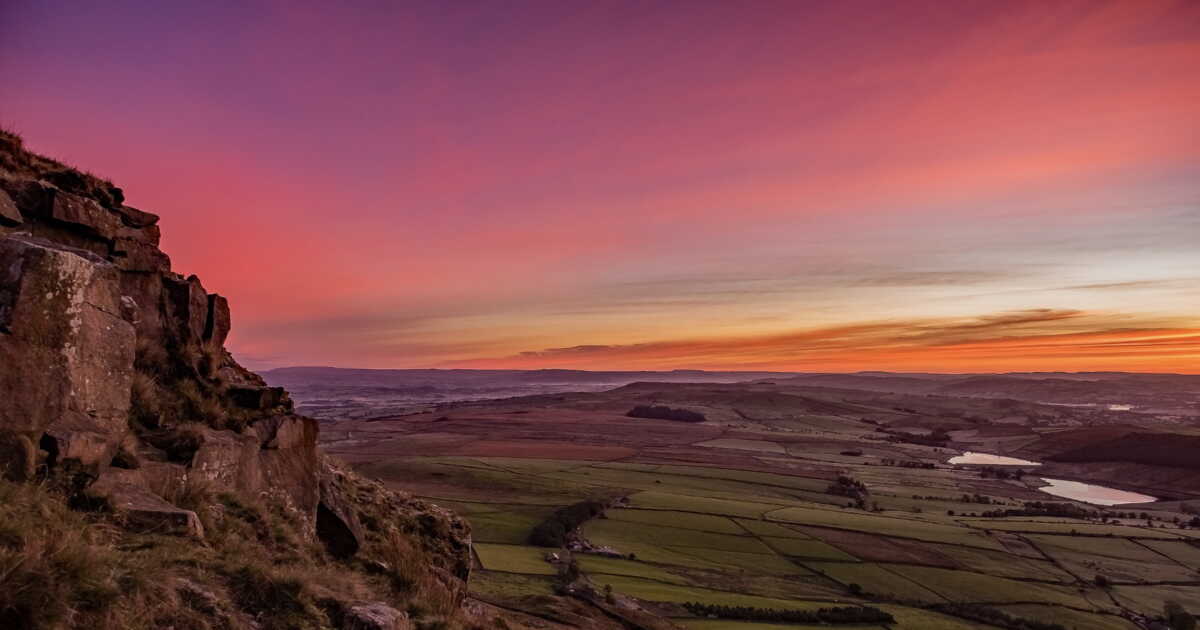
The region also cultivates its mysterious reputation. Visitors report feeling a sense of unease on Pendle Hill, whose summit rises to 557 metres and is frequently shrouded in mist. Historian Stephen Oldfield describes this atmosphere as singular: “There has always been this atmosphere and this unsettling presence on Pendle Hill.”

Accounts of unexplained phenomena draw fans of dark tourism, especially as Halloween approaches. Yet behind the ghost stories, the site’s historical interest remains essential. For Stephen Oldfield, those condemned were, above all, vulnerable individuals, caught in the beliefs of their time.
Canada: Follow in Céline Dion’s Footsteps


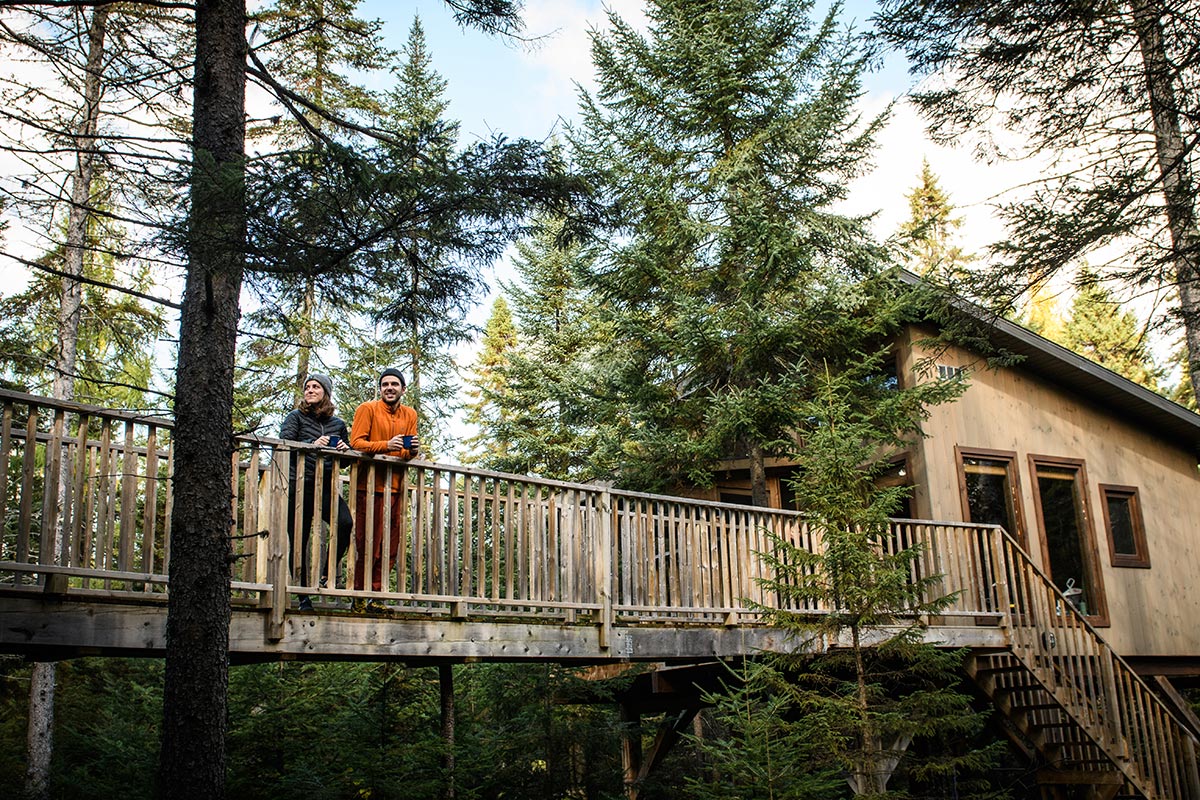
Hébergement Kabania, Lanaudiere © GouvQc Kabania Daphné Carron

Hurtigruten


In 2026, the Canadian icon is more than ever in the spotlight. After several years away from the grand stages, Céline Dion is preparing her return to concert in Paris starting in September, before continuing the journey in 2027. She also unveiled this year Dansons, her first original title in years.

The occasion is therefore perfect to imagine a journey tracing the footsteps of the most famous Canadian singer!

Our itinerary links several iconic regions of Quebec: from Montréal to the greater Québec City area, passing through Charlemagne and Lanaudière, through a three-stage pilgrimage of at least six nights, to be lived with a healthy dose of self-deprecation, a few carefully prepared playlists and, if possible, someone in the group capable of reaching the notes of All by Myself…


Montréal: Céline Dion’s Grand Chapter

For French travelers, Montreal serves as the main gateway to Canada and easily deserves two to three nights. Old Montreal, the Old Port, Mount Royal, the Quartier des Spectacles, public markets and neighborhoods like the Plateau and Mile End allow for a blend of heritage, gastronomy and lifestyle.

Our Lady of Montreal: tracing a legendary wedding

If several places resonate strongly with Céline fans, there is no place to begin other than the Notre-Dame Basilica in Old Montreal. It is here that Céline Dion married René Angélil on December 17, 1994, in a ceremony that has become one of the great moments in Quebecois popular culture.

The basilica is also, independently of Céline, one of the must-see monuments for a first stay in Montreal. In 2026 and 2027, visitors can notably discover AURA, the immersive experience designed by Moment Factory that blends projections, light, lasers and music within the building’s impressive neo-Gothic architecture. This is probably the place where fans can get closest to the “spectacle” aesthetic dear to Céline.

Old Montreal and the Saint-Lawrence River: stepping beyond the pilgrimage

After the photo in front of Notre-Dame, one can walk to Place Jacques-Cartier, Bonsecours Market, and then the quays of the Old Port. From the Saint-Lawrence River, cruises and nautical activities offer another perspective on Montreal. The Old Port also houses the Grande Roue, the Port of Montreal Tower and various seasonal activities.

For those who would like to attempt a Titanic re-enactment at the prow of a ship on the Saint-Lawrence, it’s best to seek the crew’s permission. And for the soundtrack, no one will ban My Heart Will Go On.

150th anniversary of Mount Royal

Mont Royal Park, Montreal’s enormous green lung, celebrates its 150th anniversary in 2026. Created in 1876 and laid out according to the plans of Frederick Law Olmsted, who also designed Central Park in New York, it covers about 200 hectares. It also offers a perfect illustration of what makes Montreal unique: you can visit a basilica and a historic district in the morning, have a bagel lunch in the Mile End, and then find yourself in nature with squirrels a few hours later.


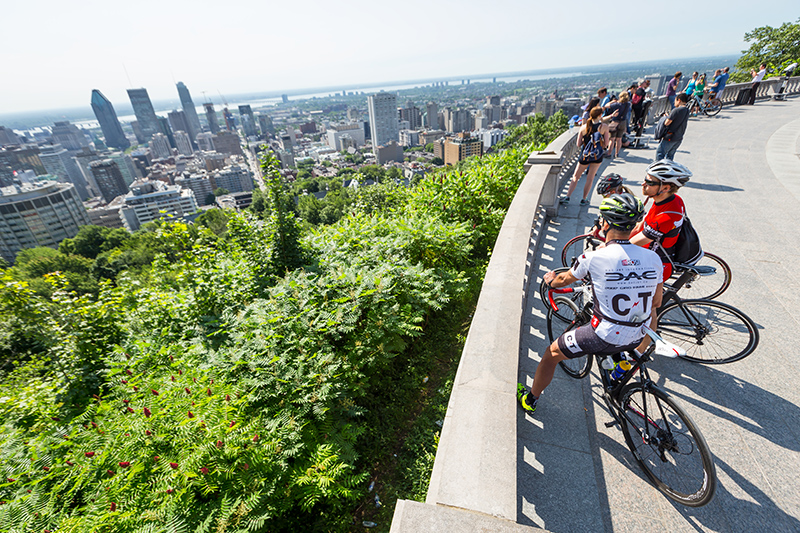
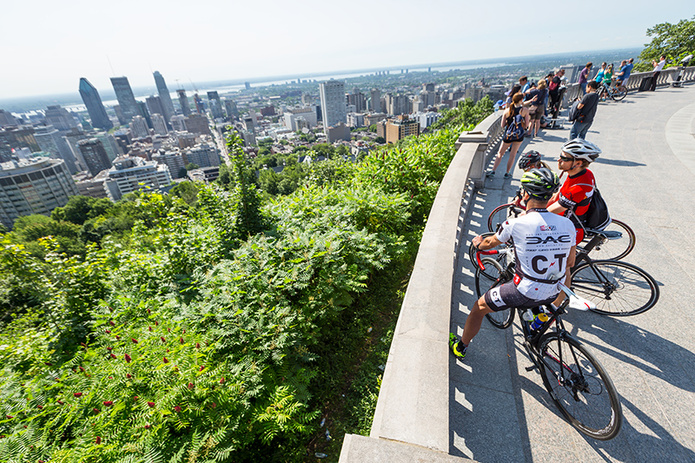
Belvédère Kondiaronk sur le mont Royal, Montréal © GouvQc Matthew Clark


Bagels, smoked meat and markets

Montreal also hosts several MICHELIN Guide-starred restaurants. Alongside this high-end gastronomy, Montreal bagels, smoked meat and poutine remain classics to discover, while the Jean-Talon Market allows visitors to meet Quebec producers and artisans.

And in the evening? Karaoke is mandatory. Do not hesitate to disown any responsibility in case of a voice loss.


Charlemagne: Where It All Began

It is in this small town of Quebec, about thirty kilometers east of Montreal, that Céline Dion was born on March 30, 1968, the youngest of a family of fourteen children. In the Dion household, everyone sings or plays an instrument. At 12, Céline wrote Ce n’était qu’un rêve with her mother and brother Jacques, a cassette that would land in René Angélil’s hands. The rest belongs to Canadian music history.

For fans, a stop in front of the Céline-Dion Boulevard sign naturally becomes the travel keepsake photo. It should be clear, however: Charlemagne does not have an official museum dedicated to the singer, and the places associated with her childhood are not tourist attractions. The point of this stage is thus symbolic; it’s best to include it in a day that’s part of a broader Lanaudière region itinerary, northeast of Montreal.


Lanaudière: After Céline, the Great Canadian Outdoors

This is where the itinerary takes on a whole new dimension, as Lanaudière offers an excellent playground for travelers seeking to combine culture and nature: forests, lakes, regional parks, villages, water activities and local products.

Lanaudière is home to several iconic sites, including the Mont-Tremblant National Park, which spans the Lanaudière and Laurentides regions, the Lac Taureau Regional Park, and renowned accommodations such as the Auberge du Lac Taureau and the Auberge du Vieux Moulin. The region also offers agro-tourism circuits that showcase local producers, know-how and regional specialties. Maple syrup, cheeses… and a Céline playlist!

In summer, lakes and rivers are explored by canoe, kayak or stand-up paddleboard. In autumn, forests turn red, orange and gold, offering one of the most iconic landscapes in Canada.

And because it’s still a Céline Dion pilgrimage, J’irai où tu iras is the perfect title for the road!


Céline as a pretext for discovering Canada

Obviously, no one will board a plane just to photograph a street sign in Charlemagne. This Céline Dion–inspired itinerary is first and foremost a narrative thread that lets you tell several facets of Canada: Montreal and its creativity, Lanaudière and its vast spaces, Quebec City and its heritage, the Saint-Lawrence, gastronomy, and the francophone identity of the beautiful province.

For fans, the journey has an evident emotional dimension. For others, it remains a very beautiful itinerary in Quebec!


Canada : partez sur les traces de Céline Dion !

Destination Canada est l’organisme national de marketing touristique du Canada représenté en France par l’agence 360tourisme.

Pour en savoir plus, contactez Maryse Normandeau, responsable partenariats trade pour Destination Canada, sur [email protected].

www.LeCanadaNaturellement.fr

Retrouvez-nous sur :

facebook instagram youtube