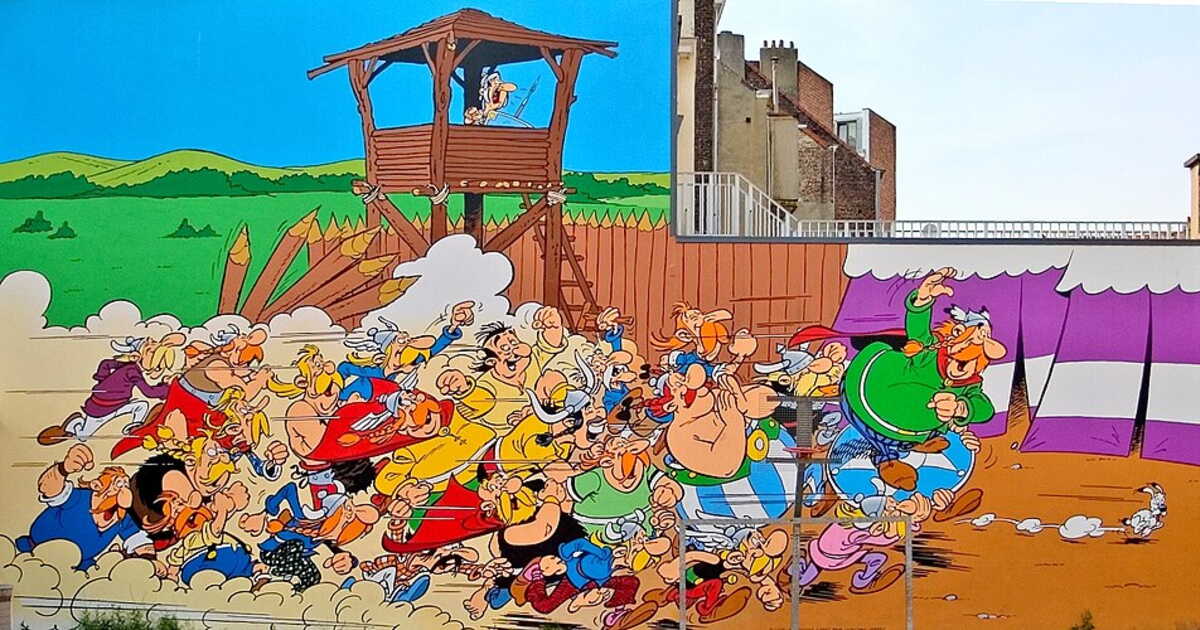
Asterix and the Peoples of the World: A Book in the Footsteps of the Indomitable Gauls

Since the birth of Astérix in 1959, René Goscinny and Albert Uderzo, its two creators, have driven the indomitable Gauls on countless journeys. They have traversed a large portion of the ancient world: from Italy to Hispania, from Brittany to Corsica, not to mention lands even farther afield. The Astérix albums have always accorded a significant place to landscapes, to peoples, to traditions, and to History. It is this link between comics and geography that Astérix and the Peoples of the World highlights, a GEO beau-livre (coffee-table book) available from September 16, 2026.

Over 128 pages, GEO magazine’s reporters set out to seek the real-world places and elements that helped shape the Astérix universe. A journey that leads them notably to Lusitania, to the lands of the Picts, to ancient Rome, and to Corsica.

When Astérix’s Albums Meet the Real World

The originality of the work rests on a dialogue between the comic-book pages and the photographs taken by GEO’s reporters.

On one side, the images from the albums narrate a reimagined ancient world through the humor and imagination of their creators. On the other, the photographs allow readers to discover, in today’s world, certain landscapes, traditions or vestiges that fed this imagination.

Fabcaro and Didier Conr ad unveil the behind-the-scenes of the creation

The book also gives a voice to those who today bring to life the adventures of the famous moustached Gaul. In an exclusive interview, the screenwriter Fabcaro and the artist Didier Conr ad, the current custodians of the Astérix character, recount their creative process and their approach to travel in the latest albums they worked on: L’iris blanc (published in 2023) and Astérix in Lusitania (published in 2025).

How does one document a narrative set in a distant era and territories? What role should be accorded to historical and geographical references? And what characterizes Astérix and Obélix as they become, through the albums, true travelers?

At the crossroads of the art book, the travelogue and the comic, Astérix and the Peoples of the World thus speaks to both fans of the universe created by René Goscinny and Albert Uderzo and to lovers of comics, of history and of travel.

Astérix: Meeting the Peoples, available from September 16, 2026, in press and in bookstores, at a price of €19.95.
Canada: Follow in Céline Dion’s Footsteps


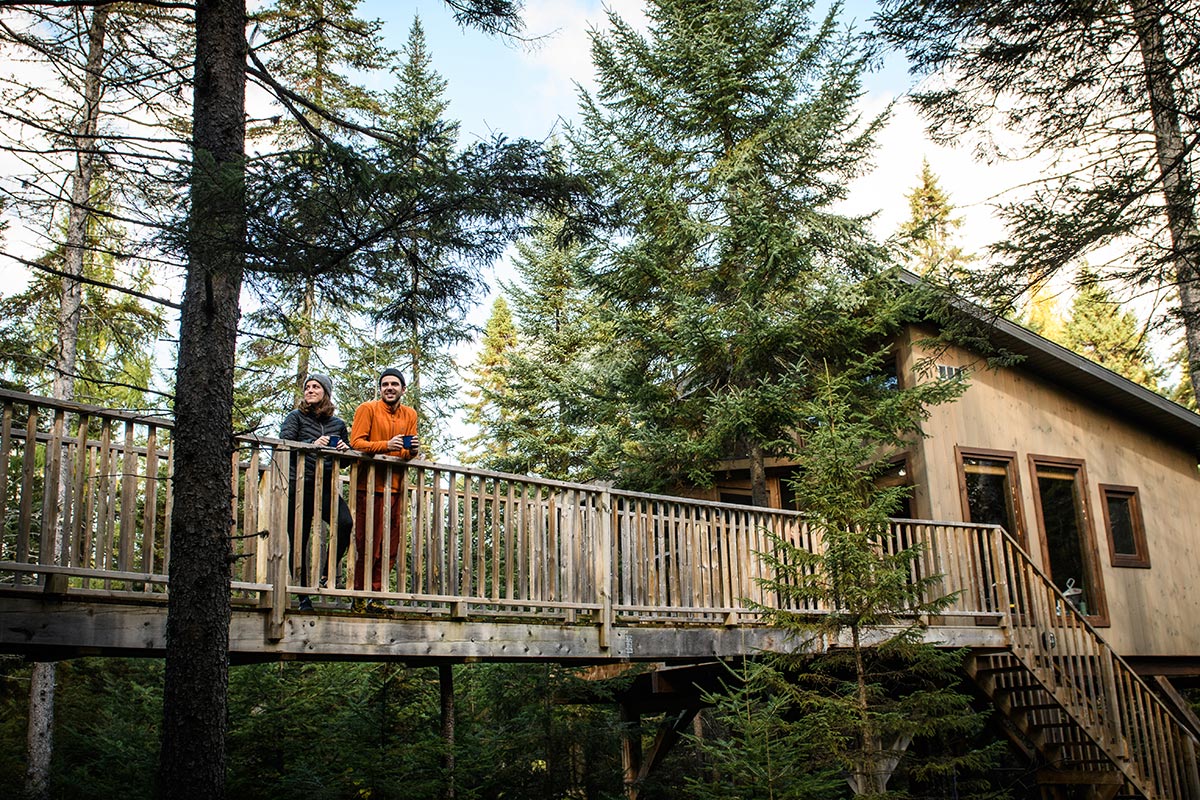
Hébergement Kabania, Lanaudiere © GouvQc Kabania Daphné Carron

Hurtigruten


In 2026, the Canadian icon is more than ever in the spotlight. After several years away from the grand stages, Céline Dion is preparing her return to concert in Paris starting in September, before continuing the journey in 2027. She also unveiled this year Dansons, her first original title in years.

The occasion is therefore perfect to imagine a journey tracing the footsteps of the most famous Canadian singer!

Our itinerary links several iconic regions of Quebec: from Montréal to the greater Québec City area, passing through Charlemagne and Lanaudière, through a three-stage pilgrimage of at least six nights, to be lived with a healthy dose of self-deprecation, a few carefully prepared playlists and, if possible, someone in the group capable of reaching the notes of All by Myself


Montréal: Céline Dion’s Grand Chapter

For French travelers, Montreal serves as the main gateway to Canada and easily deserves two to three nights. Old Montreal, the Old Port, Mount Royal, the Quartier des Spectacles, public markets and neighborhoods like the Plateau and Mile End allow for a blend of heritage, gastronomy and lifestyle.

Our Lady of Montreal: tracing a legendary wedding

If several places resonate strongly with Céline fans, there is no place to begin other than the Notre-Dame Basilica in Old Montreal. It is here that Céline Dion married René Angélil on December 17, 1994, in a ceremony that has become one of the great moments in Quebecois popular culture.

The basilica is also, independently of Céline, one of the must-see monuments for a first stay in Montreal. In 2026 and 2027, visitors can notably discover AURA, the immersive experience designed by Moment Factory that blends projections, light, lasers and music within the building’s impressive neo-Gothic architecture. This is probably the place where fans can get closest to the “spectacle” aesthetic dear to Céline.

Old Montreal and the Saint-Lawrence River: stepping beyond the pilgrimage

After the photo in front of Notre-Dame, one can walk to Place Jacques-Cartier, Bonsecours Market, and then the quays of the Old Port. From the Saint-Lawrence River, cruises and nautical activities offer another perspective on Montreal. The Old Port also houses the Grande Roue, the Port of Montreal Tower and various seasonal activities.

For those who would like to attempt a Titanic re-enactment at the prow of a ship on the Saint-Lawrence, it’s best to seek the crew’s permission. And for the soundtrack, no one will ban My Heart Will Go On.

150th anniversary of Mount Royal

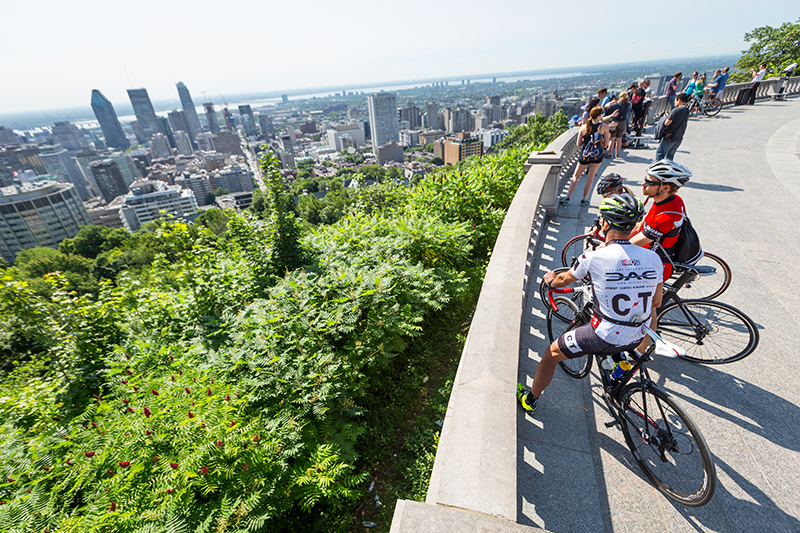
Mont Royal Park, Montreal’s enormous green lung, celebrates its 150th anniversary in 2026. Created in 1876 and laid out according to the plans of Frederick Law Olmsted, who also designed Central Park in New York, it covers about 200 hectares. It also offers a perfect illustration of what makes Montreal unique: you can visit a basilica and a historic district in the morning, have a bagel lunch in the Mile End, and then find yourself in nature with squirrels a few hours later.


Belvédère Kondiaronk sur le mont Royal, Montréal © GouvQc Matthew Clark


Bagels, smoked meat and markets

Montreal also hosts several MICHELIN Guide-starred restaurants. Alongside this high-end gastronomy, Montreal bagels, smoked meat and poutine remain classics to discover, while the Jean-Talon Market allows visitors to meet Quebec producers and artisans.

And in the evening? Karaoke is mandatory. Do not hesitate to disown any responsibility in case of a voice loss.


Charlemagne: Where It All Began

It is in this small town of Quebec, about thirty kilometers east of Montreal, that Céline Dion was born on March 30, 1968, the youngest of a family of fourteen children. In the Dion household, everyone sings or plays an instrument. At 12, Céline wrote Ce n’était qu’un rêve with her mother and brother Jacques, a cassette that would land in René Angélil’s hands. The rest belongs to Canadian music history.

For fans, a stop in front of the Céline-Dion Boulevard sign naturally becomes the travel keepsake photo. It should be clear, however: Charlemagne does not have an official museum dedicated to the singer, and the places associated with her childhood are not tourist attractions. The point of this stage is thus symbolic; it’s best to include it in a day that’s part of a broader Lanaudière region itinerary, northeast of Montreal.


Lanaudière: After Céline, the Great Canadian Outdoors

This is where the itinerary takes on a whole new dimension, as Lanaudière offers an excellent playground for travelers seeking to combine culture and nature: forests, lakes, regional parks, villages, water activities and local products.

Lanaudière is home to several iconic sites, including the Mont-Tremblant National Park, which spans the Lanaudière and Laurentides regions, the Lac Taureau Regional Park, and renowned accommodations such as the Auberge du Lac Taureau and the Auberge du Vieux Moulin. The region also offers agro-tourism circuits that showcase local producers, know-how and regional specialties. Maple syrup, cheeses… and a Céline playlist!

In summer, lakes and rivers are explored by canoe, kayak or stand-up paddleboard. In autumn, forests turn red, orange and gold, offering one of the most iconic landscapes in Canada.

And because it’s still a Céline Dion pilgrimage, J’irai où tu iras is the perfect title for the road!


Céline as a pretext for discovering Canada

Obviously, no one will board a plane just to photograph a street sign in Charlemagne. This Céline Dion–inspired itinerary is first and foremost a narrative thread that lets you tell several facets of Canada: Montreal and its creativity, Lanaudière and its vast spaces, Quebec City and its heritage, the Saint-Lawrence, gastronomy, and the francophone identity of the beautiful province.

For fans, the journey has an evident emotional dimension. For others, it remains a very beautiful itinerary in Quebec!


Canada : partez sur les traces de Céline Dion !

Destination Canada est l’organisme national de marketing touristique du Canada représenté en France par l’agence 360tourisme.

Pour en savoir plus, contactez Maryse Normandeau, responsable partenariats trade pour Destination Canada, sur [email protected].

www.LeCanadaNaturellement.fr

Retrouvez-nous sur :

facebook instagram youtube


In the Footsteps of George Sand: Walking in Indre, Berry


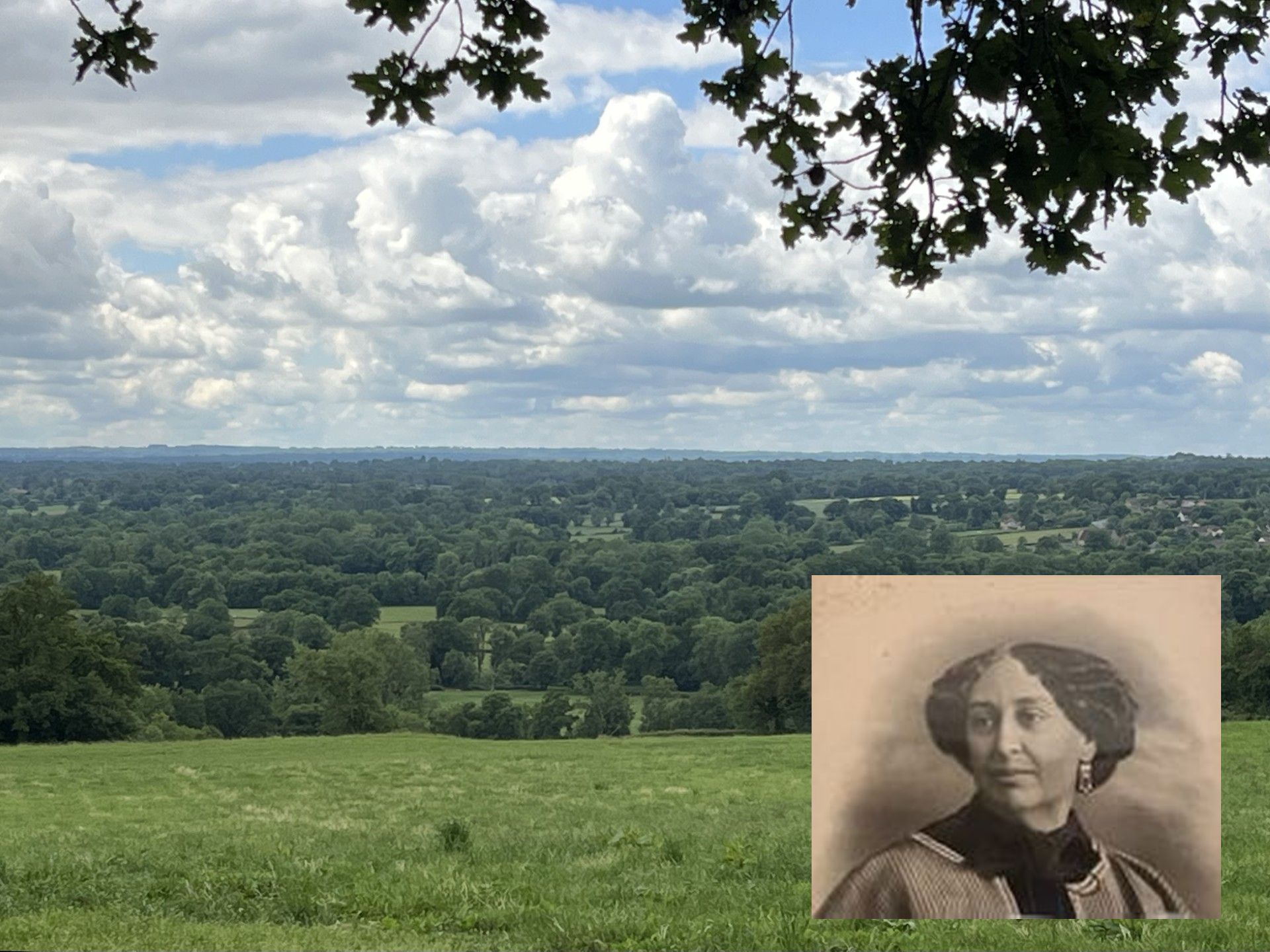
Le pays de George Sand est un pays de bocage. Dans Vallée-Noire, a-t-elle écrit, "une légère vapeur argente les lointains" - Photo PB

CroisiEurope


There are writers who are inseparable from a territory. George Sand is among them.

Fifteen decades after her death, on June 8, 1876, in her home at Nohant where she spent most of her life, the green landscapes of Boischaut-sud — this region of the Berry lies in the Indre department and thus in the Loire Valley region — are not spectacular. Yet they remain inextricably linked to the writings of this committed woman.

It is a land of hedgerows and pastures where white cows and sometimes reddish ones graze. The winding little roads and sunken lanes bordered by hedges lead to towns and hamlets topped with small tiles, each crowned by churches with pointed spires.

From Vallée-Noire to Gargilesse — in the Creuse valley —, passing through Nohant, Vic, La Châtre and Sarzay, this emerald setting that George Sand loved so much has not lost its mystery, nor its beauty.

Of course, this territory is less populated than in the past, but the nature here is very beautiful, the air is pure and the quiet deep, which makes it an ideal destination to unwind, recharge, go cycling or walk.


George Sand’s Country: A Delight for Hikers and Pilgrims


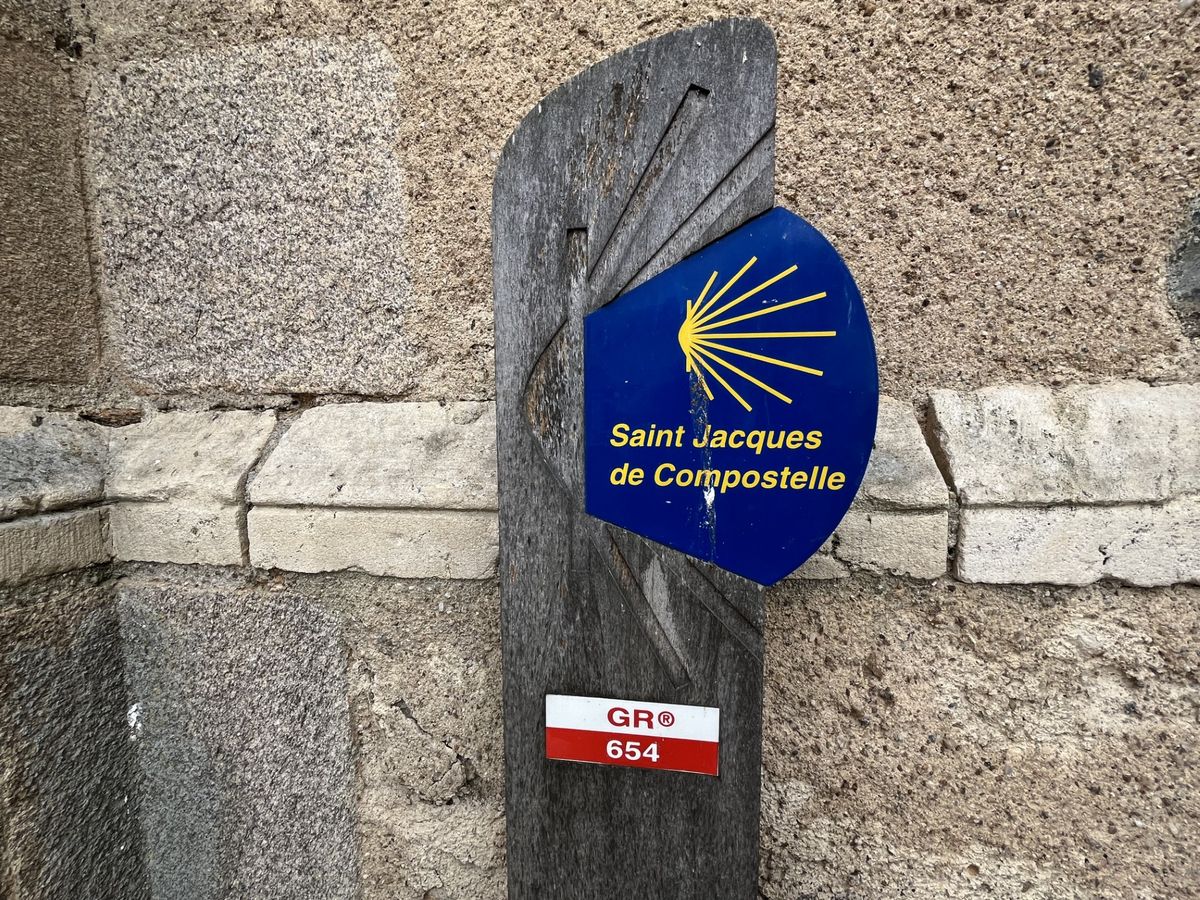
Plusieurs GR passent par le pays de George Sand, notamment le GR 654 (Chemin de Saint-Jacques) - Photo : PB

In this year of high fuel prices, hence less inclined to long trips, there is even more reason to go there since several walking routes — including a Regional Route (GR de Pays) — invite you to follow in the writer’s footsteps.

Added to this, in this 2026 George Sand anniversary year, are theme-based hikes. Check the Berry Province Tourist Office website for details.

The Vézelay Way (GR 654), Saint-Jacques de Compostelle paths also pass through here, with a highlight stop: Neuvy-Saint-Sépulchre, whose collegiate church is UNESCO World Heritage listed precisely as part of the Saint-Jacques routes.

This remarkable edifice comprises a basilica dedicated to James, the Apostle of Galicia, and a three-level rotunda built after the model of Jerusalem’s Holy Sepulchre.

Since 1257, in a reliquary there, three drops of the “Precious Blood of Christ” have been kept, the origin of a pilgrimage on Easter Monday.


The Preserved Home of the Good Lady of Nohant


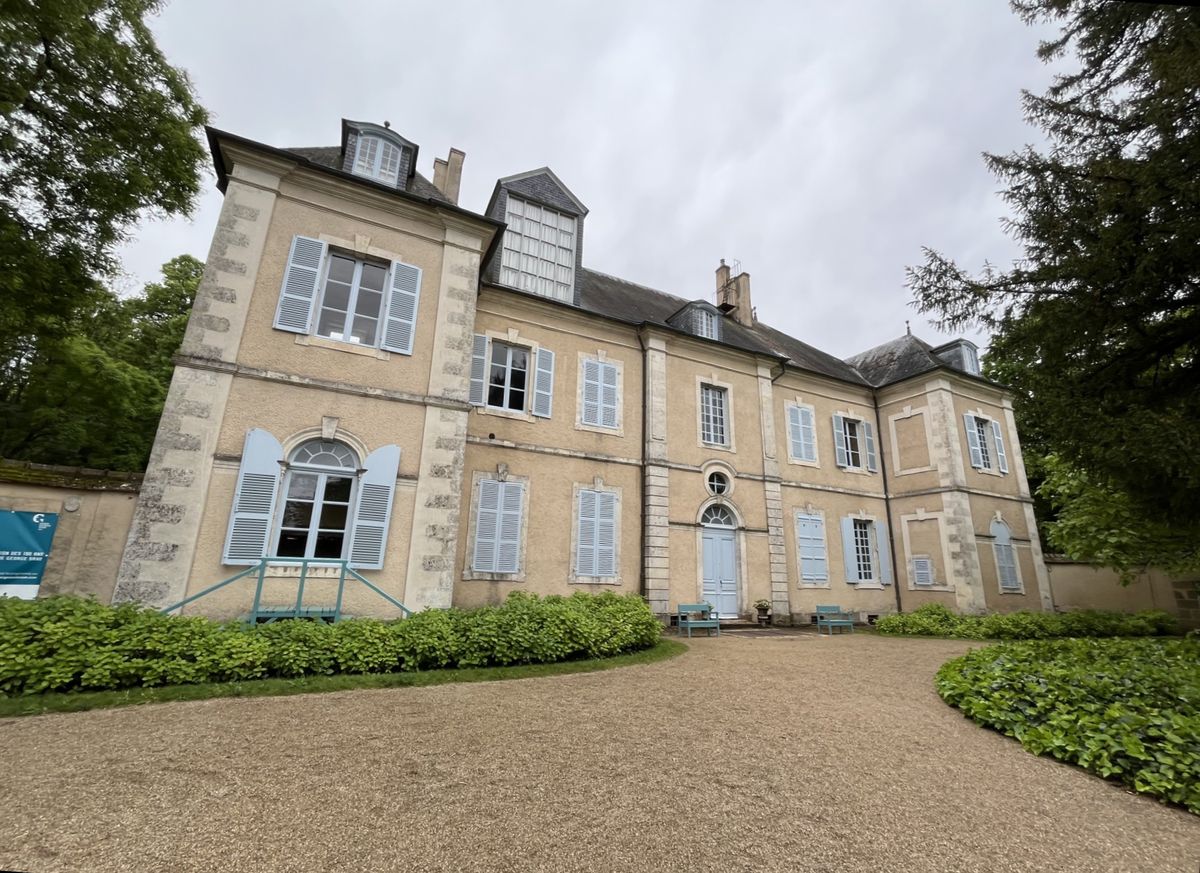
La maison de George Sand est une belle demeure bourgeoise, sise à Nohant dans l'Indre - Photo : PB

Whatever mode you choose to discover this territory, it will surely be an opportunity to step into George Sand’s intimate world.

First stop, the village of Nohant, where she rests among her kin in the small family cemetery, just separated by a fence from the parish church. It lies at the edge of the expansive park where the writer’s house stands, sheltered by high walls.

It is not a castle, but still a lovely home. The guided visit (allow about an hour) brings back to life the relatively privileged lifestyle and the complexity of a woman who claimed — and won — her freedom in a century that offered almost nothing to women.

All her life, Aurore Dupin — her real name — was marked by a double heritage: noble on her father’s side, very modest on her mother’s side. It is in Nohant, however, that she grew up, beside a learned paternal grandmother.

Later, she married a failed union with Baron Dudevant, with whom she had two children — Solange and Maurice — and soon separated from him before obtaining, in 1836, a separation of body and property (divorce did not exist at the time).

Thus, she was able to return to her Nohant estate, inherited in 1821 after the death of her grandmother.


An Extraordinary Individual


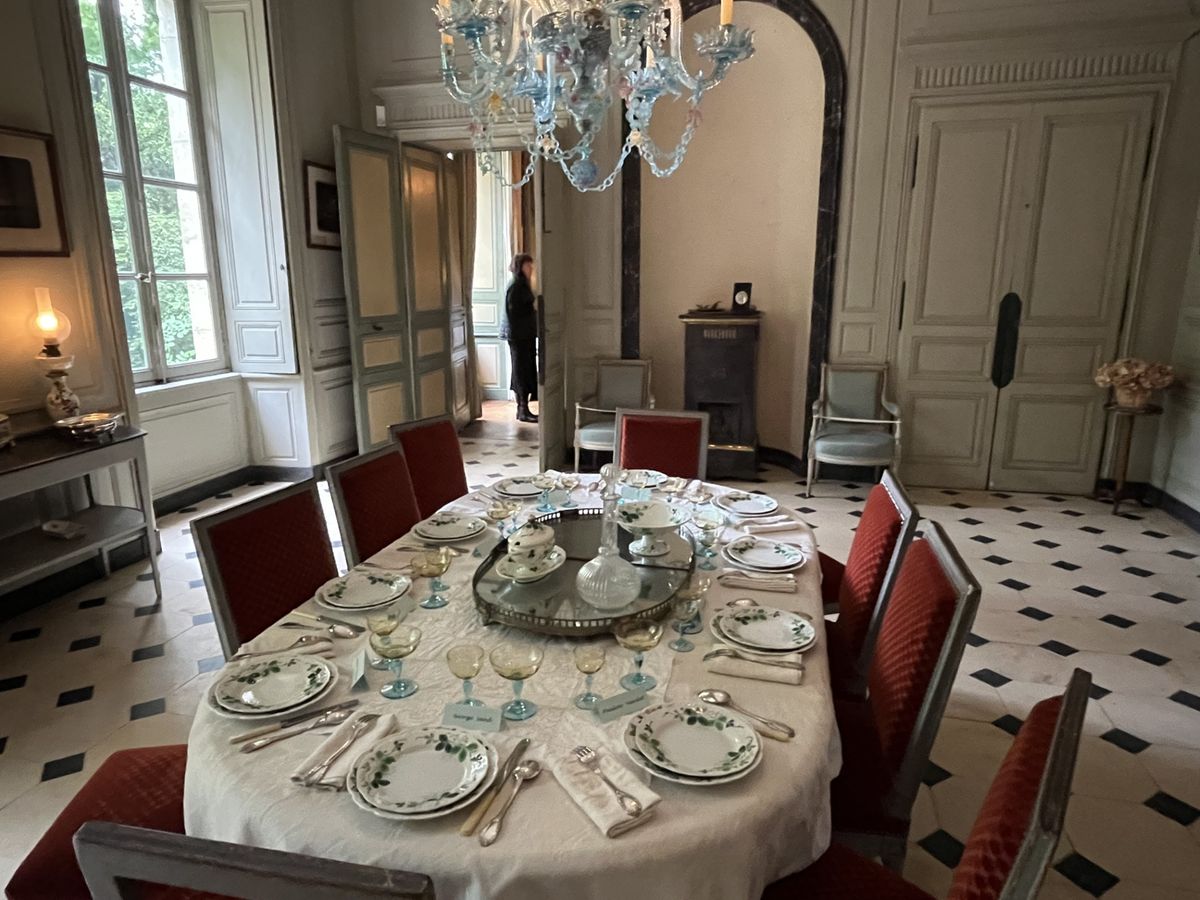
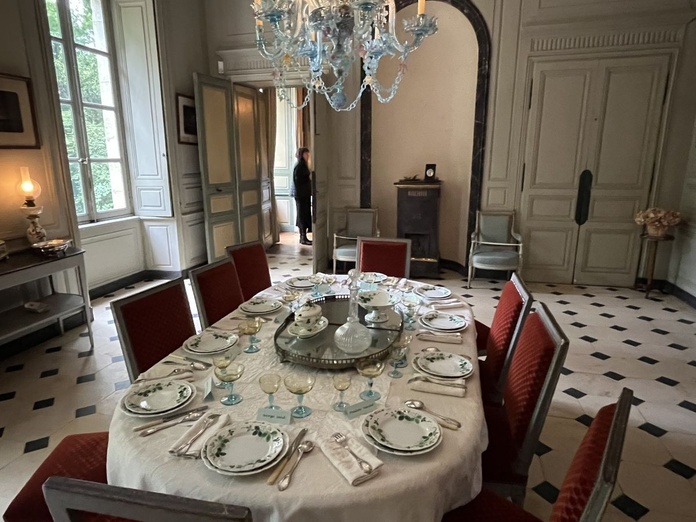
Dans la salle à manger éclairée par un liste de Murano, la table reste dressée avec les désormais célèbres assiettes à motif de fraises de la faïencerie de Creil-Montereau - Photo : Paula Boyer

From then on, as the anecdotes recounted by the guide during tours of the furnished and decoratively time-honored rooms show, this remarkable woman rooted her life here, though it was punctuated by stays in Paris and travels to Italy, Switzerland and Spain.

On site, George Sand lived with several of her lovers, including Chopin who composed a large portion of his work in the upholstered room set up for him.

She also cultivated close friendships with major artists such as Liszt, Musset, Flaubert, Balzac, Théophile Gautier, Fromentin and Delacroix.

In a world shaped by and for men, this woman defied taboos and the prevailing misogyny with her great freedom of conduct and expression, wearing trousers, smoking, cutting her hair short and, to be published, taking a masculine name — George Sand — which has gone down in history.

First woman to live by her pen, she wrote more than 70 novels, but also very political texts, advocating especially for gender and class equality, proclaiming herself “a republican of all devils” and throwing herself into the 1848 Revolution…


A True Passion for the Garden


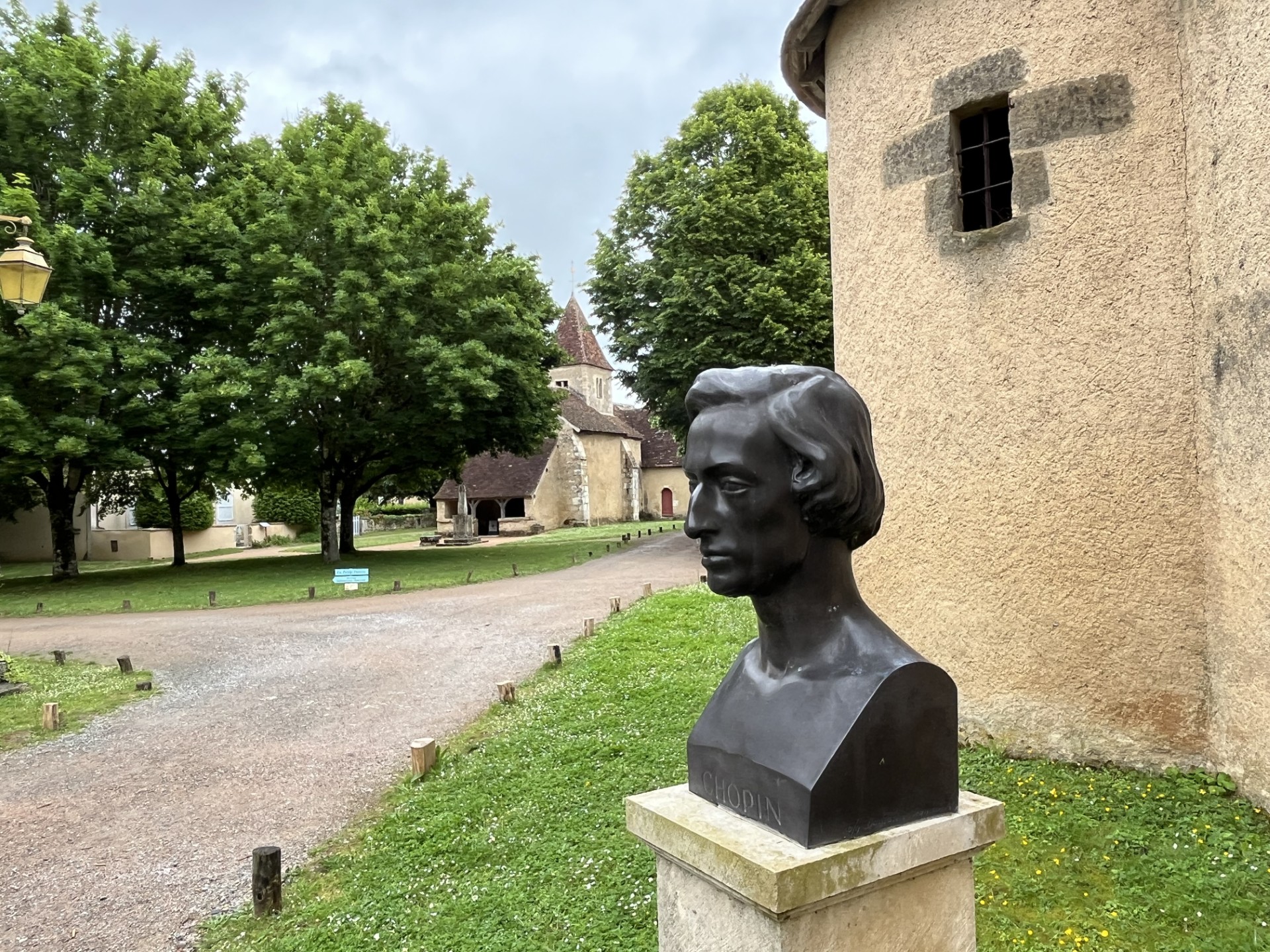
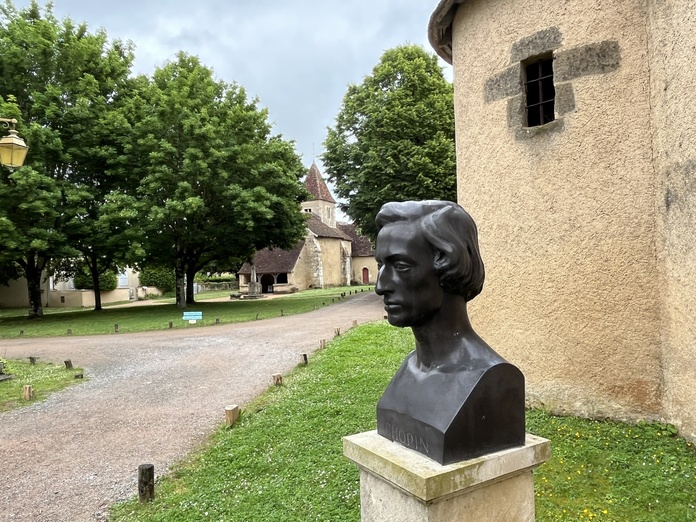
A l'entrée de l'allée qui mène à la place du village et à la maison de George Sand, un buste de Frédéric Chopin - Photo : Paula Boyer,

After the house, take a stroll through the bookshop on the ground floor of the former carriage shed (horse-drawn, of course) and upstairs, where the numerous puppets carved by Maurice, the writer’s son, are exhibited; he adored these shows, but also developed talent in drawing and painting learned in Delacroix’s workshop.

The walk is free in the park, whose layout hasn’t changed since George Sand.

It comprises a rose garden — renovated in 2023 —, a cutting garden, a vegetable garden, an orchard, and a wilder, more romantic space crossed by winding paths and populated with large boxwoods and five remarkable trees — including a vast Japanese Sophora — that the writer knew.

George Sand had a true passion for this garden, dedicating several hours here each day, even managing to grow – with success – pineapples in the small conservatory.

Afterward, a short tour through the village of Nohant, with its low, sturdy houses, lime-washed and topped with slate or small tiles, where little has changed!

On the paved square, the small Romanesque church still seems prepared for the writer’s funeral, announced by a facsimile of her death notice and noted by a Figaro article posted on a panel.

At the end of the street — in the Frédéric Chopin alley — which leads to RD 943, stands a bronze bust of the Polish pianist, who died in 1849, two years after his separation from George Sand.


Sarzay Castle, Medieval Jewel of the Black Valley


Countless Places Featured in Her Novels


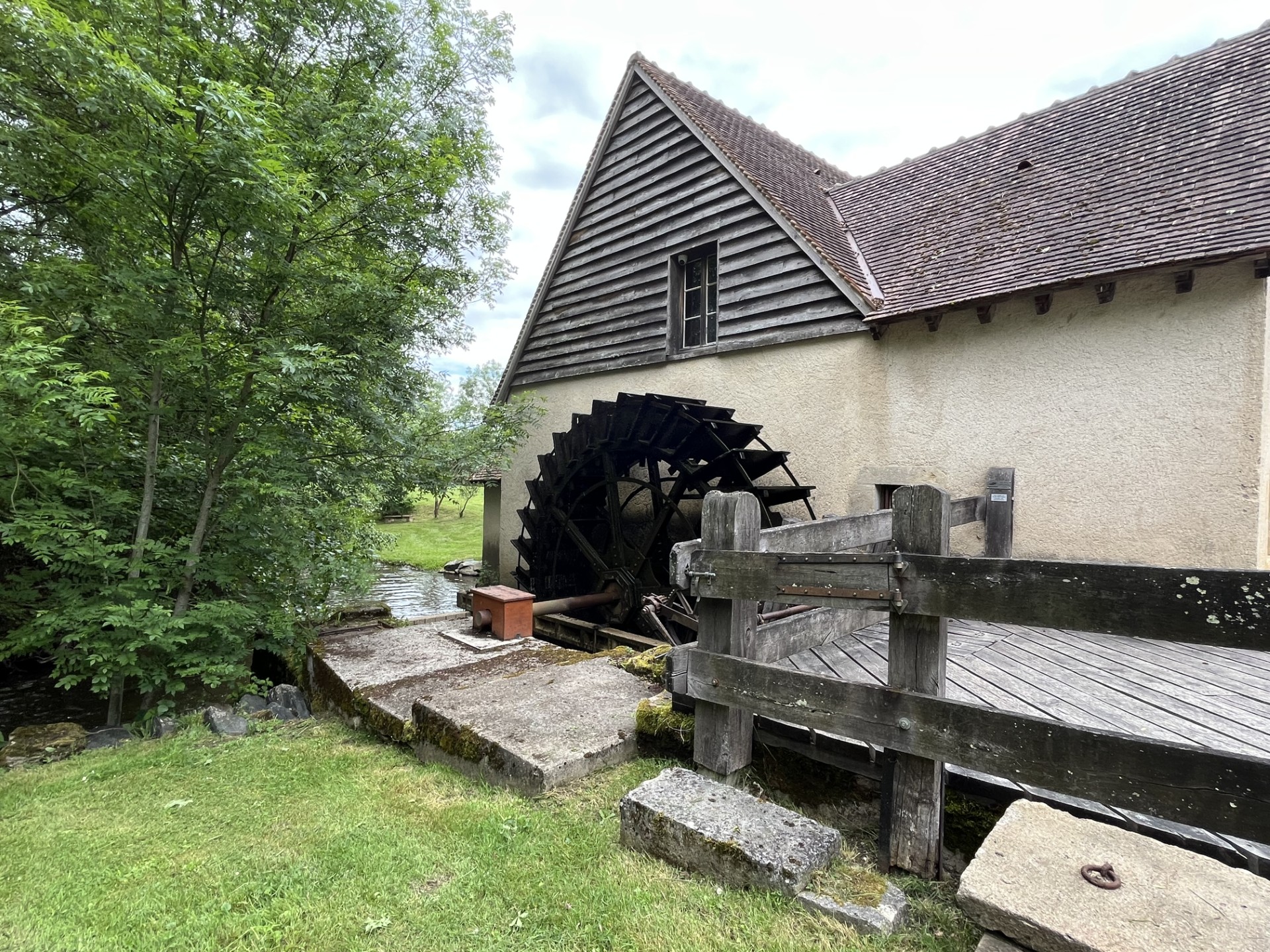
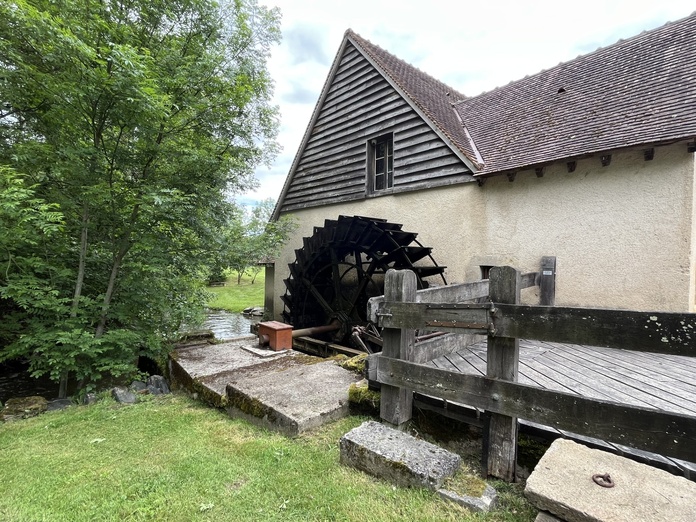
Le Moulin d'Angibault permet de découvrir le fonctionnement d'un moulin à eau de plaine du XVIIIe s - Photo : Paula Boyer

The Sarzay Castle can be visited, just as, not far away, at Montipouret, the mill where George Sand set the plot of her “The Miller of Angibault.”

Bordered by the Vauvre river, now part of a beautiful 7-hectare natural area, this mill renovated in 2016 is the last one in Indre still able to grind.

As you wander there, you better understand why George Sand wrote: “there are places that dispose us to an invincible tenderness…

Just two kilometers away, in Mers-sur-Indre, in the Chanteloube woods, lies the mysterious “Mare au diable” that inspired the famous novel of the same name.

It is a pastoral intrigue in the Berry peasant world that George Sand often portrays with benevolence, not failing to keenly critique its flaws.


In La Châtre, Eating Like George Sand

Next destination, La Châtre. This charming small town nestles along the Indre. Its museum dedicated to George Sand is unfortunately closed for renovations during the anniversary year.

By contrast, the Lion d’Argent hotel offers a “George Sand menu” (60€) but only… on holidays or by order.

Indeed, the dishes of the bourgeois cuisine dear to George Sand require lengthy preparation: Queen Margaux cream, Pistachio chicken quenelles, Sandre with Nantes butter, Beef hash in crust, Soft brioche cake…

This is a venture not undertaken by “La Table de Cérestine,” the excellent Lebanese restaurant in Chassignoles, which nevertheless pays homage to George Sand with a mini-exhibit.


Gargilesse, “the Most Beautiful Village in France”


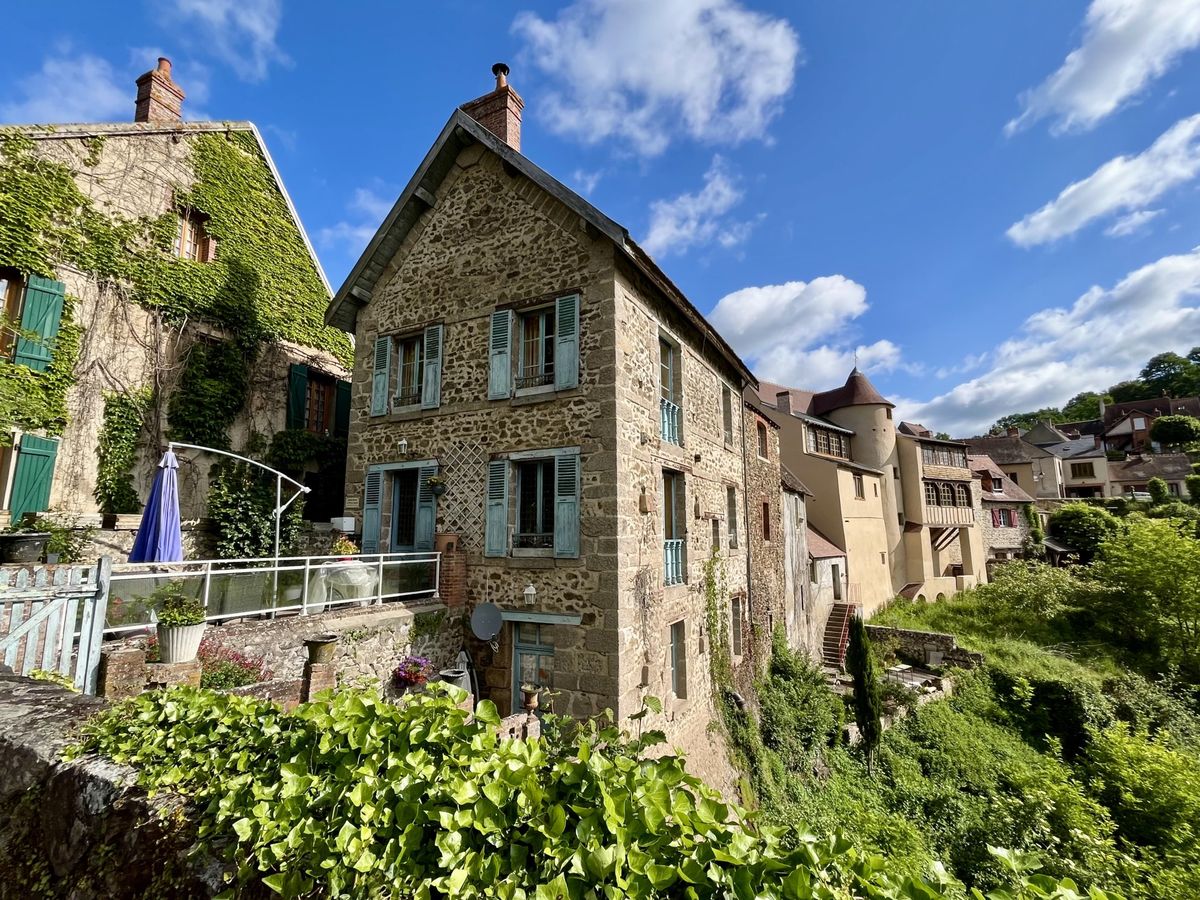
Gargilesse, "plus beau village de France", abrite aujourd'hui de talentueux potiers et artisans, dont Justin Etre, une filographe qui réalise d'admirables sculptures en fil d'algue - Photo : Paula Boyer

Final stop of this journey through a land home to countless castles, including the Château de la Rose with its elegant guest rooms: Gargilesse. It is one of the “Most Beautiful Villages in France”.

It clings to a slope in the Creuse valley where Armand Guillaumin, Léon Detroy, and also Claude Monet once set up their easels.

Lovers of nature, plants, insects and stones, George Sand and her last companion, the engraver Alexandre Manceau, stayed here several times before, in 1857, falling in love with Gargilesse.

Manceau quickly bought a cottage there, soon named Algira after a butterfly discovered during a walk.

This charming little house — slightly expanded later — furnished with period pieces houses natural history collections and objects belonging to the writer, as well as drawings by her son Maurice.

It is open for visits, in the company of the tireless Catherine Lienard, a friend (and heiress) of Christiane Sand, wife of the adopted son of George Sand’s granddaughter.


“George Sand, the Soul of the Landscapes”


L'exposition "George Sand, l’âme des paysages" est présentée dans les pièces de réception du château de Gargilesse - Photo : Paula Boyer

Set along the route of Saint-Jacques de Compostelle (and on the GR 100), well kept and flowered, Gargilesse (40 inhabitants) naturally has its own George Sand hotel-restaurant. It is a village of potters and artisans and, as Hélène Texier, deputy mayor, insists, “the harp capital.”

Adjacent to a oversized church (in the crypt, fine 12th-century frescoes), its 12th-century fortified castle, rebuilt in the 18th century, hosts from June 6 to September 20, 2026, in partnership with the La Châtre museum, “one of the most important events of the year-long anniversary 2026,” a year that will be marked by more than 110 events.

The purpose of this exhibition titled “George Sand, the Soul of the Landscapes” is — as curator Carine Stahl notes — to show that beyond their influence on her work, the writer’s attachment to the Berry landscapes also reflected her commitment to rural life and to nature.

George Sand, an eco-friendly pioneer before her time? Judging by her writings, it seems quite possible.


PAULA BOYER Published by Paula Boyer Head of the LuxuryTravelMaG section – TourMaG.com
See all articles by Paula Boyer

  • picto Twitter
  • picto Linkedin
  • picto email
Ajoutez TourMaG à votre flux Google Actualités Google Actualités icône


In the Footsteps of Jean Giono: Provence’s Immobile Traveler

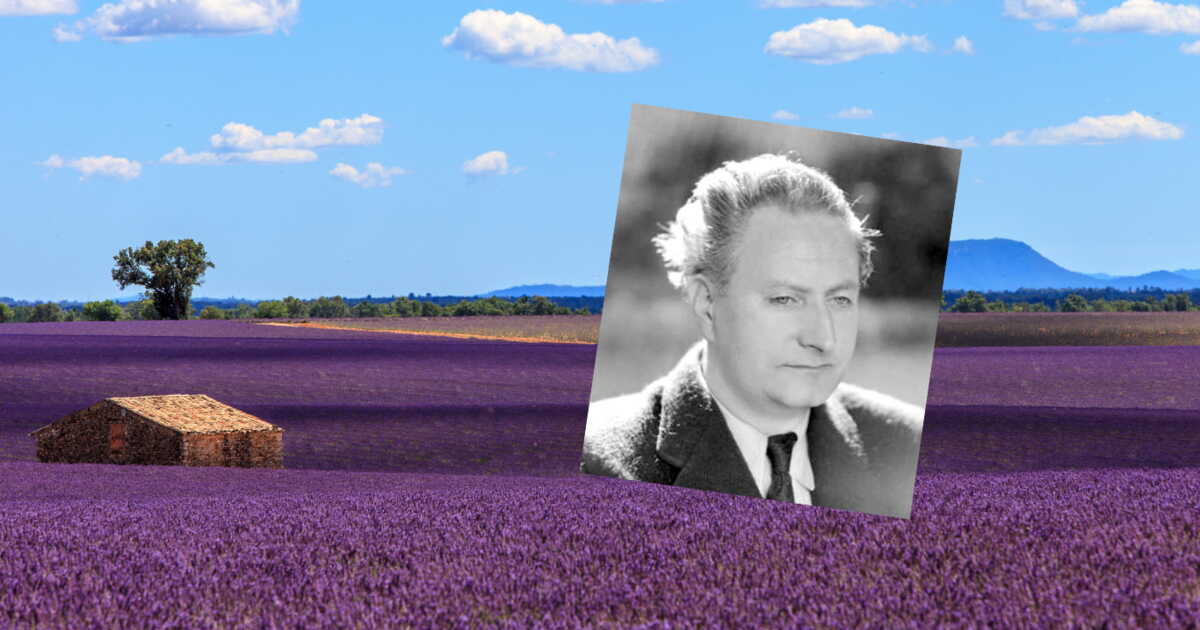
Few great writers have so intimately tied their name to a single region as Jean Giono did. For him, it was Provence—the land that saw him born in 1895, where he died in 1970, and which provided the horizon for his body of work. From Colline (1929), his first novel—describing peasant life at Bastides Blanches, a hamlet high in the Lure mountains— to his major literary successes (notably The Horseman on the Roof whose plot unfolds between Aix-en-Provence and Manosque), the native son has continually set his stories in this austere and rugged backdrop, which holds wonders for anyone who knows how to look with eyes unclouded.

Walking Through a Painting: Five Walks Tracing the Footsteps of Great Painters

Table of Contents


  • Vincent van Gogh’s Alpilles


  • Paul Gauguin’s Brittany


  • Armand Guillaumin’s Limousin


  • Claude Monet’s Normandy


  • Chaim Soutine’s Pyrenees

Vincent van Gogh’s Alpilles

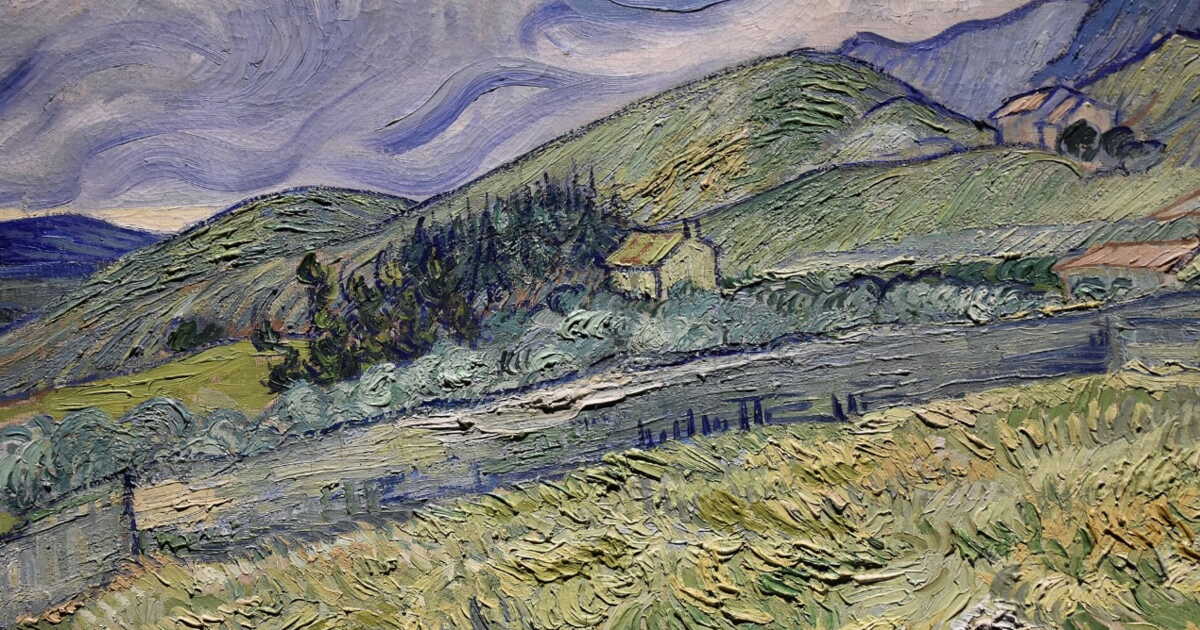
During his residence in Arles, Vincent van Gogh experienced a period of mental turmoil in which he severed his own ear, and the “red-haired madman” was admitted to the Saint-Paul-de-Mausole asylum in Saint-Rémy-de-Provence. Inspired by the luminous landscape visible from his window and by strolls through the surrounding hills, he painted tirelessly. Wheat fields, olive groves, villages, cypress trees… More than 150 paintings, mostly landscapes, came to life from May 1889 to May 1890 in this tranquil refuge, where he began the most prolific phase of his short life.

In the Master’s Footsteps: Van Gogh

The Saint-Paul-de-Mausole monastery has preserved the memory of its illustrious resident. After visiting his room and the garden that inspired his works, one can follow the one-hour trail to Saint-Rémy. Along the way, 21 reproductions attest to his fascination with the Alpilles.