During Diwali, homes, streets and temples are adorned with thousands of lights. Celebrated mainly in India, but also in many other countries, this Hindu festival blends religious traditions, family gatherings, and public celebrations. But what is its origin and why does it hold such an important place in Indian culture?
What do Diwali celebrations look like?
Also called Divali or Deepavali, the Festival of Lights Diwali is a major event within the Indian community.
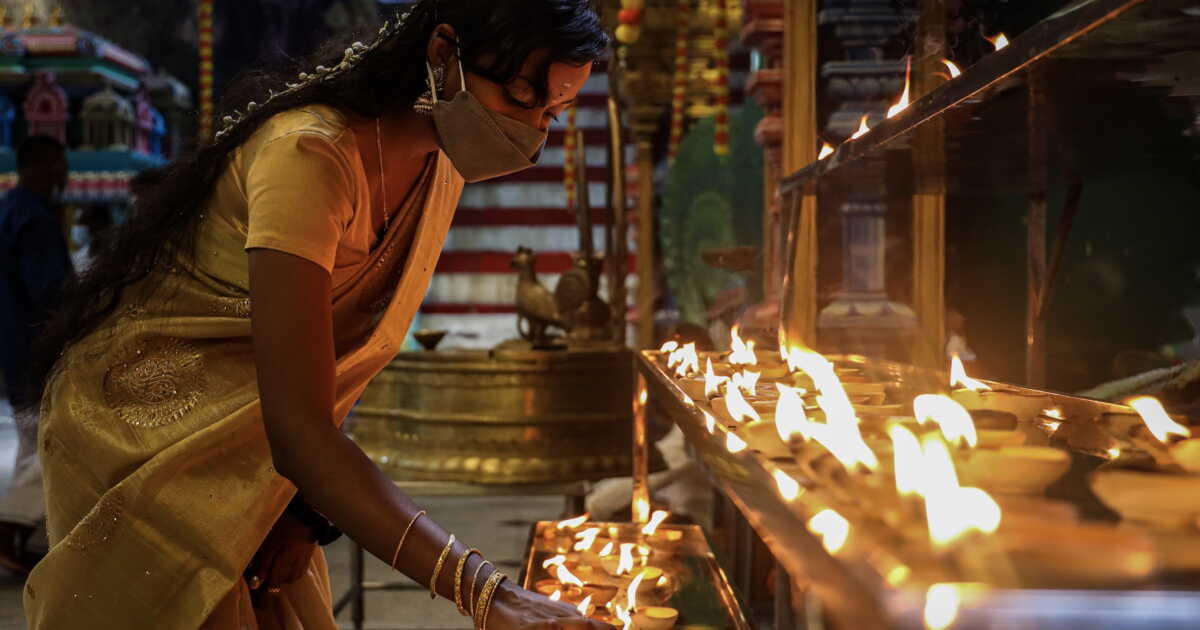
Cities are bathed in a cloak of light thanks to the numerous candles lit in streets and temples. Firecrackers and fireworks ring out all night – to the point of creating each year a choking haze of pollution in New Delhi – and performances take place everywhere to celebrate the victory of light over darkness. It is a festive period during which it is customary to exchange gifts and to dress in new outfits and jewelry.
What is the origin and history of “Divali” (or “Diwali”)?
The term “Divali” is the contracted form of “Dipavali,” meaning “a row of lamps” in Sanskrit.
Traditionally, the festival of Diwali takes place twenty days after the Dussehra celebration, which honors Rama’s victory over the ten-headed demon Ravana. The Festival of Lights celebrates Rama’s triumphant return to Ayodhya, where, according to legend, he followed oil lamps to find the way home and return home.
In southern India, the Diwali festival is more of a homage to Krishna, a central deity in Hinduism who is said to have freed 16,000 women imprisoned in the demon Narakasur’s harem.
The festival of lights is also an occasion to celebrate Ganesh, the sacred elephant-headed god invoked to remove obstacles that might hinder the smooth progress of an action.
How long does the Indian festival of Diwali last?
This year, Diwali begins on Friday, November 6, 2026. The festivities span five days, with the third day being the most significant, dedicated to Lakshmi, goddess of fortune, prosperity, and abundance.
This third day also marks the end of the northern Indian Hindu calendar year (in the south, the Shalivahana calendar is observed) and thus the start of a new year in that part of the country.