In Laos, New Mahouts Relearn How to Live with Elephants

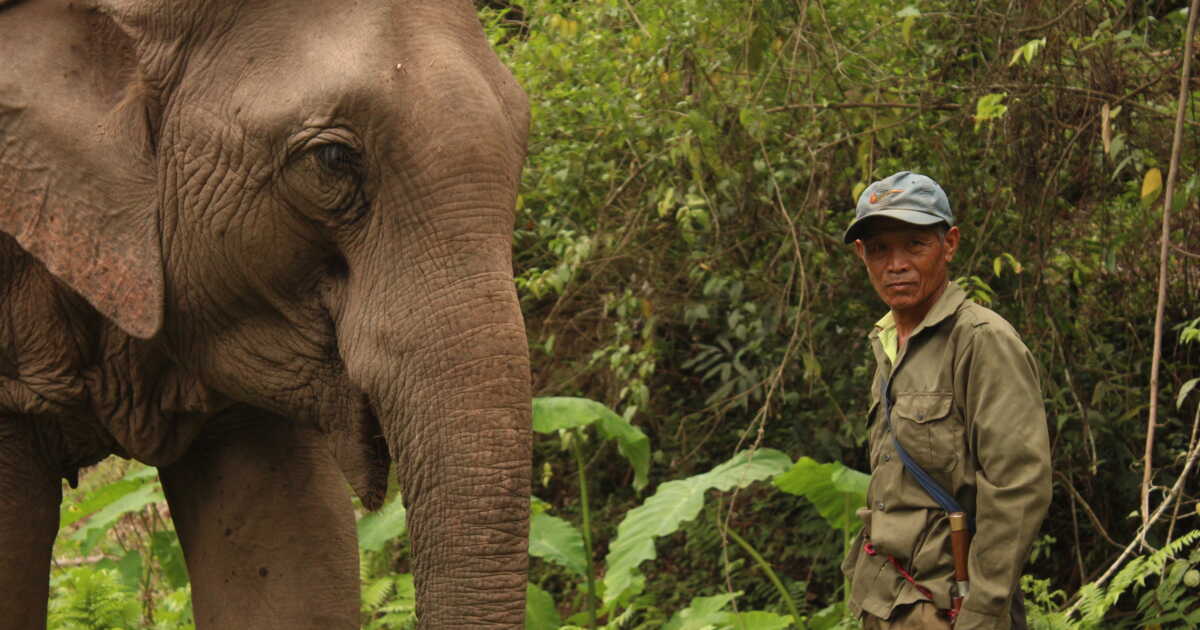
Whispering in the ears of elephants, guiding them but above all respecting them. Such is the responsibility of a mahout. Also called mahouts in Sanskrit, an ancient language originating from India, the mahouts nurture a privileged relationship with elephants in Laos. But for about a decade, this connection has deteriorated due to intensive deforestation and mass tourism. Today, sanctuaries are attempting to rebuild this bond, not without difficulties.

Perspiration beads form on my forehead as we arrive in Paklay, in Sayabouri Province, northwest Laos. A driver awaits us. We climb into a 4×4 for a one-and-a-half-hour journey toward Muang Thong, a small village inside Nam Phouy National Park. “About thirty mahouts live there”, explains Ala Touati, manager of the Lao Elephant Home and Sanctuary (LEHS) where we are headed. In Laos, the wild elephant population is estimated at 300 to 400 individuals (Laotian Elephant Action Plan 2022). The domestic population stands at 464 elephants, of which 82% are located in Sayaboury Province. With an average of ten deaths for every two births, the future of elephants in Laos is threatened. Indeed, “you cannot conduct conservation without including the mahouts”, says Sébastien Duffilot, cofounder of the Elephant Conservation Centre (ECC) in Sayaboury and of the French association Elephants and Humans.

Mahouts at the Service of Elephants

At the end of a dirt road, a cluster of bamboo huts appears amid the jungle. Built in 2023, LEHS took shape in four months with the help of the villagers. “When I was young, I witnessed a mahout strike his elephant with a hook. Since then, I felt compelled to create a place where elephants could rest and live in harmony with their mahouts”, recounts Khamla Duangmala, founder of the refuge. A mahout at the sanctuary, Loung Jek learned the trade from his father. He has owned his elephant for about thirty years. At 46, Boaw Ngern is the sanctuary’s matriarch. “We are both equally reserved”, smiles the 62-year-old man. Sometimes accompanied by visitors, he visits her in the jungle twice a day. He ensures she lacks neither water nor bamboo; if needed, he moves her to a more favorable part of the park. Here, there are no elephant-back rides, no swimming, nor even feeding. Visitors stay at the camp, accompany the mahouts, and learn traditional Lao practices.

That morning, we meet Soy. Arrived three months ago, she belongs to a member of Loung Bath’s family, who is also a mahout. On one of her front paws, a scar from a chain is etched into the skin. “Before, she worked in wood”, Ala tells us. “In the early 2000s, most domestic elephants served as village support, explains Sébastien Duffilot. They carried wood in small quantities for local constructions and were respected. The wood industry then mainly used machines.” About ten years ago, intensive deforestation rewrote the rules. “The sector turned to elephants to reach inaccessible places.” Their use became excessive. A brutal work pace took hold, forcing them to work sometimes ten to twelve hours a day, chained at the foot. Loung Jek has closely witnessed this industry. “I chose to join the sanctuary to live near my family. Before, I had to be away for long periods to work. It’s also easier to let my elephant roam freely in the jungle. She can eat to her heart’s content with much better quality food. She is less stressed.”

Generational Break

Noting the gradual disappearance of his elephants and certain tree species, the Lao government put a stop to logging by tightening wood-cutting restrictions. “The mahouts found themselves unemployed. Some sold their elephants, who ended up in the hands of inexperienced mahouts. Others turned to tourist attractions. There was a generational break”, laments the ECC cofounder.

After a thirty-minute trek through the jungle, we come face to face not with one but two trunks. The shorter one belongs to Kamoun, 6 years old, the sanctuary’s only calf. Phou, her mahout, became a mahout at 35 to help his wife’s family. “The first year, I was excited to work with my elephant, then I discovered the wood industry, then tourism… There, if they ask us to continue, we must continue, even if the elephant is tired. We are obliged to use force, otherwise it won’t move. I didn’t like that. I wasn’t happy. Now our relationship is more peaceful. There are several of us who no longer want tourists to drive our elephants because they harm them.” In the tourist industry, Phou worked on average six to seven hours. “From now on, I work between two and four hours a day at the sanctuary. I earn less but I want to support the project, even if it’s hard during the monsoon season.”

A Fateful Rainy Season

At the camp’s founding, Khamla had set out with about twenty mahouts. Four remain. Most of them left due to lack of money. According to Sébastien, “In the wood industry, mahouts can earn up to five times more than in tourism.” Since 2023, Khamla has invested around $100,000 USD (86,000 euros) into the sanctuary. In the first year, he secured the backing of a private investor, but “it’s getting more and more complicated”, he laments. To operate, the center must host 30 to 40 visitors per month, double what it currently handles. Not to mention that in Asia, tourism is highly dependent on the rainy season. The site must achieve its annual revenue within six months. “Our priority is to gain more visibility and the support of international organizations to survive the rainy season.” A necessity for the Lao who was offered the sanctuary’s buyout by a French investor. “I would like to keep it, but if I don’t find funds quickly, I’ll have no choice but to accept.”

In the realm of sustainable tourism, ECC stands as a stable model in Laos. The organization derives most of its income from visits to the center. It also raises funds through grant applications, online crowdfunding campaigns, and private donations. “My association Elephants and Humans is a partner. We define programs (veterinary and educational) and we secure the funds needed to carry them out”, Sébastien explains. On site in Laos, it is the center that handles the technical and human implementation. ECC’s hallmark lies in its commitment to species conservation. The organization has notably launched rewilding programs, monitoring efforts, and it hosts a research unit along with the only veterinary hospital dedicated to elephants in Laos.

According to Phou, the more projects like these exist, the more the mindset of the mahouts will evolve in the right direction. “If they have an alternative, many prefer to quit working in wood or on elephant-back rides. Some of us continue because it’s the only job available to us.” Unfortunately, creating truly ethical sanctuaries in Laos—on animal and social grounds—meets the reality of a country with a fragile economy, the absence of a clear legislative framework, and a lack of genuine political will.
What to Do in Laos: 5 Must-Do Activities and Outings

In Laos, travel often unfolds as a slow exploration guided by rivers, traditions and nature. Each region unveils a different face of the country, between remarkable heritage, outdoor adventures and untouched sites. A survey of five experiences not to be missed during a Lao stay.

1. Getting Lost in Luang Prabang

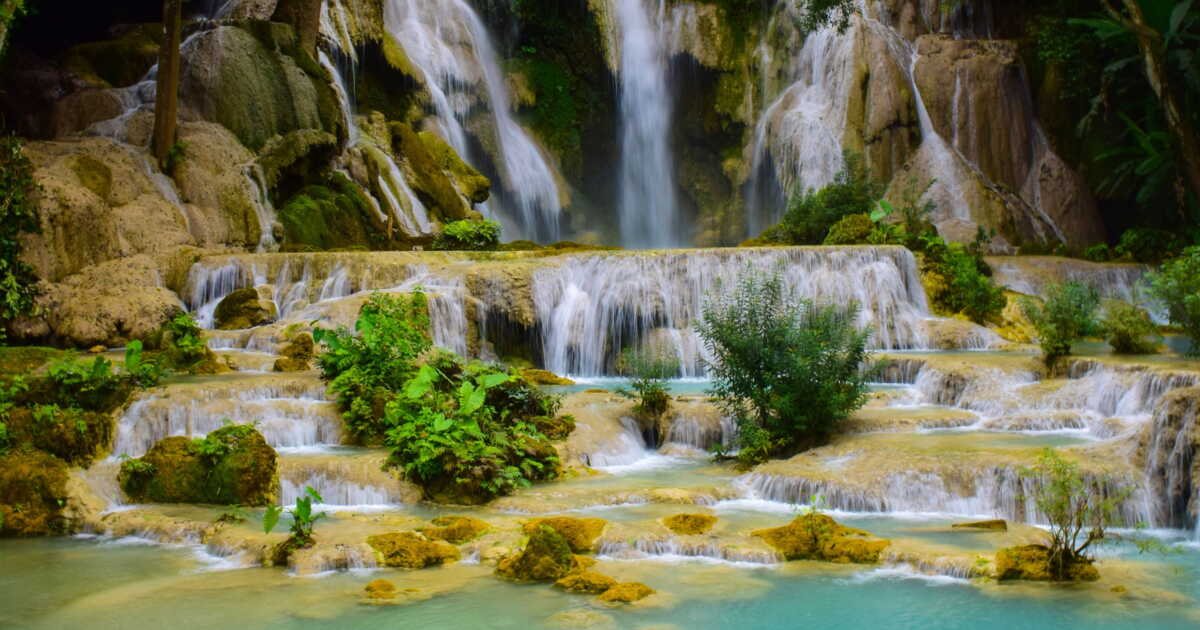
Getting lost in Luang Prabang invites you to dive into the local Lao life, in a UNESCO World Heritage city renowned for its temples, colonial architecture, and scenes of life imbued with spirituality. Watching the Tak Bat, the dawn ceremony of local offerings, is a powerful moment, revealing the relationship between the city’s residents and Buddhist traditions. This silent ritual embodies a way of life defined by simplicity and respect, shared with nearby Lao people who come to observe or participate. A multitude of activities in Luang Prabang allow for deeper immersion: cooking classes, cycling tours, or a visit to the Kuang Si Falls, located near a small village tucked away in a lush jungle. For a richer experience, it is advisable to book certain activities in advance, especially those tied to traditional arts or cultural excursions. All in all, Luang Prabang remains an ideal place to understand the Laotian way of life and to feel the harmony between spirituality, nature and locals.

2. Cruising the Mekong

Cruising the Mekong offers a smooth, immersive experience in a riverine archipelago where living traditions, pristine landscapes and waterways of strategic importance mingle. This river runs across the country, marking the border with Thailand on several stretches and guiding local life for centuries. A river cruise toward the Pak Ou caves provides a look into the country’s religious practices, while a stop in villages such as Ban Xang Hai introduces the artisanal production of rice wine, handed down among communities along the river. This gentle navigation reminds us that Laos is best discovered at its own pace, with respect for traditions and rhythms. The Mekong, stage for traditional boat races during the Lao New Year, also plays a central role in exchanges between the Lao government and its neighbors, such as Vietnam, in a spirit of regional cooperation. It remains a key axis for outdoor activities, including river expeditions, explorations of wild banks and encounters with inhabitants.

3. Adventure in Vang Vieng

Vang Vieng, in the country’s north, has become a coveted spot for outdoor adventures, set against a backdrop of impressive karst cliffs and the Nam Song river winding through green valleys. This singular landscape allows for a mix of gentle outdoor activities like bicycle rides to limestone caves, and more vigorous pursuits such as kayaking, rock climbing or hiking. Once a haven for travelers seeking adrenaline, Vang Vieng now attracts those who want to combine raw nature with a glimpse of rural life, in a setting spared from mass urbanization. The presence of small villages on the outskirts illustrates the coexistence of sustainable tourism and local residents keen to preserve their farming practices. This beautiful corner of lush jungle, bearing subtle traces of the Vietnam War, represents an ideal place to explore active Laos at the crossroads of nature and living culture.

4. Strolling through Vientiane

As the administrative capital of the country, Vientiane presents a peaceful urban face, conducive to discovering the Laotian government and its institutions, while retaining a human scale that favors everyday life scenes. The Pha That Luang, a premier Buddhist site of the nation, sits beside buildings inherited from French colonization and bustling markets where Laotians come to shop. In this mini-Pakse city, urban dwellers share their daily life at the slow pace of the Mekong, within a context where spirituality still strongly structures social relations. The Buddha Park, with sculptures that fuse Hindu and Buddhist symbols, illustrates this rich iconography. If the activities in Vientiane are fewer than in rural areas, they deserve to be planned in advance to visit archaeological sites or to partake in events such as the Lao New Year festivities. Through its apparent calm, the capital reveals another form of dynamism, more institutional, yet deeply rooted in the local life.

5. Quest on the Bolaven Plateau

The Bolaven Plateau, located in the Champasak Province, embodies a rural and pristine territory where outdoor activities occupy a central place in discovering authentic Laos. This high plateau with a temperate climate is famed for its coffee plantations, Kuang Si and Tad Fane waterfalls, and hiking routes linking small villages inhabited by ethnic minorities. The lush jungle and open landscapes offer a panoramic view of the surroundings, making this space ideal for trekking, cycling and eco-tourist stays. Marked by the traces of the Vietnam War, this region has rehabilitated its natural potential to become an ideal place for recharging and environmental education. Its proximity to the city of Pakse makes it possible to organize these activities in advance, in a framework of responsible tourism and respect for the inhabitants living along the trails. The Laotian government promotes controlled development there, balancing local life and preservation.

Laos Travel: a off-the-beaten-path itinerary in the heart of Southeast Asia

A trip to Laos invites you to slow down, to breathe differently, to discover a country still preserved, far from the hustle of major tourist routes in Asia. Here, the Mekong sets the tempo, temples rise in silence, and villages live to the rhythm of the seasons. From Luang Prabang, the spiritual jewel of the north, to the wild nature of the Bolaven Plateau, via the karst formations of Vang Vieng and the tropical gentleness of the 4,000 Islands, Laos offers a rare balance between natural beauty, cultural heritage and human encounters. It is a destination for curious travelers, those who seek to marvel without rushing, to understand rather than to consume. A trip to Laos is less an escape than a revelation.

What to do in Laos in 15 days and how long does it take to visit the country? A gentle adventure at the Mekong’s pace

Visiting Laos requires time, not to tick off a list, but to soak in its slowness, its spirituality and its grand landscapes. Fifteen days represent the ideal duration to discover the essentials, while respecting the country’s tranquil tempo. From Luang Prabang, the UNESCO-listed colonial jewel, to the mystical Plain of Jars, via Kuang Si Falls and the sacred Pak Ou caves, the north reveals a deeply spiritual Laos. Then head south to Vang Vieng, surrounded by karst peaks, down to the tranquil capital Vientiane, and the 4,000 islands where the Mekong broadens into a mosaic of water.

What is the most beautiful place in Laos? Discovering the most inspiring landscapes

If Laos overflows with natural and cultural wonders, Luang Prabang remains for many the most beautiful place in the country. Perched at the confluence of the Mekong and Nam Khan rivers, this former royal capital charms with its golden temples, colonial houses, and morning rituals where monks walk by in silence. Beyond the town, Laos’s landscapes take on a nearly spiritual dimension: crystal-clear waterfalls, mysterious caves, and misty mountains. Farther south, the Si Phan Don islands, the Champassak rice fields, or the Bolaven plateaus offer another form of beauty—raw, green, boundless. The most beautiful place in Laos might be the one that invites you to slow down, to observe, to feel.

What to see in Laos? Hidden treasures between mountains, temples and the Mekong

Laos is a country of quiet beauty that reveals itself to those who take time to observe it. In Luang Prabang, shimmering temples stand beside colonial houses and artisan markets. Nearby, the Kuang Si Falls and the Pak Ou caves invite contemplation. Further south, Vientiane, a tranquil capital on the bank of the Mekong, blends Buddhism and French architecture. The journey continues to Vang Vieng, between rivers and karst mountains, before ending on the 4,000 Islands in the south, where the river fades into the horizon. Between spirituality, nature and a laid-back way of life, each place in Laos is a meeting with authenticity.

Is it worth going to Laos? A rare destination for travelers seeking the essentials

Yes, Laos is worth more than a detour: it deserves to be lived. In this country still spared by mass tourism, time seems suspended. One discovers a calm Asia where the kindness of the inhabitants, the slow pace of the Mekong and the serenity of the temples form a rare harmony. The landscapes, often grand but never flashy, offer a raw and meditative beauty. Traveling in Laos is about re-learning the meaning of simplicity, reconnecting with nature, with oneself, and with others.

This article was written with the help of artificial intelligence, then revised, supplemented, and validated by the editors of the desk.