
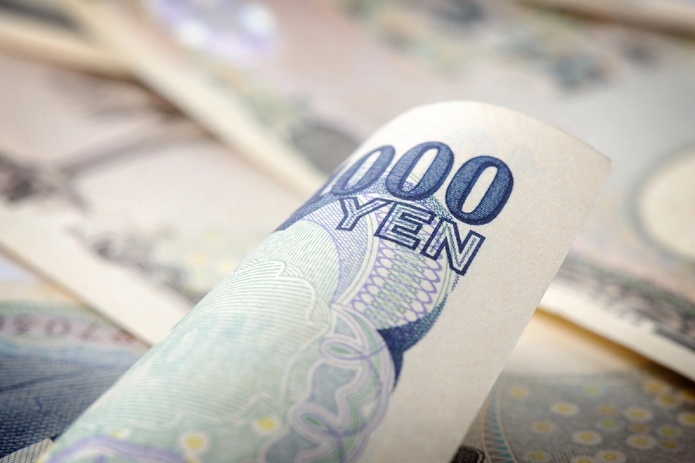

Exchange Rate: Yen Strengthens as Thailand Comes Out Ahead


Economic Situation

Taux de change : le yen se renforce, la Thaïlande tire son épingle du jeu - Depositphotos.com  Auteur norgallery

CroisiEurope


The yen dominated the week. It takes 178.56 yen to buy one euro, versus 185.22 on August 31: the Japanese currency has gained 3.6% in two weeks, mainly during the past week. Japan is therefore paying noticeably more for trips than two weeks ago, on departures already booked.

The explanation lies not in the foreign exchange market but in the cost of money. For twenty years, borrowing in Japan cost almost nothing. The Bank of Japan has closed this chapter: on June 17 it raised its rate to 1.00%, and its governor Kazuo Ueda warned on September 2 that every meeting could lead to a new hike. Investors assign about a 79% chance of lifting it to 1.25% by Friday. Japanese capital is returning home, and borrowing costs rise elsewhere.


Japan is not alone in raising its rates, and the motive is the same everywhere: energy.
In the euro area, prices rose 3.3% in August over twelve months, with energy alone up 14.3%. Hormuz remains closed since late February and the barrel price has advanced by nearly 9% in a week, to $104.61. On September 10, the European Central Bank raised its rate to 2.50%; the Fed, its American counterpart, is expected to follow suit on Wednesday.

Japan remains the most vulnerable, since it buys almost all of its energy from abroad: every dollar added to the price of crude feeds into the prices paid by Japanese households and leaves room for its central bank at Friday’s meeting. As long as Hormuz remains blocked, fuel and credit will stay expensive together. Winter budgets are therefore built on these two items, and on a yen that has ceased to be cheap.


Exchange Rates: The Technical Update

The Swiss franc and the yen usually play the same role on the market. This week, they moved in opposite directions. Against the yen, the euro fell from 181.59 to 178.56 in five sessions, a decline of 1.67%, while it rose 0.95% against the franc, with the rate moving from 0.9364 at the end of August to 0.9451 on Friday. Only one of the two central banks is active: Switzerland leaves its rate at 0% and repeats that it would intervene if its currency rose too much. Switzerland thus costs a bit less for the European buyer, while Japan is considerably more expensive.

Elsewhere, nothing moves. The euro is worth 1.1592 dollars, down 0.26% from 1.1622 a week earlier. Both central banks raise rates together and neither takes the lead. The British pound follows, at 0.85815, with the Bank of England expected to keep rates unchanged at 3.75% on Thursday. Dollar and pound buying budgets remain calm.


One destination benefits from this rate race: Thailand.
About 38.23 bahts per euro, nearly 3% higher than a year ago and at the top of its twelve-month range, between 36.21 and 38.72. The Thai central bank keeps its rate at 1% to support consumption, while almost all others are raising theirs: the baht therefore attracts little investor interest. A tour bought in Bangkok costs a little less than a year earlier, which is the exact opposite of Japan.


WEEKLY SUPPORTS WEEKLY RESISTANCES
S2 S1 R1 R2
EUR/USD 1.1450 1.1520 1.1660 1.1740
EUR/GBP 0.8490 0.8540 0.8630 0.8680
EUR/CHF 0.9360 0.9405 0.9490 0.9540
EUR/CAD 1.5900 1.5980 1.6140 1.6220
EUR/JPY 175.00 177.00 180.50 182.50


The supports and resistances shown below indicate respectively the lower and upper levels within which prices are expected to move over the course of the week.


The information presented in this publication is provided for purely informational purposes and does not constitute investment advice, a selling offer, nor a solicitation to buy, and should in no case be used as a basis or considered as an invitation to engage in any investment.


Mondial Change is a French financial institution, founded in 2015, specializing in managing international payments and exchange rate risk.

Mondial Change also supports many players in tourism, including travel agencies, tour-operators, group organizers, and receptive partners…

www.mondialchange.com

Contact: [email protected]


Beyond the Exchange Rate: What Top Travel CFOs Are Really Watching


© Airwallex

CroisiEurope


At the start of 2025, an interesting phenomenon unfolded in Canada. The United States announced a fresh set of tariff measures. Travel by Canadians to the United States collapsed immediately. Yet Canadian domestic tourism—road trips, lakeside cabins, national parks—surged to fill the gap. The currency shifted. Travelers moved even more.

Tannah Matus, CFO of Secret Food Tours, followed the situation with a highly professional eye. Her team had not anticipated the tariff changes, nor Canadians’ responses, nor the impact on exchange rates. What she did do, however, was build systems to monitor real travel movements and reallocate resources accordingly. “We focus more on people’s movements than on the policies behind FX implications,” explains Tannah Matus. “Is the American traveler still traveling? What share of the U.S. domestic market is occupied by domestic travel?” The currency impact matters, but changing traveler behavior matters even more. And it creates opportunities for operators who are nimble enough to seize them.

This instinct—to observe behavior rather than the Bloomberg terminal—has fueled all the Airwallex Margin Fortification Playbook 2026 conversations. The top finance teams in the sector do not build elaborate macroeconomic models. They track signals that most spreadsheets fail to capture.

With Golf Traveller, Darren Behan sees risk in the calendar, not in the market. “When a major tournament is announced, our financial architecture must be ready to support a sudden, day‑to‑day surge in multi‑currency transactions.” For a luxury operator where a single booking can exceed $20,000, missing on a currency conversion or payment timing during a peak demand period is not theoretical: it is a real competitive disadvantage with a concrete price tag.

Flash Pack’s clientele are predominantly American and female. The CFO, Oliver Lee, monitors in near real time how world events influence traveler confidence. When customers feel less comfortable about a destination (for political, security, or negative publicity reasons), bookings shift before analysts publish projections. Detecting these signals early gives operations time to rearrange itineraries, adjust marketing investments, and renegotiate supplier commitments. Lee notes that perceptions of safety and hospitality evolve faster and weigh more than exchange rates when customers decide whether to click “book.”

Adam Mitchell, Financial Controller at On the Go Tours, provides a lesson in preparation. Egypt had long been the company’s flagship destination. When the Israel‑Gaza conflict began to worry clients about the broader region, On the Go Tours had already begun diversifying. “They had already initiated a plan to broaden our portfolio,” explains Adam Mitchell. “Historically, we were heavily oriented toward Egypt. Even before tensions rose in the Middle East, we started opening other destinations, which helped when things became complicated in the region.” The lesson is clear: the time to diversify is before a crisis hits. When you need protection, it’s already too late to build it.

Jamie Tran Rico Pisa, at Transforma Travel Group, takes an unconventional tack: preparing for good news. His firm tracked how likely it was that British travelers could soon enter China visa‑free, a development likely to spur demand. “We already have many travelers traveling from the UK to China,” he says. “But we may need to bolster our operating team in China so that we feel fully prepared to absorb the surge.” Transforma runs regional discussion groups where teams share everything—from health alerts to natural disaster warnings. Information flows quickly enough to let the business adjust plans before problems explode, and to be ready when opportunities arise.

The through line is proactive intelligence rather than crisis improvisation. These teams don’t wait for an incident to occur to hold a meeting. They have embedded listening mechanisms into the daily cadence of their operations.

The question then becomes how to deploy cash while it’s available. If FX risk and operational frictions are complex, multidimensional problems, dormant cash management is, by contrast, surprisingly simple. All the CFOs interviewed for the playbook follow roughly the same approach: sweep excess working capital into yield‑bearing accounts and resist the urge to over‑complicate things.

“We have sweep accounts, short‑term accounts that generate market rates,” explains Oliver Lee. “We use rolling deposit accounts, with roughly a one‑month notice, that offer a return from major financial institutions. And that’s it.” He stresses the need not to over‑complicate Flash Pack at its current scale. Larger firms can diversify into corporate bonds or other instruments, with dedicated treasury teams to drive those strategies. “But at our size, one of our rules is to keep things simple. You don’t really earn more yield by adding complexity when you have a few million. The impact is marginal.”

Tannah Matus shares this view and notes that the current rate environment makes the math particularly attractive. With dollar deposits yielding around 4 to 4.5%, even the simplest accounts generate meaningful returns. Left idle, this excess cash is, in her words, “just a salary, money that’s sleeping.”

But travel cash flows obey a constraint not faced by most industries: client deposits, not corporate surpluses. Jamie Tran Rico Pisa makes this limit crystal clear: “We operate within a fairly narrow field, because, ultimately, these are client deposits. We must ensure that these funds are used to finance the trip.”

The regulatory framework reinforces this caution. Zoe Powell, Director of Travel, Hospitality and Leisure at Xeinadin and formerly with the Civil Aviation Authority, notes that ATOL‑licensed tour operators face strict liquidity requirements: “Typically, around 70% of client funds must be held in cash or cash equivalents, readily available.” Some operators must keep these funds in an escrow account until the client returns. These constraints cap the yield accessible, which precisely explains why all the CFOs in the playbook favor simple savings accounts over more exotic solutions.

The consensus is clear: in today’s rate environment, given the fiduciary responsibilities inherent in the travel sector, sophisticated treasury strategies offer only a marginal gain that does not justify the added complexity, risk, or sleepless nights.

Three principles emerge from these exchanges:

● Observe behavior, not just rates, because the most advanced operators look at where travelers actually go, not merely what currencies do.

● Keep yield strategies simple, since accounts like sweep and rolling deposits work reliably for most players in travel.

● Build a financial infrastructure that absorbs shocks rather than amplifying them, turning finance teams into true business partners rather than back‑office functions.

Or, more bluntly as Jonathan Wall of Xeinadin puts it: the gap between booking and settlement will always exist. What matters is what happens inside your organization, because that is where your expected profit can literally vanish.

To access the complete set of experiences from five finance leaders, covering currencies, payments, operations, and working capital, download the playbook: “Guide 2026: How to Protect Your Margins.”


Contact Airwallex


Au-delà du taux de change - Ce que les meilleurs directeurs financiers du travel regardent vraiment
To get in touch with us, please fill out this contact form

Website: www.airwallex.com

facebook linkedin twitter instagram youtube