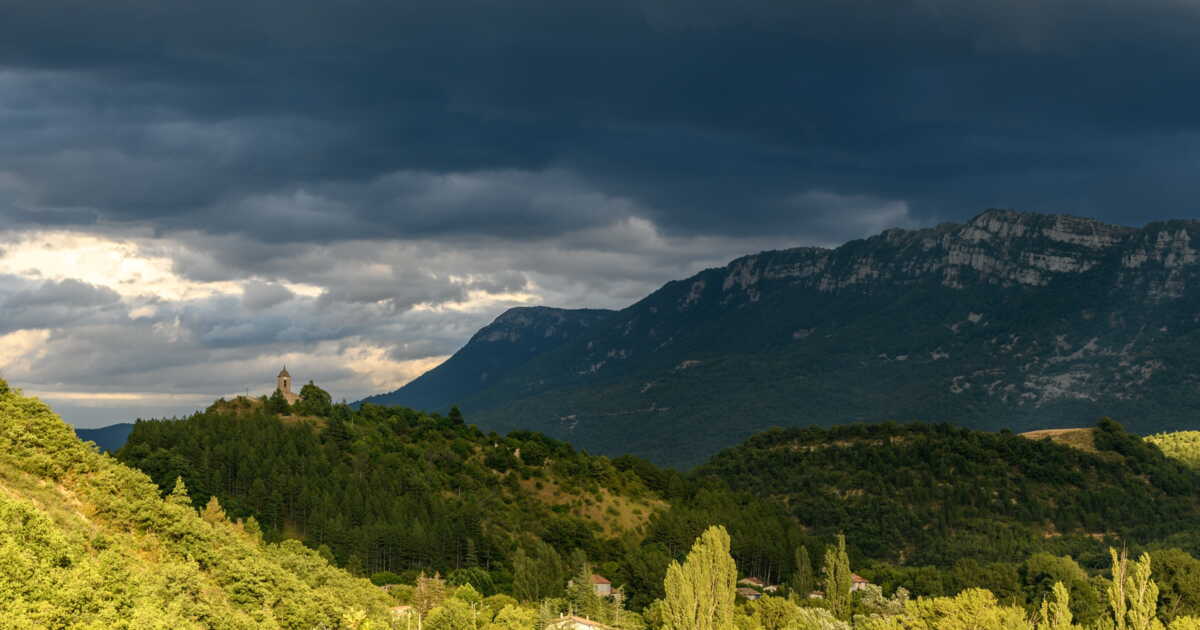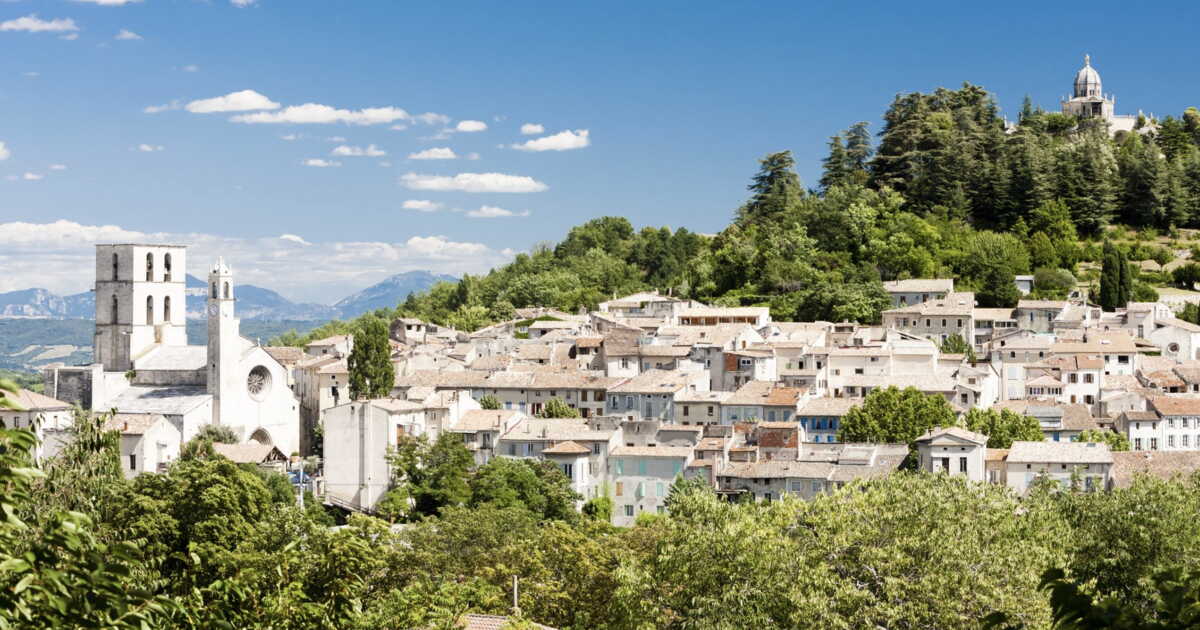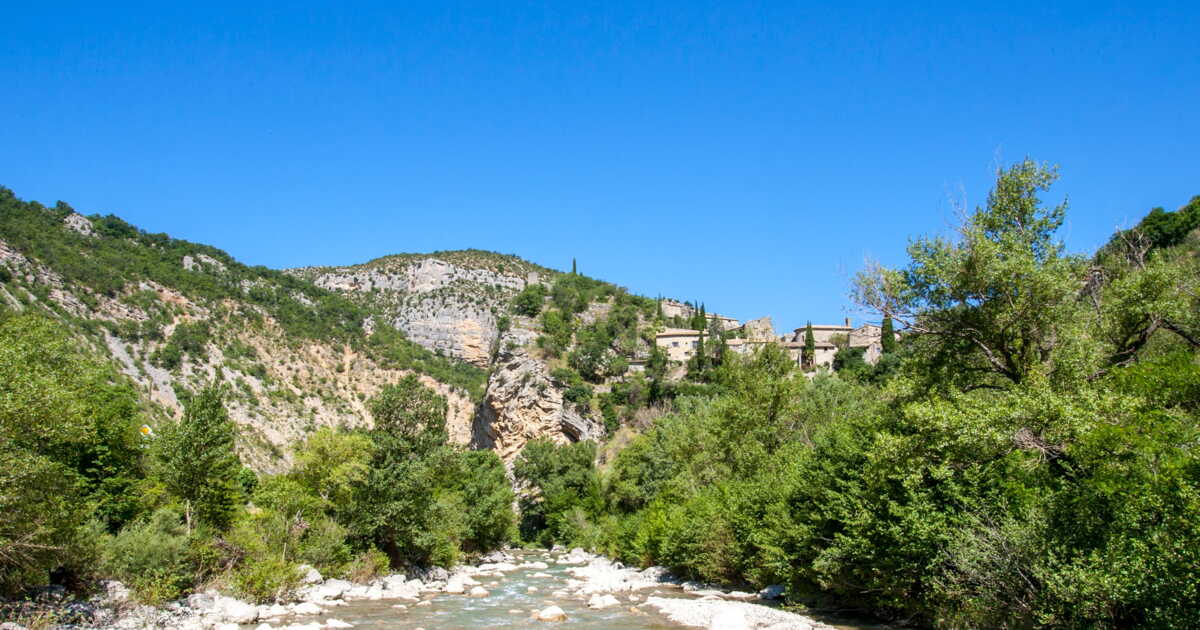
To trace Jean Giono’s steps, one can venture into the Haute-Drôme, toward the northern edge of Provence. In 1939, he boards a bus in Manosque, pauses in Nyons to admire its small Italianate square, and the next day continues toward Saint-May. This village clings to vast limestone cliffs. The road dives into deep gorges. In the middle, the Eygues River meanders softly, and the air is still. As you climb along the rock face, two dark shapes come into view: a pair of chamois attempting to cross a scree. They linger for several minutes, and the sound of their hooves tapping on the stones rings through the quiet gorge.
The Rediscovered Notebook
“In July 1939, it is there, at the heart of the Baronnies massif, that he goes in search of inspiration for his forthcoming novel, Les Grands Chemins. It is the only time he will carry a notebook on his walks”, smiles Sylvie Giono. The path rises, and the scenery becomes increasingly mineral. In his walking journals, recently rediscovered and published (Voyage à pied dans la Haute-Drôme, ed. Gallimard), Giono expresses his wonder: “Struck along the way by the landscape’s frankly Tibetan look. The deep torrents, rockfalls, the booming sounds in the corridors of rocks; the vertiginous sits high in the sky of farms that resemble monasteries. The village itself makes me think of those soldier posts guarding the passes toward the China.“
The Ballet of the Vultures
We press on along the path to the highest point of the cliff. A broad plateau unfolds ahead, its end out of sight. On the opposite slope, several dozen olive trees trace impressionistic specks. A griffon vulture wheels above the hollow. A second follows. A third. Soon, about twenty of them circle on the thermals, ten meters above our heads. A silent celebration of this “song of the world,” so dear to the writer.
Technical Sheet
Total distance : from Saint-May, a 14 km loop with 590 m of cumulative elevation gain.
Nearby : further east, in the commune of Rémuzat, the Vultures in the Baronnies Park offers walks to discover this bird.
👉 “In the footsteps of Giono: four hikes traced by his pen to follow the writer in his country of the heart,” an article to be found in GEO’s Special Issue No. 133 for June-July 2026, “France, our favorite summer strolls,” on newsstands ✨
➤ If you love GEO, then to miss nothing, discover our subscription plans to receive GEO at your home every month with ease.