

TourMaG – Transgallia fête en 2026 ses 80 ans. Pouvez-vous nous faire un rappel de l’histoire de l’entreprise ?
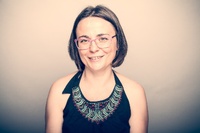
Rodolphe Costel : The travel agency was founded in 1946, then acquired and developed by my parents in 1991. Today, I run Transgallia alongside my sister, Eugénie Costel.
We specialize in group travel. We send around 750 travelers per year. We work directly with CSEs and associations. We also operate two individual agencies: one in La Chapelle-Saint-Luc (Aube) at the headquarters, and another in downtown Troyes.
Finally, we have a corporate travel activity that complements the whole. Today, Transgallia employs 20 staff for a turnover of €20 million.
TourMaG – You embarked on a major digital project by integrating artificial intelligence and automation at the heart of your organization. When did you trigger this project?
Rodolphe Costel : At the outset, we used artificial intelligence, as many do, for content creation, for dressing up detailed itineraries, helping us prepare quotes or even serving as a legal assistant.
The company truly ramped up on this topic starting in autumn 2025. Transgallia posted steady, double-digit growth year after year, except during Covid, and we struggled to recruit.
The only solution left for us was to automate part of the tasks, through AI.
AI, a true lever for improving the customer experience
 TourMaG – How did you proceed? Were you supported along the way?
Rodolphe Costel : I tried to think through the architecture and identify all business tasks, distinguishing those that could be automated from those that could not. Based on that, I developed a strategy that allowed me to progress.
My collaborators also offered suggestions. We held briefings and proposed various possibilities. For implementation, we work with an external development firm with whom we have long collaborated on other IT projects. We have invested in specialized software and benefited from guidance.
There is still a lot of development to be done. In any case, I have ideas; I have them every day.
TourMaG – Is the objective only productivity gain?
Rodolphe Costel : AI represents a major evolution for our profession. At Transgallia, we do not see it solely as a productivity tool, but as a real lever to improve the customer experience.
Our ambition is to move from an organization that merely responds to requests to one capable of better anticipating expectations.
We want our clients to benefit from the full power of the new technologies, without ever losing what makes our profession valuable: proximity, advice, and human presence.
TourMaG – Have you quantified the productivity gains, anyway?
Rodolphe Costel : We have achieved a 30% productivity improvement. But it is not primarily about productivity; it is about work quality. I reiterate: all repetitive tasks are handled by AI, which allows everyone’s work to be valued more and increases agility. With this tool, we not only improve productivity but also job satisfaction.
Concrete applications
TourMaG – Could you present a few concrete applications?
Rodolphe Costel : AI helps us better organize the processing of requests, streamline project follow-up, and automate certain administrative steps.
We receive many inquiries by email. We have a well-optimized group-dedicated website, but occasionally individuals reach out, assuming the prices offered apply to individual travel.
The tool automatically recognizes whether it is an individual request or a group one, then analyzes the type of request and the destination. We know, for example, that a staff member specializes in a given destination. The tool can then forward the request directly to the right person.
Automation also impacts the sales department, but especially the technical department, where it can be pushed very far. Once the file is confirmed, there are many repetitive tasks that can be automated.
Between contract signing and departure, a year can elapse. There are many steps that can be anticipated by automating certain processes.
The idea is to provide as much practical information as possible to the group leader, based on the destination and travel period, to assist with formalities and to offer practical advice tailored to the destination. Each traveler can receive relevant information at the right moment.
There are many such automations, being proactive and trying to anticipate questions to provide answers in advance.
For the client, this is very reassuring, as it gives a sense of ongoing monitoring. On our side, answering questions in advance also helps unclog the inboxes and reduces the number of incoming calls.
Even during the trip, we have the option to automatically send an email or a text message to verify that the arrival went smoothly, with a view to defusing any potential dispute as early as possible.
AI also contributes to improving the analysis of feedback and the tracking of satisfaction. We automatically send satisfaction surveys. The analysis of responses and the management of satisfaction are also orchestrated by AI. There are really many possibilities.
“The teams understood that their place is not in question”
TourMaG – Does this allow you to do things you wouldn’t have had time for before?
Rodolphe Costel : Absolutely. Some things have even been implemented that didn’t exist before.
TourMaG – Let’s revisit the example of formalities: how do you handle changes?
Rodolphe Costel : For the formalities, we’ve set up a monitoring system with an AI agent that consults France Diplomatie and other sources. As soon as a change occurs, the client is automatically informed to reassure them and provide the necessary information.
The goal is to give the client more information, while easing the teams’ workload, improving productivity, and placing the human element at the core of the business.
TourMaG – Aren’t the teams frightened by the place AI has taken?
Rodolphe Costel : No, they understand that their place is not being questioned.
They also understand that if we manage to handle more dossiers, that means more work for them. It brings our profession back to the heart of the customer relationship. And the teams are still overwhelmed!
Transgallia: more than 2,800 products online on the group site
TourMaG – Which destinations do you offer?
Rodolphe Costel : Our advantage is that we are generalists and not overly dependent on political crises in any given country.
We offer many itineraries in Europe and cultural stays, notably in Albania, Bosnia, or Greenland, with new offers we are launching for groups.
We produce our own itineraries and seaside stays, with the exception of requests related to clubs. We have more than 2,800 products online on our group-dedicated site.
 Published by Céline Eymery Editor-in-Chief – TourMaG.com
See all articles by Céline Eymery


Add TourMaG to your Google News feed