
Nick Adams, Trump’s Tourism Ambassador, Responds to Criticism of the United States [ABO]


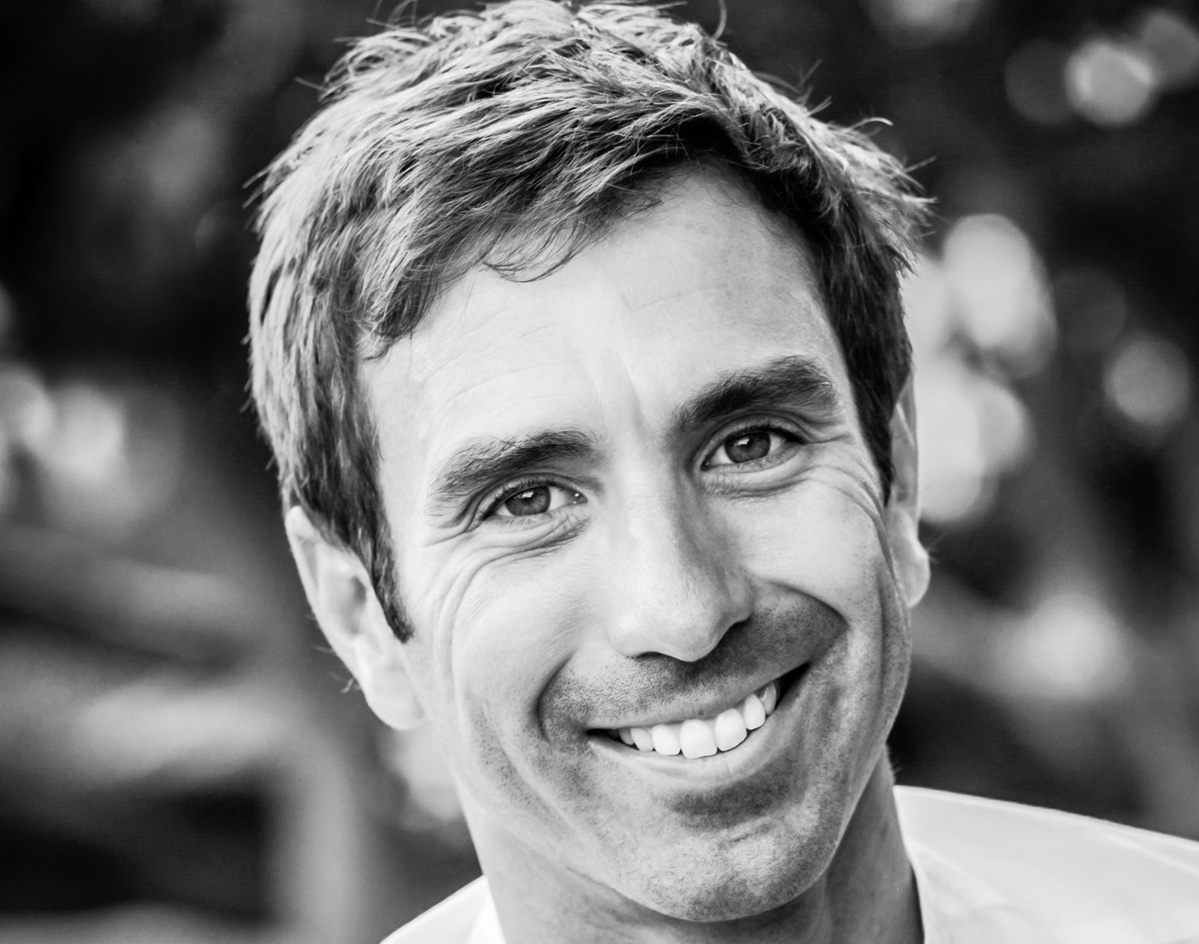
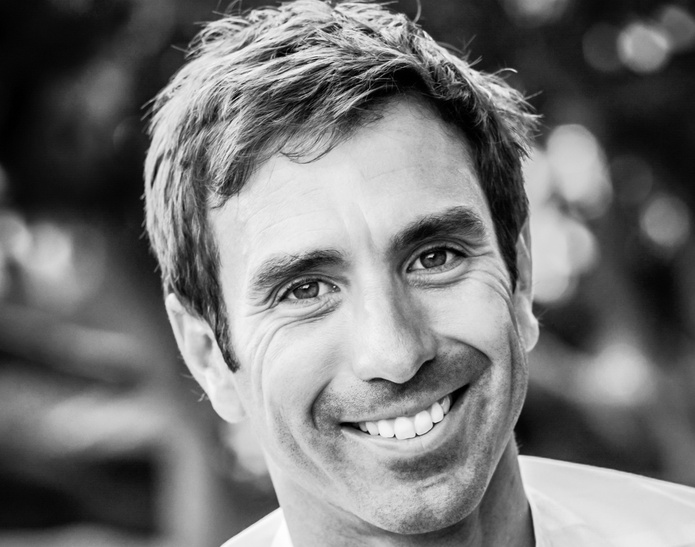
Nick Adams, le Monsieur Tourisme de Trump ce 2 juin à Paris. Photos C.Hardin

CroisiEurope


Here in France, Nick Adams isn’t widely known yet, having been personally appointed by President Trump to the role of American presidential envoy for tourism, with the mission of strengthening the United States’ appeal to international visitors.

Born in Australia where he got involved in politics at a young age, he eventually settled in the United States in 2012 and became an American citizen in 2021.

Very Republican in his public statements, one can read in a document published by the U.S. Department of State, the equivalent of the foreign affairs ministry, that: “For more than ten years, he has appeared as a commentator on television and radio, in the United States and internationally, on topics such as conflict resolution and international relations. His work promoting American exceptionalism has earned him recognition from several governors across the country…”

Nick Adams has set himself the objective of attracting 100 million visitors per year to the United States by 2030, particularly in light of major international events that the country will soon host, such as the FIFA World Cup, the Rugby World Cup and the Olympic Games.

With the observation that in 2025, the United States is the only country among 184 economies to see its tourism revenues decline, and at a time when budgets to promote the country are being slashed, the mission is somewhat challenging.

Yet the man is enthusiastic, jovial, and possesses that sales savvy aimed at bringing in and re-attracting as many visitors as possible to the United States. On the terrace of the Cheval Blanc hotel in Paris, which earned its Palace designation this Tuesday, Nick Adams answered our questions.


99.9 % of tourists traveling to the United States will not have their social media checked

TourMaG – It’s an undeniable fact that in 2025, demand for travel from Europe to the United States has fallen. This results from three factors: a sense that crossing the border is harder, the cost of living in the United States, but also — let’s be honest — a poor image of the American administration and President Trump. One of the leaders of a major French travel association recently stated:

We cannot say that Trump is the best ambassador for tourism to the United States. ” What is your response to these three points?

Nick Adams : Regarding the drop in demand, what we generally believe is that many people who had planned to come in 2025 realized that 2026 would be a far more interesting year in America, with the 250th anniversary, Independence Day celebrations, the FIFA World Cup and so many other events.

For us, the good news is that the data we have shows there are nearly 93,000 flights planned between Europe and the United States between June and October this year. That is a 3% increase in the number of flights from June to October 2025, which means there are more than a million additional seats to the United States.

Moreover, the World Travel & Tourism Council has forecast a 2.1% rise in tourism’s contribution to the U.S. GDP and a 12% increase in American jobs in the tourism sector.

Finally, the World Travel & Tourism Council has also forecast a 5% rise in the number of visitors to the United States in 2026. All the data I receive show an upward trend and that people are choosing to return to America.

Now, on the other points, I acknowledge there is this perception among people. However, I am here, in my role, to tell people the truth, the reality.

You spoke about the cost of living. Prices are rising; that is the reality, but it is everywhere, and I sincerely believe that America still offers good value for money.

Second, you mentioned rumors about scrubbing social media profiles of visitors, and I want to clarify this: 99.9% of tourists traveling to the United States will not have their social media checked. That is not true. It was never done. It has never happened.

I checked with the Department of Homeland Security, and they told me that the number of people whose social media have been checked since the start of the Trump administration is no different from the number under the Biden administration, nor under Trump’s first term, nor under Obama.

The figures are identical. Nothing has changed. It’s a false story that was manufactured and spread by people who do not like America, who do not like the president, and who want to damage the American economy and the American tourism industry.

And I’ll add something else for TourMaG readers: if you really want to understand what tourism in the United States is, go talk to your friends, neighbors, colleagues who have returned, and ask them. I guarantee that every person you ask will tell you they had a good time, and that’s all.

About the criticisms of the President: if there is anyone who truly understands the travel and tourism industry, it’s President Trump. Before leading this country, he built hotels, resorts. He is someone who knows what a problem at a hotel reception at 3 a.m. looks like, the issues of a bus trip with tight schedules… He has lived in this industry.

Additionally, your colleagues in the United States—the American travel industry, the Brand USA association—have, for decades, asked many presidents to create an American Minister of Tourism. “Please, create someone who represents us, who can be a spokesperson.”

That has never happened. But who made it happen? Donald Trump. That should give you an indication of why I think he is good for tourism and travel.

As for me, I have loved tourism and travel my entire life. It’s about exploration, discovery, personal growth, gastronomy, learning, meeting people, visiting relatives who live in another country, and reconnecting with friends you met in college.

And then, if you worry about going to a country depending on who is Prime Minister or President, or on government policy, in my view, that isn’t a good idea. The country doesn’t change.


“We are ready for the World Cup”

TourMaG – The World Cup is the major event in the coming weeks. Are you ready?

Nick Adams : Absolutely. Ready to go. We’re looking forward to it and it will be a great success.

There will be 78 matches in the United States that we have planned and prepared for a long time. We will also maintain the highest possible level of security.

TourMaG – Will you host Iran?

Nick Adams : Iran will be based in Mexico. We will welcome people from around the world. We are very, very, very excited and very optimistic about the World Cup results.


Brand USA, a valid partner

TourMaG – A question about “Brand USA.” You work with them. I’ve read that you value their work, yet their budget has been cut. They have gone from $100 million to $20 million. Do you want them to regain their previous budget?

Nick Adams : I am not involved in that and I do not have any power on this matter. What I can say is that they are still very active. They have just launched two very nice campaigns. They are a legitimate partner. I enjoy working with Brand USA.

There are a lot of people in the federal government who work with tourism: the White House, the State Department, the Interior Department, the Department of Transportation, the Department of Homeland Security, the Department of Commerce, the NTTO (National Travel and Tourism Office). These are all incredible allies.

I couldn’t do the work I do without their support and help. But I think the best news for Brand USA, for the NTTO, hoteliers, airlines and all tourism operators, is that my role has been created.


Do Museums Have a Future, and Which One Will It Be? [ABO]


Les grands musées sont devenus en deux décennies les vitrines culturelles de destinations qui en étaient privées - DepositPhotos.com, quadrio

CroisiEurope


The Louvre’s recent missteps, brought to the attention of media around the world, bring back to the table the importance of these private, public, national, and municipal institutions that give a destination its fame and the delights of a broad audience comprised of tourists as well as local visitors.

An importance all the more evident since some institutions, like the largest museum that claims to be the Louvre, can falter.

Lootings raise questions about security. Strikes, the discomfort of indispensable staff who are often undertrained and underpaid, tarnish the image of the museum institution.

As for the abundance of crowds too often poorly managed, and the admission fees that can be prohibitively high, they constitute other problems common to the “stars” of the profession.

Thirty-two euros now for non-European visitors is a lot. Way too much! No discounts for seniors, which is unacceptable when our British neighbors or farther afield, in Brazil, offer seniors free admission!

And what about those over 26? They pay full price! Expensive, too expensive!


Audiences: Key Figures

56% of French people visited a museum, an exhibition, or a heritage site in 2024 (versus 51% in 2023) ;

– One in five French people took part in at least one free museum or heritage event in 2024, such as the European Heritage Days, the European Night of Museums, or Nuit Blanche;

– 65% of museum or heritage site visitors believe that Artificial Intelligence (AI) tools can be a valuable complement to traditional devices (labels, audio guides, screens, apps, etc.);

– the appeal of paid immersive experiences is confirmed: 14% of visitors say they have visited an exhibition with a paid immersive route at least once in their life (+5 points compared to the previous survey).

Sources: 2025 Museum and Heritage Audiences Barometer, conducted by Test and the Gece Institute.


The Bilbao Effect: The Tourism Showpiece

Nevertheless, highly visible and prominent in promotional campaigns, the great museums have become in two decades the cultural showcases of destinations that were previously deprived, and they continue to lure not only the public but also elected officials who aspire to turn their cities into a tourist capital.

Whether we like it or not, the formidable silhouette of the Guggenheim Museum Bilbao designed by architect Frank Gehry has become so iconic that it sparked a architectural race with new entrants such as the Confluences in Lyon, the MUCEM in Marseille, the Louvre Abu Dhabi, the National Museum of Qatar in Doha by Jean Nouvel, and many others across Saudi Arabia, the USA, and China.

Having become a destination in its own right whose success remains undiminished, the museum has entered both tourist and local practices. Thus, about sixty national museums in France recorded 12 million visitors, a historic record.

The Louvre alone turns around 9 million entries. The museums of the city of Paris also progressed, drawing more than 5 million visitors.

These performances are likely to be surpassed thanks to more dynamic and effective strategies unveiled at the latest Museum Connections, featuring debates, roundtables, and various presentations. Too numerous to list, we will highlight a few.


The Museum for Everyone: A Living Space and Cultural Hub

The focus on accessibility for people with disabilities, a cornerstone for museums for decades, is the visible part of the progress made toward diverse audiences, and that is all to the good.

Moreover, the museum, once perceived as standoffish and closed to more popular crowds, has become a kind of lively place and cultural center for a city or a district.

Through animations, performances, creative workshops, conferences, trips, organized tours… the museum becomes even more attractive by offering an unmissable shop, well stocked with books, magazines, many of which are children’s titles. A smart way to foster loyalty.

As for cafés, tea rooms, and restaurants, they have made enough efforts to become genuine meeting spaces. Their design, menus, and even pricing make them competitive additions.


Museums and Health: A New Role with High Expectations


Spotlight on Museum Connections 2026

Claire de Longeaux, director of Museum Connections, is pleased.

For its thirtieth edition, the excellent fair, which took place on January 13 and 14, 2026, at the Paris Expo Porte de Versailles, progressed notably in the number of exhibitors — 404, of which 40% were international, including Chinese and American participants.

On the visitor side, the tally reached around 6,000 attendees, with 20% foreign participants. It must be said that the success is all the more deserved as the show asks the right questions at the right moments and provides relevant answers to professionals who have been a bit unsettled by ongoing innovations.

« It was a very friendly show, says the director, which facilitated exchanging experiences, especially in terms of welcoming audiences.

Public managers were numerous and eager to share with their peers ideas, strategies, and effective methods. The roundtables and debates were lively and engaging.

Unlike Sitem (International Museum Exhibition, ndlr), which is very oriented toward museum equipment, our show focuses on the visitor experience. Before, during, and after


The next edition is planned for January 12 and 13, 2027.


Josette Sicsic - DR

Journalist, consultant, lectrice, Josette Sicsic has been observing the shifts in the world for over 25 years to analyze their consequences for the tourism sector.

After developing Touriscopie for more than 20 years, she remains at the forefront of current affairs, decoding the present to forecast the future. On the site www.tourmag.com, in the Futuroscopie section, she publishes several times a week foresight and analytical articles.

Contact: 06 14 47 99 04

Email: [email protected]


Well-Being: Spectacular and Ongoing Growth [ABO]


Les jeunes consommateurs de bien-être sont de plus en plus nombreux et apprécient de plus en plus les séjours wellness - DepositPhotos.com, serhii.bobyk.gmail.com

CroisiEurope


The reasons why the wellness sector is booming are multiple, but they share common threads.

From one nationality to another, from one country to another, they reflect the malaise of a society that increasingly distrusts a salvific future and focuses on its physical and mental health to combat the onslaught of all kinds of aggressions that the media broadcast in abundance. Whether true or false!

In this peculiar era of generalized tipping points, where many lose their bearings, the McKinsey Institute, among others, offers a series of trends worth knowing for any professional involved in this sector.


Premier point : les demandes s’uniformisent de plus en plus

With the power of the Web and social networks behind it, the same wellness sensitivity and demand are expressed from country to country.

Yes, the Chinese, the Koreans, the Brazilians, the French… and other nationalities are in search of “survival kits,” arrangements, cures, and services that could relieve them.

Admittedly, the cultural history of wellness in each country influences the market. But overall, each country displays comparable offerings.


La santé en six secteurs phares

Néanmoins, notons que cette uniformité se reflète dans une classification mettant en évidence six secteurs :

the general health that everyone holds above all else ;

– suiv the sleep which, battered by modern life, is missing for many of us ;

the nutrition, for its part, has never been more obsessive, especially among the more advantaged categories ;

physical fitness has become mandatory: one must feel good in one’s skin and not show weaknesses in a world that evokes slowness but continues to live at high speed ;

appearances, therefore the beauty domain, also counts enough to devote time and money to preserve and enhance them. Whether young or older ;

mindfulness, finally, is taking more and more space in the wellness toolkit. Inspired by Eastern therapies and extreme Eastern approaches, it constitutes a full field of its own of which only a small portion has been explored and offered seriously.

Offers that could be addressed by the tourism sector in a more aggressive way, instead of being confined to increasingly luxurious but increasingly standardized hotel spa offerings.

What difference is there between the services and treatments of a Marrakech spa and a Thai spa? Even their design and interior architecture do not differentiate them. And only a few tour operators offer an innovative range of stays tailored to this type of demand.

Also read: Wellness and spas: a burst of creativity and seriousness


Les jeunes deviennent des cœurs de cible

Another important trend: generations, and especially the young.

Hounded by marketing that does not stop at traditional promotion networks but pours heavily onto social media, young wellness consumers are growing in numbers.

According to the McKinsey study, while Gen Z and millennials account for a little over a third (36%) of the adult population in the United States, they generate more than 41% of annual wellness-related spending.

By comparison, consumers aged 58 and older account for 35% of the population but only 28% of wellness spending.

A massive share that continues to rise by about 5-6% year over year!


Une mosaïque de consommateurs

Once these generalities are laid out, let us note, as always, that despite commonalities, a finer segmentation is necessary, underscoring the extreme need to monitor demand to respond to it.

What is it, again according to McKinsey?

1. The confident adherents: the least numerous

They represent the smallest share of wellness consumers (11%) and 15% of market spend, although they place great importance on wellness. But, more secure than the maximalist optimizers, they are obsessed with fitness, buy gym memberships, fitness apps, home equipment and sports nutrition products more frequently than other consumer groups. They also tend to conduct thorough research before buying wellness solutions, but remain loyal to what suits them once found. To attract these demanding and passionate consumers, it is best to offer them solid, serious deals comparable to what they use at home. They will not forgive average-quality tourism offers, risking to penalize their fitness programs.

2. The health traditionalists: a bit older

These are generally older consumers, mindful of their health and well-being, but who favor simplicity and practicality. They account for 20% of wellness product consumers and 13% of market spending. Their priority is healthy eating, taking vitamins and dietary supplements, and regular physical activity. They are, however, less open to experimentation or new technologies and solutions, such as weight-management prescriptions, telemedicine services or AI-based products. To win their trust, it is essential to meet their expectations. They are unlikely to buy a wellness product simply because it is new or trendy. Conversely, adherents of a traditional health approach focus on nutrition labels and ingredient lists. Wellness industry players must therefore adjust their positioning accordingly and emphasize high-quality natural ingredients where relevant.

3 and 4. The frail and those with health issues

Finally, these two groups (not exactly the same) account for 24% and 20% of consumers, and 22% and 10% of market spending, the smallest share of all groups. Tending to be stressed about their health and lacking motivation, particularly to maintain or lose weight, these people have “well-being” goals but struggle more to achieve them. It is therefore essential to make access to health management easier for them and less intimidating. Notably in a vacation setting.

Finally, let us not forget that there is a substantial portion of the population that is completely neglectful of its health and well-being. They pay less attention to health monitoring and buy only the essentials, while being very price-sensitive. They remain nonetheless a target to conquer.


Quid de demain ?

The wellness in its entirety – including thermalism, thalassotherapy, Ayurvedic cures, sleep, and art therapy – is probably the most promising thematic field for tourism development.

With one imperative: quality. Essential to an increasingly informed and demanding consumer, it is indispensable for an increasingly competitive offering.

Also read: New wellness trends seen by Six Senses


Josette Sicsic - DR

Josette Sicsic, journalist, consultant, speaker, has been observing the changes in the world for more than 25 years to analyze their impact on the tourism sector.

After developing the Touriscopie journal for more than 20 years, she remains on the front line of current events where she decodes the present to forecast the future. On the site www.tourmag.com, in the Futuroscopie section, she publishes several times a week forward-looking and analytical articles.

Contact: 06 14 47 99 04

Email: [email protected]

Museums and Health: The Rise of Museotherapy [ABO]


Lorsqu’une personne observe une œuvre, des zones cérébrales associées au plaisir et à la relaxation sont activées - DepositPhotos.com, anyaberkut

CroisiEurope


Tout le monde a entendu parler du syndrome de Stendhal ?

Celui éprouvé par le célèbre écrivain en visitant la basilique Santa Croce à Florence au cours de laquelle il est passé par un état à mi-chemin entre l’extase esthétique et une transe mystique, au contact des artistes qui en ont signé les splendeurs.

Consacrant la magie dont est capable une œuvre d’art sur nos émotions, ce syndrome qui s’est manifesté chez l’écrivain par toutes sortes de sensations physiques, ne constitue pas qu’une légende.

Le contact avec de beaux paysages, des monuments, des œuvres d’art qu’elles soient musicales ou graphiques, naturelles ou artificielles est indéniablement à la base d’un sentiment de bien-être dont nous avons tous besoin.

D’où la prolifération d’offres culturelles dans les programmes des voyagistes et la forte demande exprimée par bon nombre de touristes de tous âges pour des visites de sites et monuments exposant toutes sortes d’œuvres antiques ou contemporaines témoignant d’une part du génie humain et de l’histoire d’un pays, mais capables, d’autre part, de sublimer le mental de chacun d’entre nous.


Museums and Museotherapy

In the forefront of these places that foster encounters with “the beautiful,” museums are no longer content with simply engaging the public; they now pair the experience with a palette of wellbeing practices capable of multiplying positive sensations in our brain and body.

This is how one can conduct a yoga session or attend a concert or take a simple stroll and feel real benefits.

Where? In any museum, or in those that offer museotherapy workshops such as the Fine Arts Museum in Lille.


Montreal: A Museum on Prescription

C’est cependant historiquement parlant, l’Association des médecins francophones du Canada, en collaboration avec le Musée des Beaux-Arts de Montréal, qui a mis sur pied un projet original qui a permis à des milliers de patients de bénéficier d’une visite au musée, octroyée sur ordonnance, en complément de leurs traitements conventionnels.

Après des expérimentations dans les années 1990-2000, notamment via le programme Meet Me du MoMA destiné aux patients atteints d’Alzheimer, l’initiative canadienne fait de la « muséothérapie » une pratique à part entière, où le musée se transforme en un lieu de soin et de mieux-être.

Dès 2016, Nathalie Bondil, alors directrice du musée et considérée comme une pionnière sur la question, défendait l’idée « qu’au XXIe siècle, la culture sera pour la santé ce que le sport a été au XXe siècle : l’expérience culturelle contribuera au mieux-être, comme la pratique du sport à notre forme physique ».

Bondil, aujourd’hui directrice du musée et des expositions de l’Institut du monde arabe à Paris, enseigne la muséothérapie à l’École du Louvre.

Bruxelles, pour sa part, a été la première ville à lancer des prescriptions muséales en 2022. Sur le même modèle.

Montpellier a suivi et vu naitre le projet Art sur ordonnance. A Paris, le projet Bulle d’Art a réuni Paris Musées et le fonds d’art contemporain pour proposer des méditations guidées devant des œuvre d’art.

Au Louvre-Lens, on expérimente un espace de thérapie comme au Hamo au Palais de Tokyo à Paris… Sans compter les séances de musicothérapie qui, pour leur part, sont plus nombreuses et anciennes.

Lire aussi : « La petite histoire » : un avatar du tourisme de mémoire pour aller mieux


Scientific Evidence

Mais, est-on bien sûr de l’intérêt de cette thérapie ? Eh bien, oui.

Grâce à une étude de l’University College de Londres menée sur un échantillon de 6 000 personnes pendant 12 ans, on a constaté que le taux de mortalité est plus faible chez les personnes qui ont pu fréquenter régulièrement un musée que chez les autres.

Au Japon, un muséologue Izumi Ogata a continué l’expérimentation de 2020 à 2024 avec son projet de bain muséal « Haku/Butsu/Kan/Yoku » en japonais, sur un échantillon de 1 300 personnes. Conclusion : une baisse généralisée de l’anxiété et un ajustement de la pression artérielle.

Plus probant encore, un rapport de l’Organisation mondiale de la santé (OMS) s’est employé à explorer les effets bénéfiques de l’art sur la santé.

Après avoir analysé plus de 900 études internationales, le Bureau régional pour l’Europe de l’institution est catégorique : il confirme la façon dont différentes formes d’arts – littérature, culture, arts de la scène, arts visuels, arts en ligne – peuvent promouvoir la santé.

Du diabète à l’obésité, du stade gestatif à la fin de vie, de la petite enfance jusqu’aux personnes âgées, les arts font bel et bien montre de leurs effets positifs : améliorer le sommeil des enfants avec des histoires au coucher, la prise de décisions des adolescents avec une formation théâtrale, les fonctions cognitives chez les personnes atteintes de démence grâce à la musique, les fonctions motrices chez les patients atteints de Parkinson grâce à la danse…

Bref, les exemples de cette étude parue en 2019 sont légion. Mais, comme le précise Christopher Bailey, responsable des arts et de la santé à l’OMS, « Les arts n’ont pas pour but de guérir – ils ne guérissent pas le cancer. Mais les arts peuvent soigner. »

Lire aussi : Colère, exaspération, dépression : le temps du bien-être actif revient


Tunisia: Fancy a Little Desert? [ABO]


Le désert réunit aujourd’hui toutes les valeurs chères à une société exaspérée par le progrès technologique, le chaos économique et surtout une géopolitique imprévisible - Photo : J.S.

CroisiEurope


Two and a half hours by plane from Paris, thanks to Transavia, and you’re plunged into another world.

A world of sand, pink bricks, dunes, stones, palm trees planted to infinity, from which hang generous clusters of dates considered among the most succulent in the country… and perhaps even in Africa.

Where have we landed? At the (recently renovated) Tozeur-Nefta airport, these two gateways to the great southern Tunisia, which, little by little, seek to surface in travel imaginations and to colonize them.

Not that these destinations have disappeared. Adored by the former Tunisian presidency, Tozeur and its neighbor have known moments of glory and, as early as the 1990s, have seen hotel signs rush in to set the scene for a new tourist destination.

It was a time when Tunisia already sought to diversify its offer.

Saturated on the coast and its beaches (especially appreciated by a French and European clientele), it aimed to develop saharan tourism as other destinations, notably its Maghreb neighbors, were doing.

Algeria was selling excursions into Tassili and Hoggar to trekking enthusiasts, while Morocco was discovering the magnetic draw of its southern reaches beyond Erfoud and Ouarzazate, along the Dra valleys and not far from the Merzouga dunes.

Even Libya began offering desert glamping stays…


The world would be simple if there were only the sky and the earth (A. Malraux)

Certainly, at the turn of the century, the Islamist threat was not yet what it has become.

But, in April 2002, the Djerba synagogue attack, followed by the 2015 attacks on the Bardo Museum and Sousse, were violent and spectacular enough to leave a mark on minds and deter a portion of the destination’s enthusiasts.

In 2015, arrivals fell by about 25% according to ministry figures, reaching their lowest level.

That shows how difficult it has been for the country to rebound and regain the trust of vacationers. Notably French, deemed more cautious than average.

Medical tourism, thalassotherapy, overall well-being, events, sports… There was even talk of Tozeur hosting the second edition of the International Sahara and Oasis Tourism Fair – ISSOT – which was ultimately canceled even though it was meant to contribute to developing tourism in the southern regions by creating new circuits that included archaeological sites still little known!


Tourist arrivals in Tunisia from 2019 to 2025

– 2019: 7,984,596 foreign visitors and 1,444,000 Tunisians living abroad ;

– 2023: 8,134,000 foreign visitors and 1,236,000 Tunisians living abroad ;

– 2025: 9,921,000 foreign visitors and 1,405,000 Tunisians living abroad, for a total of 11,326,000 visitors, including 1,078,000 arrivals from France.


Between dunes and lakes, between oasis and mountains

Fortunately, this defection has not been enough to penalize the landscapes and sublime sites that any visitor can discover on their own or by using the services of a tour operator paired with a receptive agency.

Beyond carriage rides through the oases and palm groves under which it is pleasant to sip a traditional drink while one is guided through the workings of what represents the first local industry: the date, it is especially recommended to leave the capital to immerse oneself in the totally unexpected landscapes of the mountain oases – Chebika, Mides and Tamerza – which can be reached by bus or 4×4 and explored carefully in a maze of gravel, crevassed with gorges and canyons.

The salt lakes from which mirages rise, the gradient of colors tinting the landscape, the rocks and the multitude of desert roses drawn from the depths of the earth, the magic of silence… constitute the first stages of an exploration that can descend much further south toward Tataouine or to the east toward Matmata… and can be done on foot for the more courageous, with nights in bivouac and Saharan staging, as shaped by Western desert imagery.

Dunes, camels, sunsets, Bedouins… And, silence, purity, space, close contact with nature, a minimalist and primitive aesthetic. The desert today gathers all the values dear to a society exasperated by technological progress, economic chaos, and above all an unpredictable geopolitics.

In search of a simple world, humanity seeks its roots and attempts to reconnect with the authenticity of a lost universe where man walked in harmony with God.


Dream hotels and unlimited spas


So shall we go?

According to the regional tourism commissioner, there were up to 16 direct weekly flights to reach Tozeur, including two from Madrid, two from Italy, and the rest from France.

Today, besides the two weekly Transavia flights from Paris, one must fly to Djerba and reach Tozeur in 4 or 5 hours by road. One can also fly to Tunis and then take an internal flight with Tunisair.


Josette Sicsic - DR

Josette Sicsic, journalist, consultant, lecturer, has been observing the world’s changes for more than 25 years to analyze their impact on the tourism sector.

After developing the Touriscopie journal for over 20 years, she remains at the forefront of current events, decoding the present to forecast the future. On the site www.tourmag.com, in the Futuroscopie section, she publishes prospecting and analytical articles several times a week.

Contact: 06 14 47 99 04

Email: [email protected]


Winter Sports: A Popular Spectacle, Yet a Practice for the Privileged [ABO]


Au niveau national, le ski alpin reste marginal. Il reste surtout l’apanage d’une micro population de 4% de privilégiés - DepositPhotos.com, Gorilla

CroisiEurope


Between Milan and Cortina d’Ampezzo and two additional resorts, the Italians mobilized and have already demonstrated, through the opening ceremony of the 2026 Winter Olympics, their organizational prowess and aesthetic genius.

A masterpiece that is already being praised by the international press and drawing an audience estimated at 750,000 people, of whom 60,000 attended the opening.

And this, despite astronomical prices ranging from €250 to €2,000 or more! And while figure skating, the flagship event, shows tickets priced from €250 to €1,200 depending on category.

As for the spectators, expectations run to around 3 billion viewers globally, including social networks.

In the United States alone, 21 million Americans watched the opening ceremony. In France, for the entire event, expectations are approximately 40 to 50 million viewers.

The sole figure skating broadcast on France 2 drew nearly 3 million French viewers. And the opening ceremony captivated around fifteen million viewers with a peak at 7.5 million!

That illustrates how the enthusiasm for major events of this kind continues to grow.

Admittedly, the Winter Games are not as widely followed as the Summer Games. Paris 2024, for instance, would have drawn around 5 billion viewers, while Sochi and Beijing registered a little over 2 billion.

Read also: 2030 Olympics: sporting events, a lever of tourist attractiveness in Provence!


The strengths and weaknesses of major events

To achieve such results, the bill, however, has been steep: €6.6 billion for the Paris Games. And around €5.2 billion for Milano-Cortina.

Knowing that France will stage the next Winter Games (from February 1 to 17, 2030) in the Provence-Alpes-Câte d’Azur and Auvergne-Rhône-Alpes regions, which implies spending at least around €2.1 billion, one can understand why a portion of public opinion protests against what is still seen as a wasteful extravagance by rich nations.

Hence the demonstrations by “eco” activists during much of the events, outraged by the costs but also by the astronomical water and energy expenditures.

As for the inevitable environmental degradations, they will also be hard to justify in the eyes of a portion of the public. And this despite a sustainability commitment that the local and national authorities highlight prominently.

On the other hand, there are a few positives that make such manifestations more acceptable.

The prestige, above all, the reputation, the notoriety of the involved regions which, already on the event sites, should attract 2 million spectators, including 500,000 international visitors who purchased 70% of the tickets.

And, as is now customary, a post-event rebound in the region’s popularity is to be expected.


Only 9% of French people take winter holidays

Nevertheless, the practice of winter sports remains in a country as affluent as France, highly elitist.

After the euphoric decades when white gold was supposed to sustain mountains ravaged by rural depopulation and deindustrialization, climate disruption forecast and announced since the end of the last century has contributed to the current crisis that many prefer not to face.

Despite solid year-end results, some resorts have had no choice but to close doors and figure out where to hide the skeletal remains of their ski lifts, while others are precariously run by volunteers and most are trying to diversify their offerings while awaiting snow-starved winters.

The millions of skiers anticipated since the 1960s did not materialize in mid-mountain resorts irrationally equipped, while only the very high-altitude resorts were deemed winners in the race for white gold.

Despite snow classes, despite a strong presence of social tourism and a sizable influx of foreign skiers drawn to exemplary ski domains, “winter sports participation concerns less than one in ten French people,” according to the Credoc survey on living conditions and aspirations.

Nine percent of the population thus traveled to the mountains in winter 2023 for at least four consecutive nights. A rate very close to the 2010 level, which stood at 8%.

More precisely, still according to the national barometer of sports practices led by Credoc for the DJEPVA (Directorate for Youth and Sports), it is estimated that of the 9% of French people who practiced winter and mountain sports in the past twelve months:


– 4% took up alpine skiing,

-2% cross-country skiing,

-2% snowshoeing,

– 2% sledding,

-2% ski touring,

– 1% ice skating,

-1% snowboarding and other snow-related surfing.


Last point: in terms of age, 66% are under 50, while those over 65 make up only 13%. Between these two age bands, the 50–64 group accounts for 11% of winter holidaymakers.

Read also: Futuroscopy – And if skiing is not dead?


Mountains: an unsettled destiny

Given such statistics, can one afford to be pessimistic about the future as many have become, blaming primarily climate change?

Indeed, the temperatures at the Italian venues since the Games began have been warmer than hoped. Coats and jackets stay unbuttoned and gloves sit in pockets, according to an article in La Repubblica.

Yet, the imagery of winter mountains has not been completely displaced by that of summer mountains and the “winter suns” supposed to guarantee warmth and more affordable prices than skiing. A costly practice, undermined by the price of lift passes and accommodation.

But let us not forget that snow sports, beyond their spectacular display, also showcase human qualities and courage and provide an excellent way to strengthen ties among the populations and regions that host events such as the Winter Olympics. The story continues in 2030 in France…

Sources: Credoc, Atout France, La Repubblica, L’Equipe, France 2, France Info…


Josette Sicsic - DR

Josette Sicsic, journalist, consultant, lecturer, has been observing the world’s changes for more than 25 years to analyze their impact on the tourism sector.

After developing the Touriscopie journal for over 20 years, she remains at the forefront of current affairs, decoding the present to anticipate the future. On the site www.tourmag.com, in the Futuroscopie section, she publishes prospective and analytical articles several times a week.

Contact: 06 14 47 99 04

Email: [email protected]

China: Year of the Fire Horse Boosts Tourism Numbers [ABO]


Les autorités chinoises anticipent un record de 9,5 milliards de trajets passagers sur la période de 40 jours entourant les festivités du Nouvel An - DepositPhotos.com, yuliang11

CroisiEurope


As the chunyun period, the annual peak for travel tied to the Chinese New Year, has just begun in 2026, domestic tourism is experiencing the most spectacular yearly surge.

Rush to trains, to planes, to highways… The nine days of holidays granted to Chinese workers represent a golden opportunity to pack bags, hit the road, and visit family. And they indicate staggering crowds in transit hubs and at the legendary tourist sites.

Already, Chinese authorities are forecasting a record of 9.5 billion passenger trips over the 40-day period surrounding the festivities, up from 9.02 billion last year.

This speaks to the health of a sector that the government is keen to support in order to offset its tepid economic performance.

Also read: Young Chinese rediscover their traditions


Many foreign visitors

But resident populations are not the only ones elbowing their way through crowds and queuing for hours in shops.
From abroad, many visitors choose to come to China to experience the Spring Festival. Among them, the diaspora remains eager to return home.

Also read our series dedicated to diasporas
In the crowded streets of many cities, there are tastings of local specialties, traditional performances, festive customs, markets, popular parades, lit lanterns, etc. Immersion in a millennial culture is both vibrant and warm and guarantees a change of scenery. “It is also an ideal way to start the New Year,” newspapers claim.

For another proof of this momentum: according to data from the travel platform Qunar, the number of domestic flights booked during the New Year holidays by travelers with non-Chinese passports rose by nearly 30% year over year.


Korea, Singapore, Russia…

According to the head of public affairs at the travel platform Ctrip, Malaysia, the Republic of Korea, Singapore, Japan and Russia are among the main origins of visitors.

It should be noted that visa exemption policies covering 76 countries are playing a decisive role in this rebound: bookings from Russia alone soared by 471%, while trips by Korean tourists rose by 95% during the Spring Festival period.


Starting February 17, 2026, the Middle Kingdom has decided to extend its visa-exemption policy to ordinary passport holders from Canada and the United Kingdom. A measure set to last through the end of 2026.


The Chinese outbound market is rebounding


A major bottleneck

This two-way flow of travel to and from China, one of the defining features of the 2026 Chinese New Year, should not obscure that people from other nationalities are also traveling, notably Vietnamese, Thai, and Singaporean travelers who are pouring into neighboring destinations of the Middle Kingdom and creating traffic jams all around the region, and a novelty: scattering into the mountains as well.


Snow, the White Gold, to attract both domestic and international tourists

Important and forward-looking: the development of mountain tourism is spectacular.

For populations in Southeast Asia, now is the ideal moment to come to China and breathe the mountain air, enjoying leisure activities such as hiking and taking in exceptional panoramas.

Among them, Sichuan emerges as the most popular destination for travelers from Singapore, Malaysia, but also Indonesia, Thailand and even Australia where winters are increasingly warm.

For example, the newspaper China Daily notes the success of the “Dagu Glacier scenic area,” which drew nearly 140,000 visitors. According to border crossing data, one and a half million travelers crossed the border on December 2, 2025, a 48% increase.

In Harbin, one of the world’s largest ice and snow parks, during the 2024-2025 season, 90 million visitors were welcomed, including many Russians, Japanese and Koreans—about 20,000 per day. A record celebrated with international awards and explained by new direct air links and the opening of new facilities and activities.

In any case, the city claims revenues around $22 billion USD! A performance reflected in the growing enthusiasm for skiing. Had the Chinese leader promised to put 400 million people on the pistes?


A five-year strategy

If the Chinese press attaches so much importance to these movements, according to a leading researcher at the Tongcheng Institute of Research, this dynamic can be explained by several factors, including the rising value of the Chinese passport, the proliferation of visa-exemption agreements, and the improvement of international air connections from numerous Chinese cities.

He also notes that Chinese culture is generating increasing interest among young people abroad. “The Chinese New Year, as the most important traditional festival, naturally attracts those who want to experience an authentic encounter at the heart of Chinese culture,” he explains.

Meanwhile, the tourism minister recalls that 2026 marks the starting point of a five-year tourism development plan designed to raise the offer to international standards. Sources www.xinhuanet.com

Finally, remember that after a 2025 year guided by the Wooden Snake, 2026 is the Year of the Fire Horse—a remarkable convergence that occurs only once every 60 years!


Josette Sicsic - DR

Josette Sicsic, journalist, consultant, lecturer, has been observing the shifts of the world for more than 25 years to analyze their impact on the tourism sector.

After developing Touriscopie for over two decades, she remains at the frontline of current events, decoding the present to forecast the future. On the site www.tourmag.com, in the Futuroscopy section, she publishes several times a week forward-looking and analytical articles.

Contact: 06 14 47 99 04

Email: [email protected]

From Female Travelers to Influencers: We Women [ABO]


Des voyageuses aux influenceuses : nous les femmes !  - Depositphotos.com  Auteur Nadezda_Grapes

CroisiEurope


… The idea struck me suddenly to glance at the great pens of the Beat Generation, those of Kerouac, Ginsberg, Ferlinghetti, Jack London… which to this day remain references in literature dedicated to the “road” and all its symbolism of counterculture waging war against an “american dream” that no longer answered the aspirations of the sixties.

And what did I discover? Simply, that not a single female writer had the luck to be retained by literary history! Not one! While, at the same time, many young American women were traveling on unlikely roads through Asia, South America, and the Middle East!

In Europe at the same time and particularly in France, as the “backpackers” followed in the footsteps of their North American contemporaries, the landscape was equally bleak. With only a few very small exceptions (Muriel Cerf’s L’Anti Voyage), it was mainly the women engaged in the feminist struggle who were making the headlines.

“Stand up, women” shouted the newcomers coming of age, demanding sexual freedom, the right to abortion, contraception and other rights to education indispensable to the fulfillment of half of humanity!


The Pioneers!


Alexandra David-Néel - CC Wikipedia

To believe that the road and the journeys it permitted were surely the realm of these young women whose appearances were made uniform by roughly cut hair and embroidered shirts.

To believe that travel, being synonymous with learning and knowledge, was closed to women still confined to their kitchen and their children.

Some names, however, began to circulate and to serve as references. It was the grand Alexandra David-Néel who began her first work with the words “Obedience is death,” explaining her thirst for travel whose culmination in 1912 was her arrival in Lhassa where she finally approached the Dalai Lama!

Reaching the age of 101 years before passing away in Dignes, Alexandra was indeed accompanied by a young servant whom she regarded as her adopted son. For all that, this icon of travel has always shown a curiosity and a courage perfectly indispensable for wandering on Asian roads where more than once she had to pass herself off as a man to move forward!

This disguise tactic is, moreover, well known to female travelers. In 1766, for instance, a certain Jeanne Barret embarked on Bougainville’s around-the-world expedition. Disguised as a sailor, she used the voyage to develop her passion for botany and collected thousands of plant samples. Unmasked in Tahiti, she returned to France some ten years later and was absolved of her fault.

We can also recall through her writings of “La monja Alferez,” this young Spanish woman who deserted her convent at the start of the seventeenth century to embark on conquest ships, disguised as a soldier. That’s Catalina de Erauso!

We also mention the one who commanded the largest pirate fleet in history. A Chinese woman born in 1775… “Innumerable, humble and extraordinary, these survivors have been swallowed up,” write Alexandra Lapierre and Christel Mouchard in their book: “They Conquered the World.” Editions Arthaud.


Georges Sand, from Venice to Majorca

Encouraged by the development of maritime and land transport, the traveling women of the nineteenth and twentieth centuries are therefore not pioneers in the strict sense. They embody, without realizing it, an evolution in the status of women which, though long and full of obstacles, is undeniable. But, in France as well, these writers—“travelers”—were not numerous.

And few remember them. Flora Tristan in South America leaves a name, while Isabelle Eberhardt (born in 1877) also disguises herself as a man, leaving writings: “In the Warm Shadow of Islam.” A narrative about Algeria where she spent many years.

Among the writers of the era, the best known, Colette, was not a great traveler. A few returns between the provinces and Paris sufficed. By contrast, George Sand, a child of the nineteenth century (born in 1804), besides her travel between Paris and Nohant, experienced the hardship of travel abroad.

Majorca in the company of Frédéric Chopin during the winters of 1838 and 1839 has been mentioned by the writer in her diary with a vitriolic pen against the natives for whom she showed an unacceptable intolerance. In her book “A Winter in Majorca,” she nevertheless exercises her talent into a kind of narrative already akin to travel guides.

And, conversely, after a few months in Venice in the company of Alfred de Musset, she leaves in her correspondence lines that are both romantic and realistic about the Serenissima and its inhabitants. Lines perfectly romantic and realistic at once!


Ella Maillart, Margaret Mead… Edith Wharton!

A product of Europe in the thirties, grew tired of her gilded cage in Switzerland. After a journey across the Caucasus, she nonetheless published writings on Russian youth. Then came China, where she travels in 1934 and takes the opportunity to publish her first reports for Le Petit Parisien.

Iran, Turkey, Afghanistan, India—where she eventually settles—pass before her eyes and inspire all sorts of writings. Then, back in Europe where she dies in 1997, she brings the concept of cultural travel, spiritual travel, lectures, and yoga classes. Very active, also the American Margaret Mead who used her journeys to exercise her anthropologist’s skills among the tribes of New Guinea and the surrounding region.

Highlighted by the unforgettable film “Out of Africa,” the Danish Karen Blixen also contributed to the quality of women’s travel literature. Blazing, these narratives about Africa nearly earned her the Nobel Prize.

A few more words on these superb voices who were the novelist Edith Wharton, who, in the twenties, published accounts of her travels in France, Italy, Morocco… A passionate traveler, she also used her books to offer a historical, cultural, artistic description of the countries she visited. All of this with a voice often laced with humor.

And again, we are not far from a travel guide. Finally, what about Vita Sackville-West? Born in 1892, she was a poet, gardener, journalist. Wife of a British diplomat, she stayed in the Middle East, notably in Iran, India, Egypt… from which she drew inspiration to write both novels and popular science works.


Not Afraid at All! A New Inventory of Tourist Fears [ABO]


Il existe des peurs liées intrinsèquement au voyage : grèves, retards, annulations, catastrophes climatiques - DepositPhotos.com, nicoletaionescu

CroisiEurope


Departing inevitably creates a change, hence cognitive dissonance all the more serious when the journey takes place in a foreign, distant, little-known country.

Who doesn’t feel a twinge of apprehension when packing their backpack before boarding the plane for a “terra incognita”?

Even the most experienced backpackers admit this small pang on the way to the airport…

And then, and above all, let us not forget that there exists a category of individuals totally averse to the idea of traveling. These people suffer from hodophobia. Such are anxiety disorders totally irrational but impossible to control, which manifest through a variety of symptoms such as palpitations, headaches, dizziness, breathing troubles…

Generated most often by a complicated personal history involving exile and separation (divorces), this pathology is all the more difficult to treat as it is rarely identified as such or confused with fear of flying, which indeed affects more people.


The contradictions of a traveler in search of safety

Another finding: although an immense majority of travelers consider safety as a priority (89%), 1 in 3 admits not taking out specific insurance!  

A paradox difficult to explain since about a third of travelers surveyed by Safertourism have already faced health issues related to the following situations:

– either, an extreme heatwave (39%)

– or, a illness requiring medical intervention (32%)

– or fatigue resulting from exceeding their physical limits (22%).

This paradoxical laxity can also be attributed to the exaggerated optimism of many travelers who consider health problems to concern “others” and rely on their lucky star.

But it is also linked to economic issues. Insurance is perceived as expensive and sometimes unnecessary. Many people indeed imagine they are already insured by their bank, their home insurance, etc.


Food, allergies, insects and other ordinary fears

Another finding of interest: legions of fears that are not new and have always been part of traditional apprehensions whenever one travels.

Thus, while dining is one of the most appealing aspects of travel, an increasing number of people fear issues related to a diet that is too exotic for their stomachs. They are at least 39% in this case. And this, despite precautions many of them do not hesitate to take.

The risks related to drinking water are also increasingly mentioned and not only in distant countries. In Europe, people are beginning to worry about it too. Rightly so.

Just as concerns grow about the quality of swimming waters, whether fresh or salty. And then there is the air we breathe, especially in large Asian metropolises like Bangkok or New Delhi.

Likewise, the endless list of allergies! Rarely mentioned a decade ago, these have become an invisible foe that can force some people to cut their travels short.

Finally, insect bites, particularly mosquitoes, are so well publicized that they’ve climbed the charts of major fears and now come with comprehensive medical kits and vaccines. Big enough to spoil a stay, they are becoming tougher and are not likely to disappear.


Watch out for falls!

There is also a longstanding fear shared by vacationers in general, but especially by older people: the fear of falls and other slips that can sometimes prevent continuing a trip.

These risks account for more than a third of bodily incidents.

Not to mention the car accidents whose shadow remains ever-present in travelers’ minds.


Fears linked to a shifting geopolitics


And the female travelers: “She Travel Safe”, a campaign for them

A distinct category, though overrepresented among travelers, women more and more often speak of their fears of traveling solo in certain countries with a dubious reputation but also in Western countries plagued by all sorts of acts of delinquency.

Estimated to represent half of female globetrotters, these women benefit from the campaign “The she travel safe” launched by the Safertourism foundation to encourage them to take precautions.

Moreover, they are already more numerous than men in taking out insurance. Just in case!

In the meantime:

– 64% say they avoid returning home alone in the evening ;

– 56% avoid places they have been advised against ;

– 48% do not go out at night ;

– 27% admit they do not take taxis or rideshares driven by male drivers.

That shows the globetrotter is still far from combining travel with serenity. Hence their preference for guided getaways and group trips with “girlfriends”!


Josette Sicsic - DR

Journalist, consultant, speaker, Josette Sicsic has been observing the world’s changes for over 25 years in order to analyze their consequences for the tourism sector. 

After having developed for more than 20 years the magazine Touriscopie, she remains at the forefront of current events where she decodes the present to forecast the future. On the site www.tourmag.com, in the Futuroscopie section, she publishes prospecting and analytical articles several times a week. 

Contact: 06 14 47 99 04

Mail: [email protected]

Urban Tourism: The Herculean Efforts of Elected Officials [ABO]


Les murs peints du 14 éme arrondissement à Paris, consacrés à Jacques Demy - Photo JS

CroisiEurope


Le maire du treizième arrondissement à Paris ne cache pas ses ambitions. Son arrondissement déjà largement touristique avec une foultitude d’hôtels, brasseries, lieux culturels… doit continuer à attirer des touristes. Comment ?

Pour atteindre ses objectifs, le maire a choisi de positionner son arrondissement sur le street-art.

Moins élitiste, très créatif, le développement de cette forme d’art constitue l’un des moyens de séduire sur un mode interactif un public de jeunes et des artistes souhaitant démontrer leurs talents.

Synonyme de tourisme urbain, la diversité et la qualité culturelles ne sont pourtant que l’un des chantiers auxquels doit s’atteler une ville aux ambitions touristiques affirmées. Pour exister aujourd’hui, celles-ci doivent en effet plus que jamais investir, innover, communiquer, étonner, se renouveler…


Tourism with a Heavy Footprint

With hundreds of millions of individuals of all nationalities on its books, it is true that urban tourism remains an unrivaled historical practice in the spectrum of tourist activities.

It may be challenged by the growth of urbanization, population, and the ups and downs of the economy, but which leisure tourists would deprive themselves of a heritage visit, a shopping day, a show, and an exceptional nighttime activity? And which business traveler would resist the lure of a fine meal, a museum outing, or a drink at a nightlife bar?

Who else would resist the temptation of using city airport and rail facilities that allow these places to be reached quickly and dwell there for very short, particularly immersive and culturally enriching stays?

As core components of leisure tourism, all these activities have been promoted and developed over centuries of history during which the city asserted many other strengths: those generated by medical research, the university, politics, justice, science, commerce…

Crossroads and international or regional showcases, they have become so indispensable that some are tempted by this new craze called demarketization. They try to make themselves “a little” forgetful by tourists who are too numerous.

These famous “over-tourists” often caricatured and vilified by a poorly informed or outright misinformed public, who are most often not so numerous outside peak periods.


Destinations in urban areas account for 75% of global tourism. The major cities themselves account for half of that share. In France, urban tourism captures 42% of business overnight stays, i.e. in 2024, a rise of +5.5%, and 64% of the French hotel capacity (in number of rooms), including 25% for Paris and the Île-de-France region.

Sources : Atout France


Investments in “Sustainable” Strategies

But beware, none of the great and mid-sized universally known cities waited for tourist windfall with arms folded. To stay in the race, strategy and investment were necessary.

A task all the more difficult as the city must satisfy two publics who do not share the same expectations. Building a convention center is equivalent to also making this facility a venue for performances.

Renovating a monument or a museum should allow local residents to frequent it without pushing through crowds. Implementing a public transport service must first address the needs of locals, etc.

All of it within a sustainably preserved environment. An imperative that all cities have now incorporated and seek to respect by implementing, with more or less shared methods: greening, soft mobilities, management of road traffic, development of pedestrian zones, accessibility for all (notably the disabled), a balanced climate policy, and the use of eco-friendly materials for buildings (including tourist facilities), all equally eco-responsible… At the head of these exemplary cities: Copenhagen, Oslo, Barcelona, Amsterdam, Berlin…

In France, according to the GDS Index, these cities are Lyon, Bordeaux, Grenoble, Paris, Strasbourg, Nantes… A number of cities that, trailblazers on the subject, have all proposed programs including the development of their environmental actions.


The Intelligence of Cities


The Ten Most Visited Cities by International Tourism

This ranking relies mainly on data published by Euromonitor International, through its Top 100 City Destinations Index 2025, today the global reference for measuring international city tourism traffic. It is obviously influenced by current events but remains representative of the volumes that cities face.

1. Bangkok, Thailand – 30.3 million visitors

2. Hong Kong – 23.2 million

3. London, United Kingdom – 22.7 million

4. Macau – 20.4 million

5. Istanbul, Turkey – 19.7 million

6. Dubai, United Arab Emirates – 19.5 million

7. Mecca, Saudi Arabia – 18.7 million

8. Antalya, Turkey – 18.6 million

9. Paris, France – 18.3 million


Balancing the Needs of Local and Visiting Populations

Finally, the new orthodoxy (for over a decade now) is to reconcile the interests and practices of tourist populations and resident populations. A colossal task that all players in territorial tourism have taken up, without possessing foolproof recipes or the means to implement them.

Indeed, for a long time, the appearance of the “Greeters” has enabled tourists to visit a territory in a personalized way. Competing with a few other associations, this movement has been a success.

Another welcome practice, easing contact with locals, is the exploration of a neighborhood around a specific theme: cinema, song, Art Nouveau, industrial art, “street art,” chocolate shops, locally brewed beers…

This inexhaustible and innovative way of bringing places to life is all the more successful because it involves resident populations traditionally distant from tourists. Welcoming school groups in exchange programs is another tool not to neglect, as well as all sports or cultural associative exchanges.

Dances, balls, “ephemeral beaches,” open-air cinema and other street animations and festivals are also excellent means of letting two kinds of audiences coexist. Marathons, rallies, night walks, on foot or by bike, also meet the playful, festive, and participatory demands of urbanites and their visitors…

In short: to be perfect, the “urban comedy” must indeed be human first and foremost. And tourism must be the link enabling two worlds to live together in peace. A digital link, yes, but also and above all: a human link!

And let us stop describing the tourist as a “over-tourist” just to ease the mood.


Josette Sicsic - DR

Journalist, consultant, lecturer, Josette Sicsic has been observing the shifts in the world for over 25 years to analyze their consequences for the tourism sector.

After developing the Touriscopie journal for more than 20 years, she continues to be on the front line of current events where she decodes the present to forecast the future. On the site www.tourmag.com, Futuroscopie section, she publishes several times a week forward-looking and analytical articles.

Contact: 06 14 47 99 04

Email: [email protected]