

In 2026, the entire world rediscovered global warming.
After the election of Donald Trump, the planet had undergone a major ecological backlash. The American president pulled the country out of the Paris Agreement and prohibited words such as “climate change“, “decarbonization“, “sustainability” or “energy transition” in American researchers’ scientific research.
Paradoxically, August 2026 was the warmest month in history on a global scale, and winter does not promise to be much better, with the El Niño phenomenon nicknamed “Godzilla”.
Faced with this, France finds itself on the front line. After enormous fires and heat waves, our country is now confronted with a worrying drought.
Recently, Finistère has sounded the alarm about a risk of water shortage if rain does not come in the next days, with outages now likely.
And these climatic phenomena are not without impact on our tourism industry or our cultural heritage.
“We started from the observation that, on the one hand, climate change is already transforming our territories and landscapes. But we decided to take a step aside, realizing that cultural heritage does not escape its consequences.
The climatic hazards, increasingly frequent and intense, such as floods, droughts, heatwaves, etc., already affect monuments, collections, places of memory, or know-how.
And some sites face an imminent risk nonetheless, such as the Chambord and Azay-le-Rideau castles“, explains Benjamin Crettenand, a climate change awareness officer and author of the report “Twenty sites threatened by climate change”.
France: “We alert that heritage is threatened”
The idea of the 40-page report by Réseau Action Climat is to show what is already at work: the tangible impact of climate change, through a selection of 20 sites spread across France, and not only within mainland France.
It also aims to project future risks that will weigh on French heritage, essential to the appeal of destination France.
To provide a comprehensive assessment, Benjamin Crettenand also gave a voice to heritage experts.
“We do not predict the disappearance of these sites, but we warn that cultural heritage, which sometimes appears immutable, is threatened by the consequences of climate change that is fast changing and, unfortunately, worsening.
The challenge is more about alerting to the need to anticipate in order to adapt, and to better understand the vulnerabilities of our heritage“, says the rapporteur.
Read: Global warming, severe weather… What tourism in 2100?
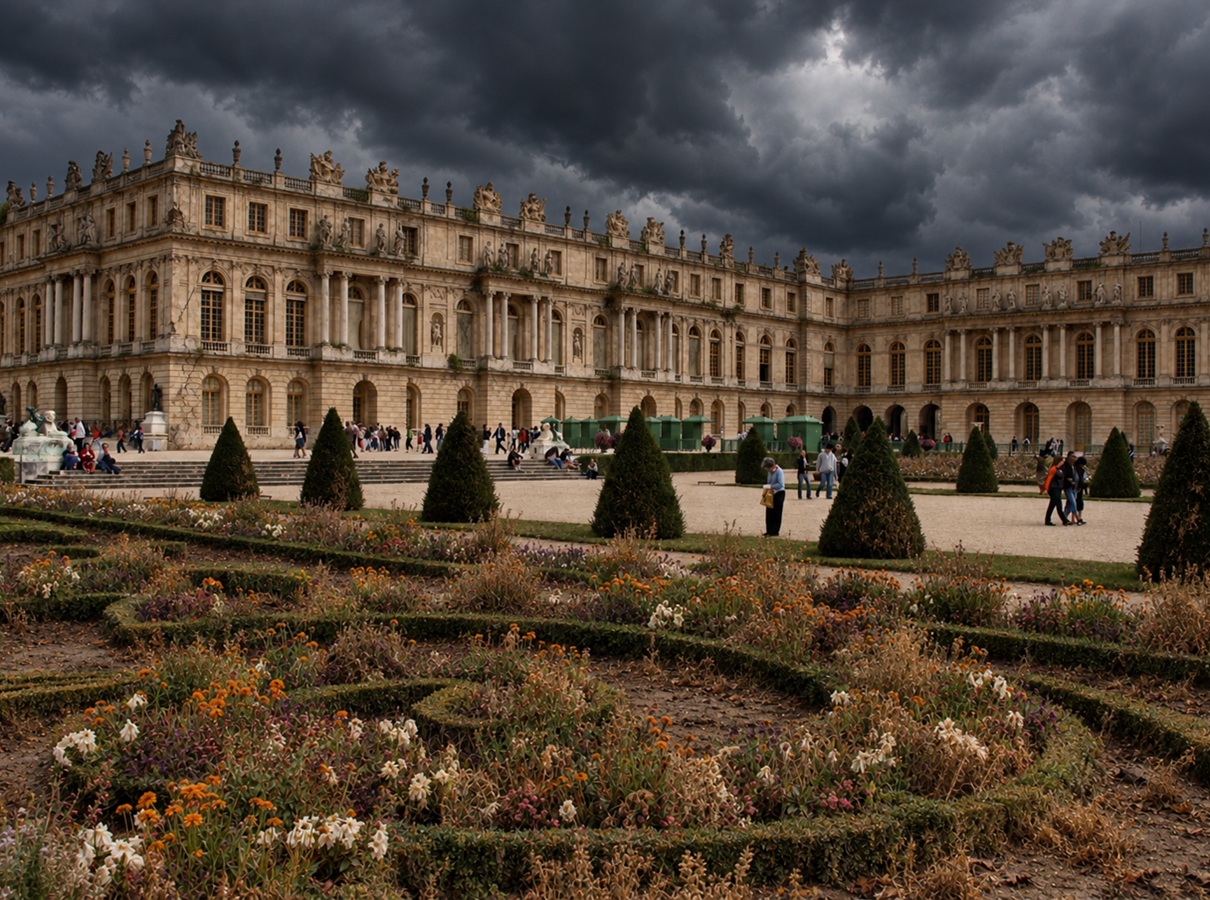
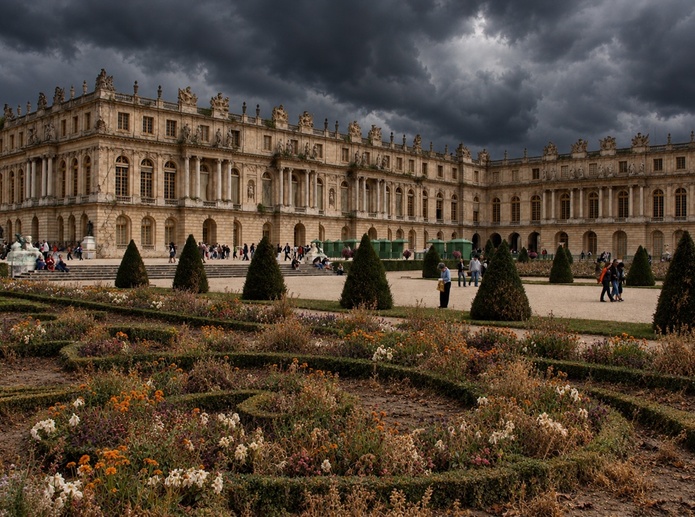
Among the 20 sites studied, we find the Palace of Versailles, the Louvre, but also the Canal du Midi, Montenvers, the citadel of Bonifacio, and the Raisins Clairs colonial cemetery.
Places and buildings built, sometimes centuries ago, and sometimes long before the Industrial Revolution.
Moreover, the excellent Arte documentary series “Fuck la planète” reminds us that, as early as the 19th century, when mining activity intensified, scientists were already questioning the impact of these thick black fumes on our climate.
“These are places and buildings that, for the most part, were built at a time when there was not necessarily awareness of this climate change, either because it was not yet at play for some of them, or because people were not yet aware of the scale of the damage for others.
Today, we are facing changes with a speed and magnitude we have never known in our modern history.
And therefore, we find ourselves with buildings that are not necessarily prepared for this. Beyond that, we have also gradually lost a certain culture of risk“, laments Benjamin Crettenand.
“What is worrying: we have a poor knowledge of risks”
This is the case, for example, with Saint-Malo, where part of the city was built by reclaiming land from the sea. Yet at that time, the sea level was lower.
However, the protections on which the corsair city relies are not always adapted to events that have occurred in recent years, nor likely to those to come.
The Montenvers case is the most striking.
In 140 years, melting has caused a 2-kilometer retreat of the glacier and a loss of 220 meters of thickness. It is now necessary to descend 550 steps to reach the glacier from the cable car exit.
Also concerning the “sea of ice,” which bears its name less and less fittingly, the cave allowing visitors to wander inside the glacier is threatened with closure within three to five years… due to a lack of ice!
“When working on these subjects, there is a certain worry, even if we do not want to be alarmist. Nevertheless, we realize there is quite a large vulnerability of these sites.
The most worrying thing perhaps is that we have a fairly poor understanding of these risks and vulnerabilities.
After all, the report’s aim is to show that all is not lost and that nothing will disappear tomorrow either.
However, action must be taken and these threats must be anticipated, in order to adapt and anticipate degradations, and also to reduce greenhouse gas emissions to limit the impacts“, asserts the climate change awareness officer of Réseau Action Climat.
It should be understood that if the report focuses on 20 sites, the number of threatened sites in France is much larger.
Incidentally, the Centre des monuments nationaux published a study in September stating that all of its 110 sites were “strongly exposed” to climatic hazards, especially in a France at +4 °C.
“Cultural heritage is broadly under threat across France. And this begins today, as seen with the deconstruction of the phare de la Coubre, already announced in January 2025 by the Interregional Directorate of the Sea for the South Atlantic, which manages it.
A decision taken to prevent it from collapsing due to coastal retreat.
There is no hierarchy of threats. However, there are certain events that are very difficult, if not impossible, to prepare for, such as floods or coastline retreat.
Then you have the problem of heat waves, which we see all over France and which will weaken collections, but also pose health risks for people.
Because, beyond the threat to buildings, we also face risks to visiting and working conditions
Réchauffement climatique : “C’est toute l’offre touristique qui serait menacée”
You’ve understood it, faced with unbridled climate warming and the absence of adaptation solutions, the entire tourism industry could be affected.
“We know that our monuments are a core part of France’s tourist appeal. And, behind the Loire Valley châteaux, the Louvre, etc., it’s the overall tourism offer that would be threatened.
Because degraded buildings, closures, or visiting conditions that are much less comfortable, or even unacceptable, could impact France’s tourist appeal, while the importance of this sector for our country is well established“, asserts him.
It thus becomes essential to better understand the risks, to map them and to anticipate what could happen.
“Some site managers tell us they are not prepared for climatic hazards if something were to occur.
We must both better understand these risks and better anticipate them. That will involve maintaining buildings and equipment, but also preparing emergency plans.
If tomorrow a museum faces flooding, we must be able to respond. Teams need to know what to do to safeguard visitors, the works, and also to protect themselves.
Therefore, adaptation will rely on training the teams so that they can act,“, advises Benjamin Crettenand.
“L’adaptation a ses limites, nous devons réduire notre impact sur le climat”
If adapting will always be cheaper than inaction, it will still not be enough in the face of threats of disappearance looming over some heritage sites.
“Adaptation has its limits, because the capacity to adapt varies greatly depending on the structures. All sites, especially the smallest ones, do not necessarily have the human, financial, technical means, nor simply the knowledge needed to anticipate.
Adaptation alone will not suffice. The higher warming climbs, the more costly or less effective some measures become. At the same time, it is necessary to reduce our greenhouse gas emissions.
Our message is to say that we must pursue reducing our climate impact. We have no choice if we also want to protect our cultural heritage“, says the rapporteur.
Read: Canicule: tourism under climate pressure




 While an unexpected mud tsunami has killed hundreds in Nepal (as we write), note that since June Nice, Cagnes-sur-Mer, Saint-Laurent-du-Var, Beaulieu, Villefranche-sur-Mer and Eze have earned UNESCO’s Tsunami Ready label.
