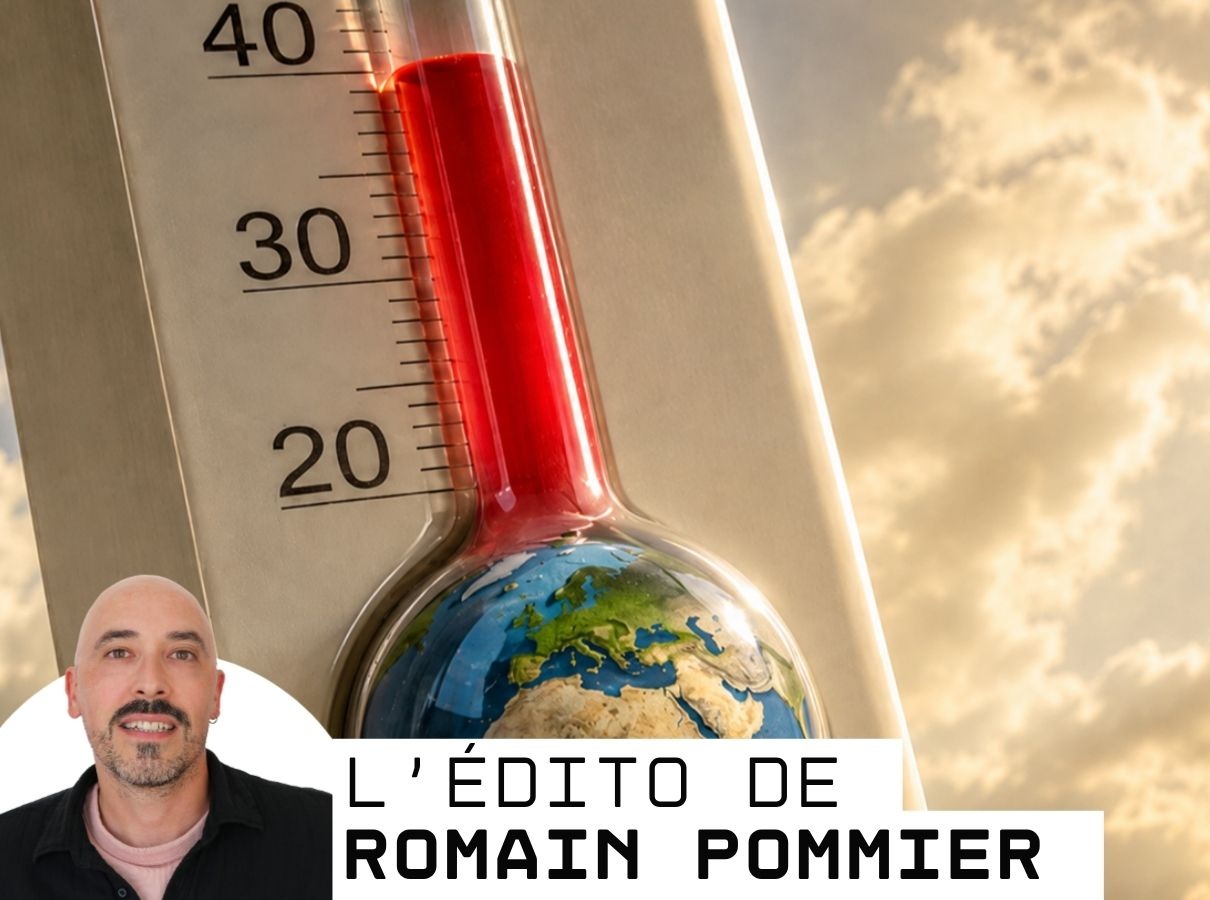



It would be unnecessary to revisit the flood of comments, analyses, and expert assessments that have poured into the media, and predictions—sometimes highly alarming, sometimes moderate—recorded all over the world; yet there are other alerts issued by our planet in distress that do not bode well for a calm future of travel and tourism.
As an example, we have identified a few of them that will at least help you anticipate development strategies (sometimes far too often reckless) and better understand where the world is headed!
As an example, we have identified a few of them that will at least help you anticipate development strategies (sometimes far too often reckless) and better understand where the world is headed!
« Tsunami ready »: UNESCO Mobilizes along the Côte d’Azur
 While an unexpected mud tsunami has killed hundreds in Nepal (as we write), note that since June Nice, Cagnes-sur-Mer, Saint-Laurent-du-Var, Beaulieu, Villefranche-sur-Mer and Eze have earned UNESCO’s Tsunami Ready label.
They thus join neighboring Cannes, which was labeled in 2024, and now display the 800 warning panels installed along coastal areas to inform affected populations of two things: firstly, the direction to move to distance themselves as much as possible from the water in case of a tsunami alert. Secondly, additional panels indicate zones to be evacuated urgently.
Introduced after the 2004 Indian Ocean tsunami, which, as remembered, claimed more than 220,000 victims including thousands of holidaymakers, this UNESCO-coordinated global tsunami alert system should not go unnoticed in a region that is known to be particularly sensitive to earthquakes and other landslides capable of sweeping away populations and transportation infrastructures, homes, beaches, airports…
Relying on a very dense network of sensors, seismographs, and regional alert centers combining scientific expertise, international coordination, and the ability of local authorities to act quickly, the system is still in its early days but demonstrates the extreme vigilance to which humanity must devote itself in order to avert tragedies with dramatic consequences.
Covering today the ocean basins of the Pacific, the Indian Ocean, the Caribbean, the Northeast Atlantic, and the Mediterranean, the system is thus present in Samos in Greece, in Alexandria, in Costa Rica, in the Marshall Islands, in Honduras, in Cadiz in Spain… and more and more in India, Turkey, as well as in Peru which is celebrating its first label this year. Altogether, 43 countries have developed it.
While UNESCO acts to strengthen the resilience of coastal communities through several key initiatives, all experts are on edge, research is energised and the press fortunately serves as a vigilant, well-documented relay:
– Debating and proposing with Shift Project: Among the many laudable initiatives, note that Jean-Marc Jancovici’s Shift Project has just launched a “citizens’ assembly” consisting of 150 people invited to debate in person. A participatory platform: www.uncommunaccord.fr will allow participation in the debate to which tourism professionals should participate in large numbers.
– In a more tourism-oriented register, note that new data from Protect Group, a major supplier of travel-related products and services, reveal that the conversion rate for reimbursement insurance for its partners has nearly doubled, rising from 14% to 27%. France has also progressed, reflecting travelers’ willingness to manage risks caused by all sorts of operational disruptions or simply by a desire for greater flexibility: “travellers increasingly regard protection as an essential part of the booking process rather than a mere extra option,” said Stephen Joyce, Head of Global Strategy – Travel & Tourism at Protect Group.
– Debating and proposing with Shift Project: Among the many laudable initiatives, note that Jean-Marc Jancovici’s Shift Project has just launched a “citizens’ assembly” consisting of 150 people invited to debate in person. A participatory platform: www.uncommunaccord.fr will allow participation in the debate to which tourism professionals should participate in large numbers.
– In a more tourism-oriented register, note that new data from Protect Group, a major supplier of travel-related products and services, reveal that the conversion rate for reimbursement insurance for its partners has nearly doubled, rising from 14% to 27%. France has also progressed, reflecting travelers’ willingness to manage risks caused by all sorts of operational disruptions or simply by a desire for greater flexibility: “travellers increasingly regard protection as an essential part of the booking process rather than a mere extra option,” said Stephen Joyce, Head of Global Strategy – Travel & Tourism at Protect Group.
Demographic Alert: “Global Depopulation Is the Most Likely Future”
In another domain, just as essential but less visible, the reversal by demographers of forecasts strikes me as particularly evocative of the false detours that forecasting activities can take.
It was said that the world population would reach 10 billion people by 2050, up from 8 billion today. Yet the prospect now points to a dramatic slowdown linked to a decline in fertility rates. Notably in Korea, Brazil, Italy… about forty countries are already affected.
While China, hit by its one-child policy, will see its population by the end of the century fall to around 650 million. And this against the United States where the fertility rate will be higher, so the population will rise without necessarily having the workforce needed for unskilled jobs!
And especially with respect to an Africa that is estimated to reach 2.5 billion inhabitants, i.e., more than double its current level, the world’s geopolitics and the handling of migration flows, including within the continent where they are the most numerous, will have to be reconsidered. Already, it is forecast that 750,000 African immigrants will be legalized in 2050.
…But what does all this mean? An aging population in the West and in China means a population less innovative, less dynamic, more costly for the state, more demanding of care tailored to its needs… But, good news, emphasize the demographers, it will be more peaceful.
As for the geopolitics of this tomorrow’s world, it is far from predictable with countries like Indonesia, Pakistan, Nigeria reaching 400 million inhabitants and India at 1.4 billion.
In any case, for this “old” world, it would also be a good time to consider planning for the future in all equipment to be built, a possible reconversion for seniors, as Japan is already doing!
We could also try to address the worst of the ills affecting seniors: isolation.
It was said that the world population would reach 10 billion people by 2050, up from 8 billion today. Yet the prospect now points to a dramatic slowdown linked to a decline in fertility rates. Notably in Korea, Brazil, Italy… about forty countries are already affected.
While China, hit by its one-child policy, will see its population by the end of the century fall to around 650 million. And this against the United States where the fertility rate will be higher, so the population will rise without necessarily having the workforce needed for unskilled jobs!
And especially with respect to an Africa that is estimated to reach 2.5 billion inhabitants, i.e., more than double its current level, the world’s geopolitics and the handling of migration flows, including within the continent where they are the most numerous, will have to be reconsidered. Already, it is forecast that 750,000 African immigrants will be legalized in 2050.
…But what does all this mean? An aging population in the West and in China means a population less innovative, less dynamic, more costly for the state, more demanding of care tailored to its needs… But, good news, emphasize the demographers, it will be more peaceful.
As for the geopolitics of this tomorrow’s world, it is far from predictable with countries like Indonesia, Pakistan, Nigeria reaching 400 million inhabitants and India at 1.4 billion.
In any case, for this “old” world, it would also be a good time to consider planning for the future in all equipment to be built, a possible reconversion for seniors, as Japan is already doing!
We could also try to address the worst of the ills affecting seniors: isolation.