Thailand: France’s Foreign Ministry Advises Against Visiting Certain Provinces


Thaïlande : le Quai d’Orsay déconseille plusieurs provinces du sud - Depositphotos @tom.griger

Hurtigruten


The year 2025 was marked by a renewed conflict between Cambodia and Thailand.

Violent clashes occurred along the border between the two countries, resulting in several dozen deaths and nearly 800,000 displaced people.

For seven months now, the conflict has been at a standstill and Thailand has begun erecting a concrete wall to seal off the route of a disputed border.

The situation seems to be easing at this level, but a new zone of tension has opened up, this time farther south.

And this time, at the border with Malaysia, incidents have occurred, not directly with the Malaysian neighbor, but in provinces where the Malay language is predominant.

Thus, on the night of August 22–23, 2026, around fifty incidents were recorded.


Thaïlande : le Quai d’Orsay déconseille plusieurs provinces du sud

As reported by Courrier International, these attacks take the form of shootings, arson and explosions, aimed at creating chaos in the Muslim-majority regions of Narathiwat, Pattani and Yala.

The attacks have not been claimed, although the Quai d’Orsay notes that armed separatist movements are active in these provinces. Since 2004, in southern Thailand, these movements have carried out several attacks.

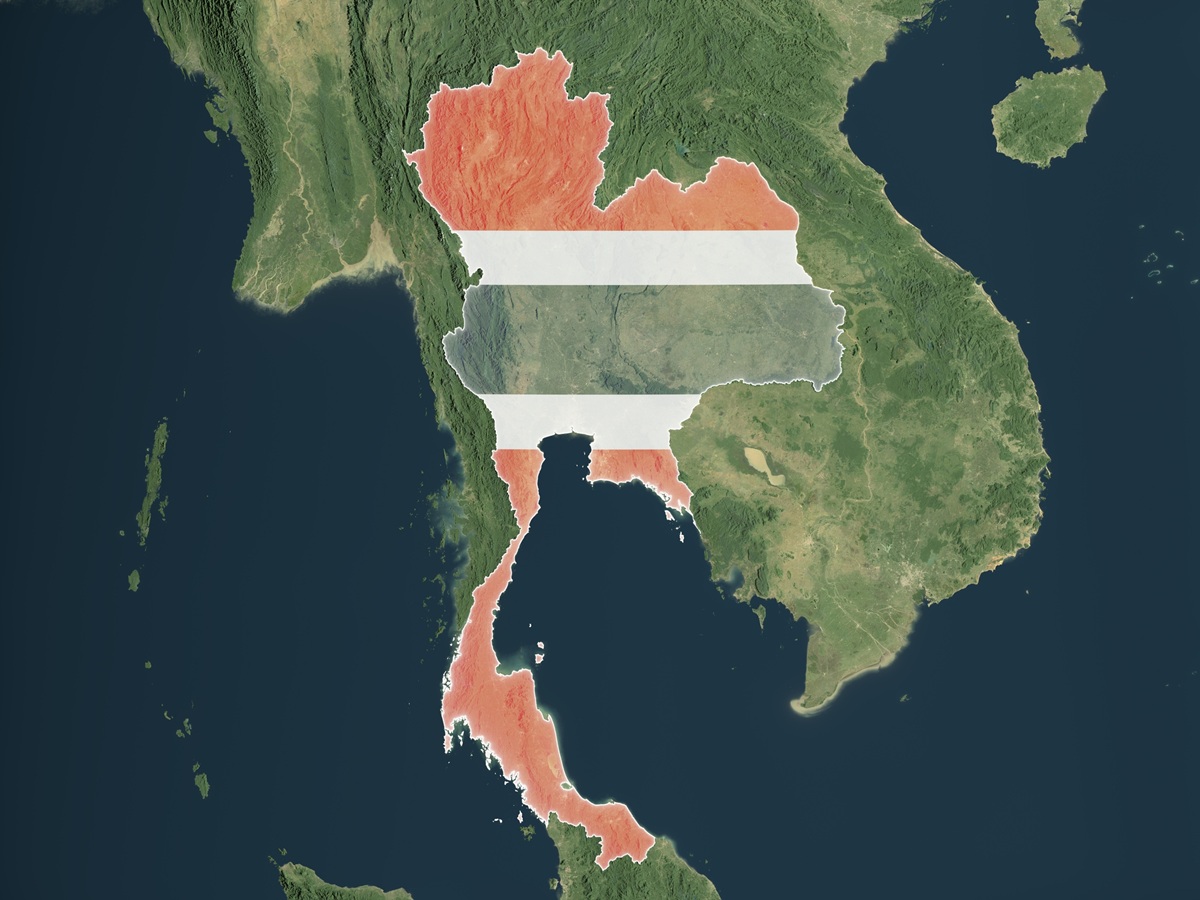
Thus, the French Ministry of Foreign Affairs formally advises against traveling to the southern provinces of Narathiwat, Pattani, Yala and Songkhla.

Going forward, the eastern, western and southern borders of the country have been placed in red, the highest vigilance level of France Diplomatie.


Thaïlande : les raisons de l’insurrection ?

The insurgent groups are demanding new rights and greater autonomy, or even the creation of an independent Muslim-majority state, according to Amnesty International in an article devoted to this little-known conflict.

These regions are also marked by economic underdevelopment.

To trace the origins of the tensions, one must go back to 1909, when Bangkok annexed an independent sultanate. The kingdom then imposes forced linguistic, religious and cultural assimilation on its inhabitants.

In response to this, opposition rose and organized itself in the 1960s. In 2004, the conflict entered a new phase, with attacks against police stations, resulting in several dozen deaths.

Over the past twenty years, the conflict has claimed more than 7,700 lives and left 15,000 injured.
France’s Grand Sites Network Expands With New Territories


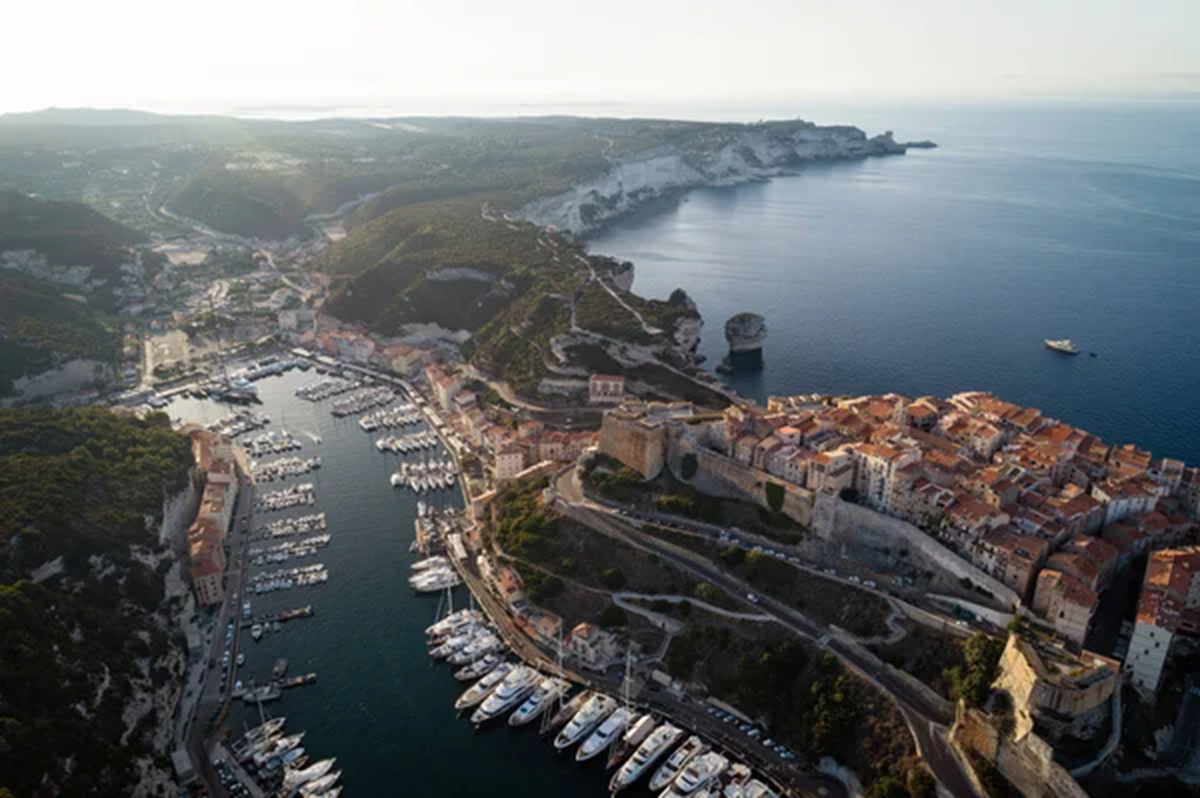
Le Réseau des Grands Sites de France intègre de nouveaux territoires, Bonifacio, Depositphotos.com

Costa Rica


The Network of Grand Sites of France records new progress in protecting and managing remarkable landscapes.

Following the recent favorable opinions of the Superior Commission of Sites, Le Havre du Payré and Bonifacio reach a decisive milestone by becoming Grand Site of France Projects.

This will enable these two territories to commit to implementing their projects and territorial action programs.

This dynamic is accompanied by the Gard Department joining the network and the integration of Gergovie as an associated member.

These efforts aim to reconcile the preservation of designated landscapes with the management of tourist visitation and the maintenance of the local quality of life.

To read : The Grand Site of France label renewed for the Poitevin Marsh

Once these plans are deployed, the two local authorities will be able to submit their official candidacy for the Grand Site of France label.


The Network’s Annual Meetings Will Be Held in Nîmes

The arrival of the Gard Department within the body of major local authorities marks a strong commitment to environmental management. 

Already managing more than 4,500 hectares of sensitive natural spaces, the territory will also host the Annual Meetings of the Network in Nîmes, from 13 to 15 October 2026, around the theme of the residents’ place.

De son côté, the Gergovie plateau and the Arverne sites located in the Puy-de-Dôme join the network as an associated member.

Fortified by its major archaeological heritage and its viewpoints over the Chaîne des Puys, the site begins its journey of support before obtaining validation from the Ministry of Ecological Transition to fully engage in the initiative.

Behind the Scenes of the Southeast TGV Axis: The Backbone of France’s Rail Network


Dans les coulisses de l’axe TGV Sud-Est, colonne vertébrale du rail français - Photo CE

IFTM prenez RDV avec TourMaG


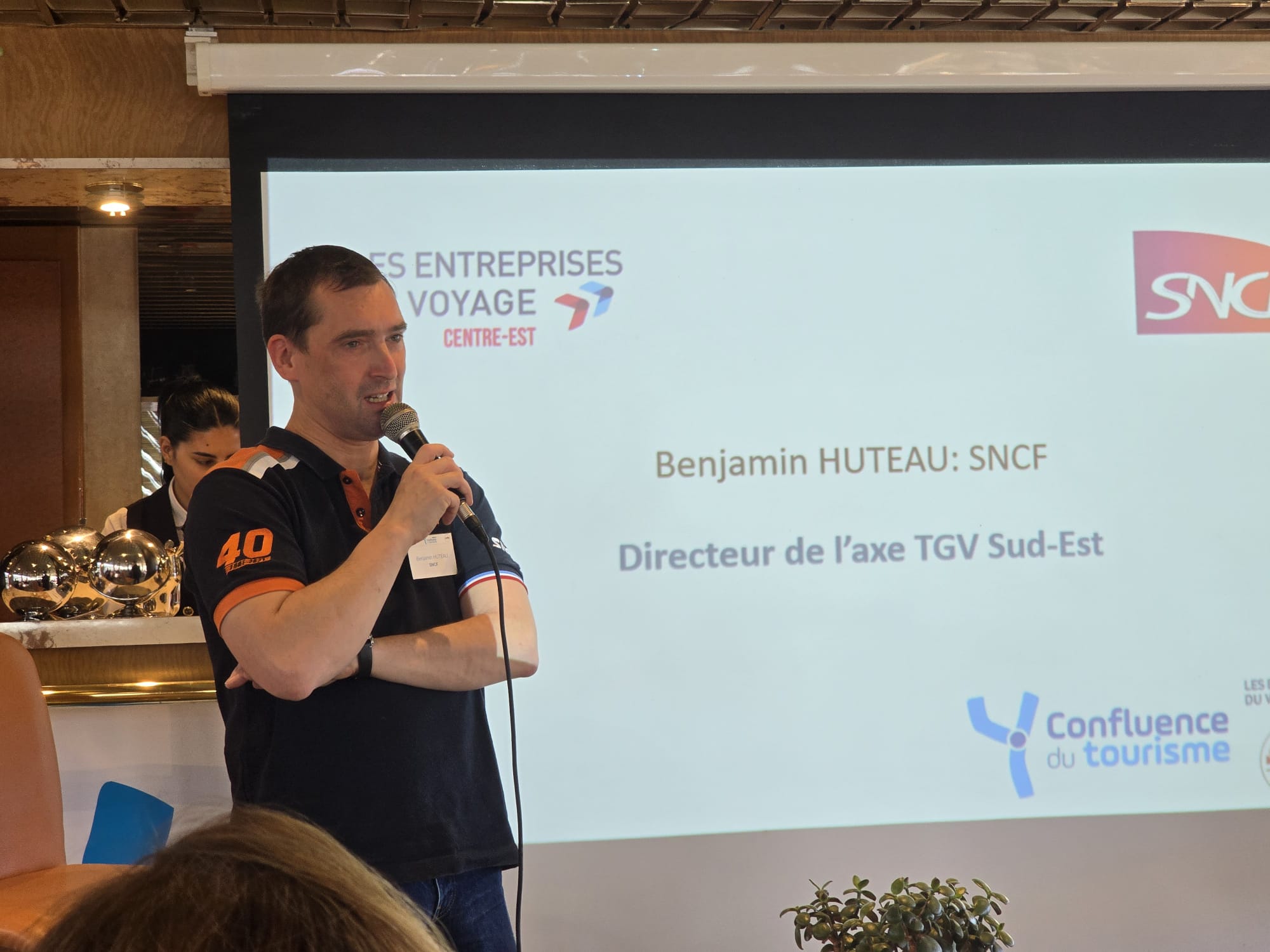
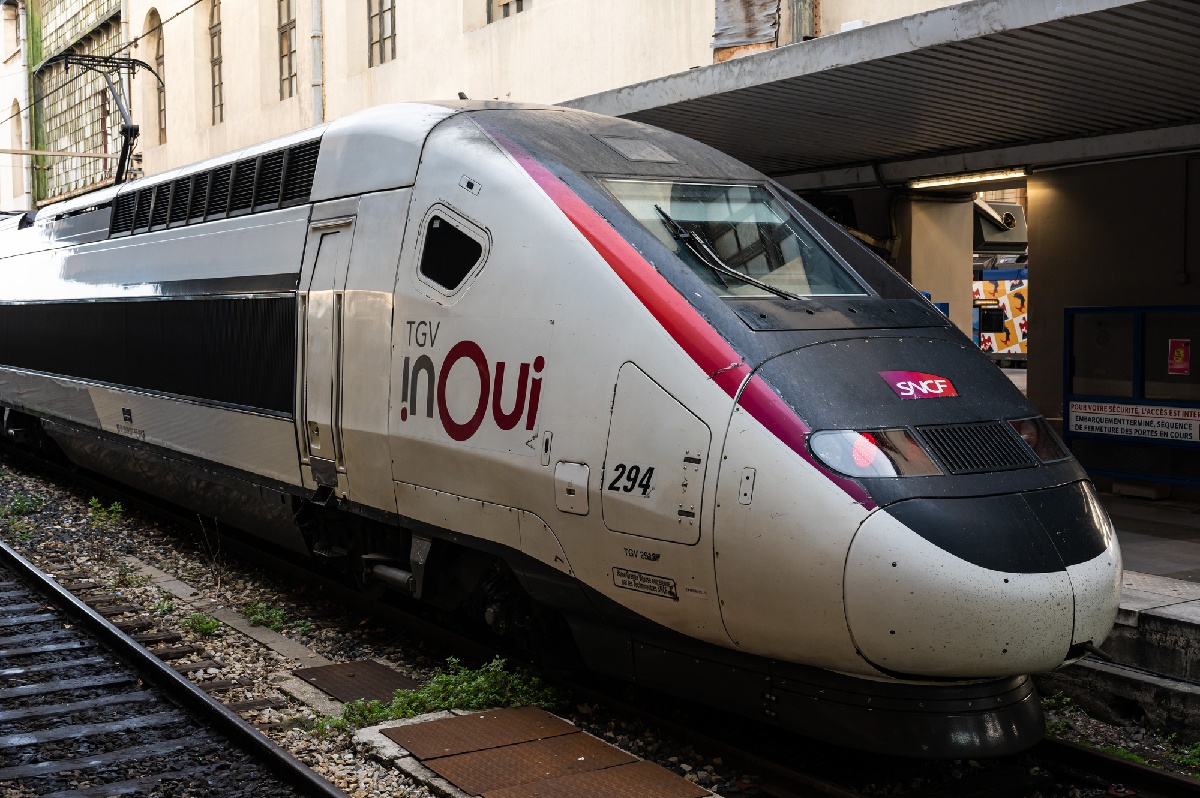
It is the backbone of French rail transport. The TGV Sud-Est axis is the main railway corridor in France connecting Paris to Lyon and then toward the Mediterranean, spanning eastern France and the Alps.

« If you draw a line from Paris-Mulhouse to Paris-Barcelone, you already cover a good portion of the country », summarizes Benjamin Huteau, director of this strategic axis.

Each day, 120,000 travelers ride on 130 TGVs. Behind these figures: a workforce of 5,000 people and an annual turnover of 2.5 billion euros.

« This is the densest axis in Europe in terms of rail traffic. The backbone of the high-speed line that physically lies between Paris and Lyon, indeed, by far the busiest line in Europe because Paris-Marseille and Brussels-Montpellier also pass through it. »


Tolls account for about 40% of a ticket’s price

The general public often doesn’t realize it, but a significant portion of the price of a TGV ticket does not go directly to the operator and is used to finance the use of infrastructure: stations and the rail network.

Managed by SNCF Gares & Connexions and SNCF Réseau, these entities market, on the one hand, calling at stations and, on the other, slots—i.e., time windows for circulation on the rail network—allowing various carriers to run trains from one point to another.

« The track charges paid by TGV activity in France are among the highest in Europe. These fees largely — and often beyond — cover the maintenance costs of the high-speed lines. In France, they contribute significantly not only to the maintenance of the high-speed network but also to that of the entire rail network, including conventional lines » explains Benjamin Huteau.

These charges represent around 40% of a ticket’s price, with notable variations depending on the line. « On the busiest axes like Paris – Lyon, this share can reach nearly 50%. Conversely, on other lines where the cost per kilometer differs, this share can be lower, around 30%, such as on Paris – Mulhouse or Paris – Dijon. »

What is less known is that these tariffs are also set according to a yield-management logic: « On Paris – Lyon, this economic logic dominates: more than 80% of the toll relates to this dynamic pricing. It’s hard to be profitable on Paris – Lyon; tolls have risen by more than 30% since 2020. »


SNCF Réseau asks to pre-book track slots three years in advance


Sur certains tronçons, un train circule toutes les quatre minutes, bientôt toutes les trois minutes d’ici 2030 grâce aux évolutions de signalisation. - Depositphotos.com

In a context of high tolls, profitability hinges on two essential levers: maximizing load factor and keeping trains running as much as possible.

This requires aligning supply as closely as possible with fluctuating demand, depending on the schedules, days of the week, vacation periods, and holidays.

And it is all the more complex because SNCF Réseau asks to pre-book track slots three years in advance. « There is still a bit of crystal ball involved. We do not pre-book everything. We pre-book the base of our offer and then there are several milestones two years ahead, one year ahead… down to six weeks before. »

« This management allows volumes transported to vary considerably, depending on the day, ranging from about 80,000 to 140,000 travelers. »


Lyon-Part-Dieu, the Côte-d’Azur, Bourg-Saint-Maurice in winter… some near-saturation zones

Some zones are close to saturation. At the end-of-line stretches toward the alpine stations, such as Bourg-Saint-Maurice during winter and school holidays, or toward the Côte d’Azur, where coexistence with the TER limits capacity, are already heavily saturated.

Similarly for Lyon – Part-Dieu, which has the peculiarity of being a through station with passenger flows close to origin stations.

Unlike an origin station, where trains dwell long enough to allow progressive boarding of several hundred passengers, stops at Part-Dieu are extremely short, often limited to a few minutes.

In this shortened time window, it is necessary to both let many passengers alight and board as many again, under very tight conditions.

« For example, just one traveler with a stroller: out of courtesy we let them pass, but the time to settle in can block boarding. And then everything jams. In these cases, we try to propose boarding last to ease the flow, » cites Benjamin Huteau as an example.


A train runs every four minutes and soon every three minutes

On some sections, a train runs every four minutes, and by 2030, nearly every three minutes thanks to signalling improvements.

Even the slightest delay can quickly snowball into a knock-on effect on the punctuality of all following trains. «There isn’t a day without disruptions. The problem with rail is that we are rather sensitive to external disturbances,» admits the director.

Among the most frequent disruptions: sick passengers on board, abandoned baggage, or conflicts between travelers. They occur regularly but typically cause only limited delays.

Other events, more serious and less frequent, such as people being on the tracks, cause much longer interruptions. Add to this climate-related risks, or network or signaling failures.

In these situations, the teams’ role is to reorganize the transport plan to limit the spread of delays.

The main objective is to avoid cascading effects. To achieve this, it is often necessary to adapt the operating plan in real time.

Without adjustment, a morning delay risks lingering all day, especially if the same trains are used for several circulations. Teams revise allocations, reorganize rotations, and adjust operations.

This responsiveness also implies revisiting maintenance planning, itself highly optimized to maximize the availability of the rolling stock. The whole system is highly intertwined, requiring coordination to avoid further malfunctions.


The arrival of new TGV rolling stock on the South-East axis, with optimized maintenance


Céline Eymery Published by Céline Eymery Editor-in-Chief – TourMaG.com
See all articles by Céline Eymery

  • picto Facebook
  • picto Twitter
  • picto Linkedin
  • picto email
Add TourMaG to your Google News feed Google Actualités icône


Read 8,432 times

Tags :
sncf

Rate

New comment:


All rude, insulting, or defamatory comments will be immediately removed by the moderator.

Report abuse

In the same section :

<
>

Wednesday 8 July 2026 – 18:42 FlixBus integrates Paris-Beauvais Airport shuttles on its platform

Friday 3 July 2026 – 09:35 Train: SNCF Connect opens reservations to Germany and Switzerland

Three Walks Through the Landscapes of France’s Greatest Writers

George Sand’s Berry Fief

Entrusted at the age of four to her grandmother who lived on the Nohant-Vic estate (in the southern Berry), the author of The Devil’s Pool and Little Fadette maintained a lifelong, deep attachment to this land. Drawing generously from local legends and the rural world, she made it, more than a mere backdrop, a living character that never reveals itself better than along the path.

France’s Most Creative Cities

France was crowned with the title of “Creative Country of the Year 2026” last February at the Cannes Lions International Festival of Creativity, underscoring France’s influence in the realm of creativity. But beyond this global recognition, which French cities truly embody this momentum? A new study conducted by Adobe sheds light, analyzing close to 200 French communes.

To construct this ranking, several criteria were scrutinized in detail. For example: the number of self-employed workers in creative sectors, the presence of cultural education institutions, venues dedicated to culture, festivals, museums, as well as job openings and independent creative studios or agencies.

Cannes tops the ranking

It is the city of Cannes that finishes at the top of the list with a score of 9.67/10. The azure-coast city stands out thanks to an impressive concentration of cultural events. With 31 festivals for under 75,000 inhabitants, the city led by David Lisnard demonstrates remarkable density, and the study shows that more than six times as many festivals were held there as in Versailles, and almost as many as Grenoble, despite Grenoble’s twofold greater population.

Its appeal is also grounded in its cultural infrastructure. The municipality hosts 28 cultural venues, which is higher per capita than Lille or Paris. In terms of employment, the city records 374 openings in creative industries, a notably high volume given its size. This performance also mirrors the weight of the Cannes Film Festival, a major global cinema event.

Versailles, queen of job opportunities

Ranked second, Versailles owes its excellent score to a particularly dynamic job market in the creative sectors. The city totals more than 8,500 creative job openings, i.e., more than 22 times the volume observed in Cannes and more than 40 times that of Avignon. It also records more than 27,000 self-employed workers, one of the highest figures in the ranking behind Paris. Unlike Cannes, Versailles relies less on cultural events, as only five festivals and 26 cultural venues are listed there.

Avignon, cultural bridge?

In third place, Avignon confirms its well-established reputation as a cultural hotspot. Its overall score of 8.9/10 rests largely on its significant number of events and infrastructures. The city hosts no fewer than 47 festivals and 59 cultural venues for fewer than 100,000 inhabitants, which represents a proportionally higher festival density than Lille or Grenoble, and more than double the festivals per inhabitant compared with Paris. The standing of Avignon as a national reference is further strengthened by the influence of the Festival d’Avignon, which is scheduled this year from Saturday, July 4, to Saturday, July 25, 2026.

Grenoble bets on innovation

Fourth in the ranking, Grenoble combines innovation, design, and culture. The city counts 53 cultural venues, 35 festivals, and six museums, the largest number of museums among the top five cities. It also hosts two higher education institutions specializing in the cultural sector. With nearly 1,000 self-employed creative workers and more than 340 job openings in the creative industries, Grenoble attracts profiles oriented toward technology and creation.

Lille, the North’s Creative Engine

Fifth in the ranking, Lille emerges as one of the country’s most dynamic cultural metropolises. Indeed, the northern city records 84 cultural venues, the second-largest total in the top 10 after Paris, along with 51 festivals and 40 independent creative studios or agencies. Lille also houses more than 2,600 self-employed professionals in creative trades, further confirming its status as a true hub for the northern region.

Paris, far down the ranking…

Despite its image as a global cultural capital, Paris only ranks 14th, with a score of 8.41/10. On paper, however, the City of Light dominates every indicator: 622 cultural venues, 299 festivals, 50 museums, more than 28,000 self-employed workers, and 382 studios or creative agencies. Yet its enormous population, with 2,103,778 Parisians, slightly dampens these performances when measured per inhabitant.

Thus, Cannes shows nearly three times as many festivals per inhabitant, while Avignon exhibits a noticeably higher cultural density. Paris remains, however, the city that concentrates the most professional opportunities, with over 3,800 openings in the creative industries. At the opposite end of the ranking, Saint-Laurent-du-Maroni finishes last with a score of 0.68/10. The commune suffers from a substantial shortage of cultural infrastructure and records no identified job openings in the creative industries…