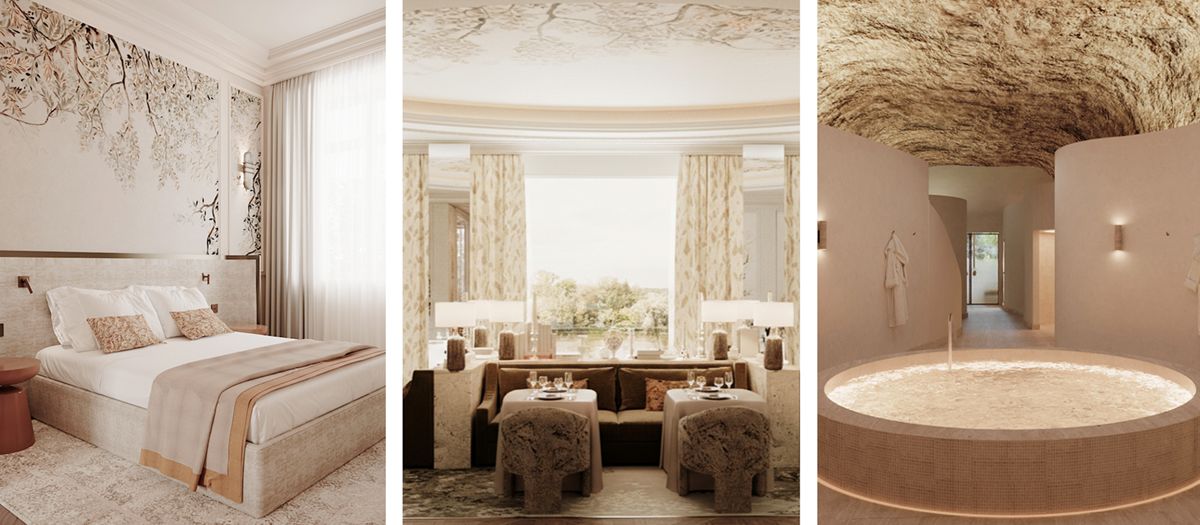


Frédéric Jousset unveils the Relais d’Amboise, his new five‑star address affiliated with The Leading Hotels of the World.
Situated at the foot of the Royal Château d’Amboise and near Clos Lucé, this 63‑room and suite establishment reimagines a exceptional historic site.
It notably integrates troglodyte spaces recorded as historic monuments, a Clarins mineral spa and myBlend, as well as the city’s first rooftop bar, offering a panoramic view of the Loire.
The architectural design, orchestrated by the LBBA agency and Roque Interiors studio, under the artistic direction of Joséphine Fossey, highlights the tuffeau stone and the Loire Valley identity.
The 63 rooms and suites occupy fully restored historic buildings, some offering private terraces with views of the river or the castle towers.
Situated at the foot of the Royal Château d’Amboise and near Clos Lucé, this 63‑room and suite establishment reimagines a exceptional historic site.
It notably integrates troglodyte spaces recorded as historic monuments, a Clarins mineral spa and myBlend, as well as the city’s first rooftop bar, offering a panoramic view of the Loire.
The architectural design, orchestrated by the LBBA agency and Roque Interiors studio, under the artistic direction of Joséphine Fossey, highlights the tuffeau stone and the Loire Valley identity.
The 63 rooms and suites occupy fully restored historic buildings, some offering private terraces with views of the river or the castle towers.
Relais d’Amboise : a troglodyte space dedicated to art and culture
On the gastronomy front, the Le Choiseul restaurant will offer contemporary French cuisine crafted by Michelin‑starred chef Nicolas Aubry and executive chef Vincent Léger Blanchard.
In parallel, the Le Turner bar, perched on the roof of the establishment, will constitute Amboise’s only rooftop. For wellness, the Spa des Roches will be housed in the heart of former troglodyte caves, complemented by a heated outdoor pool and a yoga space.
Read: 6 slow walks in Centre‑Val de Loire
The Relais d’Amboise also stands out for its cultural dimension.
The Greniers de César, vast underground galleries in tuffeau stone, will host an artistic program throughout the year, event spaces, and a tasting cave devoted to regional wines.
The site will notably participate in the artistic itinerary dedicated to sculptor Bernar Venet, in resonance with the Clos Lucé château and the Royal Château of Amboise.
In parallel, the Le Turner bar, perched on the roof of the establishment, will constitute Amboise’s only rooftop. For wellness, the Spa des Roches will be housed in the heart of former troglodyte caves, complemented by a heated outdoor pool and a yoga space.
Read: 6 slow walks in Centre‑Val de Loire
The Relais d’Amboise also stands out for its cultural dimension.
The Greniers de César, vast underground galleries in tuffeau stone, will host an artistic program throughout the year, event spaces, and a tasting cave devoted to regional wines.
The site will notably participate in the artistic itinerary dedicated to sculptor Bernar Venet, in resonance with the Clos Lucé château and the Royal Château of Amboise.