Evaluating hotel name formatting

I think we should make the title more natural, like "Aix-en-Provence: Grand Hôtel Roi René Unveils its Renovation" or perhaps "Aix-en-Provence: Grand Roi René Hotel Reveals its Renovation." However, "Grand Hôtel Roi René" is the formal name of the hotel, and in English, I’m considering how to best render it. For SEO purposes, using "Grand Hotel Roi Rene" without accents might be better. Ultimately, I’m leaning towards keeping it elegant while thinking about its marketing appeal.Considering hotel title options

I’m thinking about the title "Aix-en-Provence: Grand Hotel Roi Rene Unveils Its Renovation." Maybe it’s worth adding "in Aix-en-Provence," but since that’s already the location phrase, it might sound repetitive. It seems best to propose the title as "Aix-en-Provence: Grand Hôtel Roi René Unveils Its Renovation," while pondering whether to drop the accent for SEO purposes. However, keeping "Roi René" as is helps preserve the hotel’s proper name, even if it can confuse search engines. I’ll stick with the hotel’s name in English to ensure clarity.Finalizing the hotel title

I think we should translate the title correctly: "Aix-en-Provence: Grand Hôtel Roi René Unveils Its Renovation." In English, "Grand Hôtel" is "Grand Hotel" without the accent. So, "le Grand Hôtel Roi René" becomes "the Grand Hotel Roi Rene." "Dévoile sa rénovation" translates to "unveils its renovation." Putting it all together, I have: "Aix-en-Provence: the Grand Hotel Roi Rene Unveils Its Renovation." To keep it SEO-friendly, I’ll use title case: "Aix-en-Provence: Grand Hotel Roi Rene Unveils Its Renovation." That’s around 68 characters, which is just right!


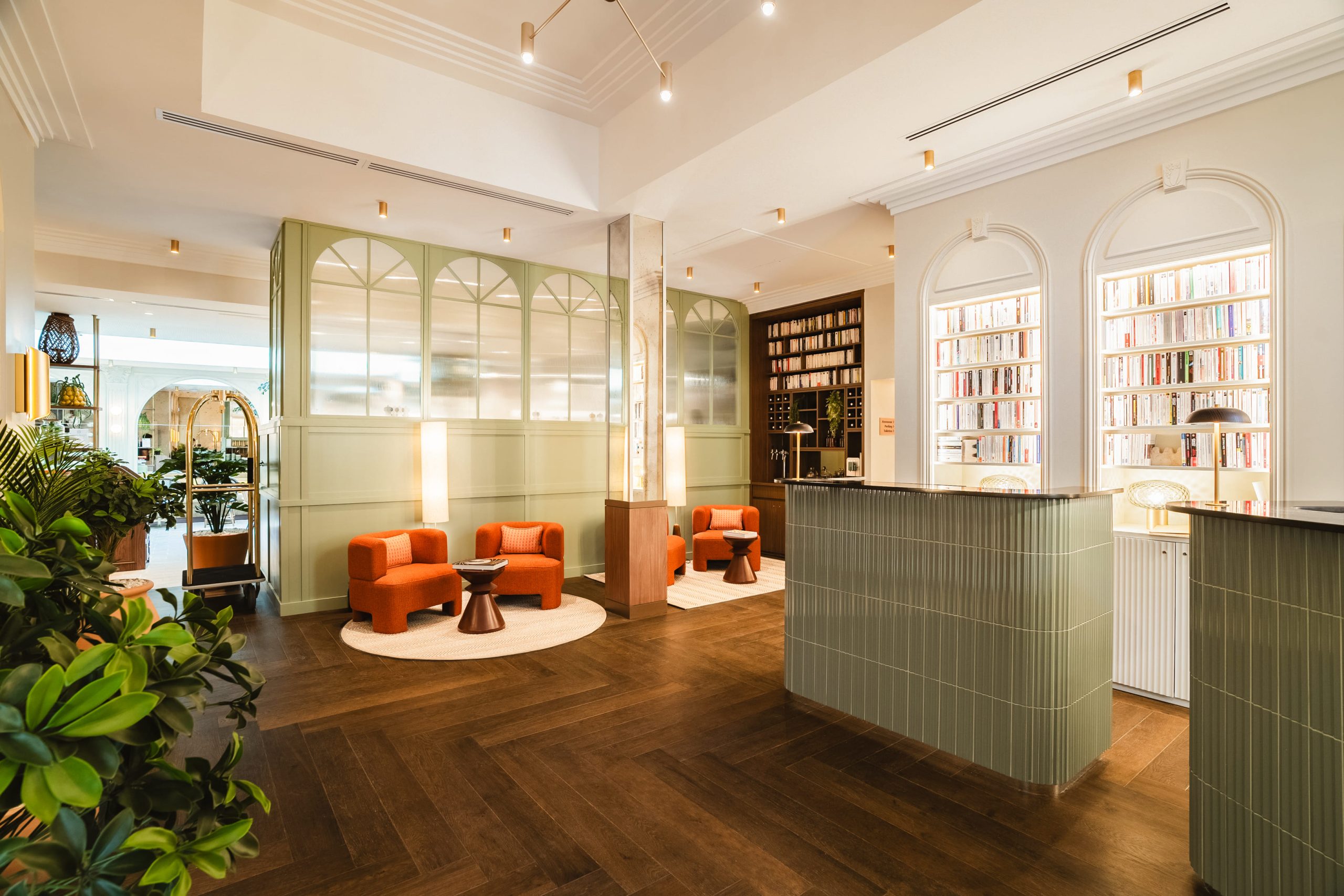
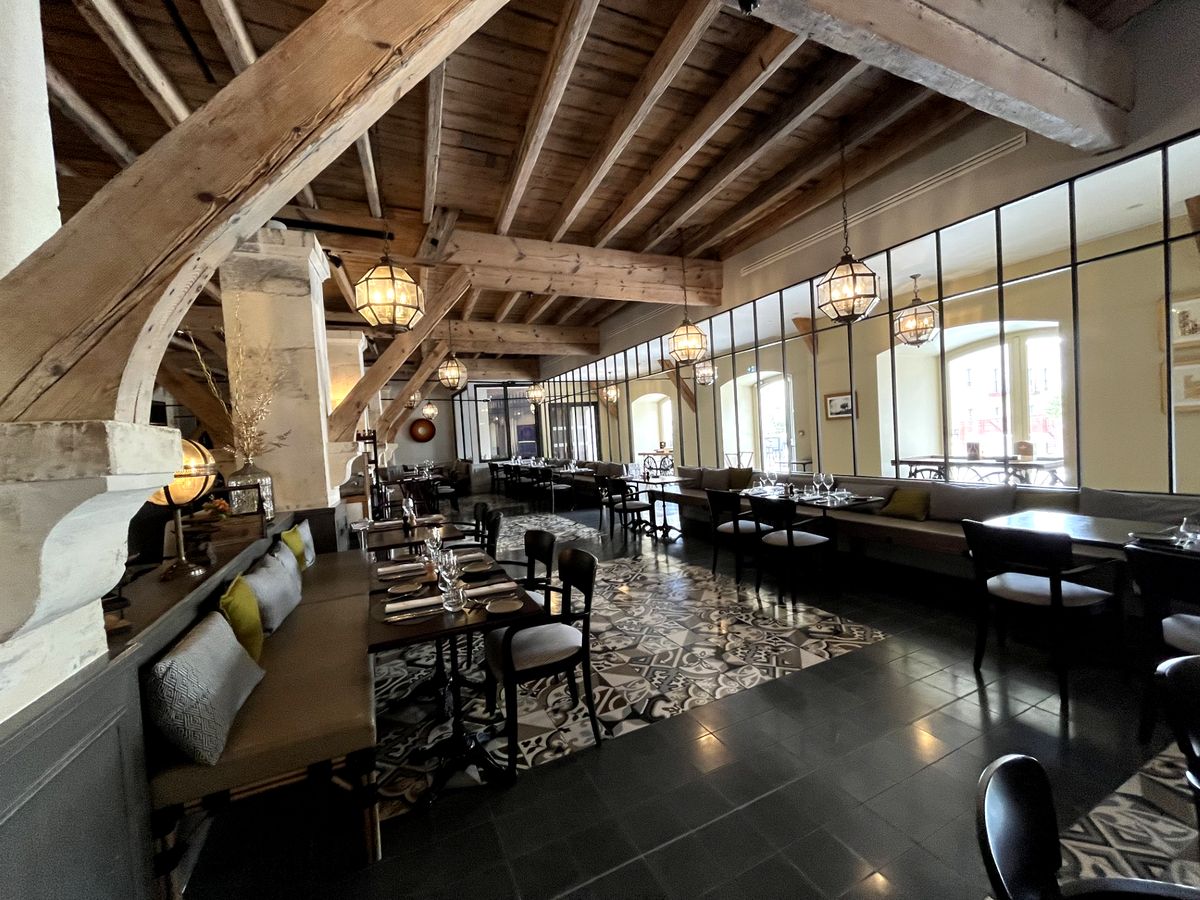
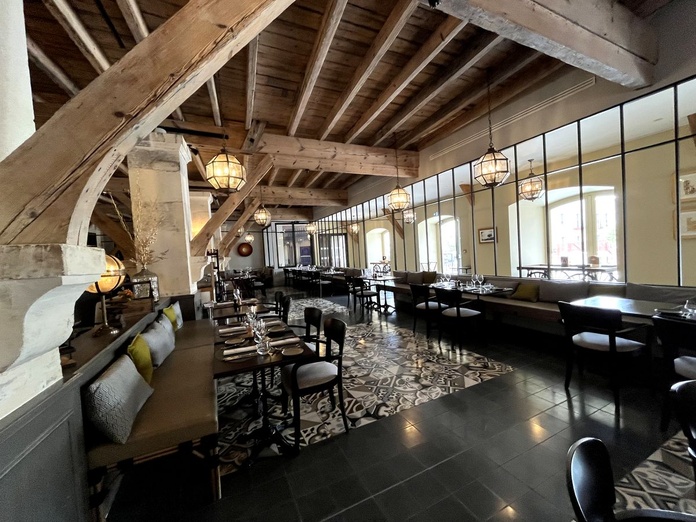
Le Grand Hôtel Roi René réouvre à Aix-en-Provence.   Crédit photo : Grand Hôtel Roi René MGallery

IFTM


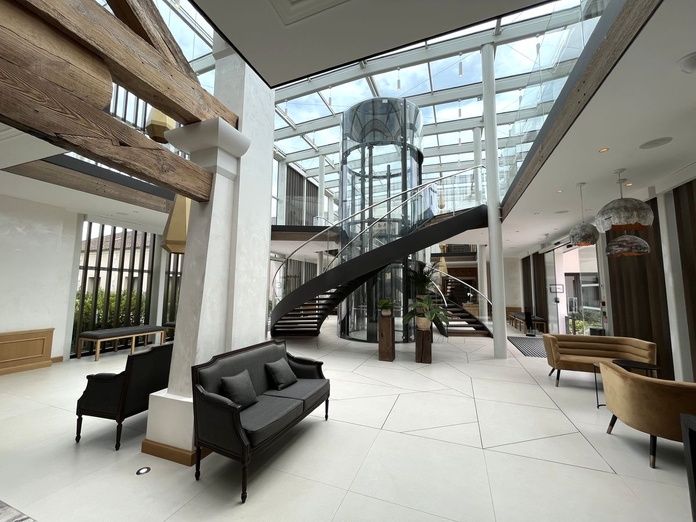
The Grand Hôtel Roi René reopened in Aix-en-Provence after a year of renovations, in late April 2026.

The hotel is pursuing a new identity, blending noble materials, craftsmanship, and contemporary design.


The renovation was entrusted to interior designer Fabien Roque, who completely reworked the lobby, the restaurant, the bar, and the reception areas.

The property notably highlights a world inspired by Provençal colors, with terracotta tones, olive green and beige, paired with solid wood, marble, leather and velvet.

The hotel also hosts several artistic creations, including a ceramic screen signed by Marie Levêque, installed in the public areas.

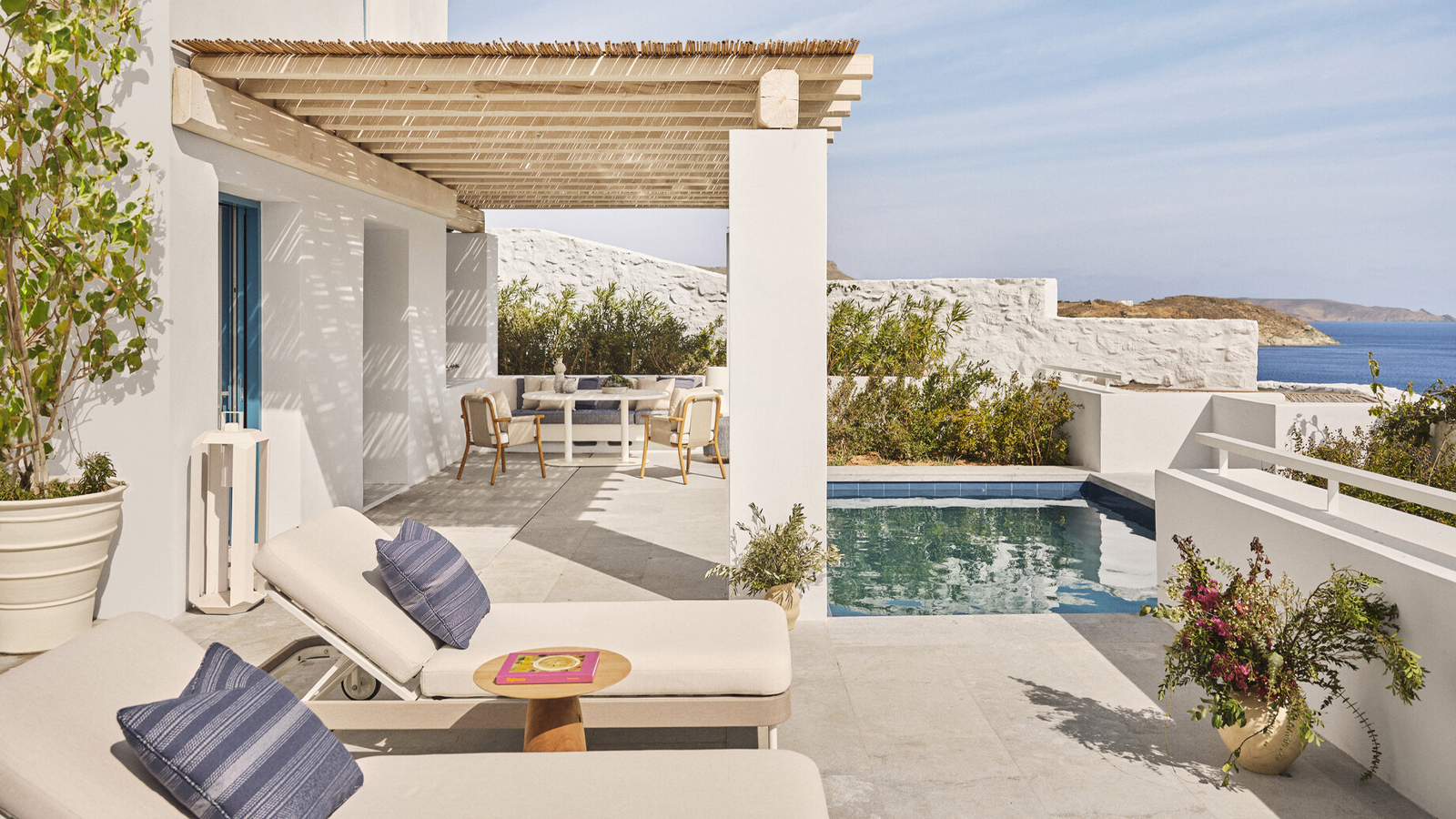
The exteriors have also been redesigned around a spirit of “French Riviera“, particularly around the pool and the relaxation spaces.


Grand Hôtel Roi René: 131 renovated rooms and a new dining offer


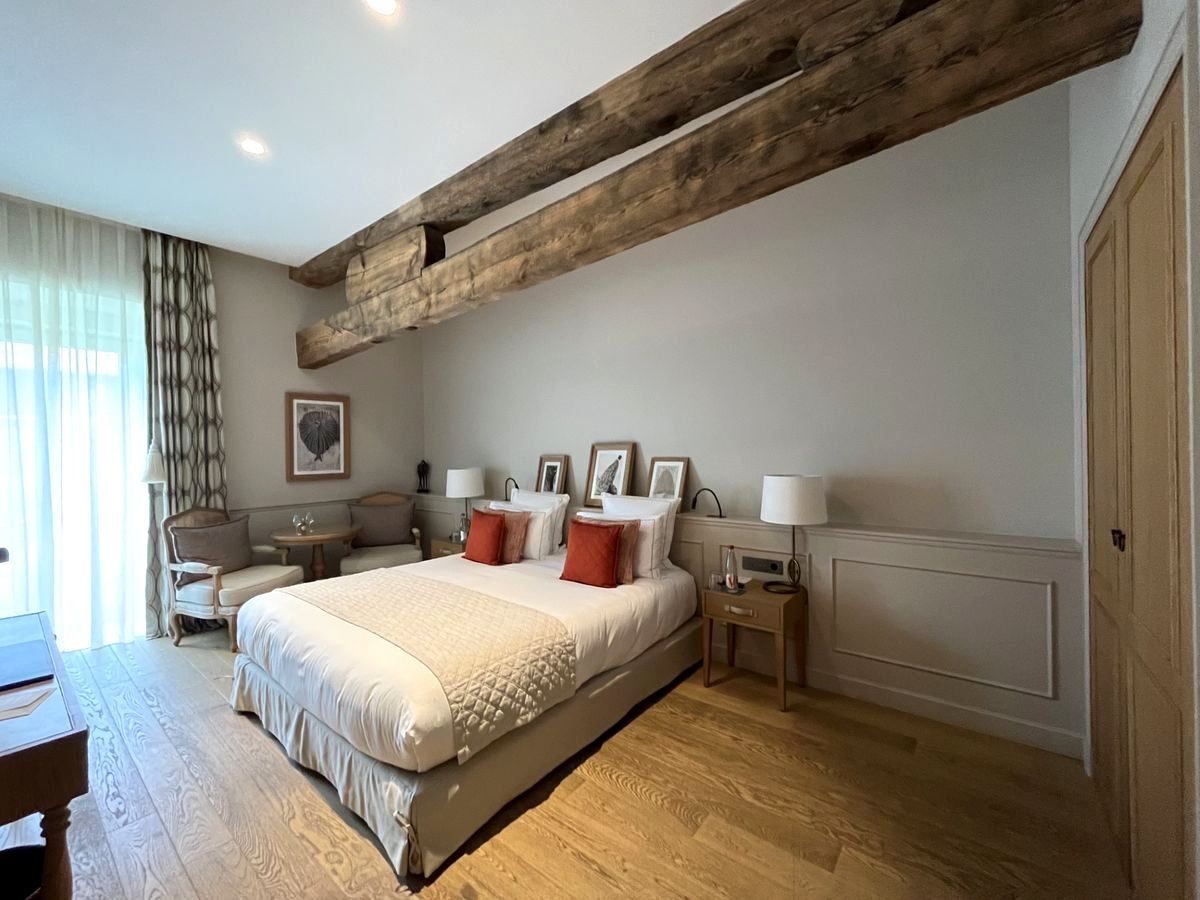
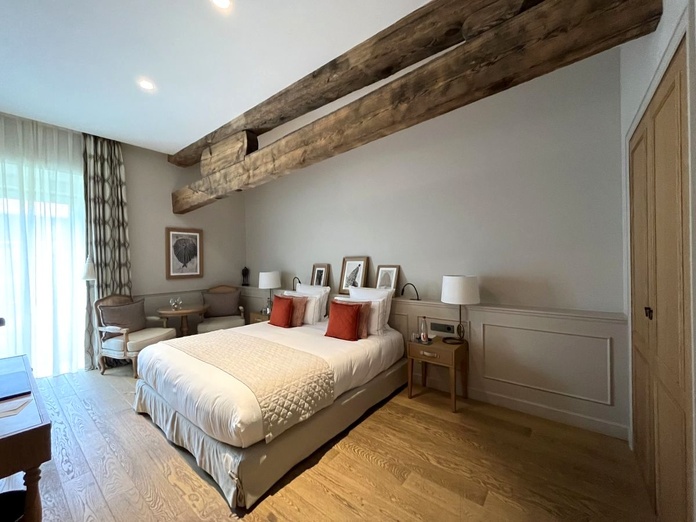
Grand Hôtel Roi René : 131 chambres rénovées et une nouvelle offre de restauration - Crédit photo : Grand Hôtel Roi René MGallery

The establishment has also completely renovated its 131 rooms, including six suites and 17 rooms with terraces.

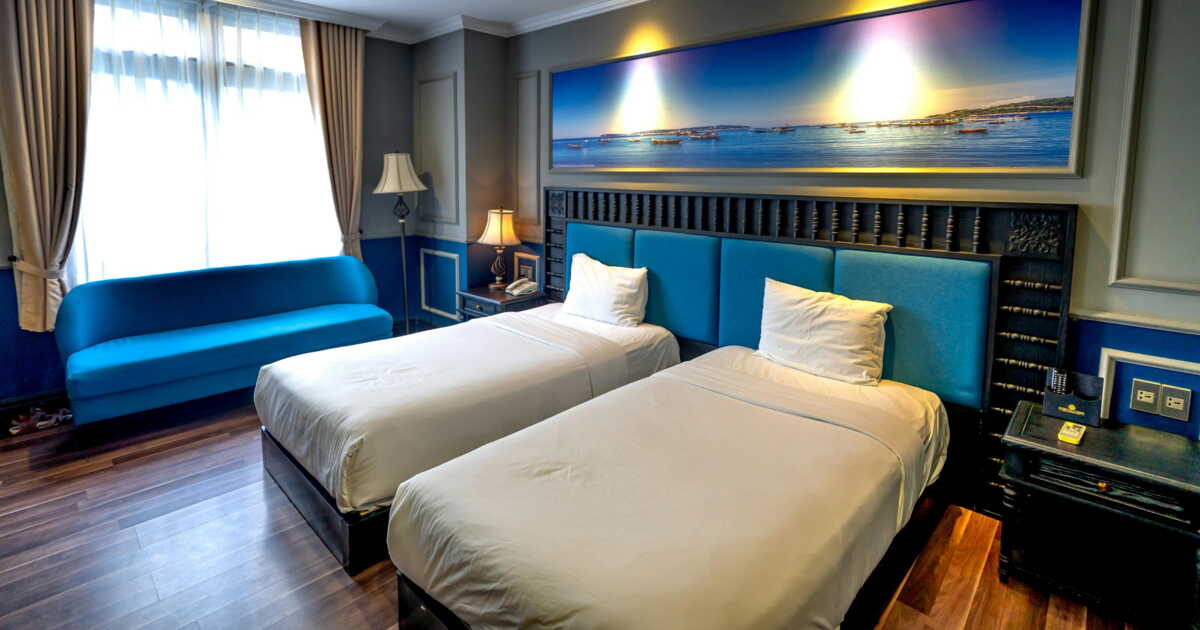
The rooms now emphasize brighter spaces, with a decor inspired by contemporary Provence and materials such as wood, stone, and linen. Some suites feature furnished terraces.

The project also includes the launch of the AÏGA restaurant, the hotel’s new Mediterranean dining concept. Open for lunch and dinner, the restaurant offers cuisine inspired by Provençal flavors and the Mediterranean basin, with mezzés, shareable dishes, grilled fish and reinvented specialties.

To read: Four places to see near Aix-en-Provence

The Aix calisson, a historic symbol of the city, also plays an important role in the culinary experience offered by the hotel.

Reachable in under three hours from Paris by train, the property also features a restaurant, a bar, an outdoor terrace, a 14-meter pool, and five meeting rooms.

Hotel Industry: Three Prestigious Hotels Lose Palace Status


Menée par Serge Blanco, la nouvelle municipalité de Biarritz a promis de se battre pour reconquérir le statut de l’Hôtel du Palais, qualifié de "tour Eiffel biarrote" - DepositPhotos.com, Xantana

IFTM


Serge Papin, the tourism minister, will unveil on June 2 the 2026 list of establishments that benefit from the Palace distinction.

Without waiting, the Hôtel du Palais Biarritz had taken the initiative. By the end of March, its management informed staff that henceforth the establishment would no longer enjoy the French “Palace” distinction that it had shared up to now with 30 other exceptional French hotels.

The Hôtel du Palais was the only “Palace” located on the Atlantic coast. The others were in Paris (12), a good handful on the Côte d’Azur, a few in Courchevel and one in St Barth.

The loss of the “Palace” distinction by the Hôtel du Palais followed several inspection visits conducted by the Distinction Attribution Commission.

During these visits, inspectors would have, according to La République des Pyrénées, revealed an insufficiency in its condition for the “Palace” label.

These shortcomings would concern certain rooms and elements, such as the hotel’s spa or the breakfast room, which would no longer meet the required standards.

According to La République des Pyrénées, the hotel was nevertheless renovated for around 80 million euros between 2018 and 2021. But the Spa was not involved in the project, and the 26 rooms of the north wing had not been fully renovated.

Operated by the American-origin international hotel group Hyatt within its Unbound Collection, the Hôtel du Palais Biarritz is owned by the city of Biarritz (57% of shares), the JCDecaux Group (37%), and the Caisse des dépôts.


Palace Distinction: a Major Image Challenge


L'offre culinaire du Mandarin Oriental Paris sera également revue - Photo : Alexis Anice, Mandarin Oriental

Two other prestigious hotels are also being downgraded to the five-star category, as they no longer meet the excellence criteria required by the Palace distinction.

They are the Park Hyatt Paris-Vendôme (Rue de la Paix, in Paris) and the Mandarin Oriental (Rue Saint-Honoré, in Paris).

For these prestigious hôtels, this loss represents a major image challenge.

Mandarin Oriental has already confirmed its ambitious transformation program reflecting “the continued commitment to shaping the future of Mandarin Oriental, Paris as one of the city’s most singular addresses”, according to Laurent Kleitman, Group Chief Executive of Mandarin Oriental.

As part of these renovations that are due to begin at the end of October, Mandarin Oriental plans to revamp its entire dining and accommodation offering.

The bedrooms and suites, as well as all common spaces, are to be entrusted to the London-based architect Tara Bernerd, with the mission to express “the essence of the destination”, to capture “the spirit of Paris while highlighting Mandarin Oriental’s commitment to craftsmanship and excellence”.

The culinary offering will also be revised, with the arrival of three distinct concepts: a new bar, a Parisian-style brasserie, and a gastronomic restaurant, each with views of the hotel’s interior garden.

The announcement of this ambitious transformation program coincided with the arrival, on Monday, May 18, of a new general manager, Vincent Poulingue. He succeeds Edouard Lapasset, appointed a little less than a year ago.

Curiously, Vincent Poulingue had been at the helm of the Hôtel du Palais Biarritz since 2023.

With more than two decades of international experience in luxury hospitality, Vincent Poulingue has held leadership roles in France, Portugal, Switzerland and French Polynesia within world-renowned groups such as The Unbound Collection by Hyatt, InterContinental Hotels Group and the Groupe Barrière.

He is recognized for his expertise in repositioning iconic properties, operational excellence, and creating exceptional experiences.


A distinctly French specialty

Whereas many foreign countries have merely introduced a “superior five stars” category, the highly coveted Palace distinction is a distinctly French hallmark.

This official distinction was created in 2010, in the wake of the hotel classification reform carried out the previous year, which had introduced the 5-star designation, whereas France had previously only “4-star luxury” hotels.

The aim was to modernize the French hotel offering.

By introducing the Palace distinction, the Ministry of Tourism and Atout France – which oversees the attribution process – sought to value and promote truly exceptional establishments among the five-star category.

Since a reform implemented in 2024 to reinforce its exceptional character, the Palace distinction is awarded for three years only (compared with five years previously).

In addition to the dossiers of hotels already benefiting from the Palace distinction, since January last year the files of first-time applicants have been studied. Asked by TourMaG last autumn, the head of the Quality sub-direction at Atout France declined to name a single candidate.

It is, however, widely known that the famous Negresco, located on the Promenade des Anglais in Nice, which has recently added a splendid spa and is nearing the completion of extensive renovation and redevelopment works, is aiming for this distinction. The same goes for Parisian establishments Cheval Blanc and Bvlgari.

A decision is expected on June 2.


PAULA BOYER Publié par Paula Boyer Responsable rubrique LuxuryTravelMaG – TourMaG.com
Voir tous les articles de Paula Boyer

  • picto Twitter
  • picto Linkedin
  • picto email
Ajoutez TourMaG à votre flux Google Actualités Google Actualités icône

Minor Hotel Group to Strengthen Ties with Travel Agencies


Le programme Minor PRO Agencies est dédié aux professionnels @Minor hotels

IFTM


The Minor hotel group aims to strengthen its ties with the B2B distribution sector.

To this end, it has launched the Minor PRO Agencies program, a new digital initiative aimed at travel agencies wishing to collaborate with Minor Hotels through a flexible, fully digital solution integrated into Minor PRO, its professional services platform.

The main advantage of this program lies in an evolving commission structure designed “to directly improve agencies’ profitability as they grow their production via minor-pro.com”.

The program comprises four levels: Explorer, Champion, Icon and Legend, offering increasing benefits according to production volume.

Beyond the enhanced commission opportunities, the program relies on a platform with a simplified interface and booking process, real-time availability, and flexible payment options, in order “to offer a modern experience tailored to the needs of independent agencies,” according to a press release.


Des avantages pour les clients mais aussi pour les agents …

Members also benefit from additional advantages, including faster commission payments, access to all public rates and promotions, and the full range of available room categories.

The program also includes benefits dedicated to the agents themselves, such as up to 50% off their personal stays via a special rate, as well as exclusive member-only promotions.

Agents also enjoy privileged access to Minor DISCOVERY rates (Minor Hotels’ loyalty program), allowing end clients to accumulate DISCOVERY Dollars (D$), thereby strengthening the combined value proposition of distribution and loyalty.

Registration for the Minor PRO Agencies program is free and can be completed in a few minutes on minor-pro.com. The program is accessible to agencies booking for their clients as well as to agents’ personal travel.


… et sa marque Anantara fête 25 ans de luxe experientiel


Anantara Hotels & Resorts célèbre son 25e anniversaire  - Anantara

The launch of this new tool aligns with the evolution of Minor Hotels (640 Hotels, Resorts and branded residences in 66 countries), which now positions itself as a brand with a B2C and B2B approach, backed by 40 years of experience and numerous hotel brands among which Anantara.

Just recently, Anantara Hotels & Resorts is celebrating its 25th anniversary with the launch of a global campaign titled “25 Years of Unforgettable Journeys.”

In a quarter of a century, this brand has progressed from a single resort in Thailand to an international portfolio of more than 50 hotels and resorts spread across 24 countries.

Anantara Hotels & Resorts was founded in 2001 by William Heinecke, founder and chairman of Minor International, the parent company of Minor Hotels.

Its aim was to create a brand inviting cultural discovery through design inspired by local know-how, cuisine anchored in each destination, and distinctive experiences.

The name Anantara, derived from Sanskrit and meaning “endless,” is intended to evoke discovery, openness to new horizons, and the celebration of travel as a way of life.


PAULA BOYER Publié par Paula Boyer Head of LuxuryTravelMaG – TourMaG.com
Voir tous les articles de Paula Boyer

  • picto Twitter
  • picto Linkedin
  • picto email
Ajoutez TourMaG à votre flux Google Actualités Google Actualités icône

Glion and the Four Seasons Hotel George V in Paris Launch an Unprecedented Contest


Glion et l'hôtel Four Seasons George V, Paris lancent un concours "inédit" !, Depositphotos.comPhoto by Mirage3

IFTM


Glion et l’hôtel George V, Paris lancent un concours conçu pour révéler les plus grands talents du luxe. Son nom est “The next Luxury Business Leader” (le prochain leader du secteur du luxe) afin d’imaginer l’expérience client de luxe de demain. Il s’agit d’un partenariat exclusif entre l’école de management hôtelier Glion et le palace Four Seasons Hotel George V, Paris.

Pour Thibaut Drege, Directeur général du Four Seasons Hotel George V, Paris, cette initiative reflète aussi l’importance de transmettre aux nouvelles générations : « L’hospitalité est avant tout une histoire profondément humaine. Derrière chaque expérience d’exception, se trouvent des femmes et des hommes capables d’allier excellence, sens du détail et intelligence émotionnelle. Soutenir les talents de demain fait partie intégrante de notre responsabilité, et ce partenariat avec Glion représente une manière concrète de contribuer à façonner l’avenir de notre industrie. »

A lire : Glion lance un nouveau Master dédié au leadership hôtelier


Qui peut candidater ?

The targets of this competition are students and recent graduates eligible for a Glion Master’s program, passionate about premium hospitality and luxury. It is open exclusively to residents of four countries: France, Belgium, Monaco and Luxembourg.

To apply, the candidate must submit a 2- to 3-minute introductory video, as well as supplementary visual material and a proposal written in English or French. Applications are open until June 30, 2026, via the official contest page.

Following this first selection phase based on dossiers and motivation letters, those with the most promising profiles will be invited to develop their response to the challenge. Subsequently, six finalists will have the chance to present their project during a final held at the prestigious Four Seasons Hotel George V, Paris. They will face a jury comprised of Glion members and representatives of this luxury Parisian hotel.

The grand winner will receive a scholarship covering 100% of the academic fees for a Master’s program at Glion (intakes in September 2026 or March 2027). In addition to exceptional professional support: mentoring and coaching sessions with the leadership teams of the George V, as well as a professional immersion within the palace.

The challenge phase will take place from June 30 to July 31, 2026. For the final and the winner announcement: see you on August 20!

Keyless Hotel in Los Cabos Invites Travelers to Embrace Nature

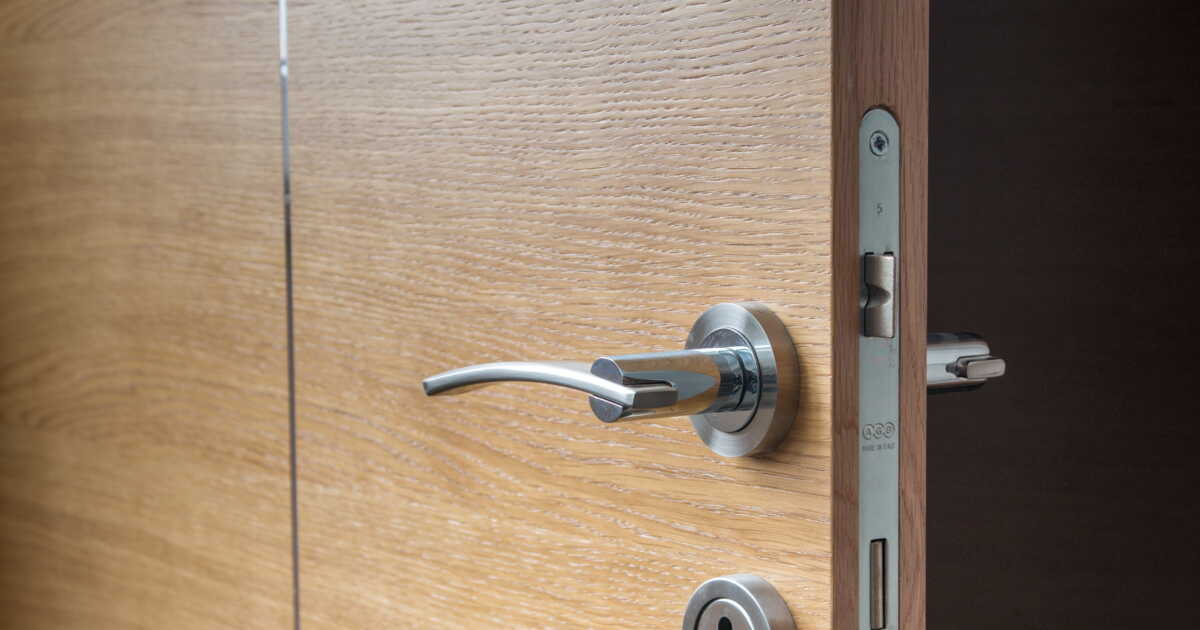
And you, could you sleep in a hotel room with no lock? In the Los Cabos region, on the wild coastline of Baja California, that is the experience offered by La Valise hotel. During a report conducted in February this year in Mexico, we discovered this discreet address tucked between desert and turquoise sea, far from the large resort complexes of Cabo San Lucas. Beyond its striking concept, the establishment also serves as a gateway to another facet of the Mexican state: wilder, more pristine and deeply oriented toward nature.

In Los Cabos, an unusual hotel amid nature

Lost between the desert and the Sea of Cortez, La Valise Los Cabos hardly resembles the properties that have built the region’s tourist reputation. The hotel, whose small buildings draw inspiration from Mexican haciendas and Mediterranean villas, comprises only nine rooms spread over a vast plot bordered by the sea, amid cacti and the dry vegetation characteristic of the East Cape.

Woman Sues Five-Star Hotel After It Refuses to Provide a Glass of Tap Water

Refusing a glass of tap water at a hotel might seem trivial. Yet in Italy, this situation sparked a seven-year legal proceeding. A guest challenged the repeated refusal by a five-star establishment to serve her tap water during her stay. The case eventually reached the country’s highest court, which ruled in favor of the hotel. At the heart of the matter lay a simple but explosive question: should water be considered a right in hospitality?

A Christmas Stay That Turns into Litigation

The facts date back to the Christmas period of 2019. The guest stayed at the Sassongher, a five-star hotel located in the municipality of Badia in the Italian Alps, from December 26, 2019, to January 3, 2020. She booked a half-board plan for 5,712 euros, including breakfast and evening meals, but not beverages.

During dinners, she repeatedly requested tap water. According to case materials, staff consistently refused and offered only bottled water, priced at around 7 euros for 0.75 liter. The guest even stated that she was willing to pay a possible service surcharge to obtain tap water, but to no avail.

From this situation, she initiated legal proceedings, seeking about 2,700 euros in compensation for economic harm and moral distress. She argued that access to water should not be treated as an ordinary consumer good within a hotel establishment.

In court documents cited by the tribunal, she maintained that “water is a natural good and a universal human right of every individual, and that providing free of charge a minimally vital quantity necessary to meet essential needs must be guaranteed, even in the case of arrears”, according to the judgment. She also compares this principle to basic services expected in a hotel room, such as bed linens or soap.

Her appeal was initially rejected by a court in Rome, then by an appellate court. She therefore decided to bring the case before the Italian Court of Cassation, the country’s supreme judicial authority.

Italian Law and Table Etiquette

The highest Italian court ultimately confirmed the prior decisions. The judges found that no national law obliges establishments to serve tap water to customers. In other words, this is a choice left to the discretion of restaurateurs and hoteliers.

The hotel’s lawyer, Silvio Belardi, summed up the court’s position by stating that “there is no obligation to provide tap water”. The establishment in question said it would respect the Court of Cassation’s decision, offering no further comments.

Beyond the individual case, the matter sheds light on persistent cultural differences in Europe regarding water at the table. In Italy, asking for tap water in a restaurant is often perceived as contrary to local custom, and waitstaff typically favor selling bottled water. Some argue that the mineral composition of tap water could alter the taste of dishes.

These practices contrast with those in other European countries. In England and Wales, venues serving alcohol are required to provide free potable water. In France, the rule is also regulated: restaurants must offer free potable water to customers who request it, usually in the form of a carafe, a practice that has become a cultural reflex as much as a regulatory one. In the United States, by contrast, no federal obligation mandates restaurants or hotels to serve tap water, though it remains common.

This case, which went viral in Italy, therefore rekindles a broader debate about the border between commercial service, cultural norms, and access to an essential resource.

Hotel vs Short-Term Rental: French Preference Depends on Price


Hôtel ou location de courte durée : l'arbitrage des Français dépend massivement des prix, Despositphotos.com

Dream Yacht


Face au durcissement de la réglementation sur les meublés touristiques, près des deux tiers des utilisateurs se disent prêts à modifier leurs habitudes de consommation en cas de hausse des prix des locations.

Cette étude publiée par Catella démontre que la fidélité des Français aux plateformes de courte durée est loin d’être acquise, ouvrant la voie à un retour vers l’hôtellerie traditionnelle.

En cas d’augmentation des tarifs des meublés de tourisme, 34 % des sondés affirment qu’ils se tourneraient directement vers l’hôtel, tandis que 29 % adapteraient leur choix selon les situations.

Only 10% would stay loyal to the rental regardless of price level. This volatility is even more marked among CSP+ (74 %) and in regions with strong tourist pressure, such as the Southeast, where 71 % of respondents are considering an hotel alternative.

Cette tendance pourrait s’accélérer sous l’effet du nouveau cadre législatif, notamment la loi Le Meur, qui réduit les avantages fiscaux des meublés touristiques et renforce le pouvoir de régulation des municipalités.

À Paris, les premiers effets se font déjà sentir : les annonces sont passées d’un pic de 79 000 à l’été 2024 à une stabilisation autour de 54 000 en octobre 2025 selon l’APUR, ce qui pourrait mécaniquement pousser les prix de la location à la hausse.


The price factor, the primary obstacle to accessing hotel establishments

The survey also reveals a massive renunciation of hotels, affecting one in two French people.

This phenomenon is particularly pronounced in the Paris region (59 %) and peaks at 70 % among young professionals aged 25 to 34. For 32 % of all respondents (43 % of those aged 25-34), the tariff constitutes the main barrier to entry.

This renunciation translates into trade-offs directly linked to the broader constraints on purchasing power and housing rather than a disinterest in the traditional hotel model.

Public opinion is also favorable to a better structuring of the market. Nearly half of French people (46 %) express the desire to see the regulation of short-term furnished rentals tightened.

The expectations are particularly homogeneous in the Southwest (50 %), Southeast (50 %) and Northeast (49 %). The economic stake is sizeable, since these furnished rentals generate, for instance, 585 million euros in revenue outside the hotel circuit in Paris, where they represent 3.5 % of the residential stock.


Towards a hybridization of hotel offerings to capture new usages

The hotel is now perceived as an opportunistic and pragmatic choice. Guests use it for short stays (33%), for price-driven opportunities (32%) or for the quality of included services (28%).

Expectations vary by generation: those over 55 prioritize brevity of stay (39%), while the 25-34 age group targets price competitiveness (40%) or the lack of availability of alternative rentals (24%).

This shift in behavior opens opportunities for the development of hybrid structures capable of combining traditional lodging, coworking and long-stay stays. This versatility responds to a growing acceptance of mixed audiences.

Indeed, 46 % of respondents believe that the cohabitation between business travelers and leisure travelers has no negative impact on their experience, and 13 % consider it even an asset for the vitality of the establishments. This stance is even stronger among the youth and in Île-de-France, sending a clear signal to investors for the creation of multifunctional hotel assets.