Condor Premium Economy: Pricing as a Key Selling Point


Condor: A Premium Experience

Premium Economy Condor Airbus 330neo © Condor Flugdienst

CroisiEurope


Understanding Condor’s Premium Economy to Better Offer It

Condor’s Premium Economy responds to a growing traveler expectation: enjoying more comfort on long-haul flights without exceeding the budget of a Business Class.

And it is precisely the balance between comfort and price that makes Condor’s offer particularly interesting.

Let’s take four telling examples of verified fares as of October 14, 2026. The gap between the Economy Classic fare and Premium Economy Classic was:

– €80 incl. tax for a Mauritius – Paris-CDG via Frankfurt, departing December 8, 2026

– €100 incl. tax for a Los Cabos – Paris-CDG via Frankfurt, departing January 11, 2027

– €120 incl. tax for a Cancun – Paris-CDG via Frankfurt, departing April 7, 2027

– €160 incl. tax for a Paris-CDG – Windhoek (Namibia) via Frankfurt, departing June 29, 2027

On a long-haul journey, such a price gap can thus make the Premium Economy option especially attractive.


More space and comfort designed for long-haul travel

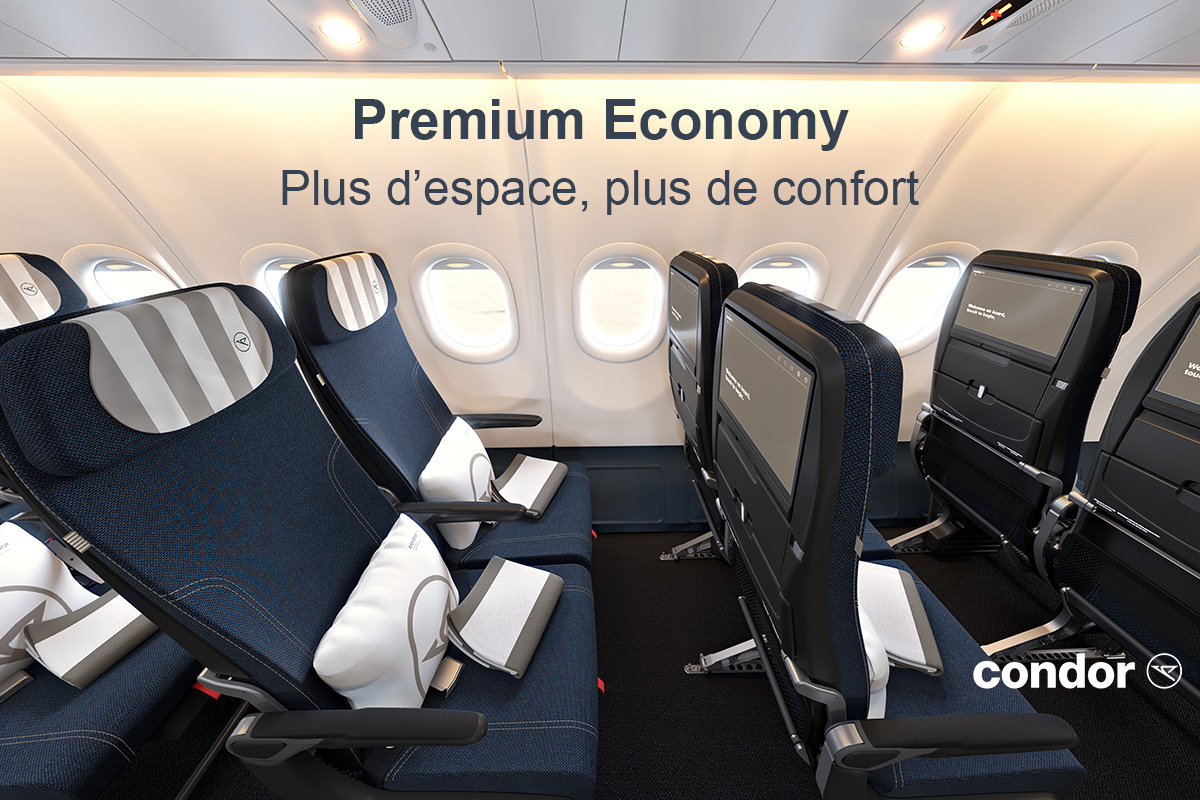
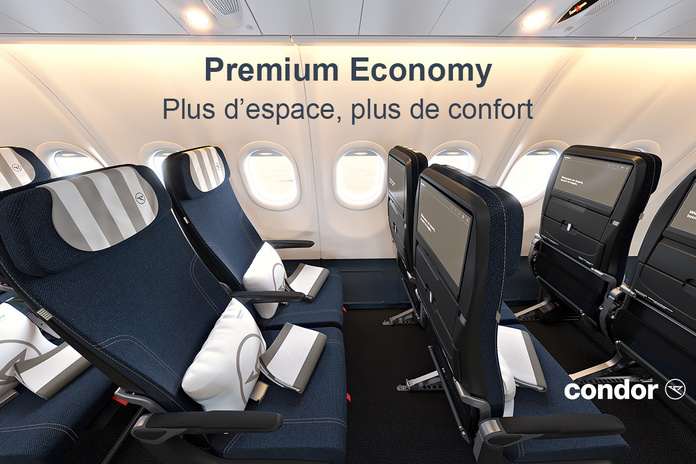
On board its Airbus A330neo, Condor offers 64 Premium Economy seats.

With a wide 89 cm legroom, a 12° recline, an adjustable footrest, and an ergonomic six-position headrest, the seat is designed to provide a more comfortable position during long hours of flight.

Each passenger also has a 13.3-inch 4K personal screen, as well as USB-A and USB-C ports.

A pillow and a blanket complete the onboard experience, as does the individual entertainment system offering, among other things, a selection of films in French.

The service also includes several priority services: Priority Check-in, Priority Boarding and Priority Baggage.

For travel agents, these are concrete elements that help highlight the upgrade to clients.


And in the dining, we also switch to Premium

The Premium Economy experience does not stop at the seat.

Condor presents its dining concept “Taste the World”, with a Premium Economy menu as well as a selection of alcoholic and non-alcoholic beverages included.

Different meal options are also offered, including vegetarian, vegan, gluten-free menus, and many others.


The takeaway: systematically compare before proposing

This is probably the essential point to remember for travel agents: do not assume that Premium Economy will necessarily be much more expensive.

The reflex may be to offer Economy right away when the client is looking for a controlled price. Yet, depending on dates and destinations, the gap with Premium Economy can be small enough to justify presenting both options.

Premium Economy thus allows you to spontaneously offer a travel experience that may be more comfortable than the client had perhaps imagined.

Also note: Condor offers TO (tour operator) fares in Premium Economy, an element worth including in comparisons and packaged offers.


Economy, Premium Economy, or Business with a lie-flat seat: three experiences to suit every traveler



La Premium Economy de Condor : le tarif comme argument de vente

Condor is the second-largest regular German airline. Condor is represented in France by Aviareps, 122 Avenue des Champs-Élysées 75008 Paris.

Email: [email protected] | [email protected]

Phone: +33 (0)1 53 43 53 92 (Mon-Fri, 9:00–18:00)

linkedin


Mount Isa Rodeo: Starting Point for an Outback Queensland Circuit


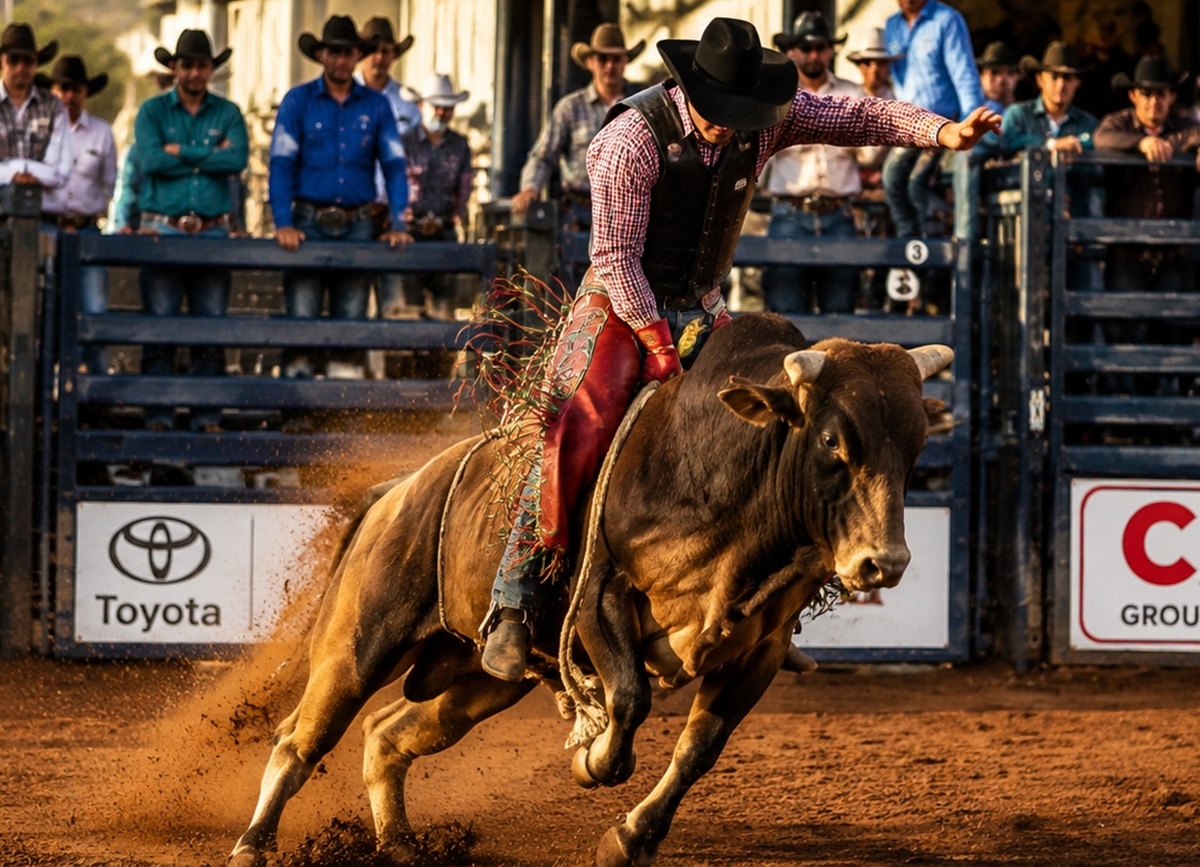
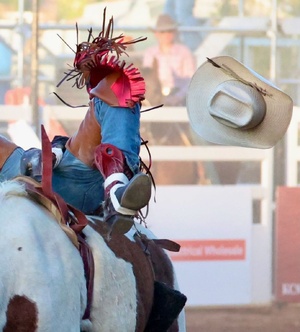
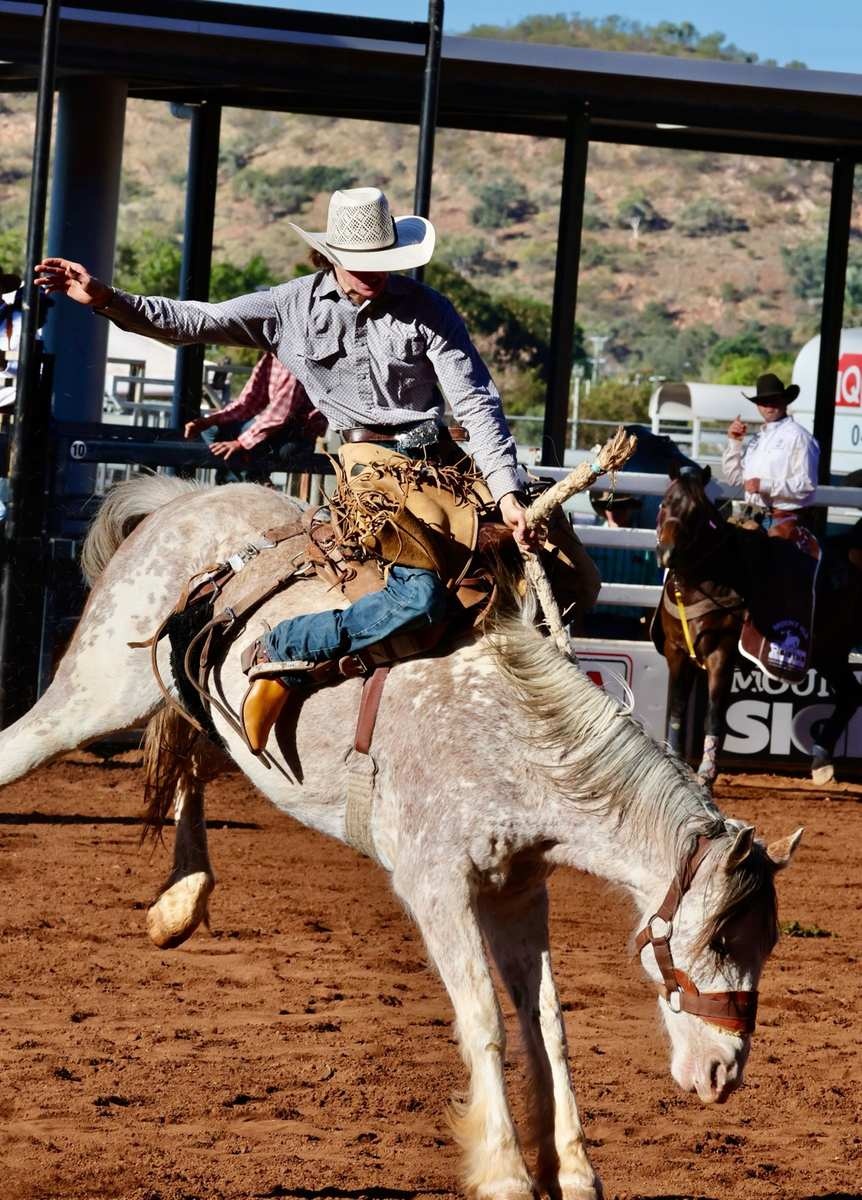
Le rodeo rider doit tenir huit secondes sur un animal dont chaque mouvement semble tendu vers un seul but : vous faire lâcher - Photo : Sébastien Cros / WeTravelAustralia

Climats du Monde


It is a little after five in the afternoon, the eve of the opening, and Buchanan Park is almost deserted.

The sun is low, the dust not yet kicked up. In the empty arena, a performer rehearses the national anthem before a silent crowd.

In the distance, you can hear the horses in their iron stables.

The sponsor stands are set, the barbecues are waiting, and the metal corridors through which tomorrow’s bulls and horses will surge into motion are in place.

Nothing happens, and yet everything feels already present. A vibration. For someone who has never attended a rodeo, stepping into this arena the day before the first event feels a bit like entering a Colosseum before the games. The next day, the Colosseum is full.


“This is where legends are made”


L’animal est imprévisible - Photo : Sébastien Cros / WeTravelAustralia

Since 1959, Mount Isa, a mining town of around 19,000 residents set at the crossroads of the North West Queensland routes, lives to the rhythm of its rodeo.

Hailed as the largest in the southern hemisphere, the event drew in 2026 nearly 800 participants from across Australia and New Zealand for three days of competition in Buchanan Park’s red arena.

At the arena’s edge, Kath Rose, the event’s press liaison, sets the scene without mincing words: “It’s the biggest rodeo in the southern hemisphere, the most loved and the most famous in Australia. This is where legends are made.” And when I tell her that every French traveler to Australia should experience this at least once, her reply comes fast: “This is an international bucket list experience.”

From the first evening, the spectacle delivers on its promise. Horses bursting from stalls in a riot of metal and hoofbeats, riders hurled into the dust, the barrel racing at full tilt, the crowd’s cheers as soon as the clock appears.

Then comes the national anthem, and a gesture that takes the visitor by surprise. Thousands stand, hats leave their heads and rest on chests.

In this Outback arena, hundreds of kilometers from major cities, there is something distinctly special: the pride of a land, its traditions, and those who keep them alive.


The Sunday Outfit, A Saturday Moment

The people in the stands deserve description, because the rodeo is as much about wearing it as watching it.

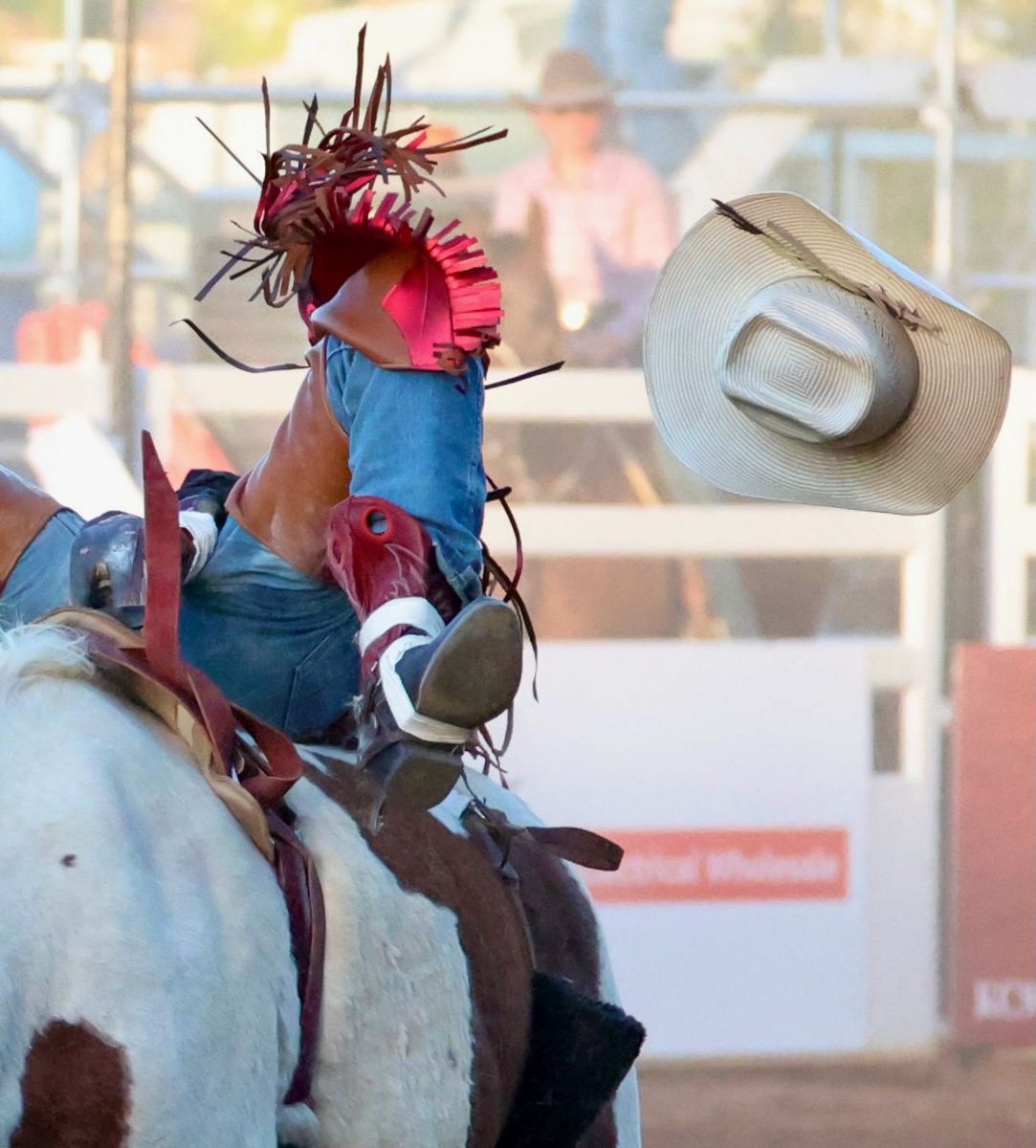
Long-sleeved shirts with nacre buttons, belts with silver buckles, spurred boots, sturdy jeans. In the arena, the riders add leather protective vests and those long-fringed chaps that flutter with every buck.

The junior events see kids donning mesh helmets and reinforced vests. And on every head, from the 70-year-old stockman to the girl with the pink marker, the same emblem: the hat.

At the Akubra stand, a major partner in the event, Elisa talks of the brand as one would speak of a family. 150 years this year, in a country that, as a federated nation, doesn’t even reach such an age.

Hats are consistently made in Kempsey, New South Wales, from rabbit-fur felt. “You can’t get much more Australian than one of these,” she smiles. It’s hard to imagine anything more Australian.

And then there are the stories. The night before, a contest celebrated the rodeo’s oldest Akubra. In the morning, a woman arrived with hers, battered, sun-worn, heavy with more anecdotes than felt: she left with a new one, and the old will keep going.

Elisa speaks of hats that vanish at parties and later return to their owners, family heirlooms seven decades old brought to her to be revived. Here, a hat is not an accessory. It is a biography.

A few aisles over, Ash, a milliner with Urban Dust Hat Co from Victoria for its first edition, shapes bespoke felt hats with steam and hands-on care, engraving the future owner’s name into the crown.

He notes that Europeans attend as well, English, Irish, Italians, French. In the corridors, though, English is heard most of all. This is exactly why this reportage exists: so that one day, in these stands, one might also hear a bit of French.


Eight Seconds


Huit secondes : le cœur du rodéo tient en une règle d’une simplicité redoutable - Sébastien Cros / WeTravelAustralia

The heart of the rodeo rests on a rule as simple as it is formidable.

On the bulls, everything hinges on a braided rope, the bull rope, wound around the animal and tightened on the rider’s gloved hand. Only one hand is allowed to hold. If the other hand brushes the beast, that’s disqualification.

You must hold eight seconds on an animal whose every move seems aimed at one goal: to make you loosen your grip.

As soon as a rider nears the eight-second mark, the entire stadium rises and roars.

And there is another image, like a Western ride: the heifer bolts out, the horse bucks behind, the lasso spins above the hat like a halo. As soon as the loop drops, the cowboy dives from his mount, pins the beast to the ground, and ties its legs. A few seconds of surgical precision, at full speed.


An Australian Tradition Before It Is a Show


What the French Travel Trade Can Do With It

For travel agencies, the commercial lesson from these three days boils down to one reversal: don’t tack rodeo onto an itinerary, build the itinerary around the rodeo.

The period corresponds to the austral winter, especially conducive to discovering this part of Queensland, and the event gives clients something brochures sometimes struggle to articulate: a concrete reason to travel on a specific date.

The product already exists on the map. Brisbane can serve as an entry point, before continuing to Longreach, Winton, and Mount Isa, by plane, by car, or by mixing several modes of transport.

Seven to ten days already allow a genuine immersion in inland Australia, with the rodeo as the culminating highlight.

Longreach adds the history of Qantas, the stockmen, and the Thomson River. Winton adds the dinosaurs, Waltzing Matilda, and a remarkably creative community. Mount Isa provides the grand finale and the arena.

One constraint remains: plan ahead. Accommodation capacity is not expandable, and the rodeo period inherently creates high demand. For a tour operator or agency aiming to build a program around the event, bookings must be made well in advance.

The coming years will offer several opportunities to shine a spotlight on Queensland. The 2027 Rugby World Cup, hosted in Australia from October 1 to November 13, will attract a substantial international clientele, including French visitors, even if it does not coincide with the August rodeo.

Then Brisbane 2032 will place Queensland at the center of international attention.

All of these occasions show travelers that beyond the coast and its iconic sights there is another Australia. The rodeo, at heart, is a hand that grips a rope and a hand raised toward the sky. For balance. And for style.

French professionals, seize the rope: the arena has been ready since 1959.


Sébastien Cros


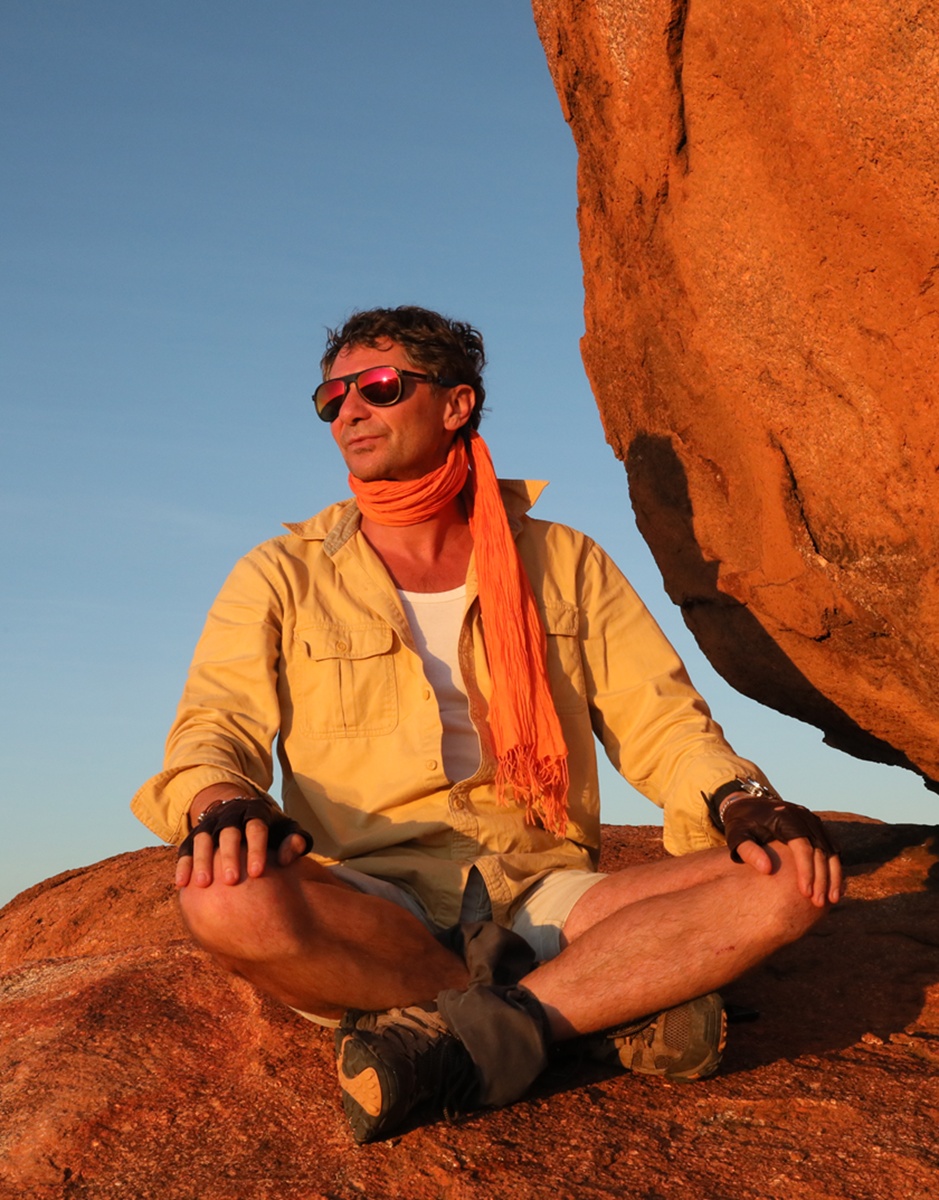
Sébastien Cros - Photo : SC

Sébastien Cros is an independent journalist and photographer based in Australia, founder of WeTravelAustralia™.

After a quarter of a century in the Australian tourism industry, notably as Managing Director of Across Australia (Goway group), he now devotes his writing to editorial narratives centered on the destination, blending storytelling, photography, and on-the-ground insight.

Slope Point: All You Need to Know About New Zealand’s Southernmost Point

Stepping over the gate of the private farm that leads to the Slope Point trail, the untamed character of these lands draws visitors into an enigmatic realm. Amidst sheep and trees bent by the wind, the spray of waves crashing violently at the foot of the cliffs lashed the face. Twenty minutes of walking are enough to reach the photogenic yellow sign marking the southernmost point of New Zealand (excluding Stewart Island): 5,140 km from the equator and 4,803 km from the South Pole, the sign states.

Slope Point is located in the tranquil Catlins region, home to about 1,500 inhabitants. “You mainly find small coastal villages, a few farms and two or three schools”, details Lloyd Esler, a teacher, tour guide and former city councilor of Invercargill, the largest nearby town. 75 kilometers away. In the Catlins, proximity is relative.

Southern Lights, Dolphins and Penguins

“Each year, around 30,000 people stop here. It’s an estimate; we don’t have precise tracking,” notes the teacher. Beyond this unique feeling of being at the edge of the world, as author Mélissa Da Costa so well describes in her book The Women at the End of the World, visitors come to this site for its dramatic scenery. “It’s a place highly appreciated by photographers, much like the Catlins as a whole”, explains Lloyd Esler. From the top of the cliff, with eyes fixed to the south, at dusk one can glimpse the aurora australis in the sky.

“It’s regular, but you have to be patient and lucky. The sky must be clear and you sometimes have to stay up late. Just last week, a very beautiful aurora was seen at Slope Point.” The southernmost point of New Zealand is also an ideal observatory for rare species: albatrosses, Antipodean penguins, Hector’s dolphins or more commonly fur seals and giant petrels glide around the unsteady waters of Foveaux Strait, which stretches from the Southland region to Stewart Island.

But they are not the only ones. Near the gate leading to the trail lies a commemorative plaque. Subtle, almost imperceptible, it pays tribute to men who fell at sea. “Every year there are accidents”, recounts the former councilor. The most infamous wreck is that of the Tararua in 1881: 131 lives lost and 20 survivors. It is the second-deadliest in the history of New Zealand. The SS Tararua wrecked on Otara Reef, at the foot of Slope Point and Waipapa Point.

Extreme Weather Conditions

All you have to do is look at the twisted trees leaning over the cliff to imagine the conditions under which sailors take to the sea below. Foveaux Strait is “renowned for its extreme weather and strong currents. It has long been a place both dangerous and of deep cultural importance. The Māori have navigated these waters for generations, and European seal and whaling hunters followed them in the early 19th century”, one can read on the region’s website.

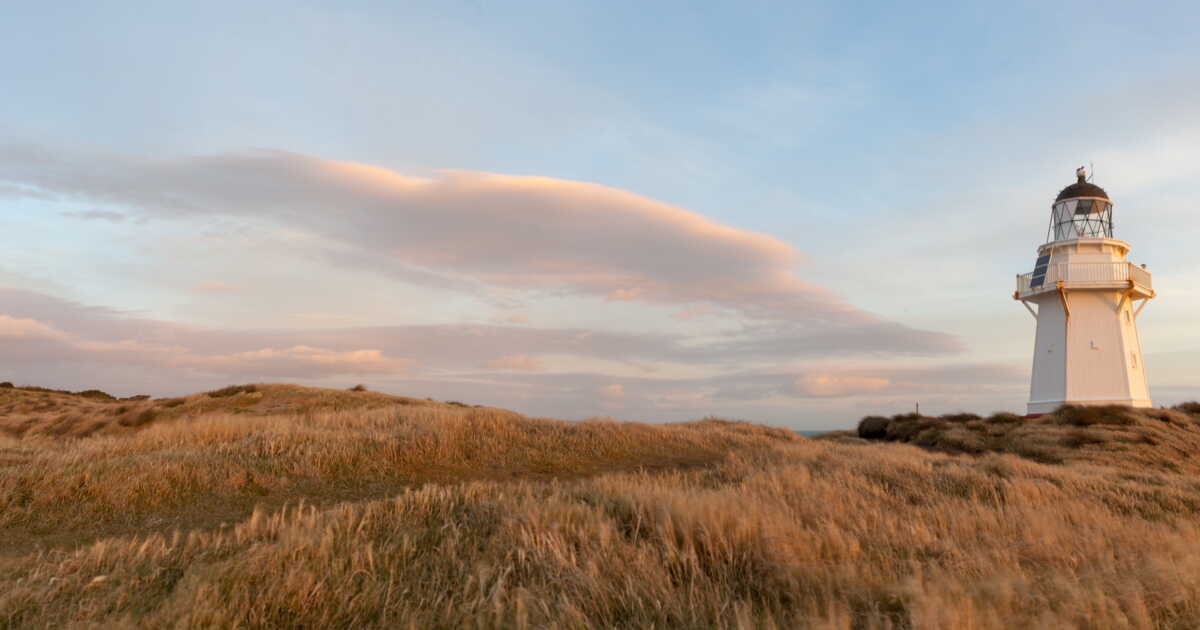
In response to the tragic wreck of 1881, a string of lighthouses was built along the Southland coast, including the famed Waipapa Lighthouse, located about 20 kilometers from Slope Point. “Today, sailors are more vigilant. There is better communication at sea and they know how to situate themselves”, says Lloyd Esler with satisfaction. More than just a postcard backdrop, this majestic site reminds us of a truth we often prefer to ignore. Nature, as beautiful as it may be in its wild and uncontrollable aspect, can also be a source of suffering if its power is underestimated.