Common Hotel Room Key Mistake That Could Compromise Your Safety

In hotels, some reflexes feel so obvious that they become automatic. Yet a seemingly minor detail about your key or room card can give an ill-intentioned person the information necessary to locate your lodging. A very simple precaution can reduce that risk as soon as you arrive. And it isn’t the only check to perform before you settle in.

Never keep the key with the room number

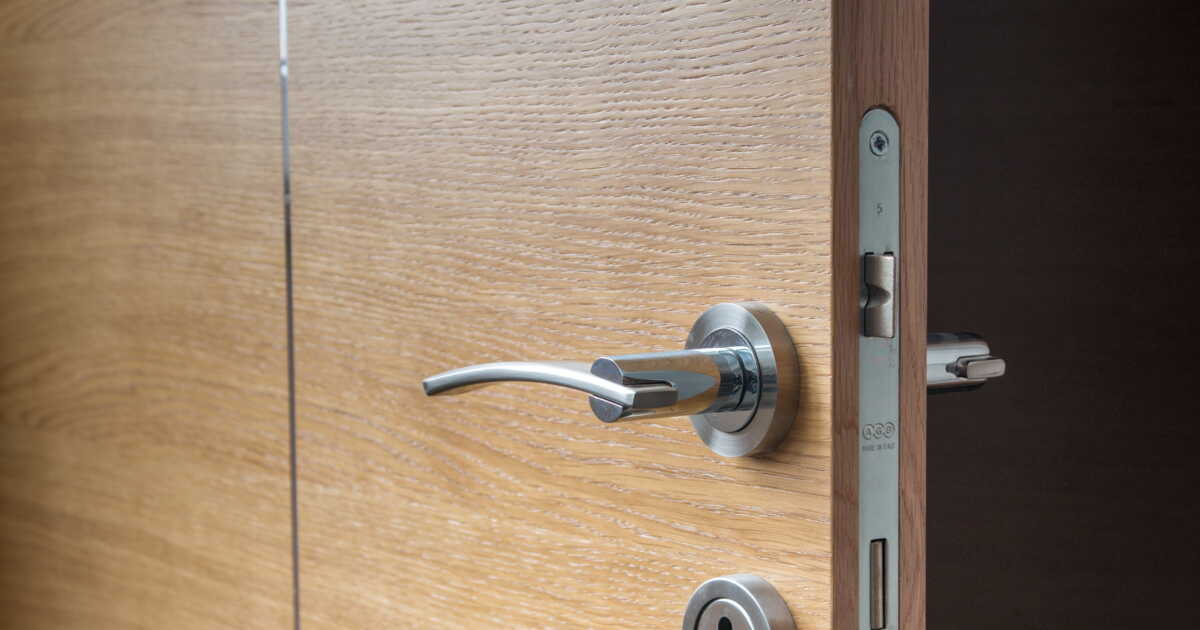
After a long journey, we often drop our belongings in the room and instinctively keep the magnetic card in its case. A case that frequently bears the room number, sometimes accompanied by the hotel’s name or logo. Information that could prove fatal for you. If the card and its case are lost at the same time, these details can indeed allow someone with ill intent to determine where the corresponding room is.

The U.S. Department of State therefore recommends always carrying your room key separately from the sleeve that displays the room number. A particularly simple precaution to adopt, but one that prevents giving a stranger two essential pieces of information at once: how to access the room and its location within the hotel. This recommendation is also listed on its page dedicated to safety in accommodations, which gathers several traveler precautions.

Because without the room number, a card found on the street or in a public place does not necessarily reveal which door it belongs to. It is precisely this association that poses the problem. “If these elements are lost together, another person could identify the hotel and the room associated with the key”, explained a spokesperson for the U.S. Department of State to Travel + Leisure magazine.

The correct reflex, therefore, is to remove the card from its sleeve as soon as you arrive in the room. To avoid forgetting the number, you can note it on your phone or photograph the sleeve, provided you keep these details on a protected device.

And if the card itself disappears, it’s best not to wait. “A traveler who loses a key should immediately inform the hotel and ask that it be deactivated and replaced”, advises the State Department spokesman to Travel + Leisure. A new card thus enables the old one to be neutralized.

A few checks to perform upon arrival

Yet the key is only one element among the precautions to take in a hotel room. Once you step inside, a few minutes are enough to verify that essential equipment is in place and that the space doesn’t show any obvious problems.

The U.S. State Department specifically advises ensuring the room’s phone works, that the locks are functional, and that smoke and carbon monoxide detectors are present where required.

It also recommends a quick sweep of the room. “Upon arrival, check behind the curtains, under the bed, and around the room to make sure it’s safe”, says the American administration’s site. The aim is not to turn every hotel stay into a meticulous inspection, but to quickly spot any unusual situation.

Travelers are also urged to be mindful of any “unusual” electronic devices present in the room and to verify that the curtains can be fully closed.

These steps take little time, but they can help prevent unwanted surprises during vacations or business trips. More importantly, they remind us that in a hotel, prudence isn’t limited to dangerous destinations; it also begins with the most ordinary habits.

In the same series “Our Travel Tips”:

Airplane: the photo you should always take before checking in your luggage

Here’s why you should never recharge your phone at an airport

This new airport scam could get you detained abroad

How to better handle long-haul flights? The secrets of a flight attendant

This often-forgotten detail can invalidate your passport before a trip

Lost passport abroad: the steps to return to France without panicking

ECTAA: Key Issues Set to Shape Europe’s Autumn Agenda


Eric Drésin, secrétaire général de l’ECTAA, fait le point sur les dossiers à suivre - Photo ECTAA

MSC Croisières


After the summer break, the ECTAA (European Association of Travel Agencies and Tour Operators) returns to work.

In its briefcase, several dossiers to monitor in the coming months. One of the first tasks concerns the implementation of the new directive on package travel.

The text has now crossed the European stage and enters its phase of transposition in the Member States. The European Commission specifies that countries have 28 months to transpose the new rules into their national law, before a six-month entry into force later.

To read: CEI, refunds, packages… what the European directive officially published changes!

The text must thus be transposed no later than September 29, 2028 to enter into force on March 29, 2029.


Package Travel Directive: Avoiding Over-Transposition

« We are in the transition phase for implementation, for transposition », explains Eric Drésin, secretary-general of the European association.

The ECTAA works with its national professional associations to monitor how the text will be rolled out in each country. « We start with the less hot dossiers», he summarizes, with one objective: to prevent compromises reached at the European level from being questioned at the national level.

If the new directive ultimately does not impose a general limitation on prepayments, member states still have limited room for maneuver.

« There is no obligation to limit prepayments, it’s clear, and we’ve managed to rule that out », recalls Eric Drésin. « But if the member states want, they can. » Vigilance is therefore required to avoid the risk of over-transposition. « There, we really want to tighten the screws to avoid this situation. »

The first country to tackle the transposition is Finland, where the ECTAA is expected as early as next week.


Air Passenger Rights: the problem of Intermediation Fees

Another particularly sensitive dossier: the revision of air passenger rights. A political agreement was reached this summer on revising the European framework. The European Commission indicates that the new regime must still be formally adopted and published before it applies, with a delay of 12 months after its publication.

For travel agencies and other intermediaries, one point crystallizes the concerns: refunds in the event of a flight cancellation.

« When a flight is canceled the travel agency will be obliged to reimburse its intermediary fees », explains Eric Drésin. And on this point, the legislative fight is now over: «There is nothing more we can do in the legislation. »

The ECTAA therefore intends to shift the debate to the realm of B2B relations.

The European association has denounced the «disproportionate impact» of these new rules on independent intermediaries and argues that intermediary fees remunerate a service distinct from that of the carrier.


Passenger Package : the dossier to watch closely

But the dossier that could monopolize a large part of the European agenda in the coming months is undoubtedly the Passenger Package, presented in May last.

The package includes three legislative proposals dedicated notably to rail ticketing, to multimodal mobility services (MDMS) and to railway passenger rights. The objective stated by Brussels is to enable travelers to compare and more easily purchase journeys that combine several operators (rail, road, sea), with a single ticket and enhanced rights throughout the entire trip.

In principle, ECTAA is supportive of this evolution. But Eric Drésin points to several difficulties.

The first concerns the absence of air travel in a device presented as multimodal. « We must integrate air transport into this legislative package so that we can have a clearly multimodal and relevant offer for customers », he says.

The organization believes that the principles of access that are fair, reasonable and non-discriminatory (FRAND) should not be limited to rail but should apply to all transport sectors whenever dominant operators impose unfair conditions on their business partners.


Sustainability: a topic that could resurface?

Finally, another topic is expected to return to the foreground: sustainability.

After having occupied an important place in sector debates in the post-Covid years, the issue seemed to have faded from view. For Eric Drésin, the events of this summer could however revive the discussions.

« The question of sustainable travel, of sustainability in our sector, had somewhat disappeared from the news », he notes. But «this summer raised so many questions that it will come back onto the table ».

According to him, national associations could ask the ECTAA to act more on this topic…

Connections Réunion: The Key to a Great Stay on the Intense Island


Au cœur du cirque de Cilaos © Maxime B.DELMAS – Connections Réunion

CroisiEurope


A More Immersive Tourism

On Réunion Island, travelers no longer aim to merely check off a list of iconic sites. They seek genuine immersion: encounters with local producers, guided hikes led by passionate guides, and a discovery of Creole traditions… This is, at least, what most requests received by Connections Réunion indicate. Whether it’s an individual stay, a group, or a GIR, the era of simple photo stops is behind us; the focus now is on practicing an immersive form of tourism. International clients have understood this well. It underscores the value of an inbound operator offering its expertise and knowledge of providers to guarantee a stay that is rich and tangible.


A Destination with Multiple Parameters

Indeed, meeting this expectation can only be achieved by relying on a trusted network of partners, built over time on an island rich in resources but also facing challenges. From cirques, high plateaus, coastline, plains and volcanoes, travel times, access conditions and capacity vary significantly from one area to another, making it difficult to design a coherent and realistic itinerary without a deep knowledge of the terrain; a factor all the more decisive for group travel, where logistics, transfer times and coordination of providers must be precisely calibrated.

To this geographical complexity, weather that can change in just a few hours and disrupt a program adds another layer. With more than 200 microclimates, La Réunion is a destination that requires adapting to weather that can sometimes swing entirely in a short span.

A local presence allows anticipating these contingencies and responding instantly with suitable contingency measures, without compromising the client’s experience. This support, provided by our team throughout the operation, before, during and after the stay, guarantees the quality of every service and secures the entire journey. Thanks to the unfailing adaptability of our local guides, each traveler feels accompanied, guided and safe. The guides, passionate about their island, are often so engaging that travelers end up wanting to stay in touch with them even after departure. This expertise becomes a real added value that only a Réunion-based incoming operator, intimately familiar with its specifics and players, and able to deliver, can provide.


A Rich Network of Contacts

On Connections Réunion, this expertise translates concretely into a rich and diversified network of contacts, built over the years with the island’s players: coach companies or VTC for transfers and group circuits, warm restaurants and guest houses for authentic culinary experiences, local service providers such as 4×4 excursions, or visits to distilleries, museums and vanilla plantations illustrating Réunion’s history and know-how, as well as a broad range of accommodations from luxury hotels to charming, discreet addresses.

This expanded network enables crafting, for every request, several tailor-made stay proposals capable of serving both an individual leisure trip and a group or GIR with specific needs.

Relying on Connections Réunion is therefore no longer merely an operational choice: it is a real differentiator and a reassurance lever for stays that live up to travelers’ expectations and the reputation of the professionals who offer them.


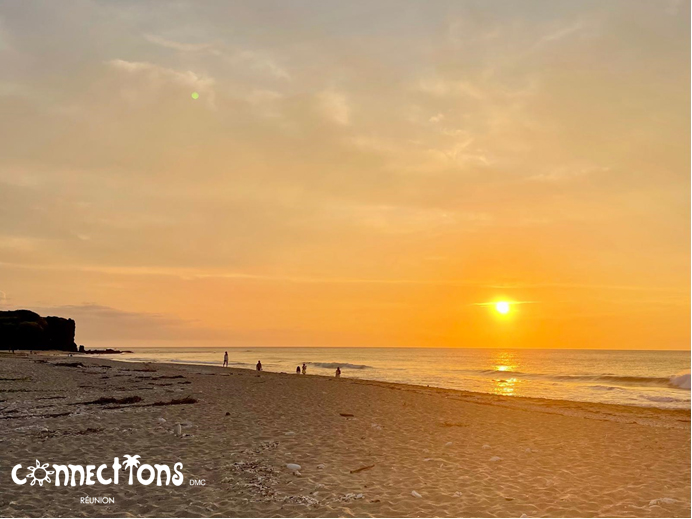
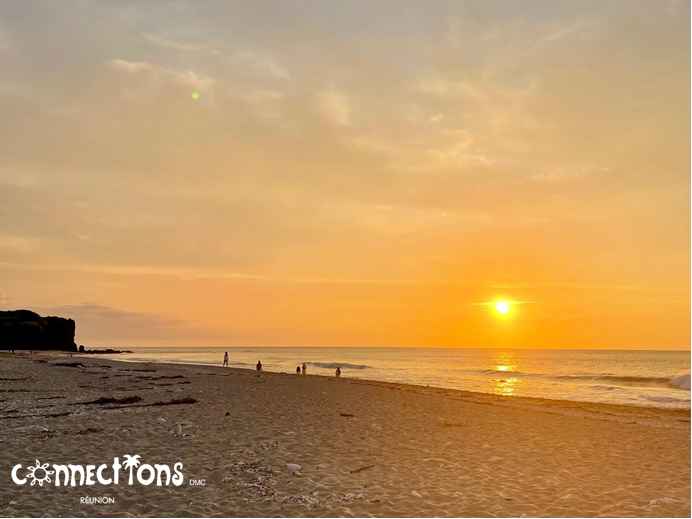
Coucher de soleil sur la plage de Boucan Canot © Maxime B.DELMAS – Connections Réunion


Present in Réunion… but not only!

While the actors of Connections Réunion operate from their island, it is not uncommon for some to travel directly to mainland France and Europe, especially for trade shows. This was notably the case at ITB in Berlin, from March 3 to 5, where Aline Chan-Tien and Matthieu Ranaivoson, respectively Managing Director and Head of the G.I.R. service, ventured to meet numerous Tour Operators.

We can also mention PURE International, held on March 12 in Paris, bringing together more than 250 MICE offers from several destinations, including Réunion, represented by Lionel Guiance and Éric Cousyn, respectively Head of the Groups Service and Commercial Representative for Groups and MICE based in mainland France.

For the rest of 2026 events, come meet the Connections Réunion team at the CRT – Ile de la Réunion stand, from September 15 to 17, 2026 inclusive. Aline Chan-Tien will be joined by Murielle Fontaine, Production Manager, and Éric Cousyn.


Contact


Connections Réunion : la clé d’un séjour réussi sur l’île Intense
Aline CHAN-TIEN, Managing Director
[email protected]

+262 262 93 13 98

Connections Réunion

instagram facebook

>> Connections Réunion dans l’Annuaire DESTIMAG