
Data breaches: why tourism must secure its entire supply chain [ABO]


La taille d'un acteur ne dit rien de sa sécurité. Elle dit seulement l'ampleur de ce qu'il expose - DepositPhotos.com, sdecoret

Hurtigruten


This summer, France experienced data leaks. And tourism, for its part, sells trust.

While the sector rode its peak activity, the country lived another high season. About fifty data breaches confirmed by their own victims in August alone, according to the tally kept by FrenchBreaches as of August 23.

The Directorate-General for Public Finances, with more than 670,000 taxpayers exposed via an internal tool linked to impots.gouv.fr, then more than two million property owners via cadastral data.

The Ministry of National Education, 43 gigabytes. SFR and its 2.1 million accounts. Intermarché drive, 1.7 million. The Civil Protection, 525 000 profiles, including minor volunteers. Inserm, Santé publique France, Bloctel, the Hospices Civils de Lyon, the national dog and cat identification file, the French Handball Federation.

You may notice there is no tour operator, no hotel chain, no travel agency, nor incoming operator. That is precisely why you should read this list.

Because what Summer 2026 has brought back on the table is not a sector issue. It is a matter of trust, and trust is the raw material of your trade, far ahead of mine.

I am going to do something unusual in these pages: speak very little about tourism, and a lot about the resilience of a company when it takes a hit.


Size has never been a guarantee, and summer just proved it

Look at who has been touched. The State, that is, the organization with the largest budgets, the biggest workforce, and a dedicated national agency.

A telecom operator, meaning a company whose core business is the network. A major retailer. Three months earlier, in May, it had been Pierre & Vacances-Center Parcs, Belambra and Gîtes de France within 72 hours, i.e., the most established players in the French hospitality sector.

Read on this: Three breaches in three days: why tourism will have to prove its security

It follows, then, that the uncomfortable conclusion is warranted: the size of a player does not say anything about its security. It only reveals the extent of what it exposes.

When you pick a booking engine, a channel manager, a CRM, or a payment provider, assuming that a large supplier is automatically a reliable one is a mental shortcut, not an analysis.

Our brain equates notoriety with reliability because it is energy-efficient, and because it relieves us of making an uncomfortable decision. Attackers know this reflex better than we do and live on it.


Find all of Christophe Mazzola’s articles by clicking this link.


You are not always the target. You are sometimes the path

The biggest August case did not involve any big brand. It targets BlgCloud, a French publisher of an ERP used by dealers, rental companies, and distributors of agricultural and construction equipment.

The attacker claims access to around 159 client environments out of the 230 the platform supports; the publisher acknowledged the intrusion on August 8 and only confirms thirteen. Whatever the number, thirteen companies have since reported a breach related to this incident, for a total of 185 gigabytes. None of them were hacked. They were affected.

The CNIL’s annual report, published in May, quantifies this mechanism with brutal clarity. The authority received 17,802 data-violation notifications in 2025. It removed 11,635 from its trend statistics because they all stemmed from the compromise of two software publishers and cascaded down from their clients.

Two providers alone accounted for two-thirds of that year’s notifications.

In tourism, the Gîtes de France breach went through the servers of its IT service provider, not through its own.

And you must read this mechanism in both directions. If a compromised provider exposes its clients, a small organization that is compromised exposes those it serves.

Your access key to a major tour operator’s system, your partner access to a reservation hub, your email account authenticated with a client that treats your messages as legitimate: all of this is worth far more to an attacker than your own customer base.

Your small size is not protection. In a highly interconnected ecosystem like yours, it is a commercial argument for the attacker aiming higher.


What protects has never been front-page news


Polite paranoia

I sign off my statements with a phrase that sometimes brings a smile: politely paranoid. This isn’t a posture of mistrust toward people, which would be intolerable in a hospitality role. It is the refusal to grant default trust, and the habit of verifying it without becoming insufferable.

It means asking your providers the questions you wish your own clients would ask you:

– where are my data hosted?

– how many of your employees can read them?

– within what timeframe will you notify me in case of an incident, and by what channel?

– when was your last penetration test, and what were the results?

– what happens to my data the day I leave?

These questions require no technical expertise. They merely require accepting a moment of awkwardness in a business relationship, which is often the real obstacle.


Restoring trust is not announced, it is demonstrated

Trust is not rebuilt by a reassuring press release, and certainly not by the line heard all summer that no banking data is involved. It is rebuilt through verifiable actions.

The first is what you do not hold. A reservation history going back to 1995, as seen with Gîtes de France, is not an asset; it becomes a liability. Each year kept unused is another year offered to whoever might come in. A deletion policy is a security measure, not a legal formality.

The second is your ability to speak quickly and accurately. The 72 hours of the GDPR are not a communication objective; they are the window in which your client decides whether to keep trusting you. The CNIL, which issued 487 million euros in fines in 2025 and sanctioned for the first time a subcontractor on par with a data controller, has announced it will tighten its checks in 2026 on large databases. Silence now costs both sides.

The third is the most profitable, and no one is exploiting it. Make security a business argument. Tourism knows how to market an environmental standard, a quality label, a service certification. It does not yet know how to tell a client, or a principal, what it does with their data and why it does it better than a competitor. Yet this is the only realm where trust can be rebuilt faster than it is lost.

The regulatory calendar, however, will not help you. The NIS2 directive should have been transposed in France by October 17, 2024; the Resilience bill was adopted by the Senate in March 2025 and is still awaiting passage in the Assembly, now hoped for September.

On July 8, the European Commission referred France to the Court of Justice of the European Union, seeking daily fines. And once the text is approved, entities will have three years to comply.

Do not wait for that timetable, because it is not the one that will compel you. Your real deadline is the next security questionnaire your biggest client will send you. Article 21 of NIS2 requires every regulated entity to secure its supply chain, meaning it will audit you, whether you fall within the text or not.

The market will regulate before the legislator, and it already is doing so.

The day an op operator tender includes a serious security annex rather than a checkbox, the sector will have stopped outsourcing trust to parties it does not evaluate.

Until then, trust will continue to be misplaced at that exact spot where no one watches: at the neighboring service provider.


Who is Christophe Mazzola?


Photo : Christophe Mazzola

Christophe Mazzola is a cybersecurity expert, founder of the Cyber Academy and head of the GRC practice at Cresco Cybersecurity.

His objective: make cybersecurity accessible to everyone.

A speaker, author, and CISO, he supports companies and institutions with a pragmatic approach to digital security, at the crossroads of leadership, pedagogy, and digital sovereignty.


The Train Is So Successful That Supply Must Increase


Selon l’Autorité de régulation des transports, les voyageurs se reportent massivement vers les transports collectifs - Crédit photo : RP

TAP Air Portugal


Alors que les grandes vacances arrivent à grands pas et que les Français ne sont plus nécessairement en quête d’un soleil de plomb, le train sera sans doute, une nouvelle fois, le tube de l’été.

Même si quelques limites sont apparues ces derniers jours.

En raison de la canicule, le matériel et le réseau ont été soumis à rude épreuve, entraînant, sur la seule journée de mercredi, près de 1 000 annulations de trains sur les 15 000 en circulation.


Les raisons sont multiples. Les rames ne sont pas conçues pour résister à des températures avoisinant les 40 degrés. Une fois cette zone rouge atteinte, la climatisation ne refroidit plus suffisamment, quand elle ne se coupe pas complètement dans les voitures Corail ou certains TER.

De plus, les rails subissent des températures proches de 60 degrés, provoquant des risques de dilatation, tandis que les caténaires peuvent également céder.

Le train est le moyen de transport d’aujourd’hui, mais il va devoir s’adapter au climat de demain, afin de ne pas faire gratuitement de la publicité à l’aérien.

D’autant que le ferroviaire ne cesse de gagner des parts de marché depuis la crise sanitaire, à tel point que, selon l’Autorité de régulation des transports (ART), il est désormais temps d’augmenter l’offre pour répondre à la demande !


The train advances at full speed in the travel habits of the French

In the midst of the flood of climate-related bad news, some data offer a glimmer of hope for a world that is moving toward decarbonization.

To begin with, the train is in vogue and public transport is showing record ridership, surpassing pre-pandemic levels.

This helps reduce greenhouse gas emissions from transport. According to ART’s calculations, they dropped by 1.2% in 2024, even as travel increased by 1%.

Since 2019, the cumulative reduction in GHG emissions stands at 7.4%. That’s the good news of the week!

This decline is not explained only by airlines’ efforts, but above all by a modal shift in favor of rail.

Trains now account for 10.9% of trips in France. And it’s not so much that the supply has increased in recent years as the ridership of the trains.

Last year, according to the latest ART data, TGV ridership rose by 4%, while improvements continued for other train categories.

The occupancy rate on high-speed lines is approaching 80%, i.e. “an unusually high fill rate“, according to the Authority, even if it is lower than low-cost air travel (85%), but 1% higher than its conventional version.

These good figures are explained, on the one hand, by rising demand and, on the other, by a 10% reduction in frequencies compared to 2019 due to a lack of available rolling stock.

A situation that helps improve occupancy and the average ticket, notably thanks to yield management.


TGV: capacity has fallen by 36% in fourteen years!

A success that hasn’t always shown up as expected.

In the mid-2010s, SNCF decided to get rid of its most bulky trains. Faced with occupancy rates hovering below 60%, the operator chose, for cost reasons, to reduce its TGV supply.

It retired no less than 105 trains out of the 482 it owned at its peak in 2012. By the end of 2023, the decline had reached about 20% in ten years, as Libération recalls.

Unfortunately, the situation has not improved since.

According to the latest count we consulted, the company now has only 307 high-speed trains, a 36% drop in fourteen years!

Sauf qu’entre-temps, le train est redevenu à la mode. -> But in the meantime, trains have returned to fashion.

Les Français veulent faire des efforts pour le climat et la SNCF pour les contribuables. L’offre baisse, la demande augmente, le yield s’affole et les prix grimpent.
-> The French want to reduce their carbon footprint and SNCF wants to protect taxpayers. Supply falls, demand rises, yield soars, and prices climb.

L’opérateur français a bien commandé de nouveaux équipements afin d’accroître ses capacités. Le TGV M devrait entrer en service en septembre 2026, avec deux ans de retard.
-> The French operator has indeed ordered new equipment to boost capacity. The TGV M is expected to enter service in September 2026, two years behind schedule.

À la fin de l’année, treize rames devraient normalement circuler sur les rails. Ce nouveau TGV disposera d’une capacité de 740 places.
-> By year end, thirteen trainsets should normally be in service. This new TGV will have a capacity of 740 seats.

Au total, pas moins de 130 rames ont été commandées. Une quantité qui ne permettra toutefois pas de revenir au pic atteint au début des années 2010.
-> In total, no fewer than 130 trainsets have been ordered. However, this amount will not be enough to return to the peak reached at the start of the 2010s.


Air travel in France: domestic routes collapse…

That’s not all, because during this period competition also arrived on some routes.

The offering thus rose by 20% on the Paris-Lyon-Marseille axis, but also by 100% on services to Italy. Not enough to reverse the trend. Moreover, while Trenitalia went all out upon entry and found an audience, the Italian carrier still struggles to truly take off.

Its occupancy rate stands at 45% after five years of existence, according to BFM.

For comparison, this figure must reach 75% for a TGV to be profitable at SNCF. It is therefore natural that Trenitalia’s losses continue to widen.

They were 20 million euros in 2021 and reached 68 million in 2024, even though the carrier benefits from a 16.5% reduction on rail tolls until December 2026.

Read: Trenitalia: why, from 2027, fares could be less attractive?

Beyond this date, Trenitalia will again need to approach ART for a decision on a new pricing scheme, more or less advantageous.

And according to the latest report on the French transport market, published a few days ago, public transport is also benefiting from the weakening of air travel.

The demand for domestic flights has fallen by about 20% since 2019.

The drop nonetheless reached 4.3% in 2024. That dynamic continued in 2025 (-2.6%), even as international routes remained on the rise (+3.6%).

If rail transport is the most used mode in France, for distances beyond 400 kilometers air travel captures 15% of trips and keeps gaining share as distances grow, while rail follows the opposite trajectory.

Between 200 and 600 kilometers, the TGV represents 80% of travelers.

It must be noted that, between the government’s elimination of certain lines and the debate that followed, combined with taxes and a sharp rise in prices, domestic air transport has been particularly unsettled in recent years.


Prices explode!

In 2024, the price of domestic air travel rose by 3% and was 40% higher than its 2019 level.

Since the start of 2026, these same prices have fallen by 3.8%. If we widen the observation window, they have nevertheless risen by 15.1% since 2023.

Read: Train more expensive than flying: “a matter of political will”

Despite this general increase, the price of standard air travel stood at 23 euros per 100 kilometers in 2024, versus 13 euros for low-cost carriers.

These carriers accounted for nearly 70% of domestic flights, while at that time Air France was still based at Orly. Meanwhile, rail remained competitive, provided one considers the air-distance.

In this scenario, the cost per 100 kilometers was €12 for conventional trains and €6.90 for the Ouigo offer.

But trains do not run in a straight line to reach Paris and must sometimes detour around towns, mountains, forests or other natural obstacles. The average price then rises mechanically.


The distance traveled by land transport is generally about 20% longer than by air. The gap reaches as much as 42% for a Paris–Nice route and 35% for a Paris–Toulouse trip by TGV. This makes the train less competitive, still according to ART.

The year 2024 was also marked by a lull, with relatively few cancellations in the French transport sector.

Last-minute cancellations accounted for 0.4% of domestic rail movements. Here is what to take away from this 96-page document.

Rail, once deemed old-fashioned, is back in vogue.

But this enthusiasm might not last, due to an undersupply of capacity, rising tariffs, and equipment that could be strained by climate change.


In the Andes, Ancestral Knowledge to Supply Lima with Water

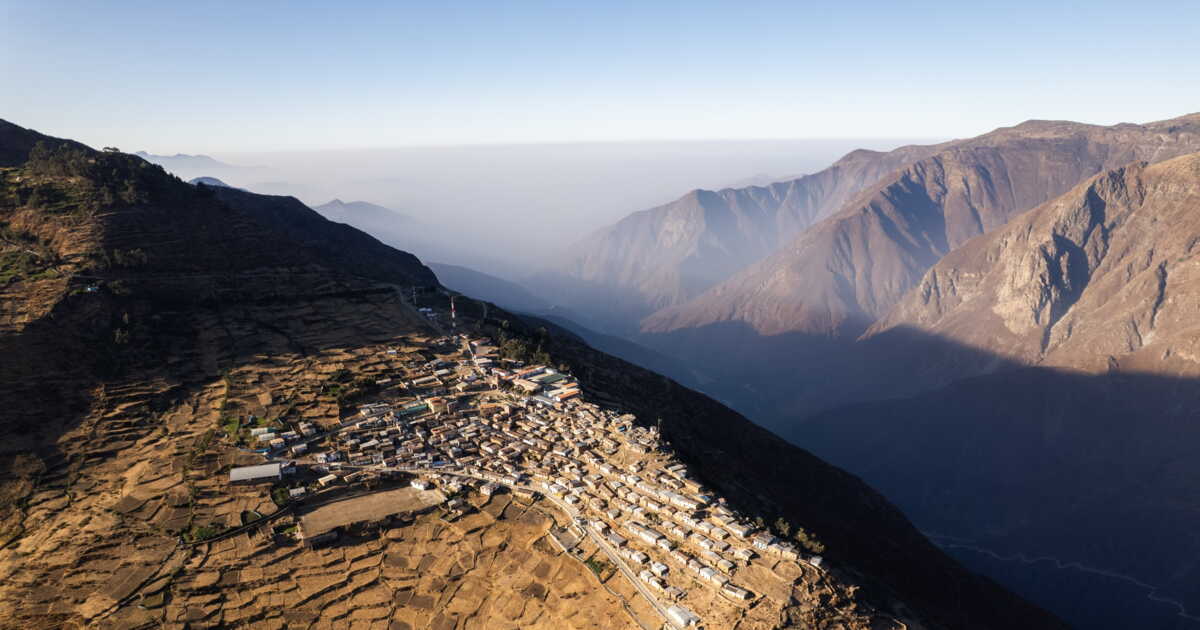
The narrow track keeps climbing and descending, winding through terraced fields planted with potatoes, beans, and corn, before reaching the bare crest where the Peruvian village of San Pedro de Casta has grown. A few dusty lanes, houses with plaster peeling to reveal red brick walls, and corrugated tin roofs gleaming in a clear sky. A highland hamlet at 3,000 metres above sea level, with one peculiarity: from there, the view dives into a surprisingly green valley, at the bottom of which fruit trees grow.

Between avocado trees, apple trees and cherimoyas—Annona cherimola, a fruit with white flesh whose taste recalls cotton candy—one can discern the short zigzags of the Santa Eulalia. This river, born in the Andes, is the main tributary of the Rímac River, which waters Lima, 70 km away by air. And if the capital (where rainfall is five to ten times less than in the Sahara) can benefit from it, it is partly thanks to the treasure of San Pedro de Casta. Eufronio Obispo Rojas, the village’s water specialist, points to a hillside where a horizontal line runs along the rock: “It’s one of the amunas that we have restored”, he says. To understand: one of the canals built between the 8th and 11th centuries by the Waris, an Andean people who inhabited the south of present-day Peru, known for their building prowess.