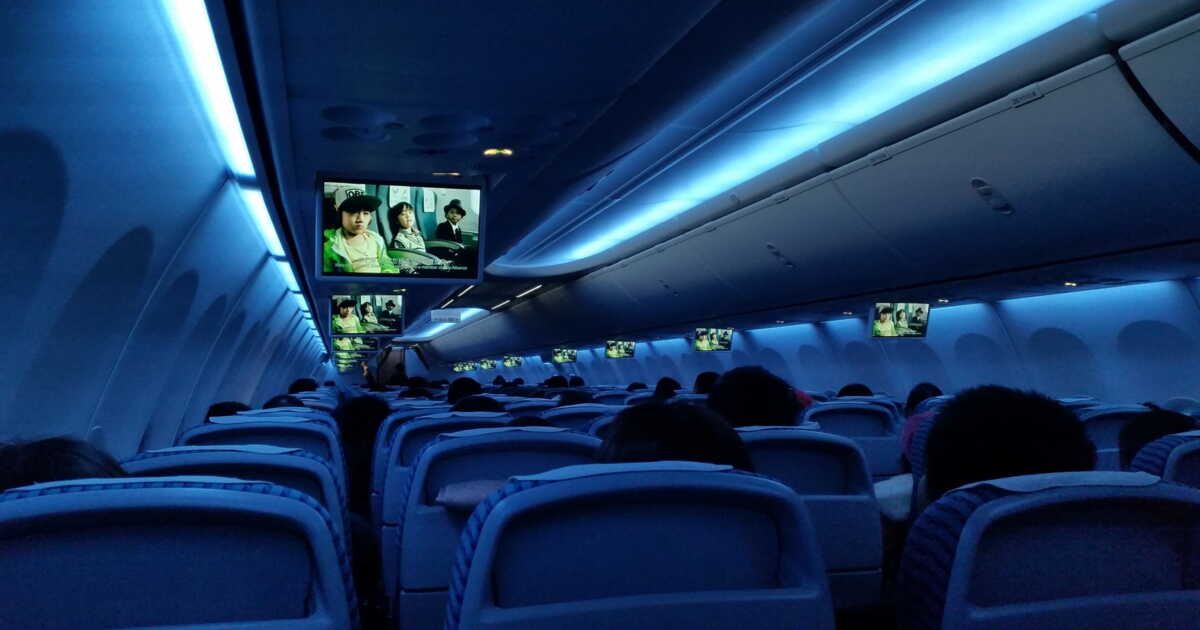
Is It Rude to Wake Your Neighbor to Exit Your Seat Multiple Times During a Flight?

You are stuck on the window seat and need to wake your neighbor to go to the bathroom? Before you hold back or feel guilty with every trip, know that flight attendants have some tips to prevent these movements from turning into a source of tension. Because while getting up several times during a flight isn’t necessarily rude, some situations lend themselves less to constant going and coming. So, when should you wait, and how can you avoid exasperating your seatmates?

Several getting up during a flight, a situation that can be managed with a few precautions

Whether you need to visit the restroom, want to stretch your legs, must retrieve an item from the overhead bin, or need to attend to a child, there are many reasons to leave your seat mid-flight. And they are not necessarily predictable at boarding. There is therefore no defined maximum number of get-ups that aviation professionals would deem acceptable.

“No, I wouldn’t automatically call that rude, because people may need to go to the bathroom, stretch, handle a health issue, take care of a child, or access something important”, explains Aura E. Martinez, a flight attendant for nearly twenty years, to Travel + Leisure magazine.

However, the situation can become tiresome when these trips multiply to the point of constantly disturbing other passengers. The discomfort is especially pronounced on short flights, where rest time is limited, when neighbors are trying to sleep—particularly on red-eye journeys or during meals. The key is not so much the number of times a person stands up as the circumstances under which it occurs. It’s better to consider the situation before asking your neighbor again, perhaps waiting a few minutes if the need isn’t urgent.

For travelers who know they will need to move around regularly, Aura E. Martinez recommends booking a seat directly on the aisle. This seat allows you to exit without asking your neighbors to stand, and it provides more freedom during the journey.

If the ticket is already booked on the window or middle, another solution is to ask a passenger seated on the aisle if they would be willing to swap seats. The flight attendant known on social media as CiCi in the Sky suggests this possibility. But it is best not to press if refused: an aisle seat can be particularly sought after, and its occupant is under no obligation to cede their seat.

It is also better to warn your neighbors from the start of the flight if you know you will need to get up frequently. This transparency prevents repeated surprises and helps set reasonable expectations right away.

Meals, Sleep, and the Seat Belt Sign: Times When Waiting is Best

If the need isn’t urgent, the moment you choose to leave your seat matters a lot. Aura E. Martinez specifically advises avoiding excursions during meal and drink service, and while your neighbor is sleeping.

The service trolley’s passage indeed makes movements more challenging. In the narrow aisle, crew members must be able to move with trays and hot beverages. Getting up at that moment risks inconveniencing flight attendants as well as other passengers. Waiting a few minutes, when possible, helps ease on-board circulation.

Another tip is to take advantage of the moment when your neighbor stands up on their own. CiCi recommends this approach to minimize interruptions. If both passengers need to leave their seats, they can then avoid multiplying requests for passage.

However, one must distinguish between simple movements and actions driven by a pressing need. Even if the toilets were used before boarding, it is still possible to need to return there several times during the journey. The flight duration, health status, and individual needs can explain these back-and-forth trips.

“I would never want a passenger to feel guilty about needing to go to the bathroom twice during a five-hour flight”, CiCi notes in Travel + Leisure. A useful reminder for travelers who hesitate to wake their neighbor for fear of appearing rude.

Finally, when the seat belt sign is on, passengers must remain seated and buckled. In that case, safety takes precedence over comfort and travel habits. Outside of those periods, the simple rule on the plane remains: everyone may need to stand up, provided they consider others when the situation allows.
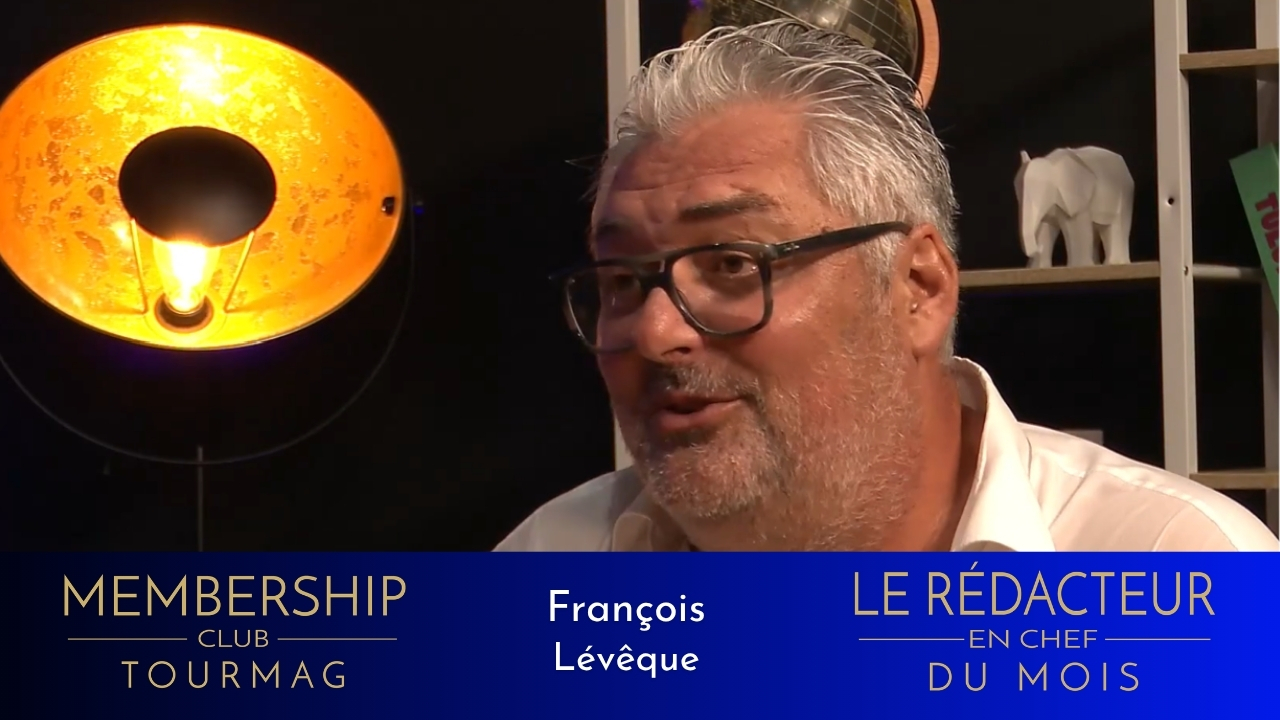
François Lévêque (Centrale Voyages): Seizing Opportunities in Times of Crisis


TourMaG – How is Centrale Voyages’ activity faring in the current context?

François Lévêque : At Centrale Voyages, we work on two main fronts. The business travel side is not doing badly overall. After a challenging 2025 marked by government uncertainties in France, activity has fairly rebounded.

On the leisure side, as everyone knows, we’re navigating a tougher period, thanks in particular to our friend Donald (Trump, ed. note). 

We mustn’t forget the Ukraine-Russia conflict that affected us for several months. In addition, the Middle East conflict has been ongoing since February 28.

This isn’t limited to trips to the Middle East, but also to Asian destinations, since three-quarters of flights are operated by Middle Eastern carriers that pass through Dubai, Abu Dhabi or the Qatar hubs. This situation leaves customers in a state of uncertainty.


Centrale Voyages acquires Meltour in Saint-Maur-des-Fossés

TourMaG – How significant is the business travel segment today at Centrale Voyages?

François Lévêque : The essence of Centrale Voyages is truly business travel. When I took over this company two years ago, it represented 80% of our revenue.

My goal is to rebalance the revenue mix between leisure, MICE – which I will address later – and business travel. Today, business travel remains the predominant activity.

TourMaG – On the leisure side, you’re making acquisitions; where do things stand?

François Lévêque : As TourMaG announced a few weeks ago, I just acquired two agencies in the Île-de-France region, one in Montigny-le-Bretonneux and one in Saint-Maur-des-Fossés: Meltour.

The objective is to acquire turnover and client portfolios, but also to gain complementary know-how beyond what we already possess. We have launched a comprehensive digital communications push for the last six weeks. We signed for one year, hoping to attract new clients and generate leads to develop leisure at Centrale Voyages.

We rolled out these efforts at a time when we’re confronted with the crisis in the Middle East. That timing isn’t ideal.

But in tourism, one must anticipate events like these. There are regular recoveries after crises, so I remain confident for the future.


“In times of crisis, you must not sit idly by”

TourMaG – Remind us of the scope of your network. Is your goal to reach 15 to 20 agencies in total?

François Lévêque : Today we have 11 agencies: one in Marseille, one in Aix-en-Provence, and the rest in the Paris region. We aim for 20 agencies within two years.

The aim is really to adopt the mindset that during a crisis you must not sit on your hands. Otherwise, as one former mentor of mine used to say, everything seems fine while the boat is slowly sinking…

I believe it’s always worth considering opportunities that open up during downturns. Today there are indeed some on-the-ground agencies that are no longer very profitable, run by leaders who have not fully embraced digital evolution, and it is quite possible to inject some energy into these agencies and make them profitable again. That’s the bet I’m placing during this period of crisis.


TourMaG – How do you choose deals? Is it about location? The storefront? Price? How does it work?

François Lévêque : To be quite honest, it’s all about opportunity. The first opportunity is Montigny-le-Bretonneux. The agency is part of Manor, and the owner suggested, then offered me the chance to take over his agency.

The second agency, however, came to me through my accounting firm, which has overseen this company for 30 years and presented the opportunity. When you acquire an agency, your biggest worry is uncovering anything that has been hidden or glossed over to make the bride look better. The advantage of sharing the same accounting firm is that you know the business is clean and overseen by people you’ve known for a long time.

That makes the acquisition process much more reassuring and limits the unpleasant surprises that can surface a few months later.


Agencies with prime locations still have a real future

TourMaG – There are plenty of opportunities; are there many retirements?

François Lévêque : There are many retirements. The Meltour agency in Saint-Maur is one example, but it’s the case for most deals I review. They’re often led by managers approaching retirement age. Since Covid, the industry has changed and evolved, and many are stepping down. There are currently a lot of deals on the market.

TourMaG – Do you believe in physical travel agencies in the age of artificial intelligence?

François Lévêque : I don’t have a crystal ball. I closed one agency in December because there was no longer a flow and there was no logic in keeping it. Today, I’m reconsidering several others.

However, I do think that agencies with a good location have a real future. There will always be business conducted in person, especially for clients seeking tailor-made journeys who need to trust the agent who guides and builds their trip.


“On business travel, margins are razor-thin”


“Clients are increasingly demanding”

TourMaG – There was a HR challenge after Covid. Do you still face recruitment issues and are you hiring?

François Lévêque : We are recruiting because some employees are retiring, while others choose to leave the agency or even the industry. Both situations are present today.

And no, recruiting isn’t easy. You hear that some agencies are closing, but that doesn’t make it any easier to hire travel consultants. I’m mainly referring to leisure tourism. We have more ease recruiting for the business travel side, which is a more technical field and less sales-oriented.

Conversely, in leisure, it’s a real commercial profession. The advisor builds and sells a file, but until the client signs, they can easily move to someone else. This dimension makes the role more demanding.

Clients are also increasingly demanding and agents sometimes suffer from a lack of recognition. They are solicited at all hours, including evenings and weekends, because that has become almost normal today. Like everyone, they would like to disconnect and enjoy their free time.

It’s often because they are highly professional and deeply committed that they end up burning out from this constant availability. Today, recruiting good travel consultants who are still happy in their job and want to thrive in leisure travel isn’t straightforward.


“My objective is to reach 20 agencies, 50 million euros in turnover”

TourMaG – Centrale Voyages, in three years, how big will it be? What will the group’s structure look like?

François Lévêque : My objective is to reach 20 agencies and 50 million euros in turnover, with one third from business travel, one third from leisure, and one third from MICE. To me, that would be the ideal balance.

This equilibrium helps distribute risk more evenly. There is always one activity that endures tougher periods than the others. The idea is that the other two segments can support the business and help it weather the crises of the third line.

Why 50 million euros? I don’t really know where that figure comes from, but since I arrived two years ago, I’ve been told that once you reach this threshold, suppliers start looking at you differently and you can secure better negotiating terms, especially regarding margins.

This objective may evolve over time, but it’s the target I’ve set and we will strive to achieve it within the next three years.