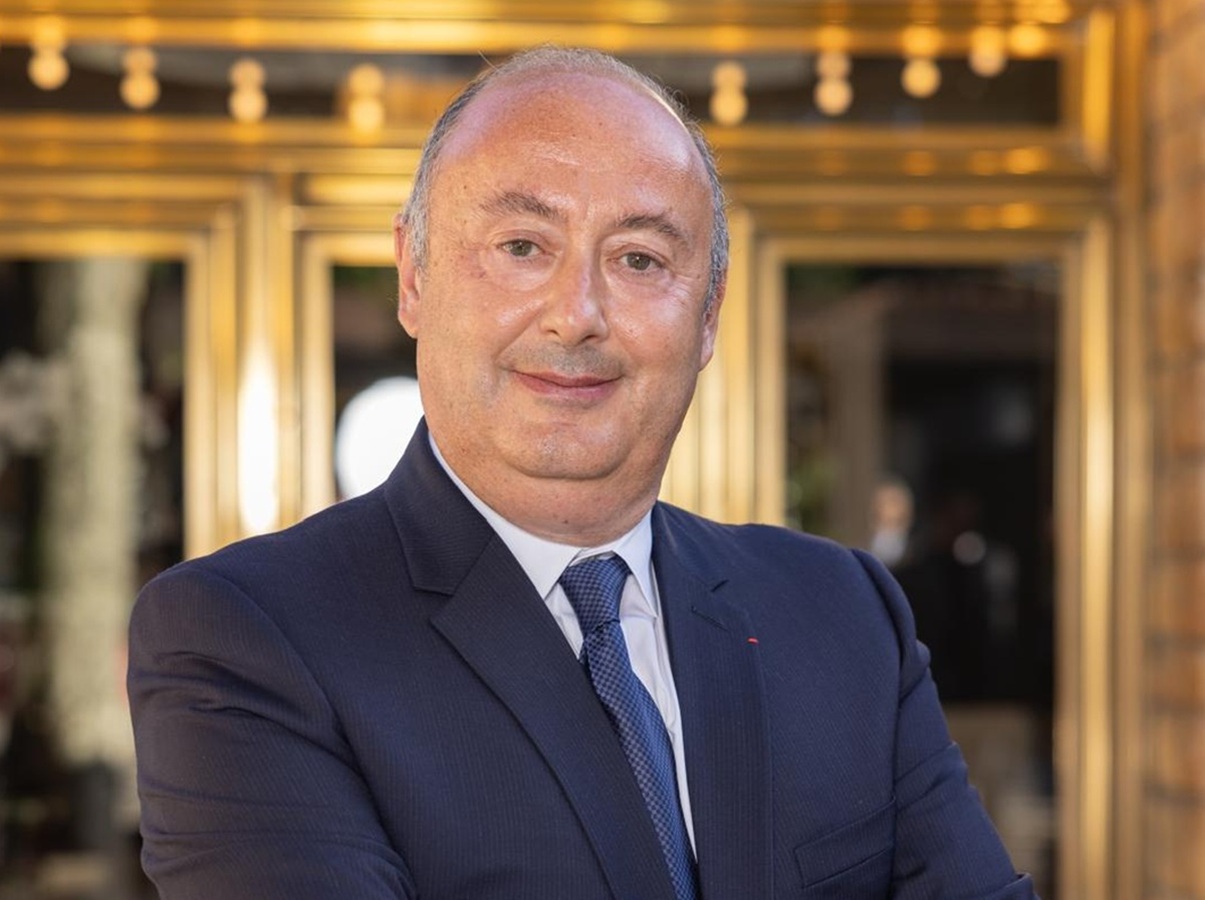
Laurent Abitbol: “We can’t see the end of this crisis”


Selectour devrait connaître une année 2026 légèrement moins bonne qu'en 2025, selon Laurent Abitbol - Groupe Marietton

MSC Croisières


Since the end of February 2026, while bookings were well under way, tourism has entered a new zone of turbulence.

The United States decided to attack Iran with its Israeli allies, in a war that was supposed to last only three weeks. In a few days, the conflict will have been underway for six months, and no exit route seems to be emerging.

Fortunately, in distribution networks, the summer of 2026 proved less dire than the spring activity had suggested.

Regarding Selectour, the downturn has not been recovered. Since June, we have seen activity return to levels similar to 2025, but that does not allow us to compensate for the losses in the tourism sector.

Unfortunately, there is no sign of an end to the crisis; it remains latent. And orders for 2027 are not at their best—they are timid.

“Will bookings continually shift to last-minute, as they did during Covid? I don’t know; we will have to wait and see,” explains Laurent Abitbol, chairman of the management board of the brand with the seahorse.

Faced with the uncertainties of the health crisis, consumers had adopted a wait-and-see attitude, taking advantage of government-approved windows to travel.


War in the Middle East: “2026 will be worse than 2025”

A few years later, the crisis has become multifaceted.

Not only have air routes in the Middle East been heavily disrupted, which in turn affected destinations in the region and in Asia, but concerns about kerosene shortages and rising prices added to the tension.

“I’m not worried about 2027 and the elections; my main concern remains the purchasing power of the French.

For this rentrée (back-to-school period), for now, we have no particular campaign planned. We must wait for this crisis to pass, for people to regain morale, because the desire to travel is there.

It’s a bit like Covid—there is fear, there is waiting; we need good news,” says Laurent Abitbol.

To read: our summer review of the distribution networks

Nevertheless, the message is not meant to be alarmist.

Rather than showing growth, as the order books from January and February 2026 suggested, activity will be slightly down, but not something to worry about.

Let us recall that the industry is coming off three historical years, with volumes often significantly higher than those of 2019.

2026 will be worse than 2025, but not in a dramatic way. It will just be a little weaker compared to an exceptional year. Selectour is doing well.

These first three months at the start of the conflict hurt us. If this war had not occurred, growth would have continued in the post-Covid dynamic
“, tempers the executive.

Unsurprisingly, the United States are clearly down. Tunisia also did not replicate the strong summer of 2025, hampered by power and water outages due to extreme heat.

Otherwise, sun destinations remain at the top of summer sales.


Lowering margins “is not a good calculation”

So there is nothing to worry about, even if the various signals, at international and national levels, somewhat stiffen decision-making.

This war with no end, which depends on the whims of Donald Trump, is added to the French economic situation.

The annual budget drama begins, with the prospect of pension indexation being linked to inflation, as desired by the Minister of Economy and Finance, Roland Lescure.

The government has promised “a lot of rigor” and shared efforts, so not enough to restart consumption.

“We have no control over the mood of the French. You know, holidays depend entirely on the mood of society.

Fortunately, airfares have not risen much. To fill the planes, the surcharges did not cover the surge in kerosene.

And I do not think prices will skyrocket in the future to allow airlines to rebuild their margins. Competition is too intense to witness tariffs rising.

The only movements we are likely to see in the future involve Emirates and Qatar Airways. To regain market share, they will lower their prices, and that will last a few months“, imagines the Lyon-based chief.

If carriers did not contribute to the inflation plaguing France, tourism players have even fought to offer as many discounts as possible.

Facing inventories that were not decreasing quickly enough, tour operators engaged in a fierce promotion war. Everyone thus rebuilt cash flow, but at what price?


Electronic invoicing: “a fairly positive reform”

Lowering margins was not a wise choice.

Better to do less, but with fair pricing, than to try to sustain volumes or improve by squeezing profitability. That isn’t a good calculation
“, chafes Laurent Abitbol.

If tourism is a little under the weather, two market segments are doing rather well.

Business travel is growing for Selectour, as are the groups, with little explanation for the latter activity.


And while this rentrée unfolds in a somewhat gloomy context, files pile up on the desks of executives, starting with electronic invoicing.

To read: Electronic invoicing: “France does not have the most complex legislation”

It will come into effect within a week, on September 1. According to the 7th edition of the Generix barometer, 48.5% of companies had not yet launched the project.

And this is felt in the sector.

On electronic invoicing, not everyone is ready, far from it. Then again, this mainly concerns business travel and government accounts. There is no urgency; in fact, many policymakers are calling for suspension due to hacking incidents.

I think state services will not be harsh; they will allow everyone time to comply. You know, for two years I’ve had two people working on this full time.

So yes, it is heavy in the short term, especially right now, but I think it will be a fairly positive reform because it will simplify accounting.

It’s a bit like the income tax withholding at source.
” concludes Laurent Abitbol.


Romain Pommier Published by Romain Pommier Journalist – TourMaG.com
See all articles by Romain Pommier

  • picto Facebook
  • picto Linkedin
  • picto email
Add TourMaG to your Google News feed Google Actualités icône

EasyJet Strike: Days Ahead of a New Walkout, Is There a Way Out of the Crisis?


easyJet France : le préavis de grève est suspendu ! -Depositphotos

MSC Croisières


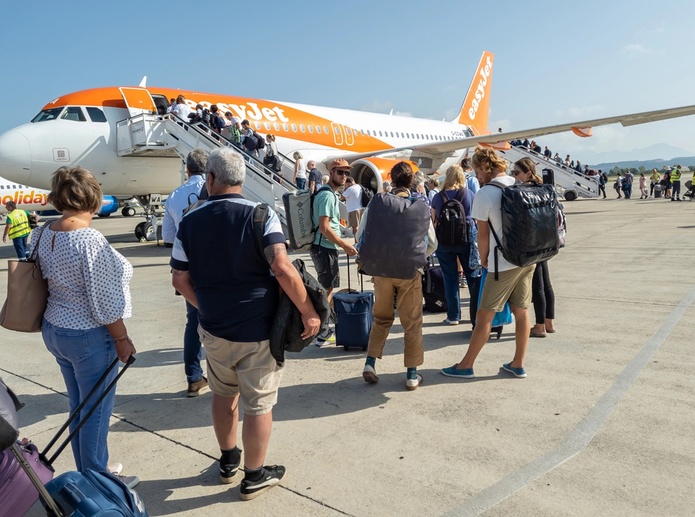
While the sky grows dark over French air travel and strike notices multiply, including the latest one issued by Volotea pilots, a piece of good news is emerging on the easyJet side.

Labor unions of the low-cost carrier had been the first to raise the stakes, due to structural instability and increasing scheduling volatility.

By July, discontent was mounting, and then a strike notice had been filed by several PNC unions, including SNPNC-FO of the company.

It ran from August 7 to September 2, 2026.

Last week, the main union flexed its muscles in the face of a management team that had said “no to almost all the proposals we have made“, as William Bourdon, the SNPNC-FO section secretary, told us.

The previous weekend, the low-cost carrier endured the most significant strike movement in its history, leading to the cancellation of nearly 180 flights.

And as another weekend of walkouts loomed, the EasyJet France management backed down and resumed talks with the unions.

According to our information, staff representatives are expressing satisfaction with the advances and proposals that have been offered to them.


easyJet France: the strike notice is suspended!

We have decided to suspend the strike notice due to a relatively satisfactory proposal that was put to us by management“, William Bourdon told us.

At the moment we are writing these lines, we do not yet know the solutions advanced to address this scheduling stability issue.

We are told that the advances being outlined are enough to stop the movement.

If it is hoped that these measures will have a significant and rapid impact on the issue highlighted in exclusive coverage by TourMaG.com, management has also put in place financial compensation for the abrupt changes to schedules.

A survey has been launched by the unions among their members to determine whether these proposals meet their expectations. It is to run until September 1.

There is therefore no strike directive, nor strikers, until the end of the survey.

Depending on the results, which so far favor resolving the conflict, we will sign an agreement starting on September 2. The strike notice will then be definitively lifted, once the signatures are affixed to the document
“, the unionist said with satisfaction.

Once this page closes, if no unfortunate reversal occurs, discussions on NAO, another thorny topic, will then begin.


Romain Pommier Published by Romain Pommier Journalist – TourMaG.com
View all articles by Romain Pommier

  • picto Facebook
  • picto Linkedin
  • picto email
Add TourMaG to your Google News feed Google Actualités icône
François Lévêque (Centrale Voyages): Seizing Opportunities in Times of Crisis


TourMaG – How is Centrale Voyages’ activity faring in the current context?

François Lévêque : At Centrale Voyages, we work on two main fronts. The business travel side is not doing badly overall. After a challenging 2025 marked by government uncertainties in France, activity has fairly rebounded.

On the leisure side, as everyone knows, we’re navigating a tougher period, thanks in particular to our friend Donald (Trump, ed. note). 

We mustn’t forget the Ukraine-Russia conflict that affected us for several months. In addition, the Middle East conflict has been ongoing since February 28.

This isn’t limited to trips to the Middle East, but also to Asian destinations, since three-quarters of flights are operated by Middle Eastern carriers that pass through Dubai, Abu Dhabi or the Qatar hubs. This situation leaves customers in a state of uncertainty.


Centrale Voyages acquires Meltour in Saint-Maur-des-Fossés

TourMaG – How significant is the business travel segment today at Centrale Voyages?

François Lévêque : The essence of Centrale Voyages is truly business travel. When I took over this company two years ago, it represented 80% of our revenue.

My goal is to rebalance the revenue mix between leisure, MICE – which I will address later – and business travel. Today, business travel remains the predominant activity.

TourMaG – On the leisure side, you’re making acquisitions; where do things stand?

François Lévêque : As TourMaG announced a few weeks ago, I just acquired two agencies in the Île-de-France region, one in Montigny-le-Bretonneux and one in Saint-Maur-des-Fossés: Meltour.

The objective is to acquire turnover and client portfolios, but also to gain complementary know-how beyond what we already possess. We have launched a comprehensive digital communications push for the last six weeks. We signed for one year, hoping to attract new clients and generate leads to develop leisure at Centrale Voyages.

We rolled out these efforts at a time when we’re confronted with the crisis in the Middle East. That timing isn’t ideal.

But in tourism, one must anticipate events like these. There are regular recoveries after crises, so I remain confident for the future.


“In times of crisis, you must not sit idly by”

TourMaG – Remind us of the scope of your network. Is your goal to reach 15 to 20 agencies in total?

François Lévêque : Today we have 11 agencies: one in Marseille, one in Aix-en-Provence, and the rest in the Paris region. We aim for 20 agencies within two years.

The aim is really to adopt the mindset that during a crisis you must not sit on your hands. Otherwise, as one former mentor of mine used to say, everything seems fine while the boat is slowly sinking…

I believe it’s always worth considering opportunities that open up during downturns. Today there are indeed some on-the-ground agencies that are no longer very profitable, run by leaders who have not fully embraced digital evolution, and it is quite possible to inject some energy into these agencies and make them profitable again. That’s the bet I’m placing during this period of crisis.


TourMaG – How do you choose deals? Is it about location? The storefront? Price? How does it work?

François Lévêque : To be quite honest, it’s all about opportunity. The first opportunity is Montigny-le-Bretonneux. The agency is part of Manor, and the owner suggested, then offered me the chance to take over his agency.

The second agency, however, came to me through my accounting firm, which has overseen this company for 30 years and presented the opportunity. When you acquire an agency, your biggest worry is uncovering anything that has been hidden or glossed over to make the bride look better. The advantage of sharing the same accounting firm is that you know the business is clean and overseen by people you’ve known for a long time.

That makes the acquisition process much more reassuring and limits the unpleasant surprises that can surface a few months later.


Agencies with prime locations still have a real future

TourMaG – There are plenty of opportunities; are there many retirements?

François Lévêque : There are many retirements. The Meltour agency in Saint-Maur is one example, but it’s the case for most deals I review. They’re often led by managers approaching retirement age. Since Covid, the industry has changed and evolved, and many are stepping down. There are currently a lot of deals on the market.

TourMaG – Do you believe in physical travel agencies in the age of artificial intelligence?

François Lévêque : I don’t have a crystal ball. I closed one agency in December because there was no longer a flow and there was no logic in keeping it. Today, I’m reconsidering several others.

However, I do think that agencies with a good location have a real future. There will always be business conducted in person, especially for clients seeking tailor-made journeys who need to trust the agent who guides and builds their trip.


“On business travel, margins are razor-thin”


“Clients are increasingly demanding”

TourMaG – There was a HR challenge after Covid. Do you still face recruitment issues and are you hiring?

François Lévêque : We are recruiting because some employees are retiring, while others choose to leave the agency or even the industry. Both situations are present today.

And no, recruiting isn’t easy. You hear that some agencies are closing, but that doesn’t make it any easier to hire travel consultants. I’m mainly referring to leisure tourism. We have more ease recruiting for the business travel side, which is a more technical field and less sales-oriented.

Conversely, in leisure, it’s a real commercial profession. The advisor builds and sells a file, but until the client signs, they can easily move to someone else. This dimension makes the role more demanding.

Clients are also increasingly demanding and agents sometimes suffer from a lack of recognition. They are solicited at all hours, including evenings and weekends, because that has become almost normal today. Like everyone, they would like to disconnect and enjoy their free time.

It’s often because they are highly professional and deeply committed that they end up burning out from this constant availability. Today, recruiting good travel consultants who are still happy in their job and want to thrive in leisure travel isn’t straightforward.


“My objective is to reach 20 agencies, 50 million euros in turnover”

TourMaG – Centrale Voyages, in three years, how big will it be? What will the group’s structure look like?

François Lévêque : My objective is to reach 20 agencies and 50 million euros in turnover, with one third from business travel, one third from leisure, and one third from MICE. To me, that would be the ideal balance.

This equilibrium helps distribute risk more evenly. There is always one activity that endures tougher periods than the others. The idea is that the other two segments can support the business and help it weather the crises of the third line.

Why 50 million euros? I don’t really know where that figure comes from, but since I arrived two years ago, I’ve been told that once you reach this threshold, suppliers start looking at you differently and you can secure better negotiating terms, especially regarding margins.

This objective may evolve over time, but it’s the target I’ve set and we will strive to achieve it within the next three years.

Post-2025 Tensions: Coach Operators Confront the Energy Crisis


"Faire plus avec moins ne doit pas être un slogan, mais une méthode", selon la FNTV - Depositphotos

IFTM prenez RDV avec TourMaG


In tourism, crises are a bit like trouble—like the saying goes, they come in swarms, a notion attributed to Jacques Chirac.

Bus operators, like other sectors, are currently facing several crises that are colliding with one another. According to the FNTV 2025-2026 activity report, the year 2025 was already a tense one.

After two years of growth, activity slowed down due to the political context and economic uncertainty.

And 2026 looks set to be even tougher. In mid-April, BlaBlaCar announced the closure of its subsidiary dedicated to Cars Macron, while bus operators have just acquired vehicles to operate routes served by the company, as Ingrid Mareschal, the FNTV’s general delegate, told us.

For its president, Jean-Sébastien Barrault, 2026 is now the year of the energy crisis.

We are no longer in a growth-driven dynamic, but once again confronted by an energy crisis following the conflict in the Middle East. Moreover, the sector must now cope with vehicle delivery difficulties.

Global demand is strong, European production capacities have diminished, and manufacturers are struggling to secure spare parts.

On top of that, tax increases are piling up. Business leaders are adapting, but the accumulation of hurdles weighs on their morale
“, he explained in this 40-page document.


“Doing more with less should not be a slogan, but a method,” says the FNTV

In light of this assessment, the union emphasizes its full mobilization to its members.

Moreover, part of the sector also has to contend with a cut in public expenditure, while activity is sometimes subsidized, as is the case for urban or school transportation.

Our challenges are immense: to succeed in the energy transition, to expand the offering, and to spark a genuine desire for coach travel to persuade more users to leave their car.

All of this within a tight budgetary context, where public money is becoming scarcer, against a backdrop of generalized cost increases, especially of fuels.

Doing more with less must not be a slogan,
but a method
“, continues the union president.

According to him, it is time to secure longer contracts and a more collaborative approach that would allow bus operators to project themselves into the long term.

They would thus be better positioned to invest in a newer, more environmentally friendly fleet.

A proactive rather than punitive approach can help optimize our fares rather than embedding penalties in the prices, which mechanically raise our offers.

In other words, solid contractual practices can enable greater influence, faster decarbonization, and control of public expenditure. Our clear objective is to defend modern, safe, and accessible coach mobility.

But to succeed, we need a stable, coherent, and ambitious framework
“, concludes Jean-Sébastien Barrault.


The FNTV welcomes the Ambition France Transports conference

Among the positive achievements of 2025, the Ambition France Transports conference stands out.

It enabled the drafting of a framework law on transport development, presented to the Council of Ministers on February 11, 2026. It established a framework offering financial prospects and clarified governance for road passenger terminals.

Moreover, the famous Cars Macron, celebrating their 10th anniversary at the time, surpassed their pre-crisis activity level.

“”They have undoubtedly earned their place in the mobility offer, but their development will depend on upgrading infrastructure, especially road stations.

By tackling this issue head-on, one can hope that the law resulting from the Ambition France Transports conference will give a boost to the ‘Cars Macron’,” explained the union president.

He also mentioned a reduced tension in employment, particularly for drivers, even though the balance remains fragile. The average age of drivers exceeds 50 years. A significant renewal will therefore need to be undertaken in the coming years.

A substantial effort to rejuvenate and modernize the profession remains to be pursued.


🚌
📋 Key Figures 2025
66,564
COACH SERVICES IN FRANCE
as of January 1, 2025

Dashboard for tourism professionals and collective mobility — an industry comprising 2,624 companies and 107,008 employees.

💰

11.3 Billion €
turnover
interurban transport

🎟️

11.1 M
passengers
Cars Macron 2024

🌿

× 30
cars replaced by
one coach

🎒

~2 M
students transported
every day

👷

82 %
of employees
are drivers

44 %
invest in
new energies

🚌
🗺️ National Offer & Network
🎟️

11.1 million
passengers carried
on Cars Macron in 2024

👥

2,745
employees dedicated
to Cars Macron

💰

11.3 Bn€
turnover for
interurban transport

🏢

2,624
companies
in the sector

🛣️

2,191
carpooling
areas

⏱️

18 months
delivery time
for a new coach

🚌
🧳 Passengers & School Transport

Tourist Coaches
Seniors or juniors
85 %
Corporate travel
59 %
National & international
50 %
Family travel
41 %

12.8 million
passenger trips
carpooling 2024

School Transport
🎒

~2 million
students transported every day

🚌

36,000
school drivers mobilized

📊

75 %
school trips by coach percentage

🚌
👷 Employment & Environment
📋

77 %
of hires
on permanent contracts

🎯

82 %
of employees
are drivers

44 %
of companies invest
in new energies

🌿

1 coach
= 30 cars fewer
on the road — champion of sustainable mobility

⚠️

Recruitment pressure

33 % of companies struggle to recruit full-time drivers
61 % face difficulties for part-time positions

Institutional Tourism Crisis: Could the Private Sector Be the Solution?


Tourisme institutionnel : un secteur en quête de légitimation... Atout France comme exemple à suivre ? - Depositphotos.com, 3d_generator

CroisiEurope


More than six months after the melodrama that shook institutional tourism with the hypothetical closure of the Val-de-Marne Departmental Tourism Committee, the sector is sinking deeper into crisis.

Admittedly, the structure has not yet closed its doors, but it must operate without the department’s 900 000 euros subsidy, which greatly jeopardizes its future.

And if Val-de-Marne Tourism is still standing, Solutions & Co. is no longer.

The Pays de la Loire Economic Development Agency, which encompassed the Regional Tourism Committee, was liquidated, because the region “does not have the means to maintain such an agency“.

Its president explained to our colleagues at La Tribune that France has entered “the era of exigency, where every public euro must be a useful euro“. Tourism professionals will appreciate being described as useless.

Ce n’est pas tout, car Gironde Tourisme va connaître le même sort.

If the explanation lies in the department’s heavy deficit, the mayor of Lacanau regards the CDT as “useless” and denounces a “millefeuille institutionnel“, unable to “implement a concrete action“.


A sector seeking legitimacy: Atout France as a model to follow?

The politicization of the debate, added to exhausted public finances, seems increasingly to threaten this sphere of the tourism industry.

The presidential deadline should not really reassure the leaders and employees of the various structures, as a disengagement by the State becomes more openly acknowledged.

The crisis is intensifying, because we are now witnessing not only budget cuts but closures as well. The fact is there. Communities have less money.

In this context, and to stem the bleed, the profession should come together and propose measures to rationalize what sometimes resembles an institutional mille-feuille
“, contextualizes Jean Pinard.

It would be possible to better distribute the housing tax. Imagine that in Paris, out of the 120 million euros in revenue from this tax, only 4 million goes back to the tourism office.

We should also question private players: how to mobilize Club Med, Belambra and all those actors who keep the destinations alive
.”

While some operators struggle to justify their budgets and their missions, faced with the rise of artificial intelligence, networks and the omnipresence of OTAs, public authorities have a free hand to cut budgets, or even eliminate levels.

Among these bad news, there are nonetheless solutions, as notably demonstrated by Atout France’s GIE.

Founded in 2009, the group of economic interest (GIE) enables governance and financing of the agency to include not only the French administration but also private players.


Private funding: the Dordogne Périgord Tourism case

Atout France is not the only case study, a CDT has also taken this turn.

You have to go to the Southwest, to a territory of character offering visitors caves, castles and a plethora of the most beautiful villages in France.

It is in Dordogne that we go. In this territory, tourism is omnipresent. It represents just over one billion euros in turnover and consumption in the department each year, for 19 million overnight stays.

Volumes higher than 2019, a year when the sector simply weighed 22% of the local GDP.

Post-Covid, with the fall in transfer duties coupled with the collapse of the real estate market, we saw our subsidies begin to drop.
The decrease is 100,000 euros for 2023, 2024 and 2025.
For us, tourism is not just about promotion or marketing; it is also about networking, animation, and support
“, explains Christophe Gravier, director of Dordogne Périgord Tourism.

We therefore created a first club on relationship marketing, where we bring along the offices. This allowed us to pool certain tools, such as the newsletter and a shared database that we manage.
Then, while discussing with on-the-ground operators the financing issue of the CDT and their needs, we realized there was private demand
.”


Dordogne Périgord Tourism: “We rested on the housing tax or subsidies”

The structure thus saw 300,000 euros disappear in total over three years, out of nearly 2 million euros of annual budget. But from faint signals and discussions at events, the operator organized itself.

It launched two clubs, but above all emerged an offer based on new services capable of bringing added value to private players in the region.

This led us to create a somewhat hybrid structure and to reinvent the CDT’s classic economic model. Being a bit provocative, I would say that, for convenience, we had relied for years on the housing tax, additional taxes, or subsidies.
This drop in budget forced us to wake up.

Either we retraced our steps into engineering, or we wanted to maintain an ability to support on the marketing and communications front. In that case, we had to do it differently.

Rather than remaining in a logic of image marketing and notoriety, we considered that this communication would be more relevant if it were invested for the benefit of professionals, in a performance-based logic“, wants to highlight Christophe Gravier.

One of the clubs addresses heritage topics, whether caves, remarkable gardens or castles.

Members pay a membership fee that funds a marketing pool, from which managers of these sites can draw to finance training actions, gain perspective on new technologies, carry out commercial outreach, or launch campaigns on social networks.

We try to deliver a set of services with real added value, while ensuring we do not compete with the work done by tourist offices or the CRT. We operate in a cluster logic“, defines the leader.

Read: Google in AI fashion: what life without clicks or audience?

The second club focuses on iconic sites and products. It brings together the entire excellence chain, including truffles, foie gras, walnut production, as well as 4- and 5-star hospitality.

A third club is expected to be launched in 2026 on nature sports, as Dordogne is a hub for hiking and canoeing, and a fourth is under development around oenotourism.


A beneficial shift for private actors and the CDT budget

This transformation has benefited both private players and the CDT budget. In just two years, 150,000 euros were collected. Moreover, partners contribute funds allowing nearly 50% of the action plan of the organization to be financed.

A change that has not completely questioned Dordogne Périgord Tourism’s role.

We remain the department council’s arm to deploy its tourism policy, that does not change.
Anyway, private operators have the flow, the traffic. Rather than chasing audience or imposing an image that already exists, at least for Dordogne, we come to support them and amplify the impact of their investments.


We are a small team of 15 people. We had to shift our logic to integrate a commercial, representational side into our work, and the need to bring added value. Because if the clubs bring nothing to the business leaders, next year they will not renew the experience.

We are, I think, closer to the ground and to the expectations of the actors