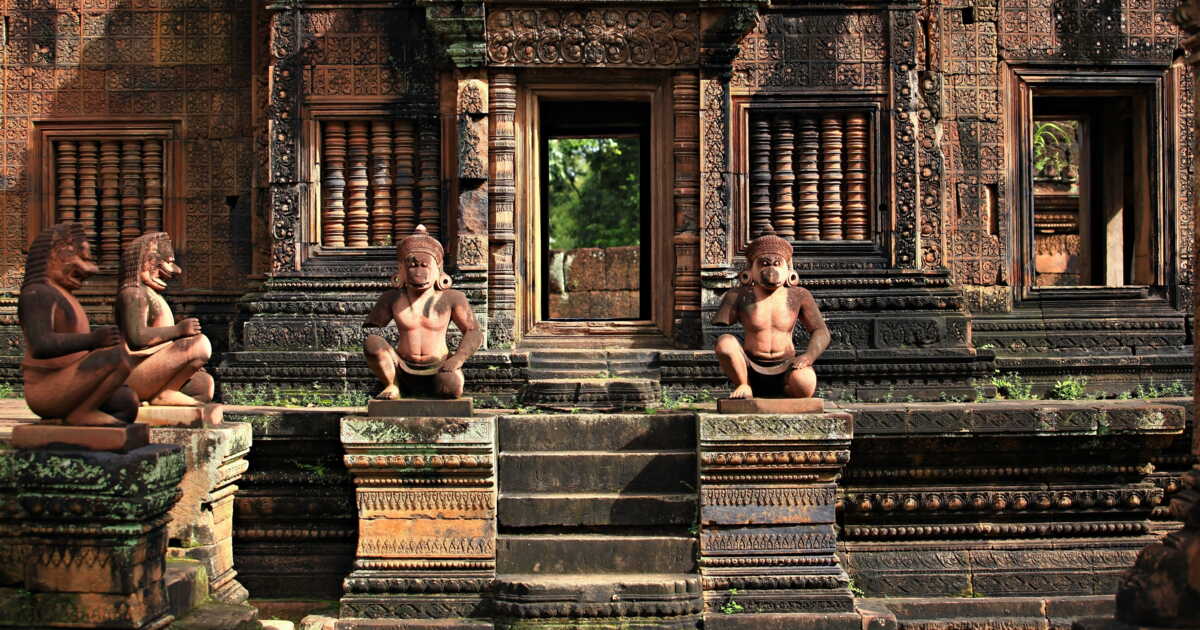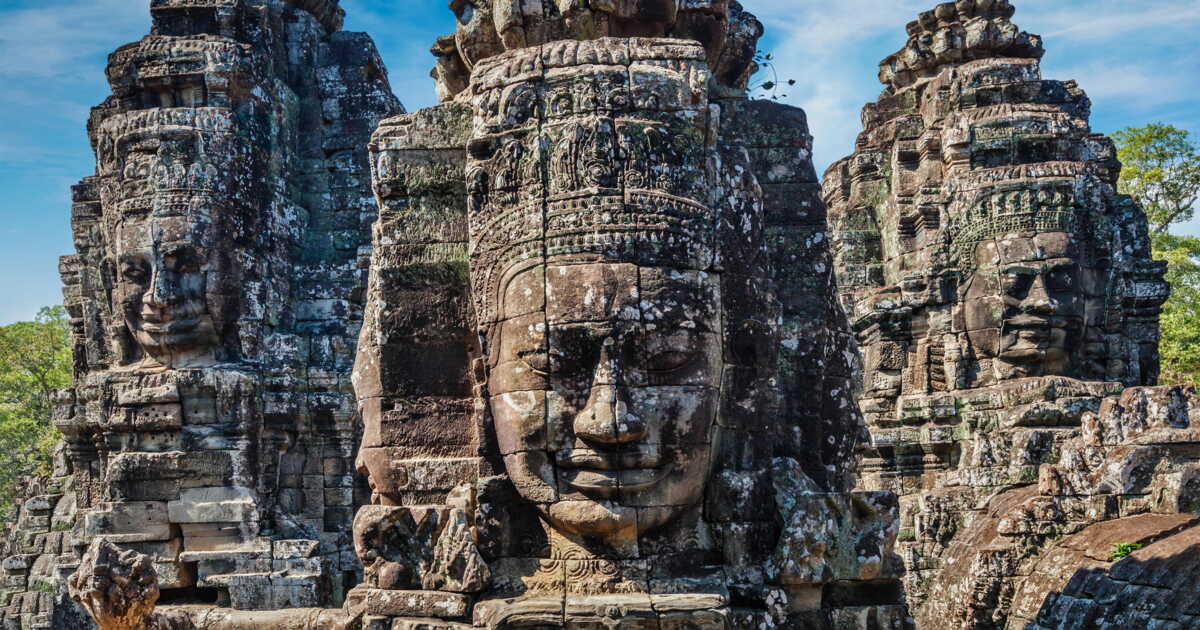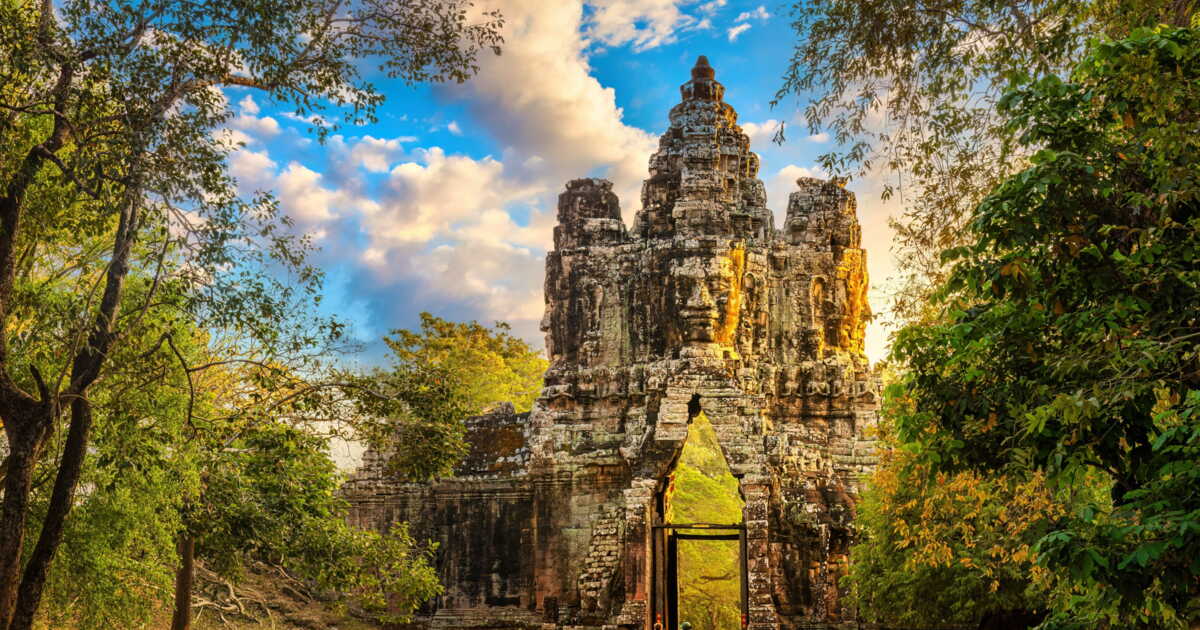
It’s pleasant to visit Angkor’s main temples and must-see sites at a relaxed pace, letting the atmosphere soak in. But why not explore them differently? Here are five distinct ways to discover the site.
Wandering Through the Museum
Museums here are often neglected. Yet lingering there is far from superfluous if you want to fully experience the grand voyage through time that is Angkor. Numerous masterworks are on display, and a visit helps you navigate six centuries of the site’s history.
Models and Statues
White Palace with a modern layout, the Angkor National Museum offers a very well-designed audio guide. Skip the introductory room to focus on the eight galleries, truly spectacular, especially the magnificent Hall of a Thousand Buddhas and the large model of Angkor Wat. angkornationalmuseum.com
Beautiful Finds
Nestled in a building with traditional architecture, the Preah Norodom Sihanouk Museum has a notably intimate vibe. Dedicated to archaeological discoveries, it features objects unearthed in recent digs, such as these 274 Buddha statues found in 2001 at the Banteay Kdei temple. Also worth seeing: a unique collection of Khmer ceramics recovered from the artificial lakes, ritual instruments (ablution vases, betel boxes, etc.) and tools (weights for fishing nets, mortars…) that tell the daily life of Angkor’s common people. apsaraauthority.gov.kh
Cycling
The Little Queen Among the Khmer Kings
Bike riding in Angkor? We love it! Even when it’s hot: 90% of the 23 km of bike paths run under the shade of tall trees, on flat terrain, and are well signposted. The ideal route? Follow Angkor Wat, pass under the South Gate of Angkor Thom, and then weave through lesser-known monuments like Ta Keo’s pyramid and Ta Nei, a gem left in its natural state, hidden beneath the forest. Many rental options in town; electric bikes recommended (from about $20 per day).
On Foot
Along the Ramparts of Angkor Thom
Eight meters high, the enclosure of the royal city, where 100,000 people lived at its peak, forms a perfect 3-km square. Start around 4 p.m. for a rather secret but fairly easy hike: climb over the South Gate to follow the parapet, with a view of the vast moat (about 100 meters wide) and the forest that cloaks the ruins. After about 1.5 km, a magical break at Prasat Chrung Southwest, a sandstone corner temple, one of Angkor’s most poetic spots.
By Boat
Crossing with a Boatman on the Western Baray
The Western Baray, this giant reservoir built in the 11th century, forms an inland sea measuring 8 km by 2 km. Departing from the Wat Svay Romeat temple on the southern dike, you board a wooden dugout for a idyllic voyage to the exact center of the artificial lake, where lies the contemplative island-temple of the Western Mebon. In 1936, monumental fragments of a bronze reclining Vishnu were found there—an important piece now on display in Phnom Penh.
Hot-Air Balloon
Aim Higher Over Angkor!
During the dry season (December–March), at sunrise (our preferred time) and at sunset, you can glide at a low altitude over villages and rice fields, then over the Roluos temples, and finally over the vast water mirrors of the barays, where the most famous monuments emerge from the jungle, revealing their perfect geometric plan. A magical three-hour adventure (about forty minutes of actual flight). Book early (125 dollars, adult rate). angkorhab.com
They Helped Us Tell This Story
Specialists in Cambodia, Les Maisons du Voyage invite you to follow in the footsteps of our reporters, with a thirteen-day, ten-night circuit starting at 2835 euros (airfare, accommodations, visits and a French-speaking guide included). From Kampot to Siem Reap, far from the well-trodden routes, this journey recounts the glorious hours of Angkor’s god-kings. The program includes lesser-known archaeological sites, isolated villages with ancient traditions, and encounters with the Khmer people, who are reconnecting with their priceless heritage. Committed to responsible tourism, the local partner ensures that every trip benefits Cambodian communities and the preservation of the heritage. maisonsduvoyage.com
➤ Article published in GEO magazine no. 570, “Cambodia,” August 2026.
➤ Do you love GEO? Then, to miss nothing, discover our subscription options to receive GEO each month at home with ease.