At the extreme north of Australia, Darwin doesn’t resemble any other capital city in the country. We discovered this city in the Northern Territory during a June report, in the heart of the dry season. Between Aboriginal heritage, influences from Asia, a turbulent history and wild nature on the city’s doorstep, Darwin has a character all its own. A destination deserving of time to linger.
Darwin is the capital of the Northern Territory, a vast region at the center and north of Australia that spans more than 1.4 million square kilometers. The city sits in the Top End, the territorial north, on the edge of the Timor Sea, close to Southeast Asia. It is even closer to Jakarta than to Canberra. With a little over 80,000 residents, Darwin has the scale of a mid-sized city rather than a major Australian capital.
Darwin, a Small Capital Marked by Its History
Its location gives it a tropical climate that largely shapes local life, altering how people live with the changing seasons. The dry season, from May to October, brings hot but pleasant days, little rainfall, and limited humidity. The wet season, from November to April, is characterized by intense heat, high humidity, heavy rains, and violent storms. But to understand Darwin, one must look further back. Long before Europeans arrived, the region was inhabited by the Larrakia, the “Saltwater People”, whose territory stretched around the port and coastline.
They maintained exchanges with neighboring peoples, such as the Tiwi, the Wagait, and the Wulna, while navigators from present-day Indonesia had been frequenting these shores for centuries. The European history of the town begins in the 19th century. In 1839, the HMS Beagle enters the port now called Darwin Harbour. Its commander, John Lort Stokes, christens it in honor of his former voyage companion Charles Darwin. The naturalist, however, never actually visited the region. Thirty years later, a European settlement is founded under the name Palmerston. Then the discovery of gold at Pine Creek in 1871 accelerates the city’s development.
Darwin also holds memory of two catastrophes that deeply shaped its history. On February 19, 1942, during World War II, Japanese forces bombarded the town, marking the first air attack on the Australian mainland. About 250 people were killed and several hundred more were wounded. Today, the Darwin Military Museum and several historic sites allow visitors to revisit this major chapter of Australian history.
Then, on the night of December 24–25, 1974, Cyclone Tracy wrecked the city. Much of it was destroyed and tens of thousands of residents had to be evacuated. The reconstruction that followed transformed Darwin and partly explains its current architecture, which is far newer than that of many other Australian cities. To discover this history, a guided tour can be particularly interesting. Darrel Trueman of Darwin Gourmet Tours offers itineraries dedicated to World War II, to gastronomy, and to street art.
A City Where Cultures Meet
Its history partly explains why Darwin is today one of the most multicultural cities in Australia. More than 60 nationalities and 70 different ethnic origins are represented here. This diversity is reflected in the restaurants, markets, and events that fill the year. It’s hard to grasp it better than by tasting laksa. This spicy Southeast Asian noodle soup has become a real institution in Darwin, to the point that the city dedicates an international festival to it every year. During the Darwin International Laksa Festival, restaurants, cafes, and other establishments compete over their own recipes, while locals vote for their favorite bowl.
But the most important cultural dimension is that of the First Nations peoples. The Northern Territory counts more than 100 Aboriginal languages and dialects. In Darwin, the Larrakia occupy a central place, but the city also serves as a gateway to the many cultures of the Top End. This cultural richness today translates into numerous transmission and revitalization projects. Artists, associations, communities and cultural institutions contribute to keeping languages, crafts, and traditional narratives alive.
The Museum and Art Gallery of the Northern Territory hosts the National Aboriginal and Torres Strait Islander Art Awards (NATSIAA), which highlight yearly the contemporary work of Aboriginal and Torres Strait Islander artists from the Torres Strait. The Larrakia Cultural Centre also aligns with this momentum. Its opening, announced for 2026, should allow the public to view Larrakia cultural objects that have recently been repatriated after being kept abroad for decades.
To go further, head to the Tiwi Islands. There you discover a culture different from that of the Larrakia, through a true immersion: traditional dance around the fire, presentations of history and traditions, an introduction to Tiwi motifs, encounters with artists, and a visit to a museum dedicated to the community’s history. An opportunity to better understand the impact of war on the Tiwi and the transformations their culture has undergone.
Another essential stop: Kakadu National Park, UNESCO World Heritage site for its natural and cultural riches. It’s a destination for its landscapes, wetlands and wildlife, but also for the history of the Aboriginal peoples who have inhabited these lands for thousands of years. The park shelters numerous rock art sites, including Ubirr and Burrungkuy (Nourlangie). To explore the sites with a guide, the CYAROUND agency and their guide Jack Tanner offer experiences that combine nature discovery with an understanding of First Nations culture.
From Sunset to the Bush, Experiences Not to Be Missed
Darwin can also be discovered through a multitude of experiences, sometimes surprising! Among the must-sees, the sunset at Mindil Beach is an institution. At day’s end, locals and tourists gather at the market just behind the beach to buy something to eat, then settle on the sand to watch the sun disappear on the horizon. And when the spectacle ends, everyone claps. Even when it rains, the Top End doesn’t stop. The wet season is notably the season for barramundi, the emblematic fish of northern Australia, at the heart of Million Dollar Fish, a competition held in the Northern Territory.
The idea is quite wild: some barramundis are specially tagged before being released, and the fishermen who manage to catch one can win up to one million Australian dollars. For those who want to approach the fish without going fishing, the Barramundi Experience NT offers a striking and entertaining encounter with large, rescued-from-farming individuals. Some exceed a meter in length and can even be caressed and fed by hand!
And for those who love genuinely quirky experiences, Darwin has another rather surprising specialty: the Heli Pub Crawl. Offered by Airborne Solutions, this helicopter/pub tour lets you reach several venues, some of them very isolated in the wild. Between drinks, the passengers fly over the coastline, the wetlands and the tropical landscapes.
The region can also be discovered through its agricultural production. The Northern Territory is Australia’s leading mango producer, accounting for about 52% of national production. In the region, harvest time brings festivals like the NT Mango Festival, featuring tastings, contests, and culinary preparations around the fruit. A tasty way to explore one of the Top End’s iconic products.
But perhaps the most striking thing is how easy it is to leave Darwin and find yourself in nature. Less than two hours by road from the city—or 45 minutes by helicopter—the Finniss River Lodge plunges visitors into a vast wild territory. Located on a sprawling cattle station, the lodge lets guests discover the life of an Australian outpost while getting to know the local wildlife.
Crocodiles, wallabies and birds populate the surroundings, while cattle are an integral part of the experience. At sunset, you can even enjoy an aperitif among particularly friendly cows! Far from a mere stopover, Darwin deserves to be lingered over before venturing further into the Top End.
Cairns will boost its accessibility from its airport.
Starting from 23 November 2026, a new regular bus line will for the first time directly connect the airport to the city center by public transport.
Named Line 100, this TransLink service will operate seven days a week, from 4:00 a.m. to 10:30 p.m., with a bus every 30 minutes. The fare will be 0.50 Australian dollars, about 30 euro cents.
A specially designated stop will be installed at Cairns Airport, between the domestic and international terminals, to facilitate continuing the journey upon arrival.
A service designed with travelers in mind
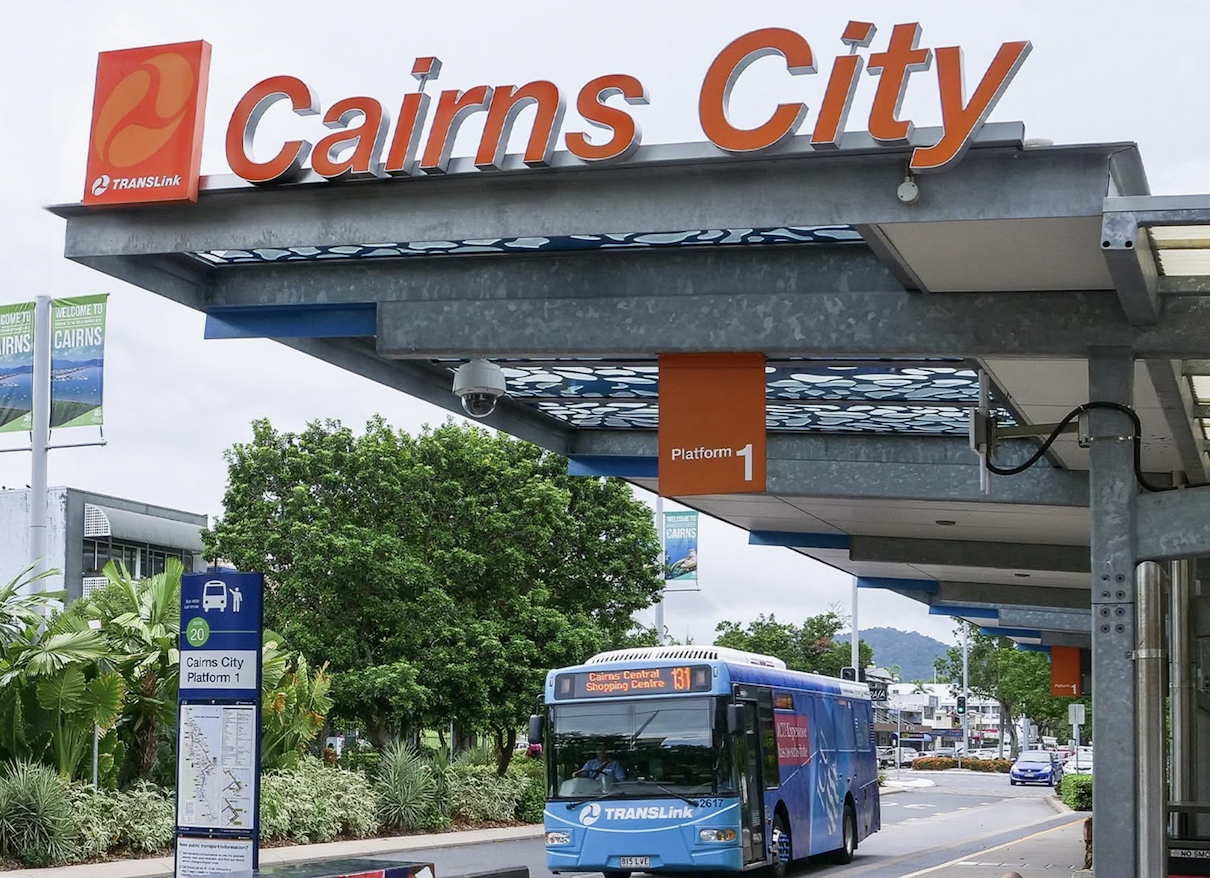
The Line 100 will notably run along Lake Street and will serve several important points in Cairns, including Cairns Hospital, Cairns City Station, and Cairns Lagoon.
This area is near numerous hotels. According to official information, around 140 hotels as well as several tourist attractions will be accessible within a few minutes’ walk of the line’s various stops.
The new connection will also allow travelers to join the rest of the Cairns regional public transport network.
The Queensland Transport Minister, Brent Mickelberg, says this new service meets a demand voiced for years by residents and tourism professionals. Cairns welcomes millions of visitors each year, but until now did not have a direct and affordable public transport link between its airport and the city center.
The fifty-cent fare aligns with the Queensland government’s pricing policy. This flat fare is applied consistently to TransLink urban buses across the Cairns region.
Several autumn events scheduled
This new service arrives as Cairns and its region prepare to host multiple cultural and musical events in the coming weeks.
On September 6, Carnival on Collins will transform Collins Avenue into a huge street party. More than 200 stalls, street food, concerts, street performances and crafts are planned for this Father’s Day Australia-wide event.
On September 12, the Yarrabah Music and Cultural Festival will spotlight the traditional culture of the Gunggandji. Held in Yarrabah, near Cairns, the festival began in 2012 with the aim of reviving the locality’s brass-band tradition. The event is free to attend.
From October 8 to 11, the Savannah in the Round festival will bring together regional, Australian, and international artists around country, rock, and blues. The festival will take place at Mareeba Rodeo Grounds, about an hour’s drive from Cairns, and will include multiple stages, camping areas, and food stalls.
Finally, the Cairns Pride Festival will run from October 9 to 25. Promoted as the region’s largest LGBTQIA+ event in tropical northern Queensland, it will feature several parties and performances, including a Tropical Pride Party set in a beach-style atmosphere.
Published by Amelia Brille TourMaG.com Editor See all articles by Amelia Brille
The Assas Hotels group officially announces the opening of Soléo Prado, its second Marseille address located just steps from the iconic Velodrome stadium.
Following the July 2025 inauguration of RockyPop in Marseille, the operator continues its expansion in the South of France by radically transforming a former Citadines hotel residence.
This ambitious project, led by project manager and director Philippine Razou, required nine months of comprehensive renovation to adapt the building to the evolving uses of modern hospitality.
Located at 9/11 Boulevard de Louvain, in immediate proximity to major transit routes and the Parc Chanot exhibition center, the hotel offers a flexible 98-key proposition, distributed among standard, superior, and executive rooms, as well as 18 apartments and studios equipped with kitchenette areas. This diversity enables it to welcome long-stay business travelers as well as families and groups of friends up to five people.
A design inspired by Marseille’s identity
The interior architecture, entrusted to Marie-Paule Clout, founder of the Noir Nuance agency, draws directly from the light and the Marseille way of living. The color palette revolves around hues of pastis yellow, calanque green, terracotta red, and azure blue.
The materials favor authenticity with an omnipresence of linen, raffia, raw or glazed terracotta, and light woods.
From the entrance, living spaces invite conviviality through a large lobby equipped with a self-service honesty bar offering coffee, syrups, and herbal teas.
At the rear of the establishment, a tree-lined terrace surrounded by flowering laurels provides a true calm cocoon away from the urban hustle and bustle. A fully equipped fitness room and a generous breakfast buffet blending homemade cakes and savory flavors complete the offerings.
Sustainable management on a daily basis
Soléo Prado integrates an environmental and social approach in line with the guidelines of the Assas Hotels group. The establishment aims to obtain the Green Key Label as well as a positive assessment via the FairScore audit by 2027. Concrete actions unfold daily through combating food waste, monitoring energy consumption, and promoting short supply chains.
In a biodiversity-preservation approach, the hotel has also banned nearly all of its cleaning chemicals in favor of an ozonated water system.
The property features an underground private parking with electric vehicle charging stations and a reception that is open around the clock.
Pricing positioning: the end of the puzzle for traveling families
The opening of Soléo Prado by the Assas Hotels group marks the introduction of a highly agile business model in the heart of Marseille’s Prado district.
The hotel offers family rooms with bunk beds or interconnecting rooms linked by a private vestibule that isolates noise. It maintains a very accessible average rate, typically between 120 and 130 euros per night for five people, excluding exceptional events.
For its business clientele and for hosting professional seminars, management chose not to invest in constructing bulky internal meeting infrastructures. The hotel has thus entered into a win-win commercial agreement with a local association located in office buildings facing the property.
The hotel rents and valorizes the workshops and meeting rooms of this organization when they are unused, allowing companies to lodge their staff at Soléo Prado while working just a stone’s throw away.
The story of Philippine Razou: from a life change to leading a hotel
Philippine Razou didn’t fall into the hotel industry right away.
This former Parisian chose to leave a permanent contract after business school and four years in human resources to pursue this sector out of passion.
Driven by a strong desire to undertake, she first learned the ropes of operational roles on the ground at a four-star property in Paris.
It was while exploring new opportunities that she seized the chance to partner with the Assas Hotels group to revive this former Citadines hotel residence, whose transformation potential immediately captivated her.
Philippine Razou thus led the nine-month construction as project manager, working in close collaboration with the management group throughout the renovation phase before officially taking the helm of the hotel for its opening.
In southern Italy, Taranto is a city that reveals itself just as much by wandering its winding streets as by sailing out to sea. Behind its appearance as a tranquil Italian town lies an ancient history, deeply linked to the waters that surround it. Over the centuries, one animal has even become one of its most recognizable symbols. To understand why, one must go back in time… and then set sail.
The second city of Puglia, Taranto stretches along the gulf that bears its name, in that part of the Ionian Sea that forms the “heel” of the Italian boot. Its history goes back to antiquity: the city is said to have been founded by Spartan colonists in the 8th century BCE and became one of Magna Graecia’s principal cities.
Taranto, a Greek city oriented toward the sea
To discover its history, head to Città Vecchia, the historic center, perched on a small island between two arms of the sea and connected to the city by bridges. As you stroll its lanes, visitors encounter notably the remains of the Doric Temple of Poseidon, considered the oldest Greek temple still visible in Apulia, as well as the San Cataldo Cathedral, whose origins go back to the 11th century. Further on, the Aragonese Castle recalls another period of Taranto’s history, when the city held a strategic position on the edge of the Mediterranean.
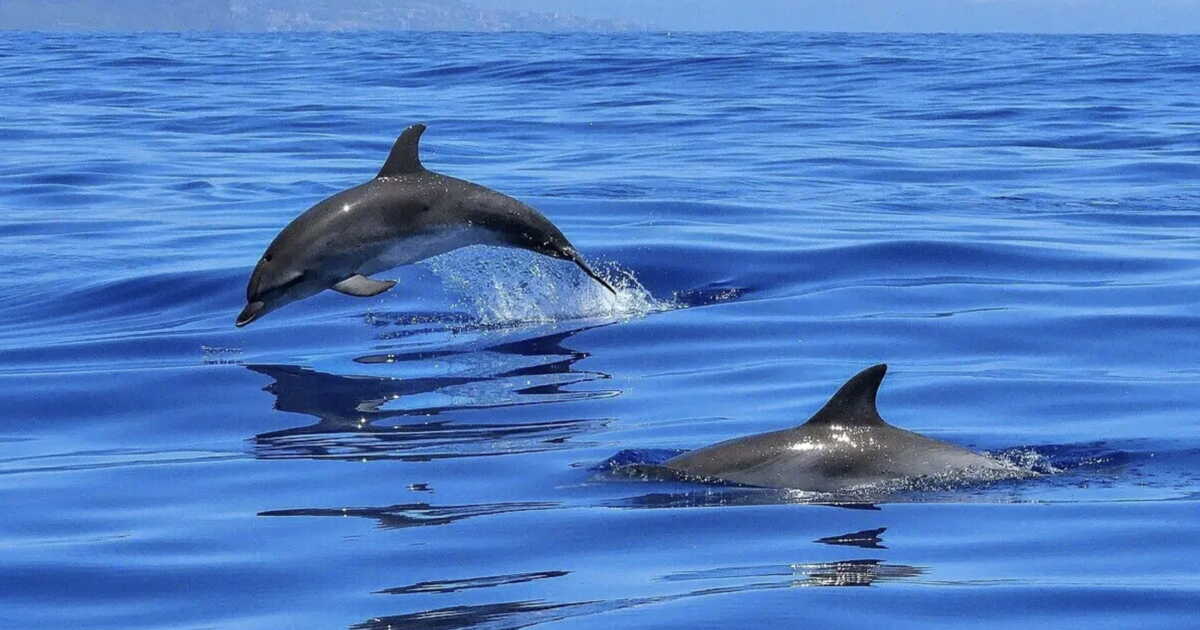
But one animal is omnipresent in the local heritage: the dolphin. According to legend, Taras, the son of the sea god Poseidon, was saved from a shipwreck by one of these cetaceans, which carried him to the shores of the peninsula. Taras would then found the city, which took his name, later becoming Taranto. Over the centuries, the dolphin has itself become a recurring motif of Taranto, depicted on ancient coins, statues and figurines, as well as on the city’s coat of arms.
Dolphins Still Abundant
And this presence is far from being merely mythical heritage. In Taranto’s gulf, thousands of dolphins still frequent the warm waters of the Ionian Sea. Several species are observed there, notably bottlenose dolphins, blue-and-white dolphins, and common dolphins. From the ramparts of the old town, luckier visitors can sometimes catch sight of their silhouettes leaping offshore.
For travelers who wish to observe them more closely, boat trips are organized in the gulf. The Jonian Dolphin Conservation association, founded in 2009 by marine biologist Carmelo Fanizza, offers participants the chance to take part in scientific observations. The passengers are not mere spectators; they can help record observations and gather information about the animals encountered.
“Our project is a citizen science project”, explains Carmelo Fanizza to CNN. Participants thus help fund the research conducted on the gulf’s cetaceans, while discovering along the outing a marine environment that is one of Taranto’s great assets.
A Marine Sanctuary for Former Captives
A few kilometers from the city, near San Paolo Island and its former Napoleonic fort, a far more unusual project is taking shape. The San Paolo Dolphin Refuge is set to become the first marine sanctuary in Europe dedicated to dolphins that have lived in captivity. The site covers seven hectares delineated by buoys. It features underwater cameras, sensors that measure water and air quality, as well as a hydrophone intended to monitor underwater noise. An artificial intelligence system will analyze these data and alert biologists in case of anomalies.
The project addresses a problem that has grown particularly concrete in France, where the prohibition of cetacean shows is set to take effect in December 2026. The gradual closure of aquatic parks indeed leaves a pressing question: what to do with the dolphins who have spent their lives in tanks and cannot be released directly into the ocean? “The French government has taken a very important step by closing facilities, or facilitating the closure of certain structures. But the problem is that no one has a solution in mind, because if you close a facility, you must find a solution for the animals that are there”, says Carmelo Fanizza.
The refuge would first welcome a small family group, to observe its adaptation to this new environment and to refine the operation of the site. The dolphins will notably be able to reclaim aspects missing from artificial tanks, such as fish, the seabed, and the sand. The refuge, however, will not be open to visitors. To discover the animals and follow the researchers’ work, tourists can go to Ketos, the center devoted to the sea and to cetaceans located in Taranto’s old town.
An observation area equipped with large screens will allow remote monitoring of the refuge’s dolphins and the on-site research. This initiative also accompanies Taranto’s transformation, long associated with its steel industry. As the city seeks to develop a new tourist image, its dolphins could well become one of the symbols of this metamorphosis.
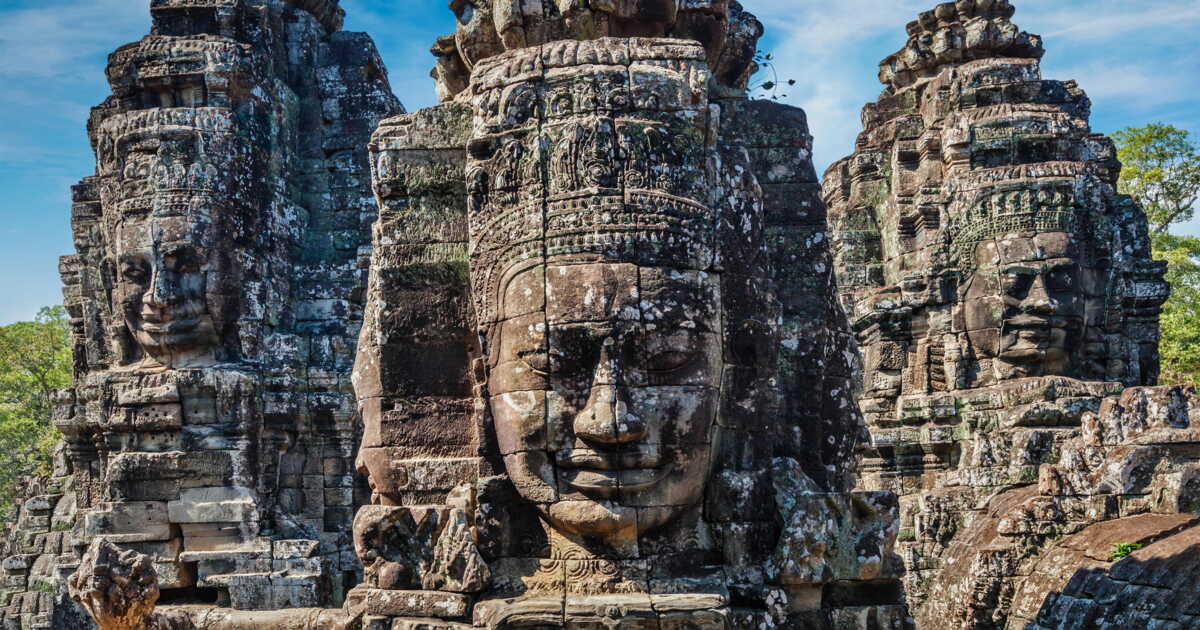
It’s a journey that leaves a lasting imprint. For no one escapes the enchantment of the world’s greatest archaeological site, with its hundreds of temples spread across 402 square kilometers (four times the area of inner Paris). Angkor denotes above all a megacity—the religious, economic, and political heart of an empire of builders that shone from the 9th to the 14th century through its refinement and its audacity. To erect the single temple of Angkor Wat, five million tons of sandstone were required—a mass comparable to the Great Pyramid of Khufu in Egypt. Between olive-hued lakes, colossal carved faces, bas-reliefs of dancers and mythical animals, every detail responds to cosmic codes where the influences of Hinduism and Buddhism intertwine…
The Secrets of Angkor
And this sanctuary is nothing like a museum. The Cambodians practice prayers and rituals there; everywhere in the corridors monks light incense—a continuity that gives these places their soul. When you go there early in the morning, aboard a tuk-tuk, you feel like Henri Mouhot, the man who introduced the site to Europe in the 19th century. Then you wander along the two circuits of the archaeological park, classified in 1925, to admire the most famous edifices. You should stay here for at least three days, ideally five, to stroll through the less-known temples, sometimes nearly deserted, and to experience unprecedented moments. And to enjoy a pleasant surprise: Siem Reap, a friendly and creative city with a living craft heritage inherited from Angkor’s golden age. Enjoy your discovery!
Our tips for a serene visit
Entrance Pass: how does it work?
Nominal with photo, the pass, valid for one, three or seven days, is often purchased online or via the Angkor Pass app. But the paper pass, adorned with a beautiful image of the site and written in Khmer, makes for a far nicer souvenir! To obtain it, head to the central gate of the archaeological park, 4 km from Siem Reap. Preferably the day before, after 16:45, to enjoy an extra evening: with the pass dated for the next day, you can enter Angkor the same evening without it counting as a day! angkorenterprise.gov.kh
The time needed to explore without stressing
Plan for three days to cover the two main routes (the Small Circuit, 17 km, and the Grand Circuit, 26 km), plus a few outlying sites. Four to five days is better! And abandon the idea of seeing everything. Even Angkor Wat alone deserves three to four hours to wander the galleries with their 800 metres of carved reliefs.
Crowd-busting tips
To visit Bayon, in Angkor Thom, go at 7:30 am. For an hour you’ll be one-on-one with nearly 200 faces with enigmatic smiles. For Angkor Wat, have an early lunch, then head there from noon, in a relaxed mood. As for Ta Prohm, temple built in 1186 by Jayavarman VII in memory of his mother, and entangled by the roots of giant fig trees, aim for late afternoon. Best entry: the East Gate, often neglected.
Tuk-tuk, user guide
For 20 to 30 dollars per day, and a maximum of four passengers, it’s the most practical way to explore the site. The tuk-tuk picks you up at the hotel in the morning, waits in front of each temple, and brings you back in the evening. To choose your driver, nothing beats a little interview on the sidewalks of Siem Reap. To verify that he speaks a bit of English, or even French—there are some! A 5-dollar supplement for very early departures.
Interactive maps to see everything without getting lost
The official Angkor Pass app is very well made, with its interactive map showing all the temples, the hours, and explanatory notes (in English). Another essential: The Map, a very clear paper plan, equipped with a useful chronological timeline, distributed free of charge in hotels, cafés, etc. On the map, a QR code links to a digital version, which is full of “good tips.” themapcambodia.com
They helped us produce this report
Specialists in Cambodia, Les Maisons du Voyage invite you to follow in the footsteps of our reporters, with a thirteen-day and ten-night itinerary, from 2835 euros (flights, accommodations, visits and a French-speaking guide included). From Kampot to Siem Reap, far from the beaten paths, this journey recounts the glorious hours of the gods-king of Angkor. On the program: lesser-known archaeological sites, isolated villages with ancestral traditions, and encounters with the Khmer people, who are reconnecting with their priceless heritage. Committed to responsible tourism, the local partner ensures that each trip benefits Cambodian communities and the preservation of the heritage. maisonsduvoyage.com
➤ Article published in GEO magazine No. 570, “Cambodia,” August 2026.
➤ Do you love GEO? Then to miss nothing, discover our subscription plans to receive GEO at your home every month with ease.
Nestled on the eastern coast of Australia, Sydney is a vibrant and dynamic city, seamlessly blending modernity with a rich historical heritage. World-renowned for its opera house and the Harbour Bridge, it also welcomes a culturally diverse tapestry and a multitude of unique experiences for visitors. Whether your stay is brief or extended, planning the best possible activities to fit your timeframe and budget is essential. What to do in Sydney? Let’s explore together, through a variety of ideas, the treasures this Australian metropolis holds.
1. Visit the Sydney Opera House
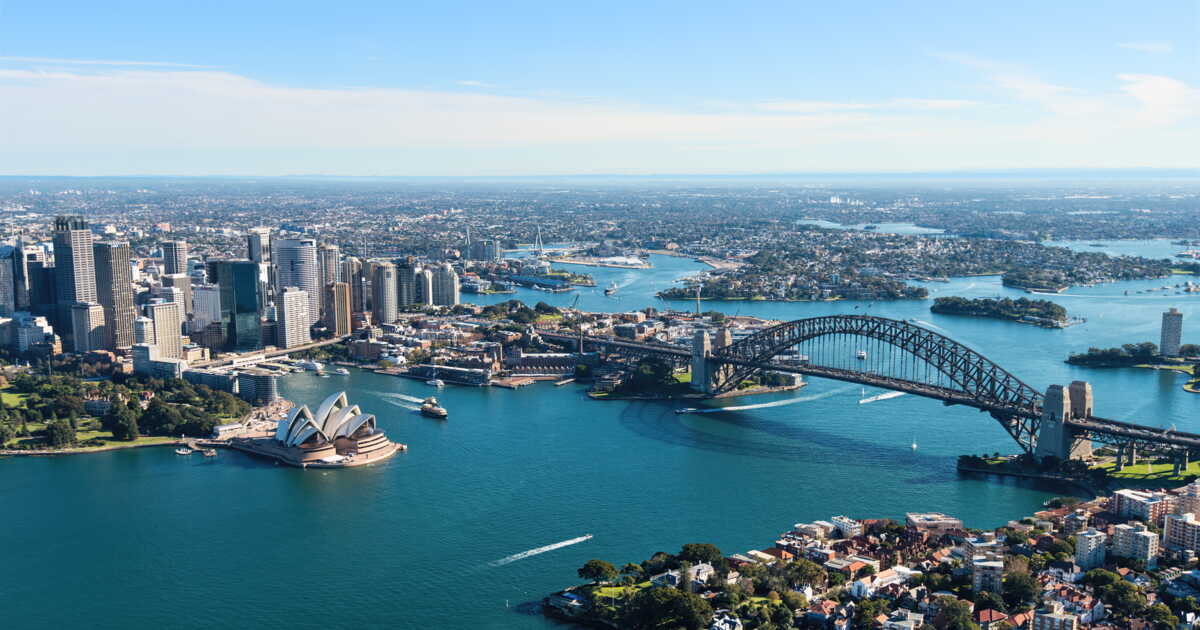
Beyond its iconic status, the Sydney Opera House stands as a cornerstone of any visit to Australia’s principal city and a major cultural landmark for the entire Oceania. A UNESCO World Heritage site, this emblematic 20th‑century structure embodies architectural innovation in its complex design and the bold silhouette shaped like sails. For travelers interested in architectural history or the performing arts, a guided interior tour reveals the technical challenges of its construction and opens access to the performance spaces, the backstage areas, and the technical galleries.
The experience can be extended by attending one of the numerous music, theatre, or dance performances offered throughout the year, making it a true hub where aesthetics, engineering, and contemporary creation converge. The Sydney Opera House integrates into a broader discovery itinerary of the city, alongside the Harbour Bridge, the botanical gardens, and iconic coastal sites like Bondi Beach, illustrating the balance between cultural heritage and natural surroundings in Australia’s tourism landscape.
2. Discover the Harbour Bridge
For travelers in search of a structured yet immersive urban experience, climbing to the summit of the Harbour Bridge in Sydney, via the guided BridgeClimb route, is an iconic activity offering sweeping panoramic views of the city, its bay, and major architectural landmarks such as the Sydney Opera House. This secured route is available in multiple formats, enabling visitors to understand the bridge’s technical features and its role in urban development.
For those who prefer a less physically intensive or logistically integrated approach to a walking itinerary, crossing the bridge on foot remains a relevant option. It allows admiring the bridge’s imposing architecture while gaining expansive views over the harbor, quays, and surrounding urban silhouettes. This site, now a symbol of national identity for Australia, sits at the heart of Sydney’s cultural and landscape infrastructures, bridging industrial heritage, active tourism, and contemporary urban space valorization.
3. Explore the Rocks
The historic district The Rocks, perched at the foot of the Harbour Bridge in the old heart of Sydney, is an essential stop for travelers looking to grasp the colonial origins of Australia. With its cobbled lanes, 19th‑century sandstone buildings, and ancient pubs, this area preserves an urban fabric that bears witness to the region’s earliest European settlements.
The Rocks is a preferred promenade, offering structured access to several cultural institutions, including museums that recount the social and urban history of the city, as well as guided heritage routes. Weekend artisan markets showcase a diverse array of local products, from textile crafts to contemporary design objects, all within a lively ambiance. This pedestrian environment, dotted with cafés, galleries, and quirky shops, embodies living heritage by balancing historical memory with cultural dynamism.
4. Relax at Bondi Beach
Bondi Beach, one of Sydney and Australia’s most iconic beaches, is a must for travelers seeking seaside activities within a structured and accessible setting. Its waves are renowned for consistency and power, attracting seasoned surfers and beginners alike, who can join local surf schools. Beyond surfing, Bondi is defined by a relaxed, friendly vibe, a strong local presence, and a thriving commercial fabric of cafés, restaurants, galleries, and community spaces.
Bondi is also the starting point for one of the region’s most beloved coastal walks, the Bondi to Coogee Walk, which traces clifflines and offers panoramic coastal views while linking several beaches and coves. This natural, safe, well-equipped environment provides diverse possibilities: swimming, sunbathing, sea‑view observation, or participation in sporting and cultural events. Integrated into an urban itinerary that includes major sites like the Sydney Opera House, the Harbour Bridge, or the neighborhood of The Rocks, Bondi Beach completes Sydney’s tourist offering by combining leisure, accessibility, and coastal promotion within a framework of urban and environmental quality.
5. Stroll through Darling Harbour
Darling Harbour, located along the edge of central Sydney, stands as a major hub of urban tourism and culture, designed as a true centre of entertainment with a wide range of offerings for a broad public. This redeveloped district features a cluster of modern attractions, including the Sea Life Sydney Aquarium, which delivers a structured exploration of Australian marine life through immersive installations. The lineup also includes several museums, cultural institutions, shopping complexes, and green spaces, forming a cohesive leisure and services ecosystem.
On the quays, restaurateurs contribute actively to the site’s vibrancy, offering a diversity of cuisines in an open waterfront setting. In the evening, Darling Harbour comes alive with light shows projected on the water and occasional events, boosting its nocturnal appeal within a strategy of enhancing the urban nocturnal landscape. This district, easily reachable on foot from the city centre, naturally fits into an itinerary that includes city landmarks such as the Sydney Opera House, Harbour Bridge, The Rocks, or Bondi Beach, adding a playful and family-friendly dimension to exploring Sydney, by connecting culture, entertainment, and urban energy.
6. Explore museums and galleries
Culture enthusiasts will find Sydney rich in museum offerings, centered around institutions that allow exploration of both artistic heritage and natural history of Australia. The Art Gallery of New South Wales, one of the country’s leading public galleries, houses a permanent collection spanning Australian, European, Asian, and Aboriginal art, while regularly hosting international temporary exhibitions.
Nearby, the Australian Museum, the oldest museum on the continent, focuses on natural sciences, anthropology, and regional biodiversity, with educational displays suited to all ages. These institutions, set in the city centre, blend seamlessly into an itinerary that highlights major Sydney landmarks such as the Opera, the Harbour Bridge, The Rocks, Darling Harbour, or Bondi Beach, adding an intellectual and heritage dimension to the tourist experience, structured around celebrating local cultures, visual arts, and scientific research.
7. Enjoy free activities in Sydney
For travelers looking to discover Sydney while keeping to a budget, the city offers a suite of accessible and varied free activities set within a high-quality tourist offering. A stroll through the Royal Botanic Garden, a vast bayside landscape, lets you appreciate the region’s botanical diversity while enjoying sweeping views of the Sydney Opera House and Harbour Bridge. The coastline invites walking along several routes, notably between Bondi Beach and Coogee, where cliffs, coves, and marine panoramas unfold.
For those interested in urban culture and architectural heritage, the Newtown and Paddington districts offer immersive experiences in contrasting atmospheres: street art murals, independent shops, Victorian houses, and local markets create a lively, accessible tapestry. These free options fit into a broader itinerary that pairs major cultural and natural highlights of Sydney, providing independence, participation, and inclusive discovery through observation, wandering, and authentic city exposure.
8. Navigate Sydney Harbour
Taking a ferry across the Sydney Harbour offers a structured, accessible way to approach the city from a scenic angle, while fitting into maritime transport infrastructure connecting the main coastal locales. The trip to Manly Beach, particularly beloved by travelers, blends efficiency with visual appeal, delivering a succession of iconic viewpoints on the Sydney Opera House, the Harbour Bridge, Circular Quay quays, and nearby coastal neighborhoods. This crossing also aids in understanding Sydney’s urban geography, organized around its natural harbor, while linking to a renowned promenade, shops, and coastal trails. The ferry thus becomes a standalone discovery tool, complementing land and pedestrian circuits that structure the city’s tourism offer. Integrated into an itinerary that includes other destinations such as Bondi Beach, The Rocks, Darling Harbour, and cultural institutions like the Art Gallery of New South Wales, this mode of transport provides a practical, contemplative, and economically accessible experience for a comprehensive exploration of Sydney’s urban and maritime landscape.
9. Take a day trip to the Blue Mountains
For a day trip outside of Sydney, the Blue Mountains offer a premier retreat for travelers seeking nature, altitude, and scenic heritage within a UNESCO World Heritage framework. Located about two hours away by rail or car, this region of New South Wales naturally extends the urban itinerary toward outdoor activities. The Blue Mountains National Park distinguishes itself with a variety of hiking trails winding through eucalyptus forests, dramatic gorges, and steep cliffs.
Key highlights include the iconic Three Sisters rock formations, panoramic lookouts like Echo Point, and altitude botanical gardens showcasing endemic flora. On-site facilities include interpretive centers and marked routes suitable for different fitness levels. This immersion into nature, complementary to city visits (such as the Sydney Opera House, the Harbour Bridge, or The Rocks), enriches the traveler’s overall experience by offering an ecological and geographical reading of the Australian landscape, structured around conservation, accessibility, and scenic observation.
10. Savor the local cuisine
Ending a day in Sydney with a culinary exploration adds a sensory and contemporary reading of the city, anchored in cultural diversity and the quality of local products. Renowned for its seafood freshness, particularly in coastal or bayside districts, Sydney also offers a wide range of international cuisines reflecting its cosmopolitan population. For a thematic gastronomic immersion, the Chinatown district offers a collection of restaurants, stalls, and markets dedicated to East Asian culinary traditions, while Tramsheds in Glebe presents a producer market model in an indoor setting, highlighting short supply chains and artisanal know-how.
These places, woven into the city’s vibrant neighborhoods, help shape a day’s end itinerary that blends tasting, local discovery, and social animation. In addition to daytime activities—whether cultural (at the Sydney Opera House or the New South Wales Art Gallery) or scenic (at Bondi Beach, Darling Harbour, or the Blue Mountains)—these gastronomic experiences contribute fully to Sydney’s plural identity, anchoring the traveler in the daily life of a dynamic metropolis, open and committed to culinary excellence.
Sydney is a city with many facets, ready to be explored at any time of year. From the iconic Opera House to the historic lanes of The Rocks, through the sun-kissed beaches of Bondi, each neighborhood reveals its own set of activities and experiences. Whether you seek relaxation or adventure, this Australian metropolis is sure to meet your expectations, offering a precious memory at every turn. Whether you choose a grand activity or an intimate discovery, Sydney promises a rich and varied exploration, ready to satisfy every visitor’s requirements.
How long does it take to visit Sydney? Building an itinerary tailored to urban and coastal diversity
The city of Sydney can be explored in several formats depending on the ambition of the trip. A stay of 3 to 5 days allows you to discover the essentials: the Opera House, the Harbour Bridge, the Royal Botanic Garden Sydney, and iconic beaches like Manly Beach. For a more immersive experience, a week enables deeper exploration of cultural neighborhoods, museums, markets, and even a few coastal excursions. The density of experiences on offer requires structuring your itinerary around priorities: nature, heritage, art, or gastronomy.
Is Sydney worth it? A metropolis where culture, nature, and architecture constantly converse
Asking whether Sydney is worth it is to assess a city’s ability to balance urban dynamism with access to natural spaces. As Australia’s economic capital, Sydney stands out for the quality of its infrastructure, the richness of its cultural programming, and the immediate proximity to maritime landscapes. Places like Manly Beach, reachable by ferry, or the Royal Botanic Garden Sydney by the port, illustrate this rare coexistence. For architecture and heritage enthusiasts, the Queen Victoria Building (QVB), carefully restored, embodies the city’s history within a living framework. Sydney thus presents itself as a complete destination—clear, varied, and coherent.
What unusual activities to do in Sydney: exploring the city differently, off the beaten path
Beyond the tourist icons, Sydney hides a wealth of unusual activities to weave into a Sydney guide. For example, you can take a surf lesson at Manly Beach, opt for a guided underground tour of the city’s historic tunnel network, or kayak at sunrise in the bay. Some contemporary art galleries tucked away in repurposed warehouses or urban farms set right in the city center offer a fresh perspective on the city of Sydney. These experiences invite you to step off the usual routes while remaining rooted in the local cultural reality.
What to do in Sydney when it rains: indoor itineraries and sheltered cultural discoveries
Even in the rain, Sydney presents a rich set of activities well suited to shelter and exploration. The Queen Victoria Building (QVB), a historic shopping arcade, pairs architectural exploration with covered browsing. Art, history, or natural science museums welcome visitors inside spaces suitable for all ages. The Royal Botanic Garden Sydney, while still accessible, takes on a different, calmer dimension under inclement weather, offering a serene space for contemplation. These places show that rain does not hinder discovery; it simply guides you toward another facet of the city.
What to do in Sydney in 2 days: a concise essentials for a short but dense stay
A 2-day stay in Sydney requires targeted choices. Day one could focus on exploring the Opera House, the Royal Botanic Garden Sydney, and a ferry crossing to Manly Beach, combining heritage, nature, and iconic viewpoints. Day two could be oriented toward museums, the Queen Victoria Building, or a stroll through The Rocks. Even in a brief timeframe, it’s possible to gain a coherent sense of this Australian city’s identity by adopting an efficient itinerary.
What to do in Sydney for free: accessible experiences in an open city
Sydney offers a range of free activities, including visits to the Royal Botanic Garden Sydney, public beaches like Manly Beach, and coastal walks such as the Bondi to Coogee Walk. Access to national galleries, artisan markets, and occasional cultural events also allows for city discovery without charge. These opportunities outline a generous and accessible destination, even without a large budget.
What to do in Sydney in the evening: urban lights and a dynamic cultural scene
When night falls, Sydney reveals a unique atmosphere where public spaces, cultural venues, and lively districts come alive. Evening strolls around Circular Quay or Darling Harbour offer iconic nocturnal panoramas. Numerous theatres, open-air cinemas, and concerts enrich the nights, while the illuminated Queen Victoria Building (QVB) remains a powerful visual landmark. As night deepens, the city does not slow down: it morphs into a more intimate and animated environment, inviting travelers to extend their discoveries with a vibrant urban energy.
This article was written with the help of artificial intelligence, then corrected, expanded, and validated by the editorial team.
Nestled in the northwest United States, Seattle captivates with its fusion of nature and urban life. Known for its breathtaking landscapes, renowned cafés, and historic contributions to music and technology, the city offers a multitude of activities to explore. Whether you’re in Seattle for a day or longer, there’s always something to discover. So, what to do in Seattle?
1. Space Needle
The Space Needle is undoubtedly one of Seattle’s most iconic architectural landmarks. Built for the 1962 World’s Fair, it offers a panoramic view of the city, its surrounding mountains, and the maritime scenery. Visitors can access an observation deck and explore interactive exhibits. Plan your visit early in the morning or late in the day to avoid crowds, and enjoy the sunset if the weather allows.
2. Pike Place Market
Pike Place Market is more than just a market; it’s an immersive experience. Open for over a century, this market is teeming with fruit and vegetable stands, lively fishmongers, and artisanal products. Additionally, you can visit the oldest Starbucks still in operation, often presented as the first, though the very first historical location was at 2000 Western Avenue from 1971 to 1976. For food lovers, don’t miss tasting local specialties while wandering between the stalls.
3. Chihuly Garden and Glass
Adjacent to the Space Needle, the Chihuly Garden and Glass is dedicated to Dale Chihuly’s glass art. This museum houses an impressive collection of vibrant and innovative works. The sculptures harmonize perfectly with the garden, offering visitors a unique aesthetic stroll. This venue is especially valued for its creativity and its harmonious integration with the landscape.
4. Museum of Pop Culture (MoPOP)
The Museum of Pop Culture, also known as MoPOP, celebrates the richness of popular culture, spanning music to science fiction. Temporary and permanent exhibits explore a wide range of themes, sometimes unexpected, with often interactive elements that make them captivating. Music enthusiasts, in particular, will enjoy tributes to influential artists like Jimi Hendrix and to bands such as Nirvana and Pearl Jam.
5. The Waterfront and Ferries
Strolling along Seattle’s Waterfront means enjoying the sea air and the splendid views of Elliott Bay. Ferries are a popular and picturesque way to reach destinations like Bainbridge Island or Bremerton. These crossings also offer a glimpse of the city from the water, providing a different angle on its skyline.
6. Discovery Park
With 217 hectares, Discovery Park is Seattle’s largest urban park. It combines beaches, cliffs, and woods to offer a superb setting for outdoor lovers. Hiking trails wind through the park and lead to spectacular viewpoints. It’s a perfect space for a quiet stroll or a contemplative picnic in nature.
7. Fremont Troll
For a glimpse of Seattle’s public art, head to the Fremont Troll. This imposing sculpture hides beneath the George Washington Memorial Bridge and grips a real Volkswagen Beetle in its hands. Fremont, the neighborhood that hosts it, is also known for its vibrant arts scene and lively flea markets, perfect for an afternoon of alternative discovery.
8. Kerry Park
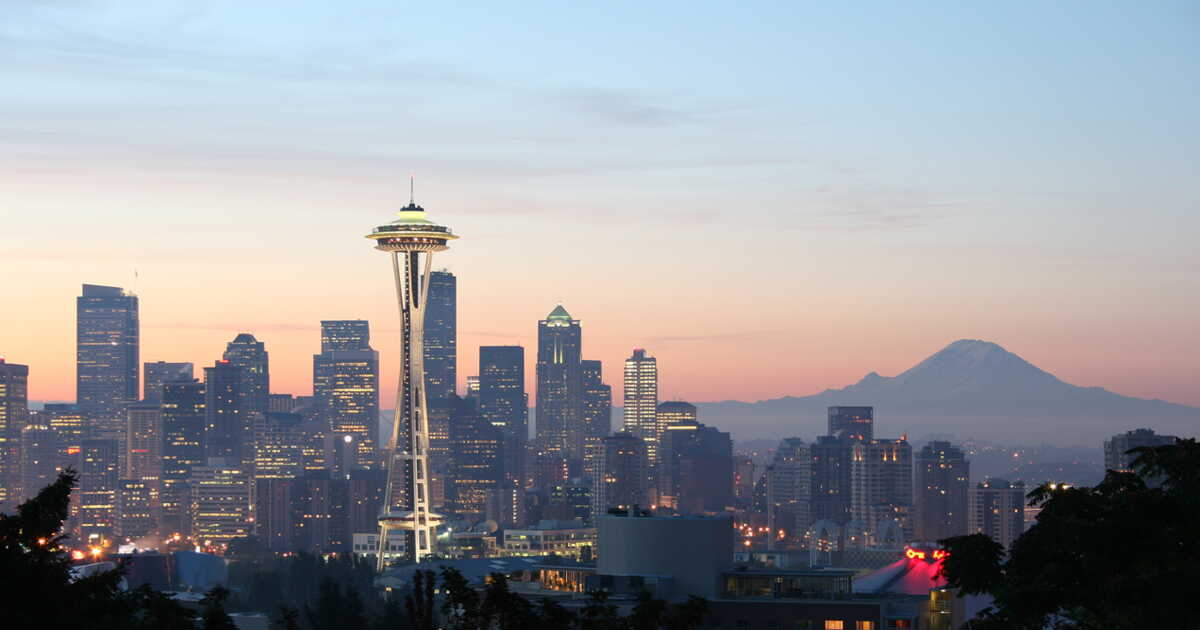
Kerry Park, perched on Queen Anne Hill, offers an iconic vantage point over downtown and Puget Sound, with the Space Needle in the background and sometimes Mount Rainier on the horizon. For a calm visit, choose a hotel in the city near the Queen Anne area, then reach Kerry Park in a few minutes. The panoramic experience also captures the vibe of this neighborhood, and visiting at sunset will let you grasp the essence of Seattle: a metropolis in close contact with nature.
9. Sky View Observatory
The Sky View Observatory, located right in the city center, represents an essential experience for grasping Seattle’s vertical dimension: skyscrapers and a panoramic view of the city and its surroundings. Staying in a nice hotel in the heart of downtown makes this visit easily accessible. The “Seattle sights” from this observatory offer a perspective of the city from another angle and serve as an alternative or complement to the ascent of the Space Needle.
10. Alki Beach
For a more serene moment away from the city center, Alki Beach is an excellent choice. Located on the southwest shore of Puget Sound, it offers a relaxed waterfront and a different vibe from the urban buzz. You can stay in a hotel in the city and plan a half-day trip to Alki Beach to stroll along the water, breathe the sea air, and enjoy the contrast between city and nature.
11. Pioneer Square
Pioneer Square, the city’s cradle, is a rich stop for history enthusiasts. Located at the southern edge of downtown, it houses galleries, cafés with distinctive atmospheres, and the famous Gum Wall—a local curiosity. Staying in a nearby hotel lets you walk to explore the neighborhood, sample local products, and immerse yourself in an urban atmosphere that contrasts with greens spaces or maritime views.
Seattle offers an impressive variety of activities and experiences for visitors. From the famous Space Needle to the charming Ballard locks, to the hidden treasures of the quirkier neighborhoods, every corner of the city hides unique pleasures to explore. Whether you’re passionate about culture, gastronomy, or outdoor adventure, Seattle has something to satisfy all your discovery desires.
How many days to visit Seattle?
To fully enjoy the big city that Seattle is, a stay of three to four days is recommended, in order to explore the heart of the metropolis, its museums, its waterfront, and its iconic neighborhoods. With only two days, you can cover the must-see sights—but a third day allows you to include a visit to Lake Union, the Capitol Hill district, or a ferry trip on Puget Sound.
The choice of hotel in the city, either downtown or on the waterfront, will facilitate access to museums, Seattle tours, and public transportation. Staying longer also makes a road trip to the southern part of Washington state or to the nearby mountains feasible.
In short: plan three to four days for a balanced visit to Seattle, including culture, nature and urban vibes.
Why is Seattle Known?
Seattle is primarily famed for its city emblem, the Space Needle, but also for world-renowned museums such as the Museum of Flight or the Experience Music Project, which embody the technological and cultural rise of Washington State.
Its downtown area, located near the waterfront along Puget Sound, combines museums, lively neighborhoods, and historic districts (notably Pioneer Square), making it an iconic city of the Pacific Northwest.
Moreover, Seattle’s vibe is marked by innovation, local coffee specialties, a strong art scene, and easy access to grand natural spaces: mountains, the Pacific Ocean, and lakes. All these assets explain its fame beyond the United States.
What is the best time to go to Seattle?
To visit Seattle in optimal conditions, July and August offer the driest, sunniest days, ideal for outdoor strolls in the city and along the Puget Sound shorelines. To avoid crowds while still enjoying pleasant weather, April–May and September–October are interesting alternatives, often with softer hotel and restaurant prices. Conversely, if your visit focuses mainly on museums, indoor experiences, and urban ambiance, winter can also present more affordable prices in Seattle, but the weather will be cooler and wetter.
What to do in Seattle with kids?
Seattle is very family-friendly, with experiences suitable for children: the Museum of Flight (an aviation museum) or the Seattle Aquarium at the waterfront offer a mix of scientific immersion and fun. You can also combine visits to Capitol Hill, walks along the water, or a ride up the Space Needle for a panoramic view of the city and its mountains. Kids will also enjoy neighborhoods like Pioneer Square or the central green spaces to vary the pace.
What to do in Seattle when it is raining?
When the weather is capricious, Seattle remains rich in cultural options: the Experience Music Project, the Museum of Flight, or the Chihuly Garden & Glass offer covered and educational activities.
Focusing on museums, iconic Pike Place Market cafés, or even staying in a city hotel to enjoy the urban vibe without having to cross many winding streets or face the rain, is a good idea.
Additionally, historic neighborhoods like Pioneer Square or a waterfront stroll can be considered under an umbrella: the experience stays rich, and the coast from the Puget Sound docks still offers interesting perspectives even beneath grey skies.
This article was drafted with the help of artificial intelligence, then edited, expanded, and validated by the journal’s editors.
What if, for once, we put aside the Keys, the Everglades, the amusement parks and Miami to head north toward the Sunshine State? As we wander into this lesser-known region, the landscape shifts. And a different Florida unfolds before us. More authentic, warm, and wild. The Florida of crystal-clear springs and ancient forests invites the traveler to an unexpected experience.
Ocala is the principal city of Marion County, in central Florida. Located 115 km from Orlando and less than 200 km from the Georgia border, it is renowned as the world capital of horses. But the region also hosts a high concentration of natural springs, fed by the Floridian aquifer. Among the most notable are Silver Springs State Park, the cradle of Floridian tourism, and Silver Glen Springs, tucked in the heart of Ocala National Forest.
Manatees and Cinema in the Clear Waters of Silver Springs State Park
As early as the 1870s-1880s, visitors began to flock to Silver Springs, today designated as a state park, a vast complex of more than 30 natural springs whose waters, exceptionally transparent, erupt at over 2,000 liters per second.
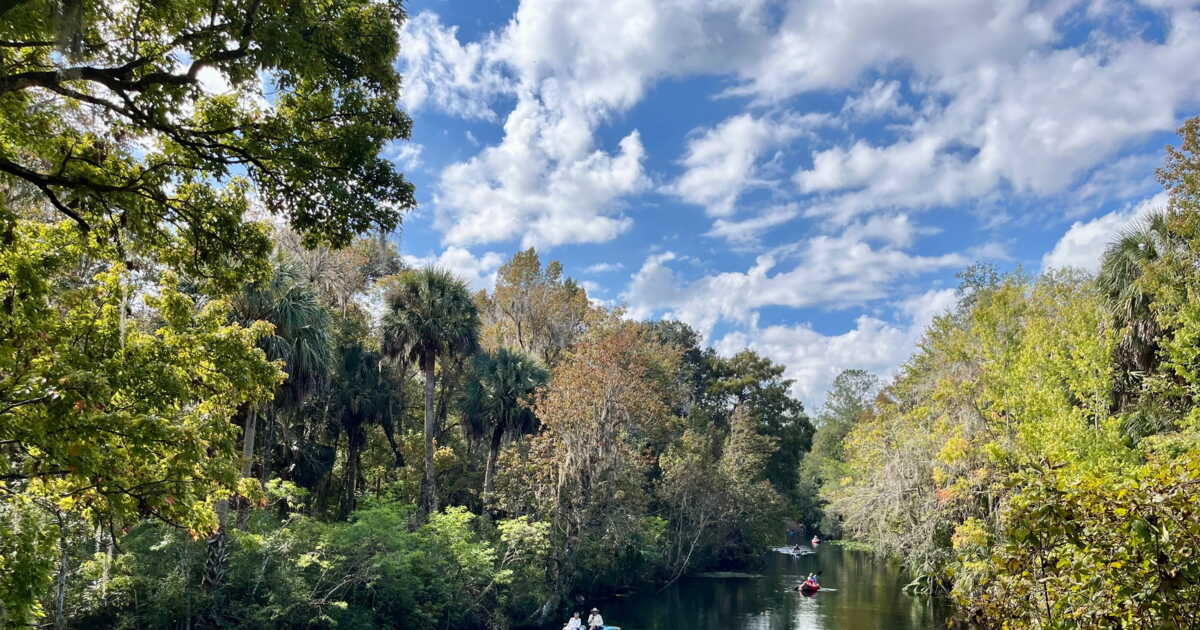
The springs became one of Florida’s earliest major tourist attractions, and their appeal has never waned. It is enough to pass through the park’s grand entrance gate to understand this enthusiasm. The turquoise water winds through a dense forest where sand live oaks, red maples, but also the famous bald cypress trees, symbols of the swamps of the southern United States. This scenery is home to abundant wildlife: alligators, turtles, wading birds and, more surprisingly, rhesus monkeys, introduced in the 1930s to create an exotic attraction.
The best way to discover the park? Kayaking, of course, but especially the glass-bottom boat, whose origins go back to the late 19th century. The craft glides slowly and one marvels at the clarity of the water, which reveals schools of fish and waving grasses. But the creature you’re looking for is the king of the place: the manatee. A moment after catching a glimpse of this slow-swimming herbivore, it has already disappeared, leaving us with a racing heart.
Silver Springs has all the trappings of a movie set, and Hollywood hasn’t missed it. No fewer than about twenty films have been shot here, from Rebel Without a Cause with James Dean, to the James Bond Moonraker, passing through several Tarzan films and The Creature from the Black Lagoon by Jack Arnold. And you might be surprised, as you look beneath the water, to spot historical artifacts but also shooting remnants. A real underwater world.
Glass-bottom boats are the park’s main attraction at Silver Springs
Silver Glen Springs, a Lost Paradise
About fifty kilometers further east, we arrive at Silver Glen Springs, a treasure tucked into the heart of Ocala National Forest. Silver Glen Springs is a karst spring, meaning it originates from a limestone relief where water has circulated and seeped into the rocks before surfacing. Born from Florida’s deep aquifer, the site is popular with snorkelers, kayakers, and families seeking a pleasant place to swim.
The luckier visitors may spot manatees, snakes, alligators and, exceptionally, brown bears. Silver Glen Springs is also home to a rich avifauna, and it is not uncommon to encounter blue herons, egrets and American black vultures (urubus noirs), whose ominous silhouettes contrast with the color of the water.
Yet it is pleasant to leave the swimming area for a moment and delve into the forest, under a canopy of palms, to Lake George, the second-largest lake in Florida. If the walk is short (the loop is only 4.8 kilometers, about an hour of walking), the change of scenery is immense. The trail offers splendid views of shores lined with cypress and the crystal-clear waters where turtles swim. Hard to leave this timeless place, a true lost paradise where nature rules. The visitor then treads softly away, lulled by the song of invisible birds.
This reportage was made possible by Visit Florida and the Ocala/Marion County Visitors & Convention Bureau.
Alexandria, Egypt’s second-largest city, perched on the shores of the Mediterranean, is a destination rich in history and culture. Founded by Alexander the Great, Alexandria has long been a beacon of culture and science in antiquity. Today, the city teems with fascinating sites, blending ancient ruins with modern life. But what is there to do in Alexandria? Let us explore the activities that will captivate both curious travelers and history buffs.
1. Explore the New Library of Alexandria
The Bibliotheca Alexandrina, the modern reincarnation of the ancient Library of Antiquity, presents itself as an iconic cultural hub. With its striking architectural design, it houses millions of books and several museums and rotating exhibitions. Visiting this library is a dive into universal knowledge and a reflection on the city’s historical role in disseminating learning.
2. Descend into the Kom el Shoqafa Catacombs
The Kom el Shoqafa Catacombs are a fascinating testament to a period when three cultures – Egyptian, Greek and Roman – intertwined. These underground galleries were used as a necropolis and offer a unique perspective on the mingling of religious and artistic influences. Every wall and corner tells a story of ancient rituals and shared beliefs.
3. Admire the view from the Qaitbay Citadel
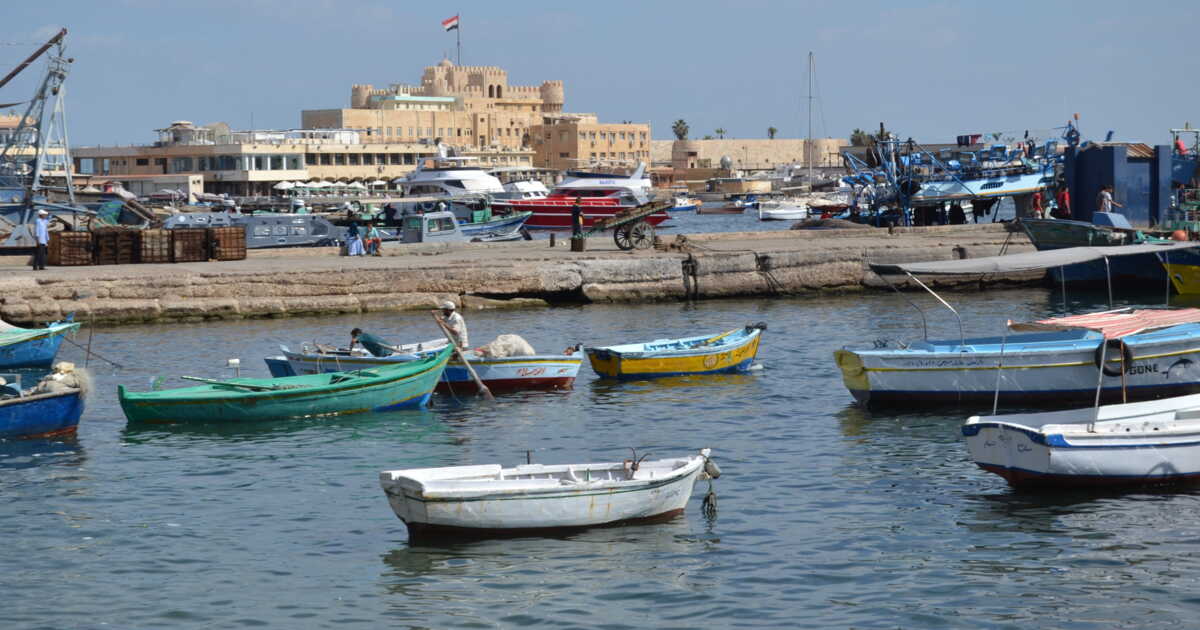
Erected on the site of the old Lighthouse of Alexandria, the Qaitbay Citadel once defended the city against seaborne invaders. Today, it offers not only a glimpse of medieval military architecture but also a breathtaking view of the harbor and the Mediterranean. Roaming within its walls is a journey through time, while enjoying the sea panorama.
4. Stroll along the Alexandria Corniche
The Alexandria Corniche is an iconic waterfront promenade. It invites leisurely walks cherished by locals and visitors alike. It’s the perfect place to feel the sea breeze and watch sunsets. Along the way, one can stop at a café to savor local specialties while observing the hustle and bustle of everyday life.
5. Discover the Alexandria National Museum
This museum is more than a simple exhibition space; it’s an immersion into the city’s history and its multiple civilizations. Covering Pharaonic, Greco-Roman, Coptic, and Islamic periods, the Alexandria National Museum displays archaeological treasures and artifacts that tell the region’s rich past.
6. Immerse yourself in the atmosphere of the Souks and Markets
Visiting markets such as the Souk El Attarine is an immersion into Alexandria’s daily life. Wandering through the stalls, you discover a range of spices, antiques, and crafts that highlight the city’s cultural diversity and mercantile heritage. Here, every exchange is more than a simple transaction; it’s an opportunity to discover stories of contemporary Egypt.
7. Discover the Montazah Palace and Gardens
With its expansive gardens stretching down to the sea, the Montazah Palace presents a picturesque setting where Egyptian royal history blends with the Mediterranean landscape. Once the summer residence of the royal family, this place evokes a lavish past while offering a perfect backdrop for moments of relaxation and contemplation.
En somme, Alexandrie est bien plus qu’une simple destination balnéaire. Par sa richesse historique et culturelle, elle propose une multitude d’activités et de découvertes. Que l’on soit passionné d’histoire, amateur de promenades côtières ou curieux de découvrir la vie locale, chacun trouvera de quoi nourrir son voyage. Pour les curieux souhaitant approfondir leur exploration de l’Égypte, Alexandrie constitue une transition idéale vers d’autres joyaux du pays.
8. How many days to spend in Alexandria to grasp its full historical and coastal wealth?
Determining how many days to spend in Alexandria depends on the traveler’s interests, but a stay of two to three days allows you to explore the essence of this unique tourist destination, located on the Alexandria Bay. The visit can be organized around the Library of Alexandria, the ancient remains such as the Pompey’s Pillar or the underground funeral complex linked to the emperor Diocletian, not to mention the coastal gems like the Montazah Palace or the Alexandria Corniche that runs along the beautiful beaches.
C’est aussi le temps nécessaire pour comprendre la stratification urbaine de la ville, marquée par la conquête arabe, les influences européennes du XXe siècle, et les traces laissées par des tremblements de terre historiques. Un séjour court mais structuré offre une approche complète du centre-ville et des bâtiments de la ville, permettant de découvrir quelques-uns des trésors qui font d’Alexandrie un bon endroit pour relier civilisation de l’Égypte et bord de mer.
9. What to do in Alexandria when it rains without compromising your cultural stay?
Knowing what to do in Alexandria when it rains helps optimize your trip without relying on the weather. The city offers several indoor cultural and historical refuges to explore. The Bibliotheca Alexandrina, designed by a Norwegian architectural firm, stands as a landmark of contemporary knowledge and a dive into the Book of Alexandria, in the tradition of the Wonders of the Ancient World.
The Mahmoud Said Museum, renowned for its female nudes and its fine arts works, also allows focusing on the country’s artistic scene. For history enthusiasts, the collections of archaeological objects, coins, or stories around the body of a Roman legionary are visible in local museums. In case of rain, these establishments offer solid alternatives to the seaside Corniche, while enabling a deeper dive into Alexandria’s identity, between heritage and creation.
10. What to do in Alexandria as a couple to combine culture and romance by the sea?
For a couple’s trip, asking what to do in Alexandria as a couple opens up possibilities between heritage and shared moments by the sea. A stroll along Alexandria’s small Corniche, particularly near the Stanley Bridge, provides an ideal setting for a romantic date facing the Alexandria Bay.
Private beaches at Montaza Palace are also suitable for moments of calm, between swimming and strolling. In the evening, wandering the alleys of the city center, then visiting the Ras el-Tin Palace or admiring the façade of the Coptic Cathedral of Saint Mark allows mixing historical interest with a shared atmosphere. It’s also an opportunity to explore more authentic neighborhoods such as Karmouz, where the fish market illustrates another facet of the city. Alexandria, between the civilization of Egypt and the coast, thus offers a varied setting for a couple’s stay, far from clichés.
11. What to do in Alexandria in the evening to extend the urban experience beyond the day?
Thinking about what to do in Alexandria in the evening involves combining heritage, local vibe, and relaxation on the Alexandria Corniche. At dusk, the seaside promenade comes alive: locals meet there around cafés, while seaside restaurants open to a mixed clientele of residents and visitors.
The city center offers a handful of cultural venues that are still active, including theatres or galleries with architecture inspired by the 20th century. For a quieter evening, a stroll near the Cleopatra Palace or the gardens of the Montaza Palace allows watching the Mediterranean Sea in softened light. If the weather permits, the beaches remain accessible in the early evening for a more intimate seaside experience. Nocturnal Alexandria, though understated, reveals a unique atmosphere, between cosmopolitan heritage and urban vitality.
12. What to do in Alexandria with family to combine relaxation, education and discovery?
Planning what to do in Alexandria with family helps structure a balanced program between leisure, culture and exploration. Children as well as adults will enjoy historical visits such as the Pompey’s Pillar, rising several meters, or the subterranean Roman tomb complex that evokes entire pages of the city’s history.
The Alexandria Library also offers spaces suitable for younger visitors, easing a didactic approach to knowledge. On the leisure side, private beaches such as Mamoura Beach allow families to enjoy the coastline in a safe setting. A train trip from Borg el Arab, with trains running daily, can also be a fun experience for the youngest. Between fine arts, historic palaces, and outdoor activities along the corniche, Alexandria is a tourist destination accessible to all ages, offering families a wide range of experiences.
This article was written with the help of artificial intelligence, then corrected, expanded and validated by the newsroom journalists.
Porto, an immersion between stone, river and light
Porto is a concentrated blend of culture, history and traditions.
Its historic center, Ribeira, invites wandering through a maze of cobbled lanes, lined with colorful houses and flowering balconies.
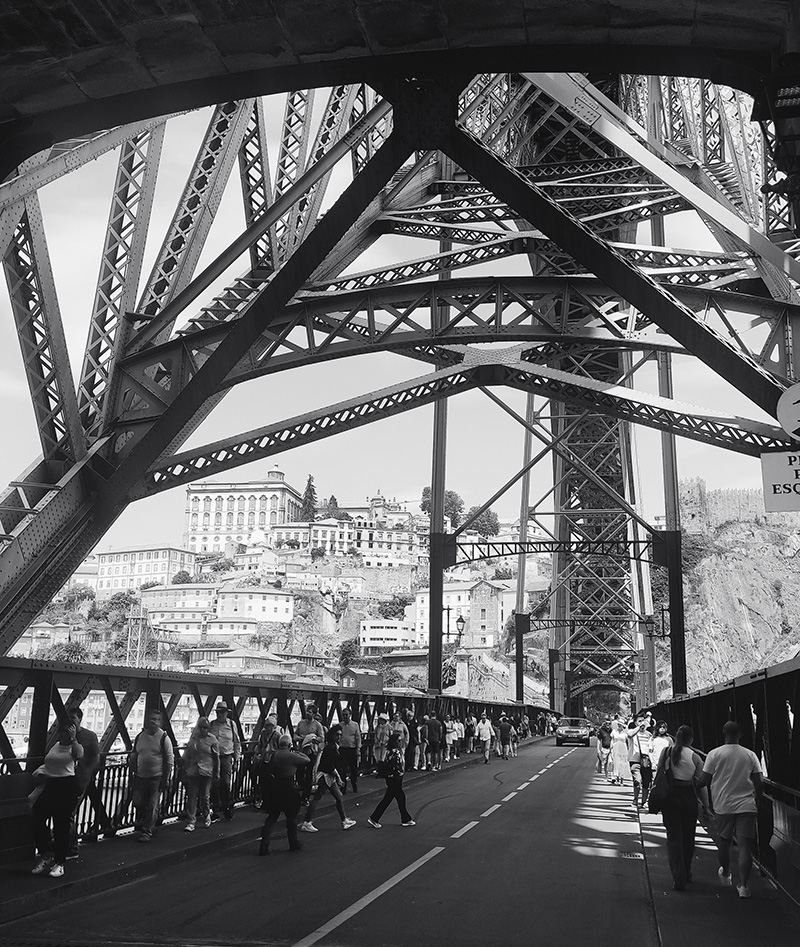
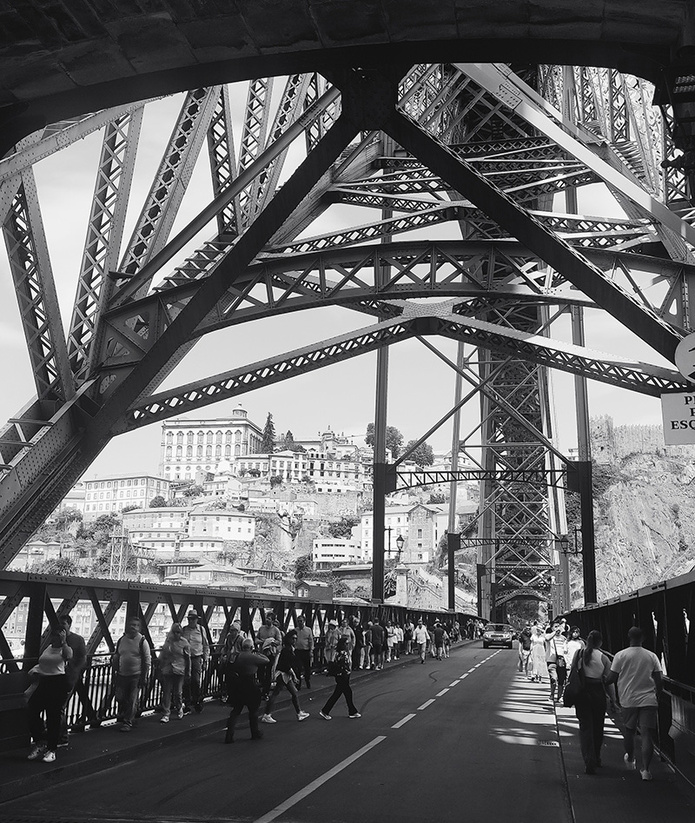
From the majestic Sé Cathedral to the famous Dom Luís I Bridge, passing by the São Bento station and its magnificent azulejos portraying Portuguese historical scenes, every corner of the city tells a story.
But Porto is not stuck in the past.
It also stands out for its vibrant cultural scene: contemporary art museums, independent galleries, music festivals, urban design, and iconic bookstores like Lello, thought to have inspired J.K. Rowling.
The city appeals to history enthusiasts, art lovers, casual strollers, and those keen on modernity.
Gastronomic experiences not to be missed
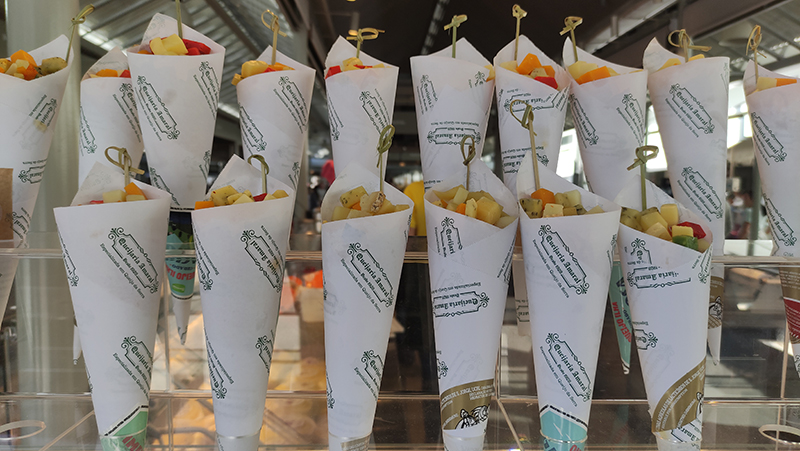
It is impossible to visit Porto without diving into its rich and tasty culinary scene. Northern Portugal is renowned for its hearty and convivial cuisine. Among the must-try specialties are, of course, the francesinha, a indulgent toasted sandwich drenched in a spicy sauce, tripas à moda do Porto, bolinhos de bacalhau, and the famous cod-based dishes.
Traditional markets like Mercado do Bolhão or the numerous traditional restaurants and taverns allow you to taste the local cuisine in a warm, convivial atmosphere. For the more curious, culinary tours also let you discover the secrets of this gastronomy by taking part in cooking workshops with passionate chefs. A unique way to immerse yourself in the culture of northern Portugal.
An exceptional wine-tasting getaway in Vila Nova de Gaia
No visit to Porto would be complete without a stop in Vila Nova de Gaia, the twin city located on the other side of the Douro River. It is here that the famous Port wine cellars stand, aging the region’s finest vintages. These historic cellars – such as Sandeman, Graham’s, Taylor’s, or Ferreira – open their doors to visitors for guided tours and tastings in a enchanting setting.
Porto, a city to explore according to your desires
Porto’s Nightlife: An Unmissable Festive Destination
Porto also captivates with its vibrant nightlife. After dark, the city becomes a hotspot for celebration.
From trendy bars on Rua Galeria de Paris to rooftop terraces and outdoor clubs, the city offers an eclectic nightlife, spanning electronic music, reimagined fado, and alternative atmospheres.
How to Get to Porto from France?
By plane : The fastest option. Many French cities (Paris, Lyon, Marseille, Bordeaux, Nantes, etc.) offer direct flights to Porto’s Francisco Sá Carneiro Airport. Expect about a 2-hour flight and a time difference of one hour less upon arrival.
Whether you are a culture hunter, a history buff, a nature fan, or a foodie, Porto awaits with open arms and Travel One Portugal will guide you there with professionalism and passion.

 Published by Amelia Brille