Village in Japan Claims to House the Tomb of Jesus Christ

In the wooded mountains of Aomori Prefecture, in northern Japan, a small village draws the curious with a story that is, to say the least, perplexing. In Shingo, two burial mounds are presented as the tomb of Jesus Christ and that of his brother Isukiri. A legend without historical basis, but one that the locals have nurtured for decades through a museum and an annual festival. Here, the mystery matters less than the tradition that has grown around it.

A Legend Born from Mysterious Manuscripts

Arriving in Shingo, nothing suggests that the village is linked to one of Christianity’s central figures. The landscapes are those of quiet rural Japan, between rice fields, farmhouses, and forests. Then a blue sign in English points toward the “Tomb of Christ,” the tomb of Christ.

According to local tradition, Jesus would not have died crucified in Jerusalem. After an initial stay in Japan, he would have returned to Judea before escaping crucifixion. His brother Isukiri would have taken his place on the cross, while Jesus embarked on a second voyage toward the archipelago. He would have settled in Shingo, where he supposedly lived to the age of 106, founded a family, and had three children.

This story rests on the “Takenouchi Documents”, manuscripts whose existence and authenticity are highly contested. They would have been found in 1935 by Kiyomaro Takenouchi, a religious leader who claimed to have identified the tomb of “Iesu Kirisuto”, the name given to Jesus Christ in Japan. The originals are said to have disappeared during World War II, leaving only copies.

The nearby museum presents reproductions of these documents and various items related to the legend. The museum director, Hidenobu Kadogishi, tells CNN that “the tomb of Christ himself has always been here, but nothing allowed a proper explanation”. In 1996, the village therefore created the museum to tell this story to visitors.

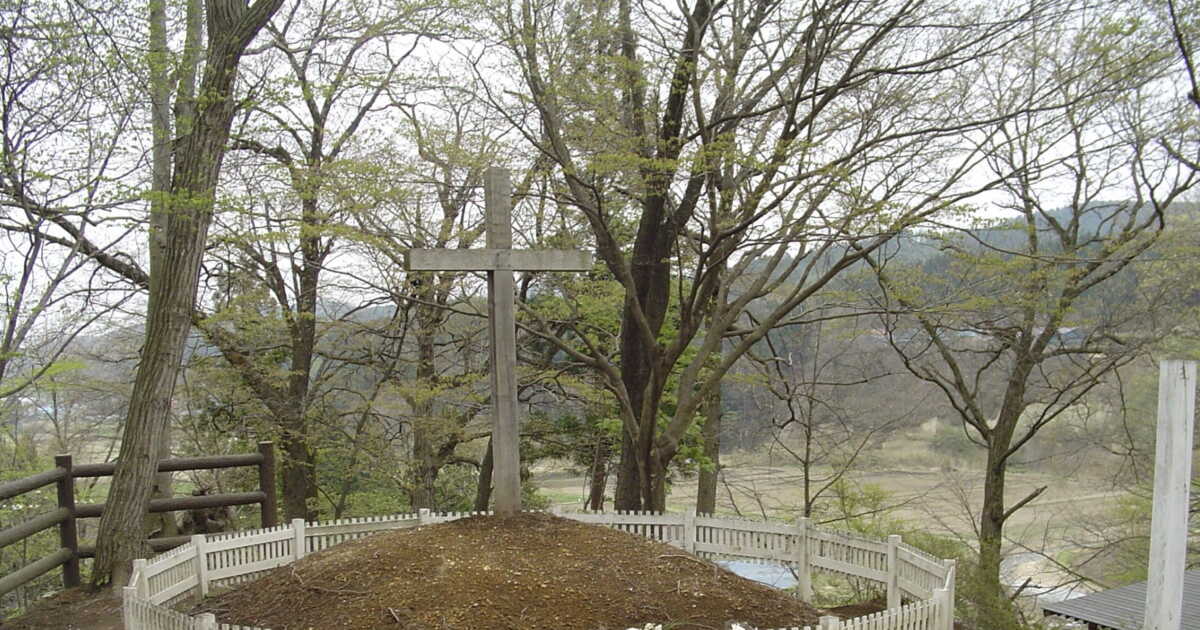
On the hillside, two mounds surrounded by small white fences are topped with large wooden crosses. One would be the burial site of Jesus, the other would hold his brother’s ear.

Nevertheless, no reliable historical evidence proves that these are the tombs of Jesus and Isukiri. Japanese professor Ryosuke Okamoto, a theologian and tourism expert at Hokkaido University, reminds CNN: “There is no reliable historical evidence that these are the tombs of Jesus and his brother.” He also notes that Isukiri does not appear anywhere in the Bible.

In Shingo, the Mystery Has Become a tradition

While the legend draws attention, it is not the core of a Christian religious practice. Each year, the village hosts Kirisuto Matsuri, or Christ Festival, on the first Sunday of June. Established in 1964, the event blends local traditions with homage to the two tombs.

The ceremony is led by a Shinto priest, who offers prayers and presents sacred branches called tamagushi. Artists then perform a shishimai, a traditional lion dance, before kimono-clad women interpret Nanyadoyara, a local folk dance around the burial mounds.

Visitors are invited to join the dance. This year, about 1,000 people participated in the festivities, a record for the event. Among them were locals from the region as well as foreign visitors drawn to this singular story.

For mayor Kazutomo Sato, the objective is not to determine whether Jesus actually lived in Shingo. “Don’t overthink it,” he tells CNN. By setting aside the question of truth, the tomb of Christ is here, and we pay homage to it. It’s our reality, and it’s something we have protected as a tradition handed down by our ancestors.”

Professor Ryosuke Okamoto likewise sees the legend’s survival as independent of its historical veracity. “The legend survives not because everyone believes it to be historically true. It survives because people value the place, the festival, and the connection they maintain with previous generations,” he told American media.

This story also contributes to giving Shingo, a village of about 2,000 residents, greater visibility, a situation familiar to many rural areas in Japan facing demographic decline. For Okamoto, the tomb mainly represents “visibility and a memorable story that allow a village to present itself to the outside world”.

Yet the site remains only a waypoint on the broader tour of the region. Nearby are the Oirase Gorge and Lake Towada, while the port city of Hachinohe is reachable in under three hours from Tokyo by high-speed train. In Shingo, the supposed tomb of Jesus thus remains less a Christian pilgrimage site than an extraordinary local story that over time has become a means for the village to safeguard its traditions and to make itself known to the wider world.
Da Lat’s Crazy House: Vietnam’s Most Unusual Building

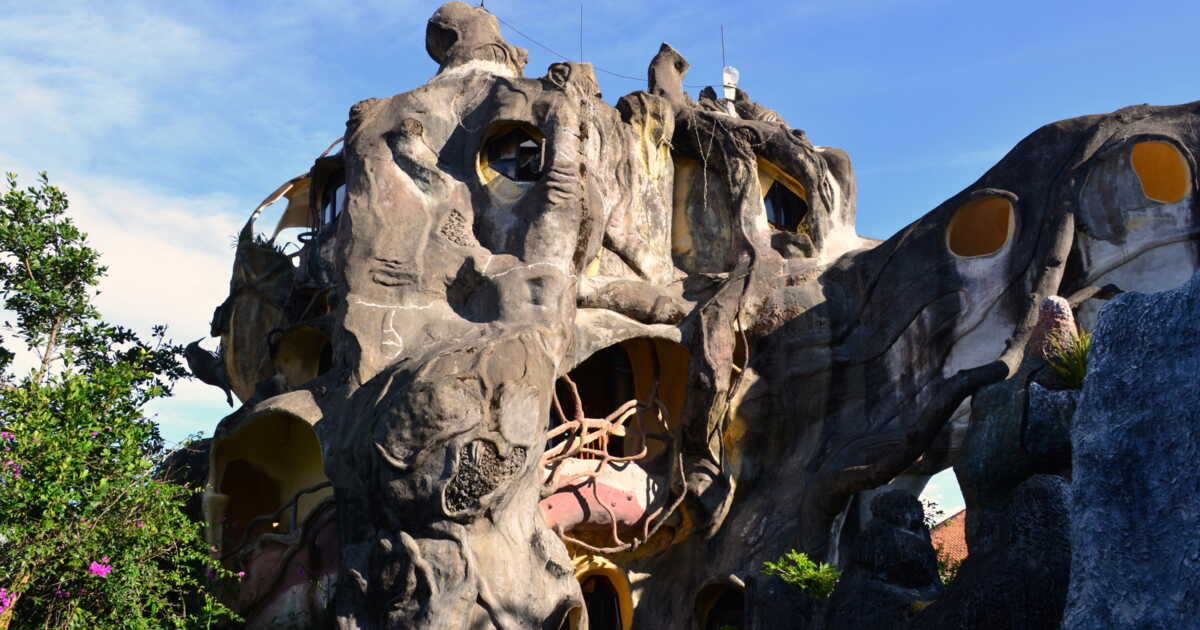
“Nature is the greatest teacher I have ever had.” With these words full of conviction, Dang Viet Nga, now 86, speaks of the work of her life: the Crazy House, whose construction began in the 1990s in Da Lat, in the southern region of Vietnam. Part guesthouse, part attraction, and a living architectural masterpiece, this place welcomes between 200,000 and 300,000 visitors each year and invites people to reconnect with nature and to respect it.

Miyazaki-Inspired House in China Attracted Tourists, Authorities Demolished It

Pendant des années, elle a intrigué les voyageurs de passage dans la province chinoise du Guizhou. Avec ses étages empilés de manière improbable, ses structures en bois et ses échafaudages de bambou, cette habitation hors normes évoquait pour beaucoup les décors fantastiques des films du studio Ghibli, fondé par Hayao Miyazaki et Isao Takahata. Mais cette maison devenue attraction touristique dans le village de Xingyi a finalement été détruite par les autorités chinoises. Une démolition spectaculaire qui met fin à un long bras de fer entre son propriétaire et l’administration locale.

A Structure That Became a Symbol of Resistance

À l’origine, la maison de Chen Tianming n’était qu’un simple bungalow en pierre situé dans le village de Xingyi, dans le sud-ouest de la Chine. Mais à partir de 2018, cet habitant de 43 ans a commencé à transformer progressivement l’habitation familiale en une construction verticale atypique, composée de petites pièces en contreplaqué empilées les unes sur les autres.

Selon l’AFP, Chen Tianming a investi environ 200 000 yuans, soit plus de 25 000 euros, sur une période de huit ans pour donner forme à ce projet. Au fil du temps, la bâtisse a gagné des étages jusqu’à atteindre une dizaine de niveaux. Et sa silhouette pyramidale et désordonnée a rapidement attiré l’attention des touristes et des internautes chinois.

De nombreux visiteurs se sont alors mis à comparer cette maison aux univers imaginés par Hayao Miyazaki, célèbre réalisateur japonais et cofondateur du Studio Ghibli. De “Princesse Mononoké” au “Voyage de Chihiro” en passant par “Totoro” et “Le Château Ambulant”, le studio Ghibli est connu pour ses films d’animation aux décors très détaillés, souvent composés de villages anciens, de bâtiments immenses aux formes irrégulières et d’univers mêlant nature, poésie et fantastique.

De quoi, donc, faire penser aux assemblages de bois, les détails bricolés et l’aspect presque irréel de la maison de Chen Tianming. Plusieurs internautes chinois ont notamment fait le parallèle avec “Le Château ambulant”, un film mettant en scène une immense construction mobile composée d’extensions métalliques et d’éléments assemblés de manière chaotique. Comme dans ce long-métrage, la maison de Xingyi semblait s’être construite progressivement, presque sans logique architecturale classique, au fil des ajouts réalisés par son propriétaire.

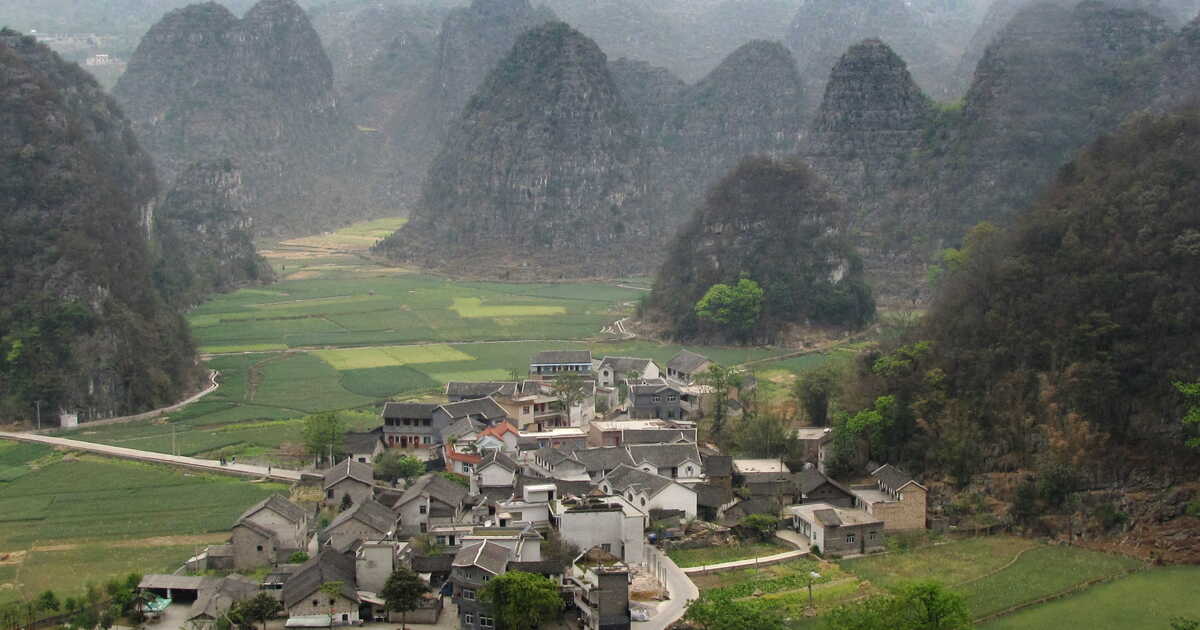
Mais derrière cette apparence poétique se cachait un contexte beaucoup plus conflictuel. En 2018, une grande partie du village de Xingyi avait été détruite dans le cadre d’un projet touristique porté par les autorités locales. La région est connue pour ses paysages montagneux spectaculaires, très prisés des visiteurs. Alors que de nombreuses familles ont quitté les lieux, celle de Chen Tianming a refusé de partir.

Le projet de complexe touristique ayant ensuite pris du retard, l’homme a poursuivi la transformation de sa maison, malgré les avertissements répétés des autorités. Ces dernières considéraient l’édifice comme dangereux et dépourvu des autorisations nécessaires.

View this post on Instagram

A Swift Demolition Under Police Supervision

Le conflit a pris une tournure décisive en août 2024, lorsque les autorités locales ont officiellement qualifié la maison de “construction illégale”. Chen Tianming a alors reçu l’ordre de détruire tous les ajouts réalisés au fil des années et de ne conserver que le bungalow d’origine.

Le 18 mai dernier, les autorités de Xingyi ont adressé un dernier avis à la famille, exigeant qu’elle quitte les lieux avant 9h du matin le mercredi suivant. Après l’expiration du délai, des agents des forces de l’ordre et du bureau de la sécurité publique sont intervenus sur place. Selon l’AFP, Chen Tianming et ses parents ont été escortés hors de la propriété avant le début de la démolition. Son téléphone aurait également été confisqué et il aurait été placé en détention pendant l’opération.

Quelques heures seulement ont suffi pour réduire la construction à son état initial. Sur les images filmées après les faits, on distingue des amas de matériaux éparpillés là où se dressait auparavant cette étrange tour devenue célèbre sur les réseaux sociaux.

Malgré la disparition de sa maison, Chen Tianming affirme ne pas éprouver de regrets. “Je ne ressens pas de regret, parce que regretter ne sert à rien”, a-t-il déclaré à l’AFP. Il a également ajouté : “Je ne me blâme pas non plus de ne pas avoir réussi à la protéger : c’est simplement que la force qui a conduit à sa destruction était trop puissante”. L’homme espère désormais obtenir une reconnaissance juridique du caractère illégal de cette démolition forcée. “Alors j’aurai une chance de la restaurer“, a-t-il conclu.