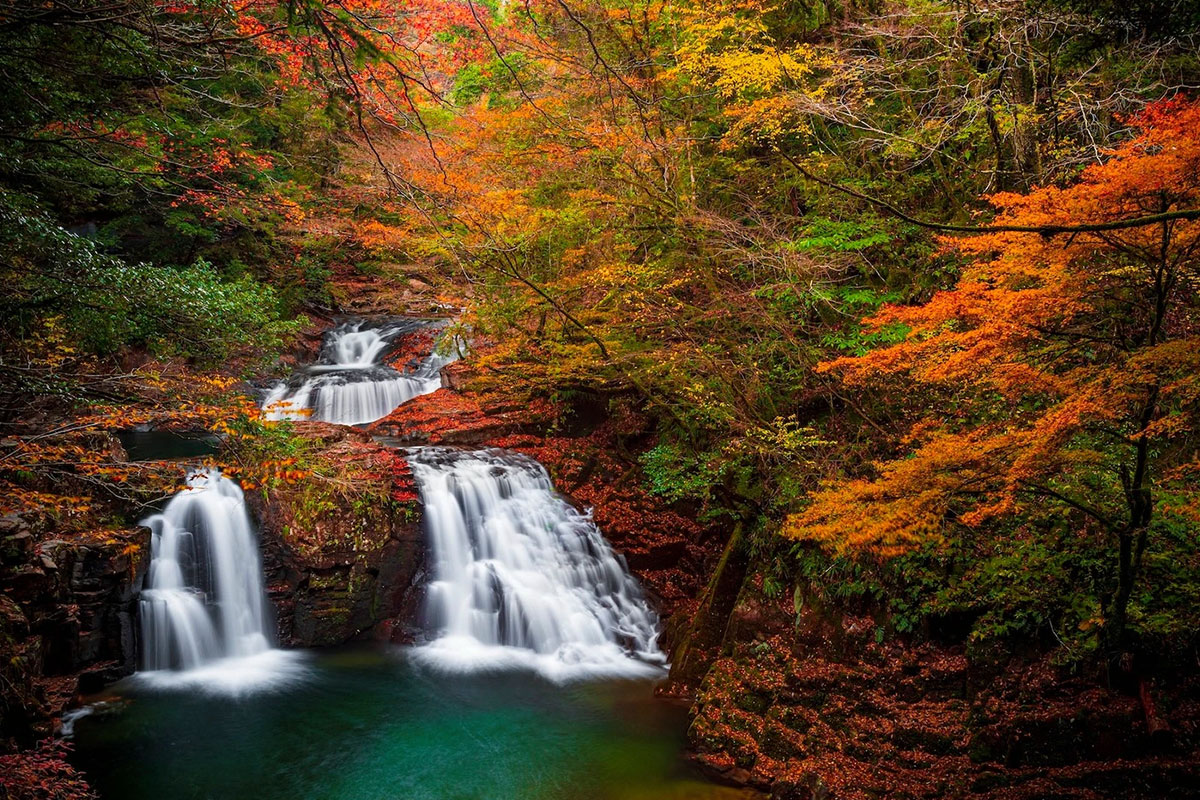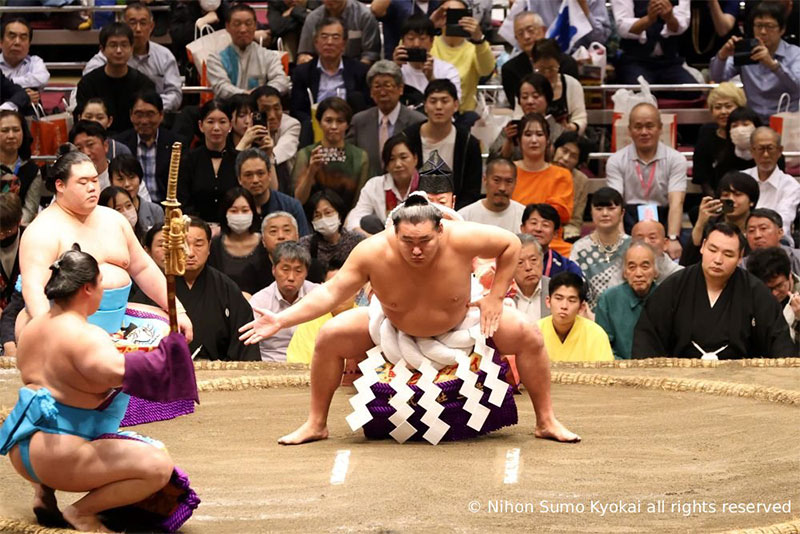
In Fukuoka, the main city of Kyūshū, a kite-shaped, large island far to the south of Japan, one strolls along the canals and through the quiet temple alleys bordered by blooming hydrangeas. One takes the bus to bathe at one of the numerous sandy beaches facing the Korea Strait, or to pick amaou (the queen of the local strawberries) in the surrounding farms. One orders an iced coffee on a terrace – a rarity in Japan. And in the evening, one sits down at the micro-counter of a yatai, that kind of ambulant restaurant once widespread across the country, of which the city is now the last bastion.
A Sweetness Born in the South
Fukuoka, home to 1.6 million inhabitants, shares many traits with other Japanese megacities: the same climate-controlled malls, the same glass-and-steel buildings, the same flurries of salarymen rushing at the giant star of the intersections. Yet there is something different here. A particular ease of living, a kind of southern hedonism that invites you to slow down. A feeling you do not experience anywhere else in Japan.
The impression grows as one explores the rest of this island the size of a French region. Volcanoes cloaked in azaleas, vast cedar forests, soothing hot springs: Kyūshū cultivates a lifestyle that is more relaxed and nature-oriented than Honshū, its bustling and highly urban neighbor. Around Fukuoka, a theatre-like amphitheatre of mountains glitters at the city’s edge. It is visible from every building, as soon as one reaches the tenth floor. A foretaste of the vast spaces the island has to offer. To dive into them, head to Hakata Station, the great rail hub where Shinkansen (the TGV) from the north arrive. From here, all of Kyūshū is accessible via a network of around thirty lines and 2,500 km of tracks. The moment you gulp down a tonkotsu ramen (noodles in pork-bone broth), slide, full and content, into a train, and watch another Japan roll by behind the window. First stop: the Yame region, one of the cradles of Japanese tea.
From Yame to Arita
A Campaign in a Cup of Tea
“Hô-hokekyo !”, cries the uguisu, the Japanese nightingale, as if to warn Mrs. Fumiko that visitors are entering her garden. Lace apron and smartphone in hand, the hostess awaits us with a firm footing anyway. “Call me Grandma Fumi, says the septuagenarian through her translation app. Today, we will prepare dago soup.” For the rest, Fumichan relies on gestures. She guides unfamiliar tubers into our fingers, grips our wrist to ensure the knife is held properly. She has us slice the gobo (burdock) and the daikon radish; loosen miso into broth, drop in dumplings; pour the rice washed three times into the hakama, a cast-iron pot fueled by wood. And while all this steams and smokes, she sits with us on the porch to chat.
The rain hammering the tiles finally wakes the frogs. A misty cotton-like veil rises from the mountains, disguising the cypress-topped pompoms as steam-breath broccoli, while bowls carry the herbal scent of shincha, the new tea. “I started welcoming tourists twenty years ago, explains our host. At first, Japanese who wanted to rediscover rural life. Then Koreans, Taiwanese, Chinese. In recent years, I’ve seen more and more Americans, and even Europeans!” Although accessible by train and then bus from Fukuoka, the village of Hoshino, with its trout streams and terraced rice fields, is far from having a place on the world tourism atlas. Yame, 60,000 inhabitants, 30 km away, is somewhat better known: it is one of the most prestigious centers of green tea production in Japan. One stops there in a traditional house, three tatami rooms, with neighbors including a deserted Shinto shrine, a sacred camphor tree, and a neighborhood restaurant.
The Delicate Art of Arita
The next day, heading west, we go toward Arita, cradle of Japanese porcelain. In the 16th century, the discovery of a kaolin deposit—the clay that forms this precious ceramic—changed the town’s fate, and it began exporting white-and-blue tableware to Europe via Nagasaki’s Dutch trading post. Sakaida Kakiemon, the fifteenth in line, continues the craft of master ceramicist in one of the town’s oldest kilns, founded by his ancestor around 1640. “The Kakiemon clan developed its own style and techniques, such as nigoshide, a milky-white porcelain that is very difficult to fire”, explains Takami Ishii, who leads us through the workshop. He then takes us to the tea house and seats us opposite the garden to taste a red bean pastry in a porcelain piece adorned with a trompe-l’œil kaki. The wind rises, softening the cloud-pruned trees and the wild cedars into a single rustle.
On the Way to Shimbara
Gas in the Water
In Kyūshū, the grand affair is the onsen, natural hot springs. Located just west of a zone where two tectonic plates converge, the island experiences intense geological activity, even by Japan’s famously turbulent standards. This tremendous underground boil brings thousands of hot springs to the surface. In Beppu, on the northeast coast, there are 3,000, or about 10% of the national total! Rather than join this spa town, one of the region’s few tourist hotspots, we head south. A train and then a bus from Fukuoka take us to Ureshino-onsen, renowned for its alkaline waters, which presents a deliciously nostalgic charm. The Siebold no Yu, its public bath topped with orange tiles, has the look of a Bavarian church mingled with Taishō Romance, the Japanese Belle Époque style. Around it, a string of ryokan (traditional inns) offers all the ways to take the waters, from the rotenburo, outdoor bath, to that odd establishment where you steep like a tea bag in giant cups.
The Infernos of Unzen
Leaving the fog of the saunas behind, we board a bus at Isahaya Station, the last big town before Nagasaki. Two sleepy schoolgirls, quiet elderly folks, a couple of Australians and their big backpacks… The vehicle is nearly empty as it climbs toward Shimabara Peninsula. After a stop along the Tachibana Bay coast, at Obama-onsen, another spa town where baths are taken with towels featuring the image of the American president (the naming coincidence is purely accidental), the bus winds up a hairpin road and deposits us in the middle of a field of fumaroles. “Welcome to Unzen-onsen!” exclaims Emanuele Carloni amid the smells of rotten eggs. In Japan, we call this jigoku, after the Buddhist hells. The guide, from Bologna, Italy, points to plumes of gas escaping from rocks yellowed by sulfur, rimmed by bubbling pools. When you know that during early 17th-century persecutions Christians were thrown here, the term takes on another connotation.
After we pass through the doors of hell, the Italian guides us along the paths of paradise, to the heart of a grove of cherry trees where, carved into the rock, the blissful face of a Buddha meditates. Then up the slopes of Mount Unzen, responsible for these malignant emanations. Covered in the cherub-pink of wild azaleas, the lava dome gleams like a celestial vision. After a night beside a jade-colored lake, we descend by bus to Shimabara, a town lulled by the heat of late May. Under the indifferent gaze of a master, middle schoolers sketch in their drawing pads the town’s grand white castle and the dragonflies that hover around its moat. Others swing baseball bats or wander the samurai district, greeting processions of koi in the clear-water channels. An ordinary Sunday in the shadow of the volcano.
From Kumamoto to Aso
The Little Caldera Train
Dressed in black-and-white like a dalmatian, with panoramic carriages: the beast waiting on the platform at Kumamoto Station, the western coast’s great city, is one of Japan’s many “special trains” of which the country is proud. These sightseeing cars are a fantastic way to see the country at leisure. With its mascot, Kuro, a mischievous mutt who peeks out from doors to curtains to the ball-pit in the kids’ car, the Aso Boy covers the 49.9 km to its terminus in exactly 1 hour 30 minutes. So be it. We sit in front of a matcha in the lead car, watching watermelon fields and the first rises of the island’s center roll by. After a few kilometers of gentle ascent, the train enters a gap in the caldera of Aso. Formed by eruptions between 300,000 and 80,000 years ago, this colossal crater hosts one of the country’s most active volcanic complexes. The subterranean risks (in 2016, a quake here claimed dozens of victims) do not stop nearly 50,000 people from living there and farming their fields and rice paddies, the train weaving through them.
On the Kumamoto station’s platform, Nathalie Chauveau waits beneath the bronze statue of a One Piece pirate — Eiichiro Oda, the author of the celebrated manga, has just arrived from Kumamoto. Rather than sprinting with tourist coaches toward the volcanic dome, the guide proposes exploring by bicycle the rolling hills around the caldera, like Auvergnat uplands that moor along the caldera’s rim. “They’re covered with pastures that have existed for millennia and that the inhabitants continue to maintain,” she says, as the wheels of our mountain bikes slip on the soft grass. Married to a native of Aso, the Belgian guide herself shares the duty, like all locals, to clear each winter by fire one of the patches where sheep, cows, and horses graze, to prevent it from being overtaken by trees and bamboos. As evening falls, we find ourselves almost alone on the road up toward the volcano. Access to the crater and its acidic lake is impossible at the moment, too dangerous. No matter. The real treasure is around us, in this apple-green carpet undulating beneath the hooves of equines, and in the mosaic of rice paddies that, at the bottom of the caldera, reflects the sky like the lens of a telescope.
Around Kagoshima
The Ash and the Fireflies
A crescent-shaped bay guarded by a volcano, shaded boulevards of palm trees, and hot nights where sweaty strollers swallow smoky eggplants on wood-fire, grilled octopuses, and all the sea’s imaginable fruits. Kagoshima, the southern capital, has not robbed itself of its nickname “Naples of the Orient.” At dawn, along Napolidori (“Naples Avenue,” the two cities having been twinned since 1960), partygoers in suits sleepily drink their shakōshū in the street, the sweet potato liquor that the region is a major producer of. If you look closer, their shirts, like the street’s cobbles, bear a fine gray film blown into clouds by taxi wheels. Those are the ashes Sakurajima, the local Vesuvius, has spewed all night and that settle on the city, stinging the eyes of passersby.
On a ferry that takes fifteen minutes to reach the island where the volcano rises, one understands, in the black plume that crowns it, that the giant isn’t in a good mood today. “The alert level is 3 out of 5, with a prohibition on approaching the crater. That sounds impressive, but it’s far from the great eruption of January 11, 1914, when fiery clouds devastated the entire landscape!” assures Rento Oshikawa, persuading us to hop onto a bike and go a little closer. A native of the volcanic island, the guide wants to show both faces. To the east, a stark, mineral landscape, scored with ancient lava flows. To the west, the lushness of forests inhabited by birds and of greenhouses where giant radishes and komikan, a tiny mandarin, grow.
Samurai and Fireflies
But let’s leave Sakurajima to its moods and seek a touch of coolness. From Kagoshima’s central station, one can easily multiply excursions into the surrounding countryside. Taking another small wooden-trimmed train that heads to Ibusuki, a spa town famous for its warm sand baths, its mangoes, and its katsuobushi (smoked and dried bonito). Or boarding a bus to Chiran, the former fief of the Shimazu clan, the warrior family that once ruled the region. In the samurai district, a warm drizzle lifts scents of lilies and damp straw. There one wanders alone, along straight avenues flanked by hedges trimmed at right angles and gateways opening onto zen gardens. Further on, a wooden house turned museum recalls that Chiran was during World War II the main launch base for kamikazes. It is here that Madame Torihama served their last meals to these boys barely twenty years old, who had been given a rapid, yet sufficient training to take off but not to land. At nightfall, rather than yielding to the noisy lights of the izakaya (neighborhood bars), one prefers the calm of a stroll by a brook. In the dark, a slight vibration: a swarm of hotaru (fireflies) flitting branch to branch makes the undergrowth flicker with tiny lanterns.
On Yakushima Island
The Gorge of Misty Water
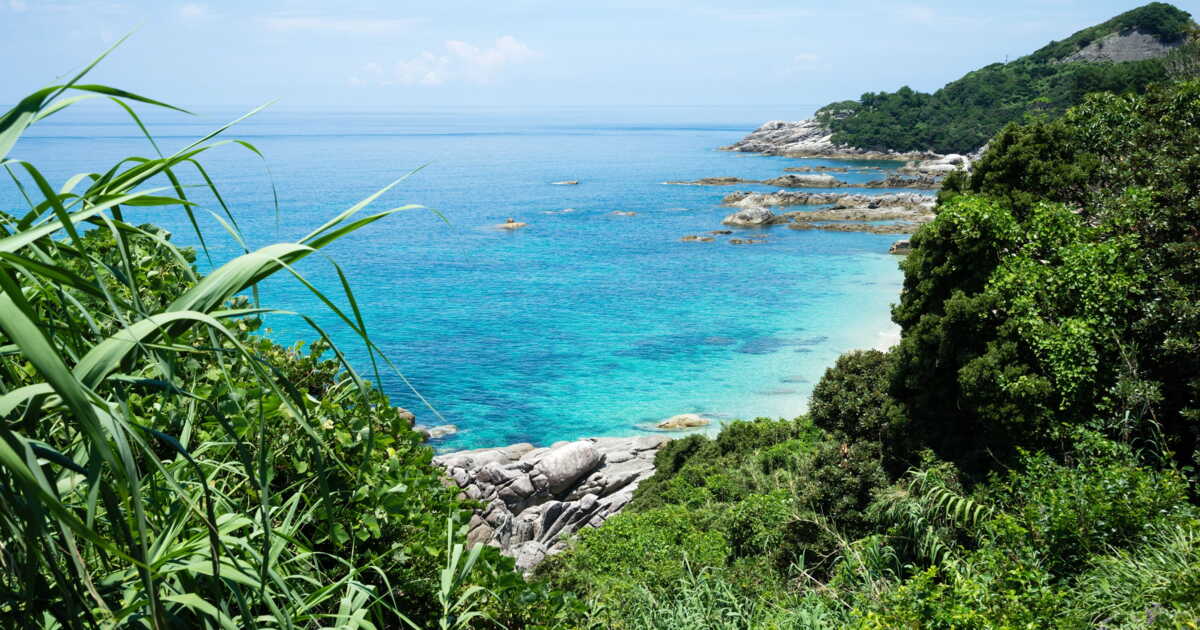
Sprinkled with a motif of a flying fish, the hydrofoil speeds from dawn toward Yakushima, an island about a hundred kilometers south of Kagoshima. Less than two hours later, one lands in a tropical humid pocket of Japan that feels a bit apart. A near-perfect circle, the proverbial humidity (they say it rains here 35 days a month), mountains housing a biodiversity unique to the country, including the oldest cedar trees, 150 bird species, 16 mammals, including four endemics, like the yakushima deer sika… “Two sea turtles also come to lay eggs on our shores: the green turtle and the hawksbill. For the latter, Nagata Beach is the main nesting site in the North Pacific”, details Hirofumi Ueda of the local NGO Umigame Kan, which works toward a harmonious coexistence between tourists and marine life.
But the attraction here is not sunbathing on the sand. The main draw is the thick forests at the island’s center and their primal sylvan atmosphere. Rescued from mass clear-cutting in the 1970s, they inspired Hayao Miyazaki’s scenery for his film Princess Mononoke. They also host a multitude of hiking trails. The best known leads to Jōmon Sugi, a venerable cedar believed to be between 2,000 and 7,000 years old. But many trekkers also head to Shiratani Unsuikyō (the “Gorge of the Misty Water”), high up on the island. After ten kilometers of bouncing along a road whose edge is peopled by unafraid macaques, a bus drops us where the asphalt ends and the trails begin. There we progress sometimes on wooden platforms, other times on stone and root paths. The gnarled trunks of the sugi (cedars), the vines clinging to the branches, the boulder-strewn ravines: all are shrouded in moss, forming a verdant taffeta in infinite hues. At the end of a final ascent, a granite block juts out of the vegetation and reveals, at our feet, an impenetrable jungle. One must pull from one’s bag the onigiri (rice ball wrapped in seaweed) carried along to break bread and remind oneself that yes, we are indeed in Japan.
The Volcano Islands, Unhurried
Get around without a car
By train: besides the very efficient Shinkansen (the TGV) linking Fukuoka to Nagasaki and Kagoshima, there is a solid network of regional trains. And about ten themed tourist lines. JR Kyūshū, the company that runs almost the entire rail network on the island, offers passes that let you board all these trains at will. jrKyūshū.co.jp/english
By bus: on this mountainous island there is always a small bus to reach places where the rails do not go. If you’re not in a hurry (the journey takes time, with many stops), they’re an excellent way to see the country at low cost. For etiquette: board at the back, and when you disembark, you free yourself from the price of your trip. Bring change!
By boat: to cross a body of sea or to reach an island, this is sometimes the best, even the only, solution. For short journeys, choose regular and inexpensive ferries. For longer crossings, other options are better, notably the hydrofoil, toward Yakushima.
Getting there
The Japanese carrier ANA offers daily flights between Paris and Tokyo and easy connections to Fukuoka Airport, one of the closest to a city center in the world. The best way to begin exploring without wasting time. Paris–Fukuoka flights from 1,200 euros, ana.co.jp/fr
Make the most of your trip
The right partner: for more than twenty years, the agency Les Maisons du Voyage has been assisting GEO in its reports. Their intimate knowledge of the terrain made this Kyūshū exploration possible. Workshops on Arita porcelain, the Aso caldera, Chiran’s samurai houses, Unzen’s fumaroles… Their Japan specialists can tailor a route following our reporter’s steps. A rail-based itinerary with three nights in a ryokan to explore southern Japan at your own pace. Circuit of 15 days and 13 nights, from 3890 €. 0140519515 maisonsduvoyage.com
Before you go: for practical advice or general information on how to travel in Japan, the Nippon Tourist Board site is a goldmine. japan.travel/fr/fr/
Local guides
– Fukuoka. Based in Hakata, the local Freya agency offers guided tours and activities throughout Fukuoka Prefecture.
– Unzen. For a guided “hells” visit, ideas for things to do in the area, or lodging options, contact the local tourism office.
– Aso. The French-speaking guide Nathalie Chauveau will guide you through the caldera’s must-sees and secret places.
– Kagoshima. To venture along the slopes of Sakurajima and discover the island’s many facets, opt for an electric bicycle tour guided by Rento Oshikawa
Directory of addresses
– In Hoshino-mura. Local cooking courses and homestays—courtesy of the charming Fumi-chan. A wonderful way to discover rural Japan.
– In Yame. More than a hotel, Rita offers stays in traditional, comfortable homes, with a key handed to you on arrival.
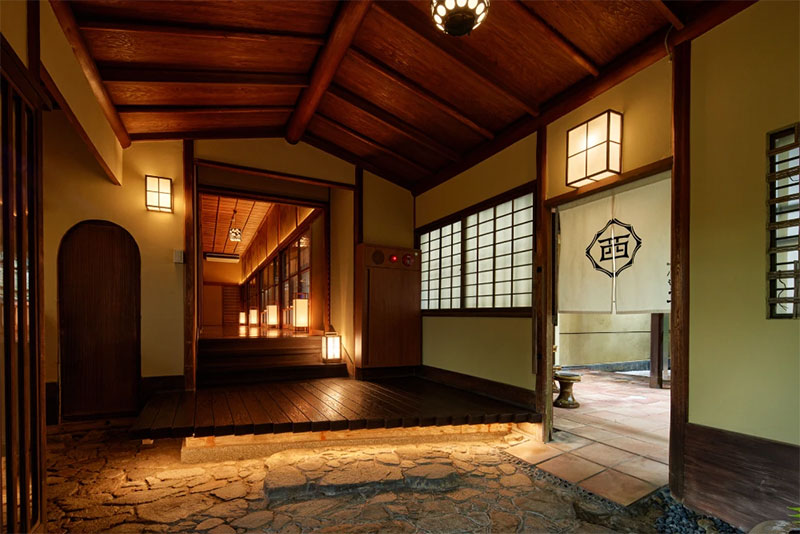
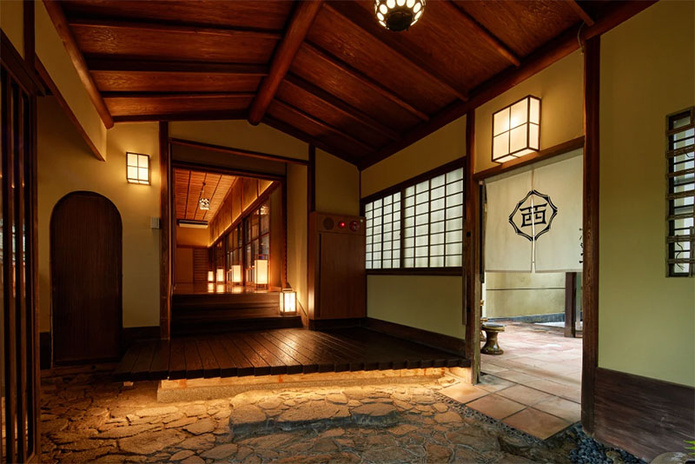
– In Unzen. For a night in a ryokan with traditional kaiseki dinner and hot baths in volcanic waters, choose this institution by a pretty lake, close to the town’s main sights.
➤ Article appeared in GEO HS magazine No. 134, “Great Escapes at a Slow Pace,” August-September 2026.
➤ Do you love GEO? Then to miss nothing, discover our subscription plans to receive GEO at home every month with ease.