
Slow Village Aims for International Expansion with Around 30 Sites by 2030


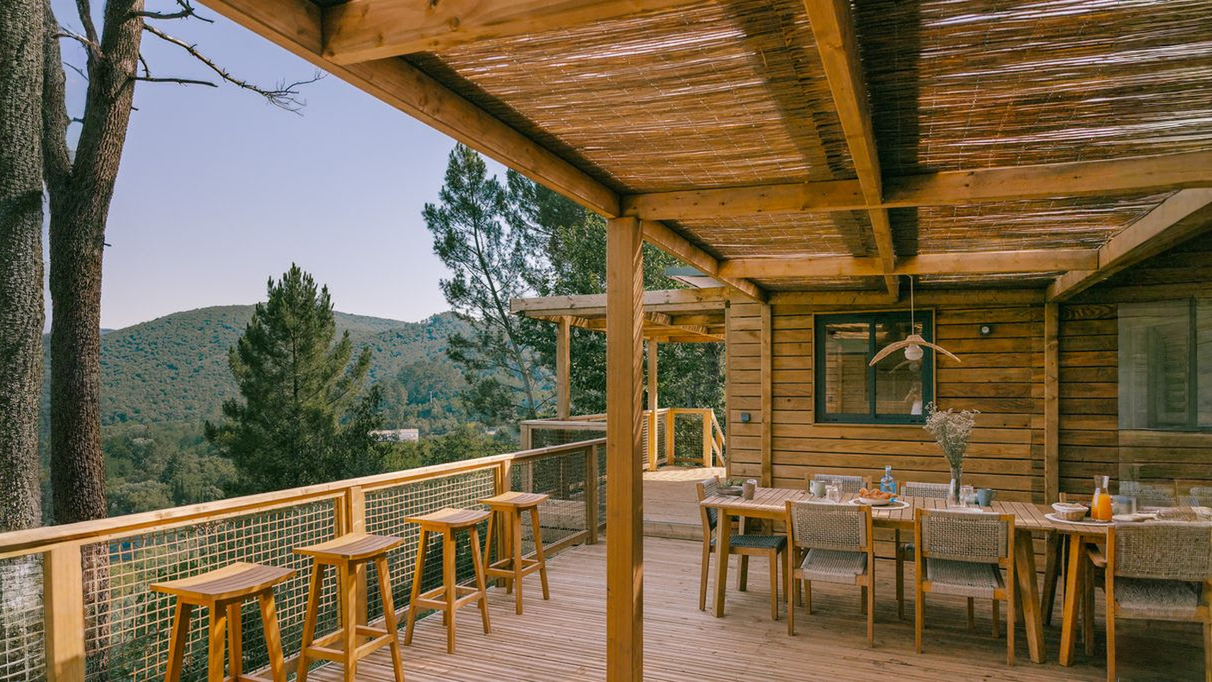
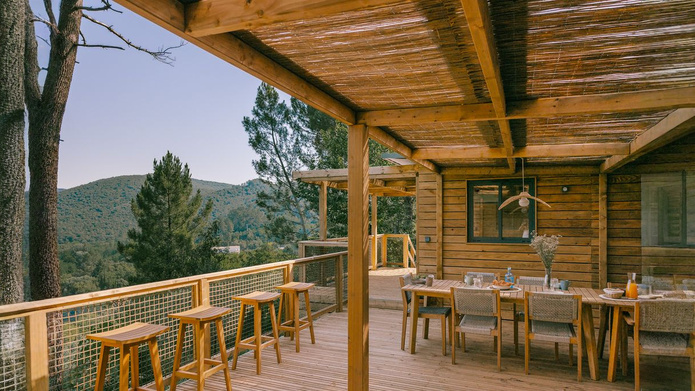
Le camping SLOW VILLAGE ANDUZE, Gard - Photo Slow Village

IFTM TourMaG Party


TourMaG – Could you introduce Slow Village?

Baptiste Bonnichon: Slow Village is a group based in Angers. Today, the group owns 14 establishments spread across France, in some of the country’s most beautiful locations, as we like to say, including 11 that bear the Slow Village brand.

Slow Village is a concept of nature-focused hotels with a premium positioning. Our approach, inspired by slow tourism, is to create living spaces and holiday destinations where people can reconnect with time, with nature, with the land, and with the terroir of the places where we operate.

To achieve this, we pursue a highly committed sustainable approach and we rely on the European Eco-label.


Also to read:
Bon Air Club aims to invent a new generation of outdoor “base camps”


Slow Village: a discerning selection of implantation sites

TourMaG – You recently selected certain locations to set up campsites, notably Belle-Île-en-Mer, Île de Ré, and the Lot. Why did you choose these destinations for your investments?

Baptiste Bonnichon:
We have a particular approach in our acquisitions: we always own and operate the establishment. We are very selective about the destinations we choose.

Today, Slow Village is present in Brittany, at Brignogan, on a magnificent beachside site on a hill. We are also in Pornic, in a very natural site, in Les Ponts-de-Cé, in the Loire Valley near Angers, and in Vendée near Saint-Gilles-Croix-de-Vie.

Finally, we also have sites at Biscarrosse, Oléron, Saint-Martin-de-Ré and La Couarde on Île de Ré as well as in the Périgord where we have two establishments: near Sarlat, in the Céou valley, and near Les Eyzies, close to Saint-Léon-sur-Vézère, in the Périgord Noir. Finally, in Gers, we have a site at Lamothe-Goas, but also in the Cévennes park as well as in La Roche-sur-Yon, near one of France’s most beautiful villages.

When we acquire existing establishments, we strive to stay within this charter of very beautiful places, with low density for the placement of our accommodations.

We always position ourselves next to a tourist point of interest, accessible on foot or by bike, in places that are either atypical or unique. For example, Belle-Île-en-Mer is an exceptional Breton island, well known for hiking and trail running (the Belle-Île trail exists). The site is close to the harbor, walkable, in a natural area, with the beach accessible on foot.

Île de Ré is also a place our guests love because it is preserved, with a very eco-responsible approach and many cycling routes. Already present at Saint-Martin-de-Ré, the second site at La Couarde allows us to be present in another part of the island. The beach is accessible on foot, we are 100 meters from the sea, between the salt marshes of Île de Ré and the beach. It is quite an exceptional site.

The third is the Mas de Saboth estate in the Lot valley. It is a hilltop site with an exceptionally beautiful view over the Lot, between Cahors and Saint-Cirq-Lapopie, a magnificent small village of the department. It is always with this vision in mind when we intend to establish ourselves in a region.


TourMaG – The current market is dominated by campsites or nature hotels with fewer than 300 places. Is that the establishment size you target as a priority?

Baptiste Bonnichon:
Yes, we focus on sites that range between 100 and 300 places. There is a real opportunity because, among the 7,500 campsites in France, 80% are still run or owned by independents.

It is with these owners, who wish to sell their campsite, that we source our projects. These are stories we write on small, human-sized sites with a very familial dimension. It is these sites that we look at and enjoy taking over.


European Eco-Label: all sites certified this year

TourMaG – You mentioned sustainability earlier, beyond the aesthetic aspects of the places. How does that translate in practice?

Baptiste Bonnichon:
Yes. First, when choosing locations, there is an ecological and environmental prism. We always study, during our acquisitions, all risks. It is a way to examine the ecological dimension. What risks does a site face: submersion risk, rising waters over time for the site’s longevity, fire risk, etc. That is the initial analysis we perform.

Next, we analyze the biodiversity present on the site and how we can best preserve it. We conduct biodiversity analyses progressively across all sites in the group.

Finally, once we have acquired the site, we rely on the European Eco-label. It is the only environmental label that remains public, issued by the European Commission. It represents 67 stringent criteria in operating models, but these elements are fully integrated into our system and linked to our operational processes.

They compel us in a concrete way to meet a broad set of environmental criteria applicable to tourism. We are the first hotel group in France to systematically use the European Eco-label across all our sites.

We launched a wave of certification across all our sites. The eco-labeling of all our sites will be completed this year. We aim for 100% of our properties to be eco-labeled.

What is particularly interesting about the Eco-label is that we must renew it every two years. At each renewal, we are required to improve, which places us in a continuous improvement process regarding the environmental dimension.


TourMaG – concretely, what kinds of work do you undertake in the campsites you purchase?

Baptiste Bonnichon:
The Slow Village approach and concept means we do not run camping; we operate as a full-nature hotel experience, even though the underlying asset remains a campsite.

We pursue a far more nature-centered approach, with a focus on the quality of our accommodations. Compared with more traditional camping groups, we do not use white PVC accommodations (or they only remain temporarily until we renew them).
(or they stay only as long as we renew them gradually).

When we invest in a new site, we transform a very large portion, 50 to 70% of the accommodations, to install lodgings that meet the Slow Village standard.

This entails hotel-grade quality criteria, wooden cladding in a cabin-like style, an eco-friendly approach, large outdoor terraces, and a substantial vegetative density to offer a significant nature experience.

Then, we recreate or enhance the heart of life so that it aligns with Slow Village standards, including a modern, design-focused restaurant. The menu adheres to our standards for local production and local suppliers. We operate all of our restaurants; we are not in management. All our chefs are trained in the Slow Village culinary method, from the perspective of catering and supplier selection.

Regarding activities, the Slow Club stands in opposition to what is typical in classic club camping. Our Kids Club is heavily inspired by the Montessori method, with upcycling activities, building tipis in nature, exploring biodiversity, creating herbariums, or discovering the animals that inhabit the site to better know and protect them.

We establish educational farms at each of our sites to reconnect children and families with the rural, agricultural, and animal dimensions.

Finally, unlike many campgrounds, the heart of our concept is not a swimming pool with giant water slides. We always prioritize a water feature. For example, at Biscarrosse, one of our largest sites, there is no pool because the lake is 50 meters away, and our guests love it. In Lamothe-Goas, there are rivers right next to us, and we have recreated a natural swimming lagoon with ecological filtration, without pouring a single cubic meter of concrete, with a strong commitment to the quality of infrastructure.


Goussainville: The Rebirth of a Ghost Village

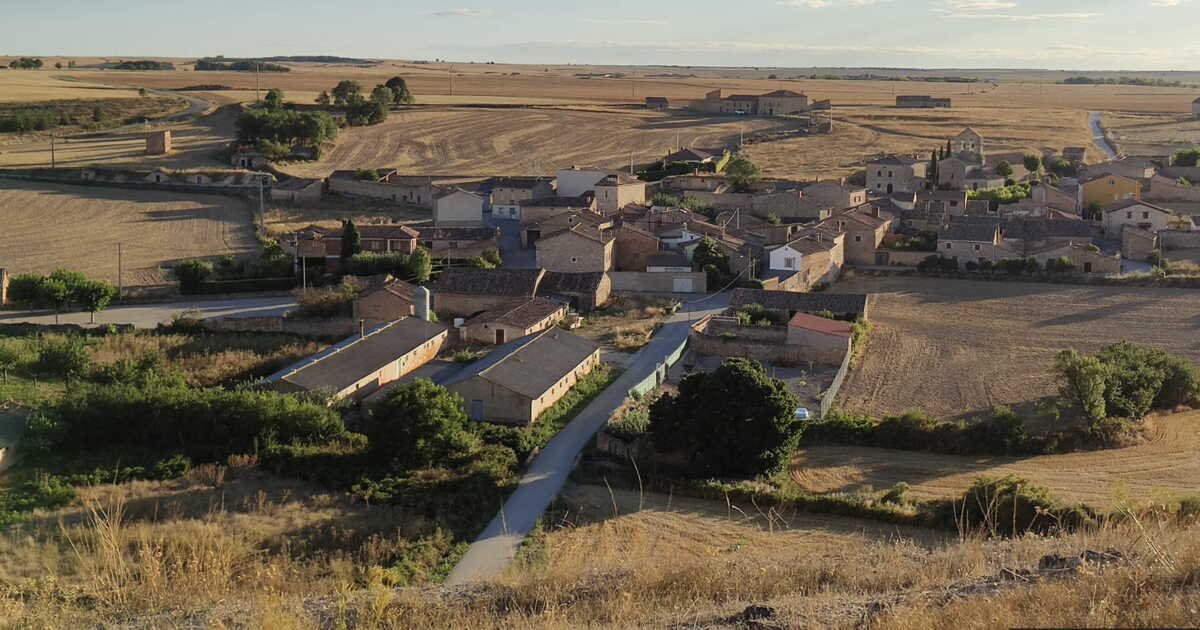
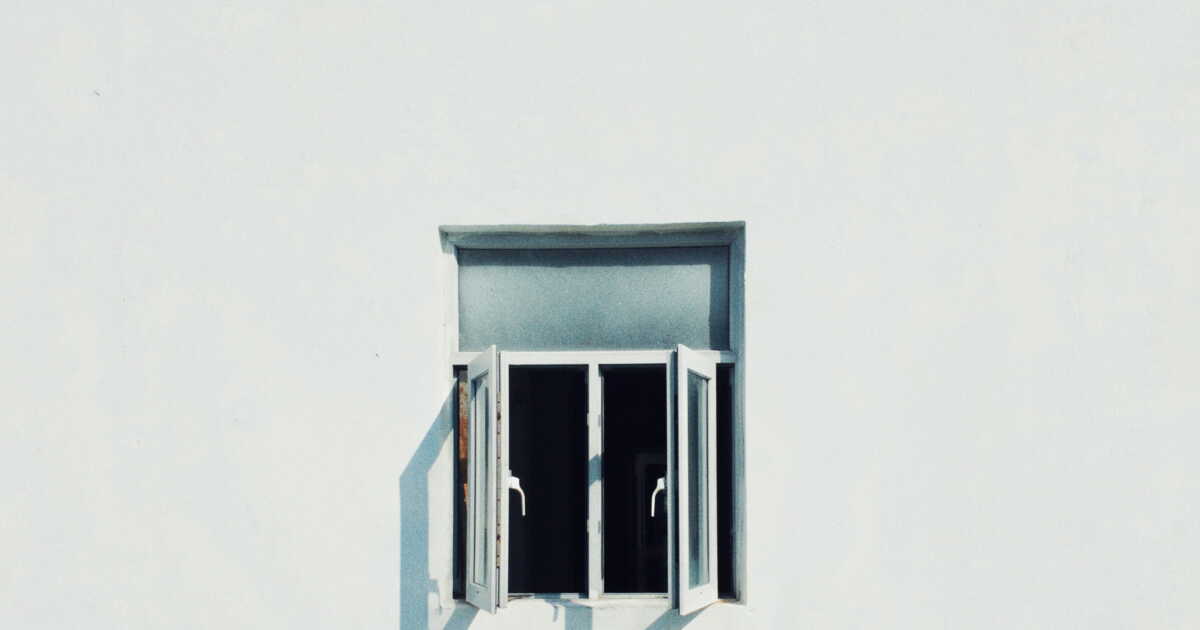
On a crumbling facade, the sign “Bakery” remains faintly visible. The door and windows are bricked up. The same goes for most of the houses that make up the town center. The cobbled sidewalks are overrun with green moss. A situation that for a long time gave the Old Town the image of a ghost village.

A reputation that the Goussainville town hall is determined to change. Since 2022, it has launched a broad revitalization operation to “highlight this heritage”, says Khader Berrekla, the city’s deputy general director, forced to raise his voice to drown out the noise of a plane flying over the village.

A return to life begun after more than 50 years of abandonment. For the Old Town, located less than five kilometers from the runways at Roissy-Charles de Gaulle, it had almost emptied of its inhabitants in the early 1970s, at the time of the airport’s construction. At that time, the Paris Airports Company (ADP) had committed to buying back, at a price above the market, all the houses included in zones overly exposed to noise.

ADP planned to raze them, but that was without taking into account the Saint-Pierre-Saint-Paul church, of which a portion dates back to the 13th century. Classified a hundred years ago, the building protected all the houses within a 500-meter radius around the bell tower from destruction.

Around 300 people stayed despite the nuisances. The houses of those who left were saved but not maintained and are mostly in a lamentable state today.

“We could feel the walls trembling”

That is the case with the large building located on the village square, lined with lime trees. In a few months, the old dwelling, rotted by damp and with unstable floors, will be transformed into a cafe-restaurant and exhibition space.

“It’s a resilience project with new activities that will create jobs, training, a new economic momentum”, assures Khader Berrekla, convinced that the noise from the roughly 300 planes that pass over the village each day will not hinder the arrival of tourists.

“In the Concorde era, you could feel the walls trembling”, comments Nicolas Mahieu, who has been running the Vieux-Pays bookstore for 30 years, the only active shop.

“The setting is superb. It has kept its charm with the old stone”, he says, pleased with the rehabilitation works underway.

Just a stone’s throw from the village square, a group of schoolchildren leaves the castle park laughing. The children have just run off their energy in a brand-new treetop parcours. Opened in 2024, AbracadaParc is also part of the revival project.

“You really had to have a lot of imagination to envisage it,” recalls Vanessa Schweitzer, its founder. “It was a wasteland, a squat, there was a lot of waste: carpet, scrap metal, beer cans.”

Today, thriving, the leisure park also leans into the ghost-town image with an escape game titled “The Forgotten of Goussainville”.

“We get used to the planes,” promises Vanessa Schweitzer, who confirms that when the sky is clear, the planes follow another flight path and spare the village from their roar.

Living with Peacocks? A Small Italian Village Split on the Issue

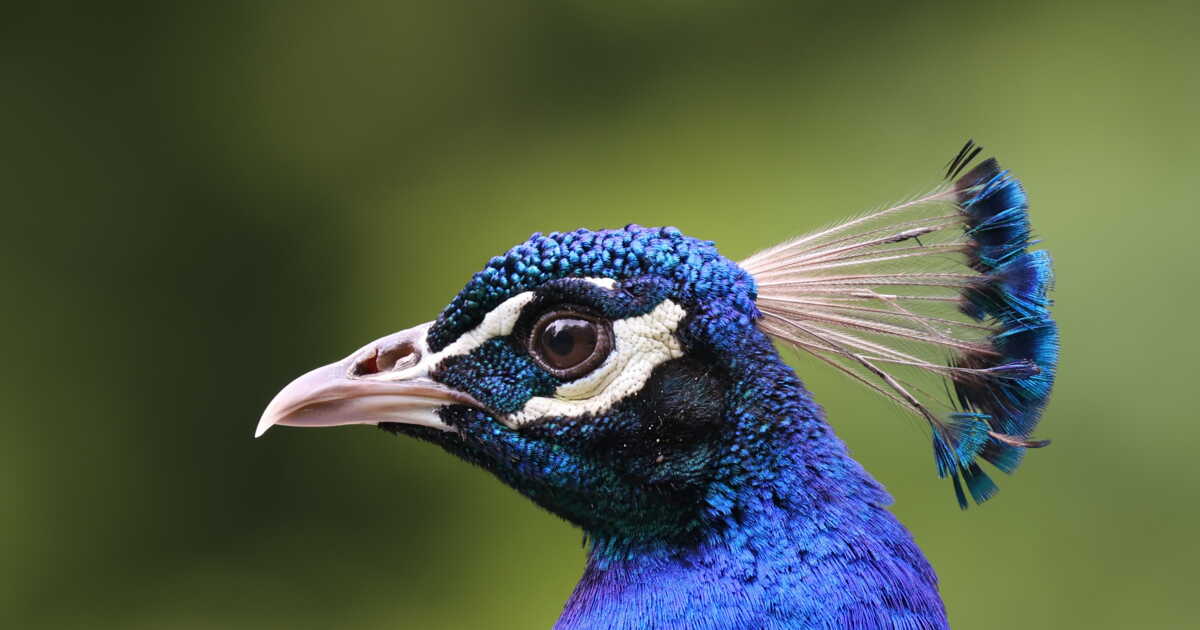
In a quirky take on Alfred Hitchcock’s The Birds, dozens of peacocks promenade through the streets of a small Italian village, driving residents crazy with their mating calls. We can see these birds, with their long iridescent tails, perched on roofs and fences in Punta Marina, a seaside village in the Emilia-Romagna region near Ravenna.

The city’s prestigious mosaics from the ancient era bear witness to the birds’ presence in the region for centuries. Although there has been no official census in the village, these birds are believed to number around 120 in Punta Marina, where no predator seems to bother them.

But for Marco Manzoli, 81, a retired bus driver, it is mainly troublemakers that produce a lot of droppings. “Their population has exploded over 30 years and is now too large: they disrupt sleep, hinder traffic and soil the ground with droppings that resemble ice cream, in which people end up walking.”, he told AFP TV.

Not far away, six peacocks stroll nonchalantly at a crossroads, admiring their reflection in parked cars and shop windows. “The peacocks climb onto cars… and scratch them,” adds Mr. Manzoli, fearing that “tourists will stop vacationing unless they have a garage to park their car”.

The baker Claudio Ianiero, 64, told AFP TV that the peacocks had long lived in a pine grove behind the village, but they had begun seeking shelter from predators by nesting in the gardens of abandoned houses. “There they have many natural enemies, such as wolves and foxes. Here, however, they have none, and they are proliferating at a pace that’s difficult to control”, he said.

The Formation of Two Camps

As a peacock approached the bakery window, eyeing the butter croissants on display inside, Ianiero dismissed alarmist reports in the media about an invasion, a health emergency, or a forced exodus of residents.

The baker, who specializes in peacock-shaped cookies among other specialties, says that residents have lived in harmony with these birds for years. These crest-bearing birds, with their countless shades of blue, are “something magical” for Punta Marina, he believes.

But for Mara Capasso, a 57-year-old supermarket cashier, the issue of peacocks “has split the town into two camps”. She notes that some neighbors are awakened every night by the birds’ mating cries. The peacocks should be “taken to pine forests, woods, places where they can live in their natural habitat, because they should never live on concrete”, she continues.

Over the years, the Ravenna city hall, which oversees Punta Marina, has considered various strategies for managing the bird population. A relocation attempt in 2022 failed, largely due to opposition from animal-rights groups. This initiative could well bear fruit today, as “we are receiving adoption offers from all over Italy”, assures Mr. Ianiero.

Although the municipality launched a 2024 campaign to raise awareness among residents and visitors about coexisting with peacocks, including a request not to feed them, Emanuele Crescentini, a local resident, thinks more needs to be done.

Mr. Crescentini, 50, has dubbed himself the “forest ranger” of the peacocks, roaming the streets to shield the birds from inhabitants’ anger. “There is plenty of space in Punta Marina, they could spread out everywhere without causing any trouble”, he notes. “We could set an example of smart and mature coexistence. It’s entirely possible”, he adds.

What is the difference between a city, a village, and a municipality?

What differentiates a large village from a small town? What exactly are their definitions? A few answers.

What is the origin and definition of the word “ville”?

It is not always easy to distinguish a town from a village… especially since the word ville derives from the Latin villa, which means a farm! In the past, the villa indeed referred to an agricultural estate or a house located in the countryside.

This term then took two parallel directions, giving rise to the words :

  • villagium, then designating the farm as we know it;
  • ville, which referred to a “group of houses”.

Thus, the city is far from being a recent notion, and it covers indeed different realities depending on where in the world one lives. In France, the city is understood as a place where populations gather to carry out certain activities: commerce, craft trades, and service provision.

Agricultural activities, for their part, are the domain of villages. Moreover, the city is characterized by a concentration of housing organized along streets, which can be numerous depending on the size of the cities.

What is meant by village?

But this definition is also tending to disappear… For in many villages, one also finds concentrations of housing and various activities related to commerce, crafts, and services. Just like in cities.

Yet a village remains linked to the countryside and to the agricultural activities that are overrepresented there. But again, this distinction is far from being sufficient. In general, it is the number of inhabitants that is taken into account to distinguish a village from a city.

The figure used by INSEE for this criterion is 2,000. Beyond 2,000 inhabitants, therefore, the commune is considered a (small) city. However, there is also a nuance here.

Indeed, some municipalities with more than 2,000 inhabitants can keep the designation of village if the residents are dispersed around the center, and not concentrated in the heart of the commune.

In summary, city and village, what distinction?

The number of inhabitants and their distribution thus provide a consensus for clearly identifying a city from a village. Another criterion also enters into this distinction: housing density.

If the housing in the center of a commune exceeds 2,000 occupants, it means there is a dense housing stock capable of housing a significant number of people. As mentioned earlier, a densely built-up population of fewer than 2,000 souls constitutes a village; beyond that, we speak of a city.

What about the distinction between village and bourg? INSEE introduces here the criterion of the distance between two dwellings. When there are fewer than 200 meters between two homes, we speak of a bourg. Beyond that, we speak of a village, provided the other criteria mentioned are also met.

City, village and commune: what are the differences?

The commune is in fact the smallest administrative subdivision that exists in France. A commune can thus be either a city or a village, and it is necessarily administered by a mayor.

Today, to distinguish the different typologies of urban areas, INSEE refers to the notions of rural communes and urban communes, based on a density grid.

Low-density communes are described as rural, and communes with intermediate or high population density are called urban.