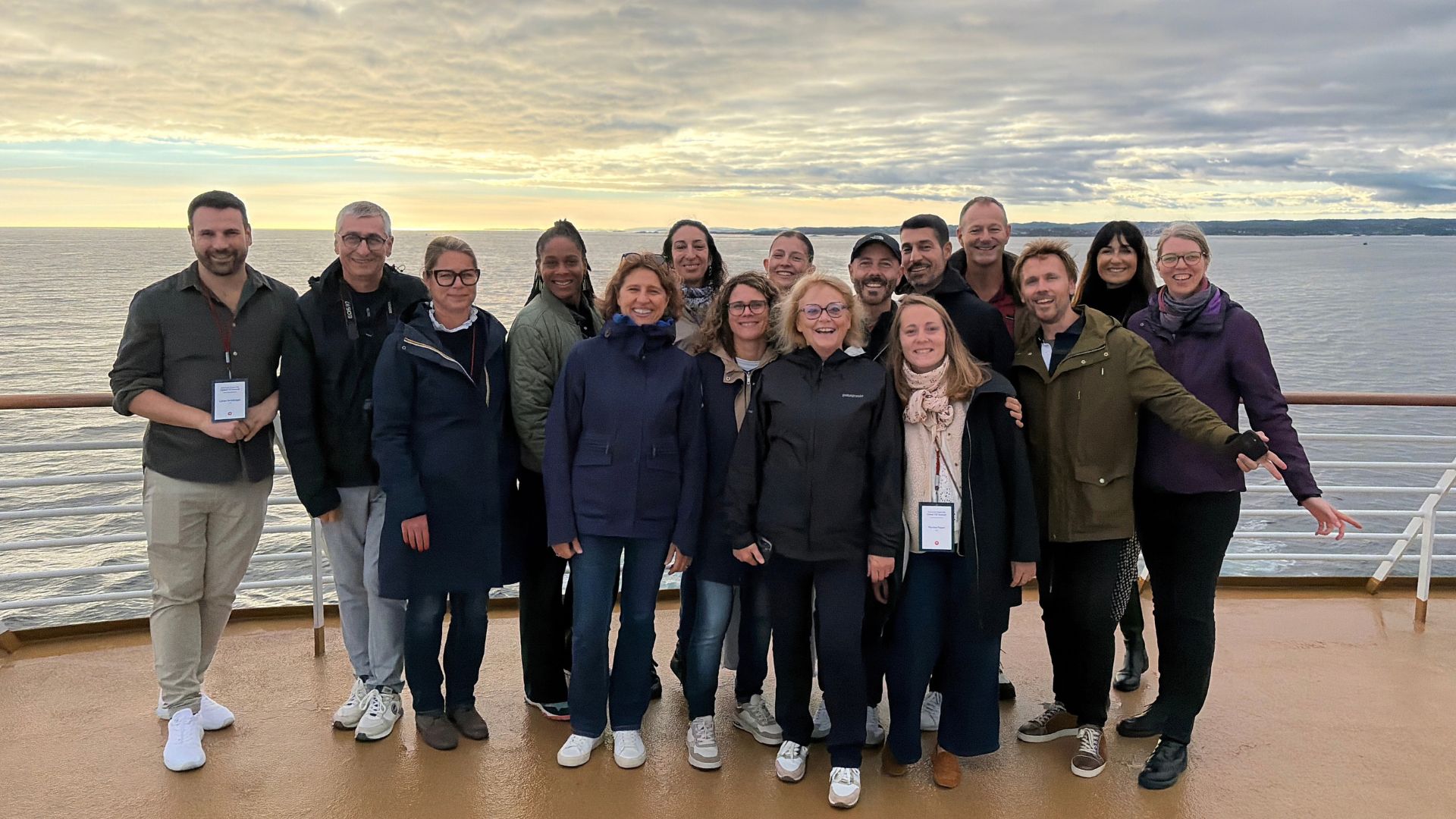


From September 22 to 25, Hurtigruten hosted nearly 200 partners from its various markets aboard the MS Trollfjord.
From Bergen to Oslo, the Global VIP Partner Summit at Sea combined strategy briefings, product discoveries, visits and excursions. All of it with a central idea, to enable distributors to better understand the experience they offer to their clients.
For Christine Bois-Beauval, Director France and Benelux of Hurtigruten, the objective was notably to “inspire confidence” in partners.
A démarche qui prend tout son sens pour les croisières Signature, une gamme lancée en 2023 en complément de l’Express Côtier.
“Where the historic product remains tied to the Norwegian coastal itinerary, Signature seeks more to highlight exploration, longer calls, and onshore activities. We want distributors to be able to experience the product themselves before marketing it.” adds her.
From the Coastal Express to Signature, an expanding offering
« L’Express Côtier, c’est l’ADN de Hurtigruten », rappelle Christine Bois-Beauval. La compagnie entend donc conserver cette identité tout en développant une gamme complémentaire.
Signature propose notamment des itinéraires plus orientés vers l’expérience, avec des escales plus longues et davantage de possibilités d’excursions.
Randonnée, kayak, vélo électrique ou sorties accompagnées par les équipes d’expédition font partie des activités mises en avant.
Le sommet organisé à bord du Trollfjord a précisément permis aux distributeurs de comprendre cette différence en la vivant eux-mêmes. Les conférences sur les paysages et la géologie des fjords, les présentations sur la culture sámi, les excursions à Kristiansand ou encore les interventions consacrées aux aurores boréales n’étaient donc pas seulement destinées à animer le programme. Elles correspondaient aux différents ateliers proposés à leurs clients.
An offering that expands to multiply sales opportunities
This strategy also explains why Hurtigruten continues to broaden its programming.
Among the products already offered, the Nordkapp Line, departing from Oslo toward the Svalbard region, and the Nordland Line, departing from Bergen, notably enable Hurtigruten to extend its reach into the Arctic and the autumn and winter seasons.
The program is especially enriched by three new offerings. Odyssey at the Heart of the Fjords, eight days from Bergen, provides a journey through the great fjords of southwestern Norway. The Arctic Route, between Copenhagen and Tromsø, opens a new gateway to the High North. Finally, the Boreal Odyssey, departing from Tromsø, places greater emphasis on the Arctic experience and the Northern Lights.
Through this extension of the range, Hurtigruten aims to keep its must-have products while multiplying sales opportunities for distributors with different durations, different territories and especially different seasons.
Making Norway a four-season destination
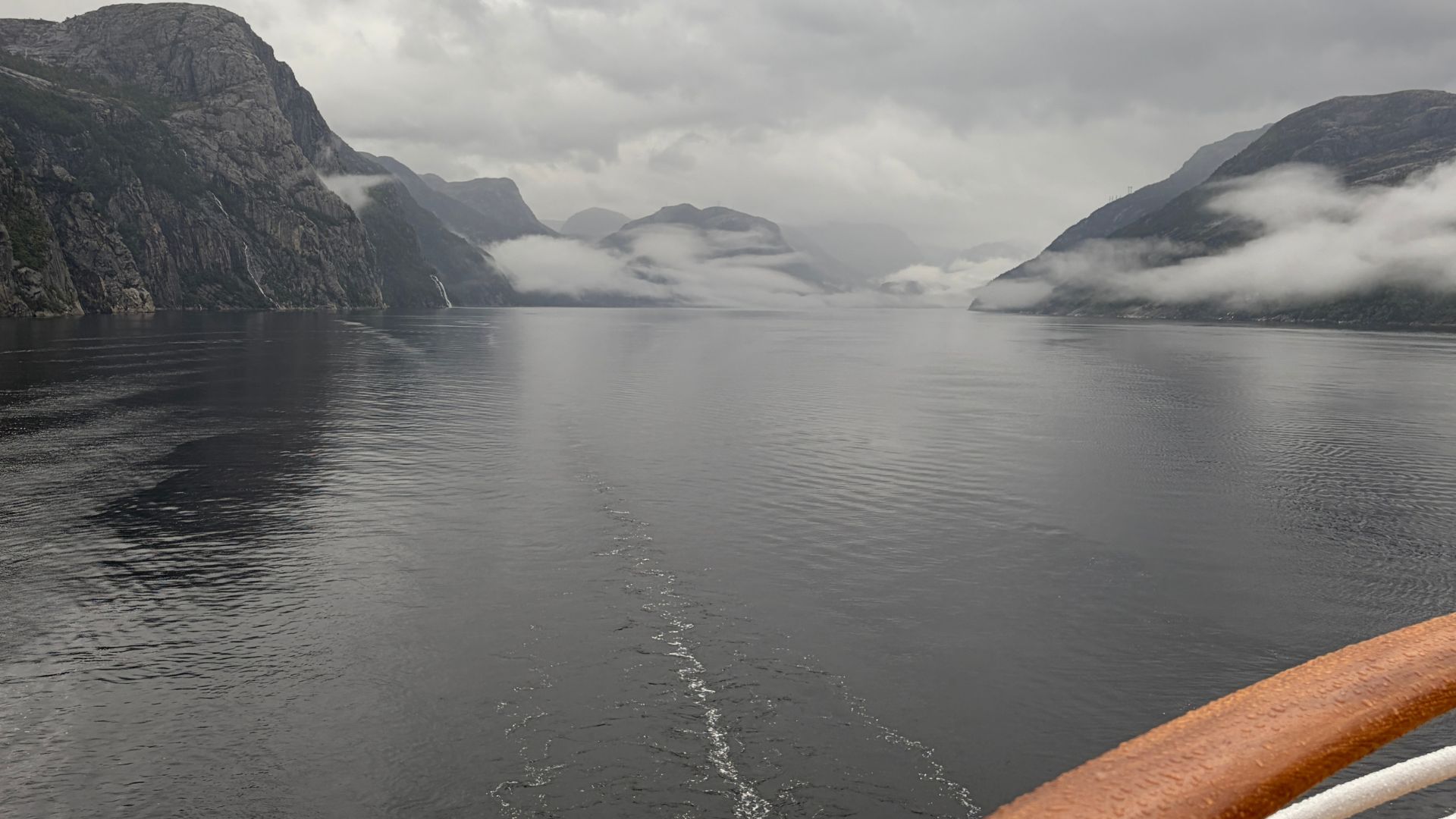
Behind these new routes lies a second strategy: de-seasonalization.
Hurtigruten aims to make Norway a destination that sells year-round, based on experiences that vary with the seasons.
If summer remains associated with the fjords, long days and the Midnight Sun, autumn and winter allow in particular to highlight snowy landscapes and the Northern Lights, especially sought after from late September to March.
Gastronomy as a selling point
Gastronomy was also among the elements the company wished to highlight. Partners could discover the Trollfjord’s three restaurants: Flora, the main dining room; Røst, more oriented toward gastronomy; and Árran, dedicated to Sámi cuisine.
The topic particularly caught the attention of French partners. Cheeses, beers, seaweed and seafood products were presented during tastings and meals.
Hurtigruten also emphasizes its local sourcing and notes that more than 80 % of the foods served at table come from local producers.
The topic particularly caught the attention of French partners. Cheeses, beers, seaweed and seafood products were presented during tastings and meals.
Hurtigruten also emphasizes its local sourcing and notes that more than 80 % of the foods served at table come from local producers.