
The delivery of Explora III, on July 24 in Genoa, has not closed the book on 2026’s novelties.
After its christening in Barcelona and the start of its inaugural season on August 3, five other cruise ships are still due to enter service before year-end. Explora Journeys.
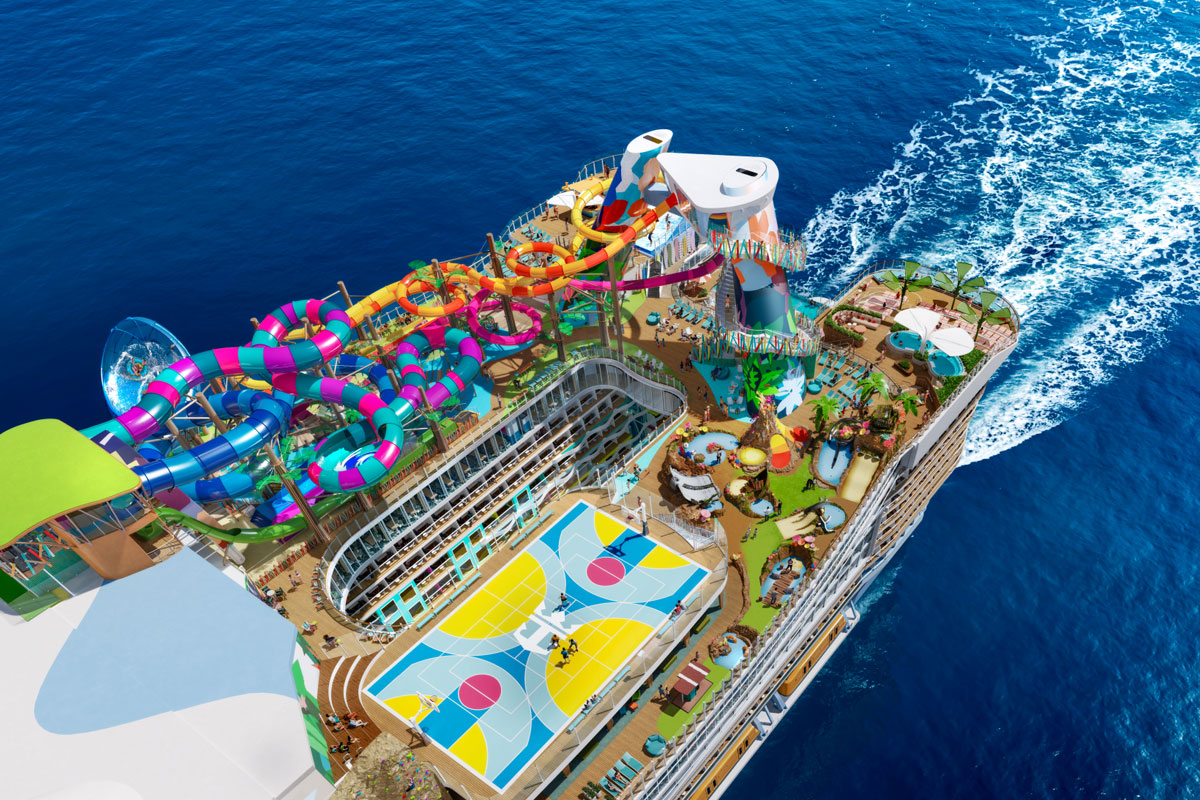
The calendar sketches an astonishing contrast. The smallest, the Magellan Discoverer will welcome fewer than a hundred passengers in Antarctica. The largest, the MSC World Asia, will be able to embark up to 6,762 in the Mediterranean.
Between the two lie three other models: a large cruise ship intended for the Chinese market, a vessel partially powered by liquid hydrogen, and a new showcase of all-inclusive ultra-luxury.
After its christening in Barcelona and the start of its inaugural season on August 3, five other cruise ships are still due to enter service before year-end. Explora Journeys.
The calendar sketches an astonishing contrast. The smallest, the Magellan Discoverer will welcome fewer than a hundred passengers in Antarctica. The largest, the MSC World Asia, will be able to embark up to 6,762 in the Mediterranean.
Between the two lie three other models: a large cruise ship intended for the Chinese market, a vessel partially powered by liquid hydrogen, and a new showcase of all-inclusive ultra-luxury.
A 2026 vintage with character
With thirteen new cruise ships, 2026 is not a record year for the number of deliveries. The vintage stands out more for its eclectic mix.
According to Cruise Industry News’ orderbook, the ships delivered this year add roughly 27,000 beds and a cumulative investment estimated at 9.5 billion dollars.
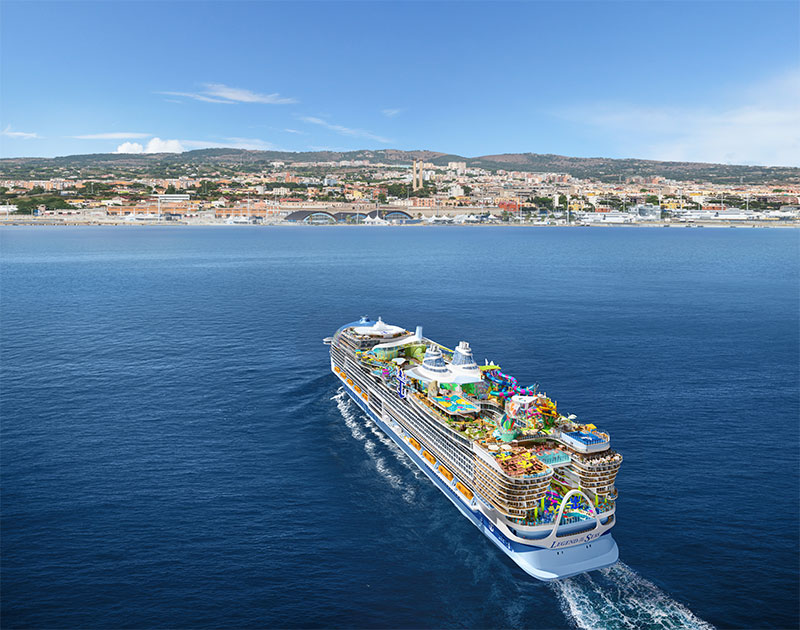
The fleet has already been enriched by the Norwegian Luna, the Disney Adventure, the Mein Schiff Flow or the Legend of the Seas, which became the largest cruise ship in the world. Delivered on July 24, Explora III was the eighth ship in this lineup.
The 2026 vintage thus covers almost all sector evolutions. It brings together floating resorts capable of hosting thousands of passengers, ultra-luxury units, a small expedition vessel, and the first responses from the shipowners to the question of the post-fossil-fuel era.
According to Cruise Industry News’ orderbook, the ships delivered this year add roughly 27,000 beds and a cumulative investment estimated at 9.5 billion dollars.
The fleet has already been enriched by the Norwegian Luna, the Disney Adventure, the Mein Schiff Flow or the Legend of the Seas, which became the largest cruise ship in the world. Delivered on July 24, Explora III was the eighth ship in this lineup.
The 2026 vintage thus covers almost all sector evolutions. It brings together floating resorts capable of hosting thousands of passengers, ultra-luxury units, a small expedition vessel, and the first responses from the shipowners to the question of the post-fossil-fuel era.
September: Magellan Discoverer opens the final wave
The eagerly awaited Magellan Discoverer is slated for delivery in September before beginning its itineraries in November, during the southern hemisphere season 2026-2027.
Built in Chile for Antarctica21, it will become the first hybrid-electric polar ship built in South America. Classified as PC6, it will be able to accommodate 76 passengers within the company’s “air-cruise” programs and 96 on wholly maritime journeys.
The model enables travelers to reach Antarctica by air, without crossing the Drake Passage, and then board near the peninsula. Batteries, electric propulsion, heat recovery and a scientific laboratory are expected to enable the company to pursue a low-impact approach in one of the planet’s most sensitive environments.
Built in Chile for Antarctica21, it will become the first hybrid-electric polar ship built in South America. Classified as PC6, it will be able to accommodate 76 passengers within the company’s “air-cruise” programs and 96 on wholly maritime journeys.
The model enables travelers to reach Antarctica by air, without crossing the Drake Passage, and then board near the peninsula. Batteries, electric propulsion, heat recovery and a scientific laboratory are expected to enable the company to pursue a low-impact approach in one of the planet’s most sensitive environments.
November 6: China delivers Adora Flora City
The next major milestone is set for November 6. Adora Flora City is to be delivered in Shanghai, before heading to Guangzhou to begin its commercial career.
The second large cruise ship built in China after Adora Magic City, the vessel measures 341 metres and has 2,130 cabins. It can accommodate up to 5,232 passengers. The inaugural voyage will depart from Nansha Port, in Guangzhou, on November 22. The five-night itinerary will call at Hong Kong and Chan May, gateway to Huế in Vietnam.
The interior design, dining and entertainment will incorporate references to Chinese culture. A special program bringing together Cantonese opera, acrobatics, traditional music and puppet theatre is planned for the inaugural voyage.
The second large cruise ship built in China after Adora Magic City, the vessel measures 341 metres and has 2,130 cabins. It can accommodate up to 5,232 passengers. The inaugural voyage will depart from Nansha Port, in Guangzhou, on November 22. The five-night itinerary will call at Hong Kong and Chan May, gateway to Huế in Vietnam.
The interior design, dining and entertainment will incorporate references to Chinese culture. A special program bringing together Cantonese opera, acrobatics, traditional music and puppet theatre is planned for the inaugural voyage.
4 décembre : Viking Libra ouvre l’ère de l’hydrogène
Delivered by Fincantieri in November, Viking Libra is set to welcome its first guests on December 4 in Piraeus. Its inaugural voyage will be a ten-day itinerary through the Greek islands, returning to Athens on December 13.
The ship will stay true to Viking’s established format: a relatively compact footprint, 499 balcony cabins and a capacity limited to 998 passengers. The breakthrough will lie beneath the hull.
Viking Libra will be equipped with a propulsion system partially powered by liquid hydrogen and fuel cells. With a power output of up to 6 MW, this installation is designed to allow the cruise ship to operate with zero emissions during certain sailing sequences or at its ports of call.
Viking presents it as the first cruise ship in the world capable of using liquid hydrogen directly for propulsion.
A highly watched first, even though the vessel will also retain conventional engines.
The ship will stay true to Viking’s established format: a relatively compact footprint, 499 balcony cabins and a capacity limited to 998 passengers. The breakthrough will lie beneath the hull.
Viking Libra will be equipped with a propulsion system partially powered by liquid hydrogen and fuel cells. With a power output of up to 6 MW, this installation is designed to allow the cruise ship to operate with zero emissions during certain sailing sequences or at its ports of call.
Viking presents it as the first cruise ship in the world capable of using liquid hydrogen directly for propulsion.
A highly watched first, even though the vessel will also retain conventional engines.


Imagined by Balich Wonder Studio, the dragon becomes the main symbol of the Asian references woven into the ship’s design. Despite its name and this aesthetic universe, MSC World Asia will not immediately head toward Asia.
After its delivery in Saint-Nazaire and its christening in Le Havre on November 28, it will move on to Marseille to begin its first Mediterranean season. The dragon will thus come to life in Europe.
After its delivery in Saint-Nazaire and its christening in Le Havre on November 28, it will move on to Marseille to begin its first Mediterranean season. The dragon will thus come to life in Europe.
 Published by Laurent Guéna Journalist – TourMaG.com
 See all articles by Laurent Guéna


Add TourMaG to your Google News feed 


 I take the opportunity to open a parentheses because, ashore, you also find the vacation club.





 Published by Paula Boyer